
 Worksheets
Image Analysis 1B Class 9: Bootcamp Review
Total questions: 25
Worksheet time: 19mins
The appearance of saturation artifact on a radiograph is caused by:
Inadequate receptor exposure
Excessive receptor exposure
Incorrect positioning of the patient
Incorrect post-processing
Small matrix size
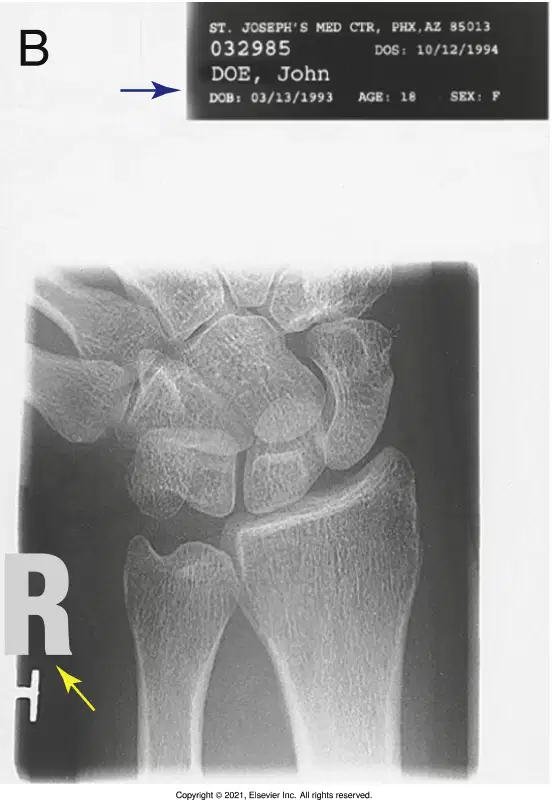
Which of the following identifiers are NOT required by law to be included on a radiographic image?
The patient's name
The patient's date of birth
The patient's medical record number
Radiographic marker
Date of exam
If a radiograph has an "S" number of 12 and demonstrates a loss of soft tissue differentiation, the technologist should consider which of the following actions? (a)
Incomplete erasure of a computed radiography (CR) image receptor may produce an artifact called: (a)
A technologist recieved requisitions for a thoracic and lumbar spine on the same patient. The technologist accidently performed the lumbar spine under the wrong accession number. How should this error be corrected? (a)
A technologist is setting the exposure for a table-top exam. The technique chart calls for 87 kVp but the technologist uses 82 kVp. What will be the most likely effect?
Saturation artifact
Quantum mottle
Loss of contrast
No visible errors
Which term describes the process of adding brightness and contrast to exposure values within a radiographic image? (a)
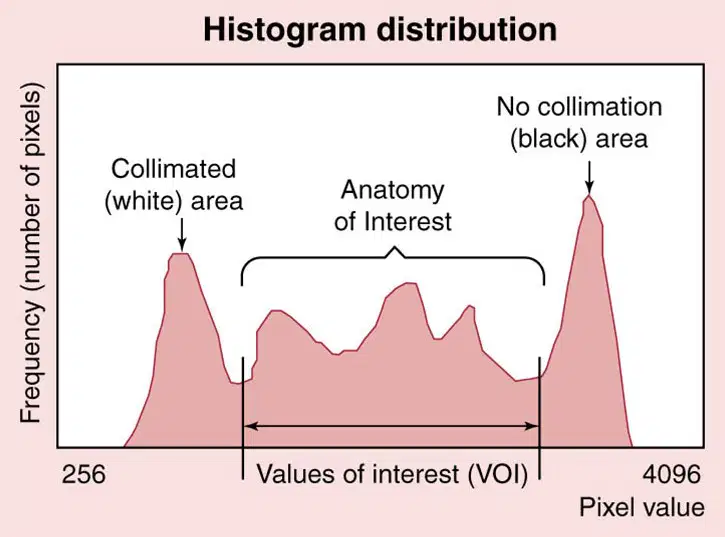
The highest exposure reading on a radiograph histogram usually represent areas of: (a)
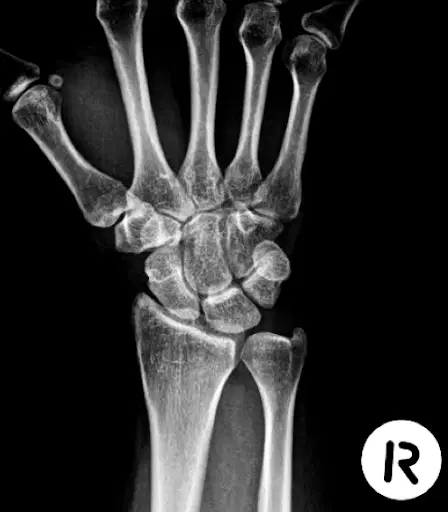
The loss of soft tissue differentiation in this image is caused by: (a)
The requistion is for a 2 view knee exam. The technologist performed a 2 view tib/fib exam. How should this error be corrected? (a)
The DICOM data associated with a radiographic image does not include:
Exposure indicator
Name of the facility
Patient's name
Radiographic marker
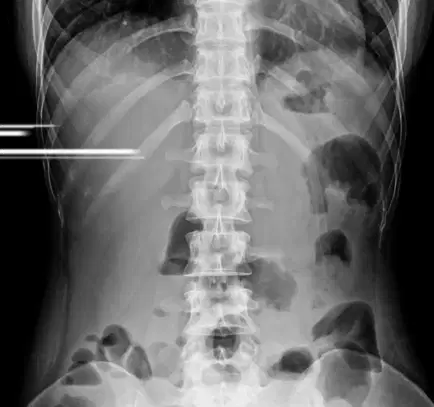
Physical damage to the structure of a CR image receptor is likely to manifest itself on a radiograph as: (a)
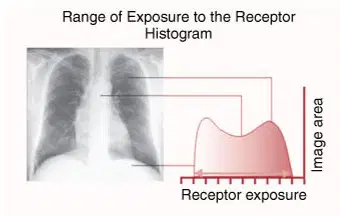
The process of identifying the values of interest in a radiographic histogram is called: (a)
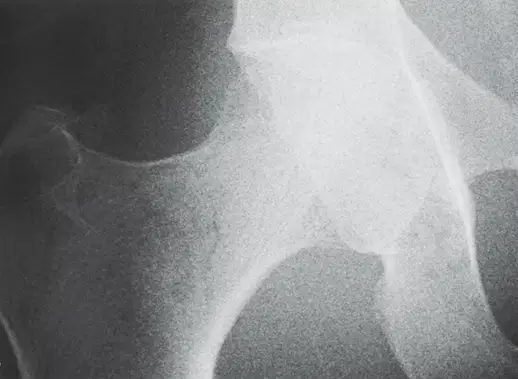
What should be changed to correct the exposure error in this image?
Decrease kVp
Increase SID
Increase the grid ratio
Increase the mAs
Decrease the mAs
If a radiograph demonstrates an S number of 80 with no visible exposure errors, what should be done? (a)
An "S" number significantly above 200 indicates:
Insufficient image contrast
Excessive image contrast
Insufficient receptor exposure
Excessive receptor exposure
A technologist accidently performs a radiograph under the wrong patient name. How should this error be corrected?
Annotate with the correct name
Discard the radiograph
No action is needed
Repeat the radiograph
Move the radiograph to the correct patient and accession number
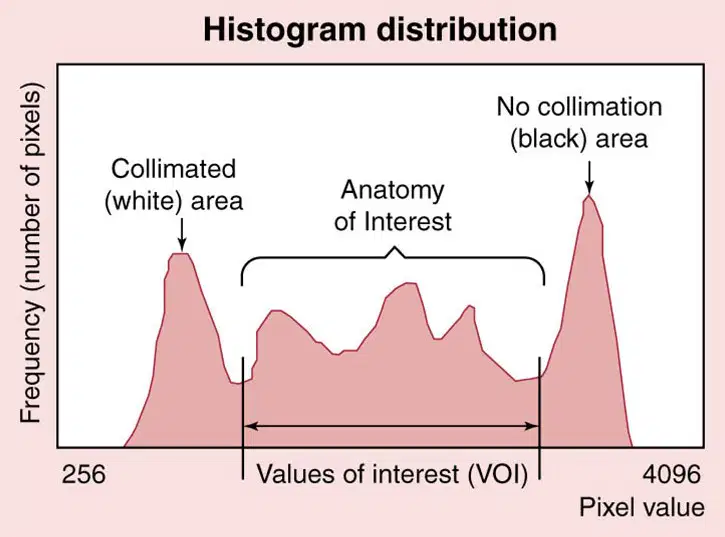
A radiographic histogram is a graphic representation of: (a)
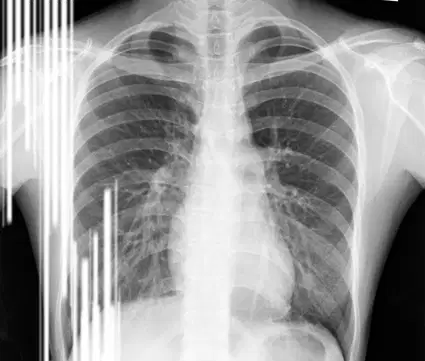
The appearance of the bright-white artifact in this image should be corrected by:
Repeating the image with a different image receptor.
Repeating the image with a different x-ray tube.
No action is required.
Reprocessing the raw data with a different histogram protocol.
A technologist accidently processes a chest radiograph under the abdomen histogram protocol. How should this mistake be corrected? (a)
Which of these mistakes is most likely to cause processing errors within a computed radiography (CR) system? (a)
A dead detector element (DEL) is visible within a radiograph of the orbits performed for MRI screening. This error should be corrected by:
Repeating the exposure with a different image receptor.
Repeating the exposure with a different x-ray tube.
Reprocessing the raw data with a different histogram protocol.
Repeating the exposure after cleaning the IR and the tube.
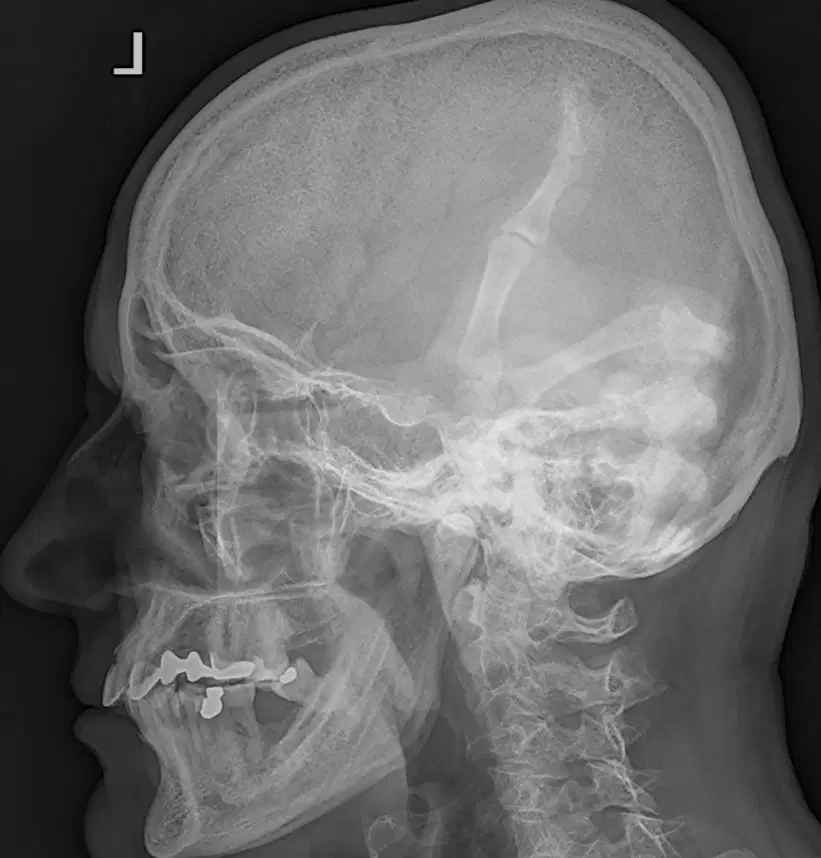
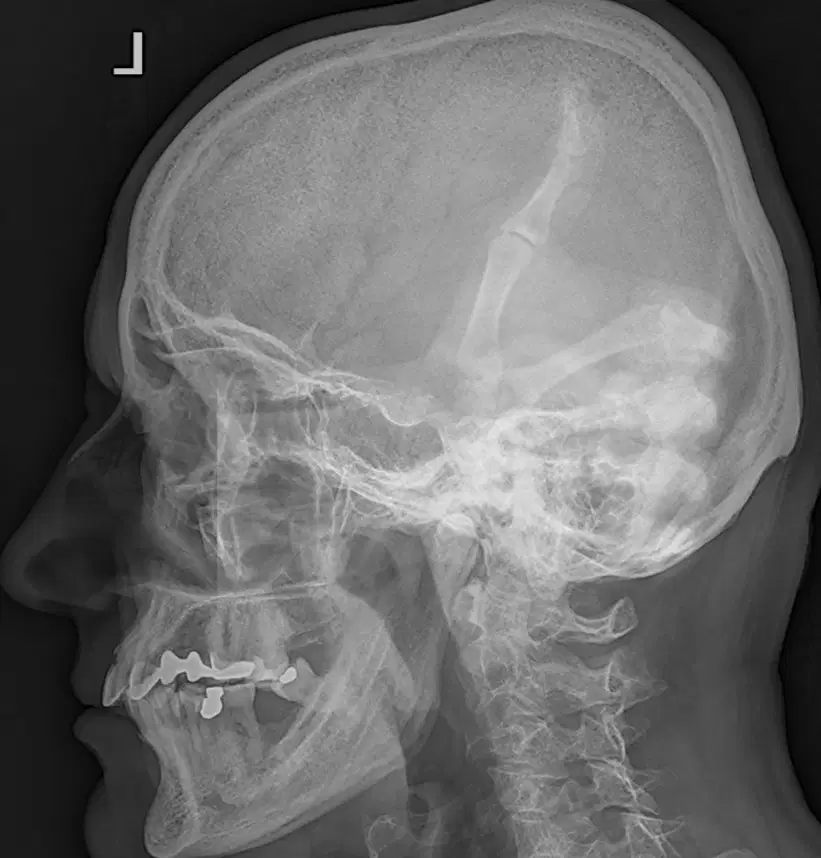
This image was acquired using a CR image receptor. What is the most likely explanation for the hand appearing in the AOI? (a)
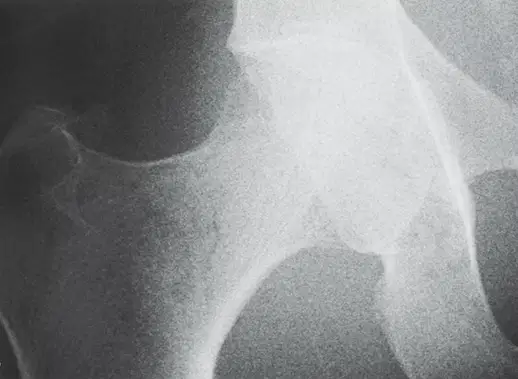
The exposure error in this image is called (a) :
Which of the following exposure readings are processed as part of the "values of interest" within a radiographic image?
Patient anatomy including medical implants
Collimator shutters
The lead marker outside the AOI

