
 Worksheets
Year 10 Easter Term Civic Edu. Revision Book
Total questions: 90
Worksheet time: 2hrs 49mins
“rule by __________ .”
In our democracy the people vote ________________.
directly for the laws we want
for how long we want the president to be in power
for the rules in the classroom
for the people we want to represent us in government
The citizens choose leaders to make decisions on our behalf. Which type of government is this?
Direct Democracy
United Democracy
Republic Democracy
Representative Democracy

What can you infer from the fact that more than half the world's countries are democracies?
Half the world's people are entitled to vote in U.S. elections
Half the world's people have very little say in how they're governed
Half the world's people live in the U.S. and Europe
Half the world's people do not know what elections are

What are the two types of democracy?
republican/democratic
representative/direct
representative/democracy
fair/unfair
In the 5th grade, each student got to vote for what kind of Starter Pokemon they could have, this is an example of____________.
Representative Democracy
Direct Democracy
In Foxboro, a group of 12 people were chosen to vote on the new New England Patriots stadium design, this is a form of __________________.
Representative Democracy
Direct Democracy
The Greek word "demos" means _____________________.
people
rule
government
president
The Greek word "kratos" means ____________________.
judge
rule
law
governor
What is considered the birthplace of democracy?
Rome
Paris
London
Athens
The idea that the people are the ultimate voice of authority and liberty in a democracy is known as ________________.
general will
good will
absolute power
lack of power
In our democracy the people vote ________________.
directly for the laws we want
for how long we want the president to be in power
for the rules in the classroom
for the people we want to represent us in government
Which is NOT a characteristic of a democracy?
Only the wealthy can vote.
free elections
limits on lawmakers
citizens rule
In order to uphold the rule of law, courts should remain
silent
partial
impartial
dedicated
Which describes a component of rule of law?
consistent application
enforcement of the law
decisions based on the law
all of the above
In rule of law, we are ruled by
man
laws
a few men
the President
Which statement correctly describes a law?
The only laws that affect Americans are Federal laws.
In a democracy like the United States, laws are given to people by a leader, like the president.
Laws are rules set in order to have control over a country.
Laws exist to protect people, their property, and their freedoms.
What is Rule of Law?
People have the ability to make their own laws.
Some people in society have to follow the law while others do not.
No one is above the law and the law applies equally to everyone.
Everyone can interpret and follow the law in their own individual way.
A consistent set of legal rights makes the laws fair for all. Which principle of rule of law does this pertain to?
enforcement of the law
transparency of legal institutions
due process of the law
accountability before the law
Which type of government is most likely to have rule of law?
Communism
Democracy
Dictatorship
Monarchy
Minority influence involves one person or a small group of people challenging the beliefs and behaviours held by the m (a)


What did Nelson Mandela fight for?
Only liberty
Only Equality
Both
What is your understanding of Freedom?
According to universal adult franchise every adult has:
No vote
1 vote
Multiple votes
None of these
What is not the element of equality
Justice
Weather
Religion
Health
Which is NOT a characteristic of a democracy?
Only the wealthy can vote.
free elections
limits on lawmakers
citizens rule
If the government ignores or suppresses public opinion the people can
agitate and cause riots.
conduct protests.
remove the government in the next election.
Who quoted this 'democracy is a government of the people, by the people and for the people"
Pericles
Abraham Lincoln
George Washington
Hippocrates
The wishes of the people on any issue or problem is described as
personal opinion
collective opinion
public opinion.

Abraham Lincoln wrote the Emancipation _ which freed the slaves from Southern states.
Proclamation
Commandment
Amendment

Slaves did not have
work to do
rights
a hard life

President _ wrote the Emancipation Proclamation
George Washington
Thomas Jefferson
Abraham Lincoln

The 13th _ was a CHANGE to the Constitution that set all slaves free.
commandment
amendment
colony

After the Bill of Rights was passed, all people had equal rights.
true
false

Declaration of Independence
Document that made America free from Great Britain
Constitution
Document that is the law of the United States
Bill of Rights
The First Ten Changes to the Constitution
Emancipation Proclamation
Set the slaves free
19th Amendment
Gave women the right to vote

Which document is too delicate to keep out on display?
The Constitution
The Bill of Rights
The Emancipation Proclamation

The _ War was fought to end slavery.
Civil
Revolutionary
Vietnam

Most slaves were
African American
White
Native American

Some of the slaves that were freed went to fight in the Civil War.
true
false

Which woman helped slaves escape?
Rosa Parks
Susan B. Anthony
Harriet Tubman

After slavery was ended, everyone was treated equally.
true
false

Mason broke the state record in typing, but no one cheered.
true
false

The maze is when you get trapped inside one of your emotions.
true
false

The best thing to do if you are stuck in the maze is to yell at people.
true
false
Freedom is a_________ Nigerian have.
right
option
want
need
the system that allows each branch of government to limit the powers of the other two branches
federalism
checks and balances
limits and supports
constitutionality
the part of government that carries out, the laws
legislative
executive
judicial
presidential
the lawmaking part of government
legislative
executive
judicial
presidential
the part of government that interprets the laws
legislative
executive
judicial
presidential
Introductory part of a statute or deed stating its aims
Preamble
Concurrent Power
Amendments
Separate branches are empowered to prevent actions by others
Checks and Balances
Supremacy Clause
Delegated power
Powers specifically granted to the federal government
Expressed powers
Implied powers
Delegated powers
A power that is given and granted to the national governement
Delegated power
Implied power
Amendments
How many branches of government are there in Nigeria?
2
3
4
Who is head of the executive branch of the state government?
Congress
President
Governor
Who is the head of the judicial branch of the state government?
City court
State court
Supreme Court
A ________________ is a person who is a member of a community, state, or country.
council
citizen
executive
legislative
The President and Vice President are in charge of which branch of government?
Local
Judicial
Executive
Legislative
The constitution contains the _________________ laws of the land?
super
supreme
basic
general
How are people governed?
by following the constitution only
by following the federal, state, and local laws
by the legislative branch making laws
by the judicial system
Which is NOT a service provided by local government?
local libraries
police department
fire department
state parks
city roads
Which of these services would the STATE government be in charge of?
local libraries
state universities and colleges
fire department
city road repair
What is a citizen?
A person who leads a government
A person in a city only
any person who is a member of a community
any person who is a member of a club
Which arm of government can veto legislation.
Legislative
Executive
Judicial
Congress
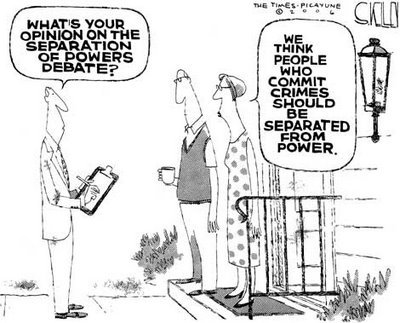
What does it mean to say we have "separation of powers?"
We divide power between the three arms of government
The President doesn't work with the Courts
National Assembly doesn't work with the President
We divide the two Houses of National Assembly

The President can veto or sign a bill into law. What principle is reflected in this power?
Individual Rights
Separation of Powers
Checks and Balances
Limited Government

The Executive arm of government is responsible for ______________
Making the Laws
Enforcing the Laws
Interpreting the Laws
Why do we have three Arms of government?
avoids one arm having too much power
to keep the king out of power
let George Washington to be the first president
to give kind all of the power

Who is the Head of the Senate House?
President
Vice President
Senate President
Ministers

The name of the Speaker of the House of Representatives is
Jimi Agbaje
Femi Gbajabiamila
Babatunde Fashola
Akinwunmi Ambode

There are _____________ members of the Senate.
360
120
109
129

There are ____________ members of the House of Representatives
360
120
109
129

The senate president, _________________ is the head of the senate.
Senator Ibrahim Babagana
Senator Ahmad Ibrahim Lawan
Senator Ahmed Shehu
Senator Abba Kyari

