
 Worksheets
Newton's Laws of Motion
Total questions: 49
Worksheet time: 35mins
Motion is the process of changing ___.
reference
dimension
displacement
position
The total distance traveled by an object divided by the total amount of time needed to travel equals the ___.
average speed
friction
average acceleration
net force

Which best explains the graph below?
The speed is zero and does not change.
The speed of the object increases at a steady rate over time.
The speed of the object decreases at a steady rate over time.
The speed of the object increases and decreases over a given amount of time.
When an object is at rest, what is its speed?
2 m/s
3 m/s
1 m/s
0 m/s
Acceleration involves a change in ___.
time
direction
speed
both b and c
The distance traveled divided by the time taken to travel the distance is ___.
average speed
mass
momentum
speed
When a car slows down at a traffic light, it is ___.
accelerating
traveling at constant velocity
decreasing its displacement
changing direction

During which time interval was the object moving fastest?
0 to 1 s
1 s to 2 s
2 s to 3 s
3 s to 4 s

Which of the following statements best describes the motion of the object?
The object moved at a constant speed.
The object accelerated at a constant rate.
The average speed of the object was less than 1 m/s
The instantaneous speed of the object was greater than 1 m/s

According to the graph, about how long did the object take to move 40 m?
2 s
3 s
4 s
5 s
Which of the following is an example of a noncontact force?
musician playing the piano
athlete hitting a ball with a bat
a ball falling after you toss it in the air
karate expert breaking a stack of wood
An arrow can be used to represent a force. The length of the arrow represents ___.
direction of the force
strength of the force
mass of the force
acceleration of the force

Which label goes on the horizontal axis?
distance
force
mass
acceleration
Unbalanced forces can make an object accelerate by ___.
changing its speed
changing its direction
both a and b
neither a nor b
Which of the following is a force?
momentum
friction
acceleration
velocity
Which of the following is an example of an unbalanced force?
book sitting on a table
car sitting in the garage
person on an elevator going down
person leaning on a wall
A skater slowing as she slides across the ice is an example of ___.
inertia
momentum
friction
mass
Which of the following is a force or motion that is involved in the Moon orbiting Earth?
a force pulling the Moon toward the center
a speed at right angles to the line from the mass of the Moon to the center of Earth
acceleration toward the center of Earth
all of the above
We are able to walk forward because ___.
we push on the air
we push on the ground
the air pushes on us
the ground pushes on us
Which of the following best completes this phrase? For every action there is _____.
a reaction
an equal reaction
an opposite reaction
an equal and opposite reaction
Whenever an object exerts a force on another object, the second object exerts a force of the same magnitude, but in the ___ direction to that of the first object.
opposite
same
right angle
vertical
A student hits a nail with a hammer. During the collision, there is ___.
a forceon the hammer but not on the nail
a force on the nail but not on the hammer
a force on the nail and also on the hammer
no force on either object in the collision
Forces that are equal in size but opposite in direction are ___.
balanced forces
frictional forces
inertial forces
net forces
If gravity did not affect the path of a horizontally thrown ball, the ball would ___.
go straight up
travel horizontally
fall straight down
follow a curved path
Newton's first law of motion states that an object remains at rest unless a ___ force acts on it.
balanced
frictional
gravitational
net
Air resistance ___ as you move faster.
increases
decreases
remains the same
eventually disappears
The force you have to overcome to start an object moving is ___.
rolling friction
static friction
sliding friction
air resistance
Whenever a body is in motion, there is always ___ to oppose the motion
friction
inertia
gravity
acceleration
The upward force on an object falling through the air is ___.
air resistance
inertia
gravity
terminal velocity
The relationship among force, mass, and acceleration is stated in ___.
the law of conservation of momentum
Newton's first law of motion
Newton's second law of motion
Newton's third law of motion
A feather falls through the air more slowly than a brick because of ___.
gravity
air resistance
inertia
momentum
According to Newton's second law of motion, which of the following formulas is incorrect?
F = mv
m = F/a
a = F/m
F=ma
The statement for "every action, there is an equal but opposite reaction" is a statement of ___.
the law of conservation of momentum
Newton's first law
Newton's second law
Newton's third law
Witch action - reaction forces, ___.
the action force is created first
the reaction force is created first
the forces are created at the same time
both forces already existed
When a diver jumps off a diving board, gravity pulls him or her down tot he water. What is the reaction force to Earth's gravity?
The diver's legs push against the board.
Frction between the diver and water slows the diver.
Air resistance slows the diver.
The diver pulls Earth up.
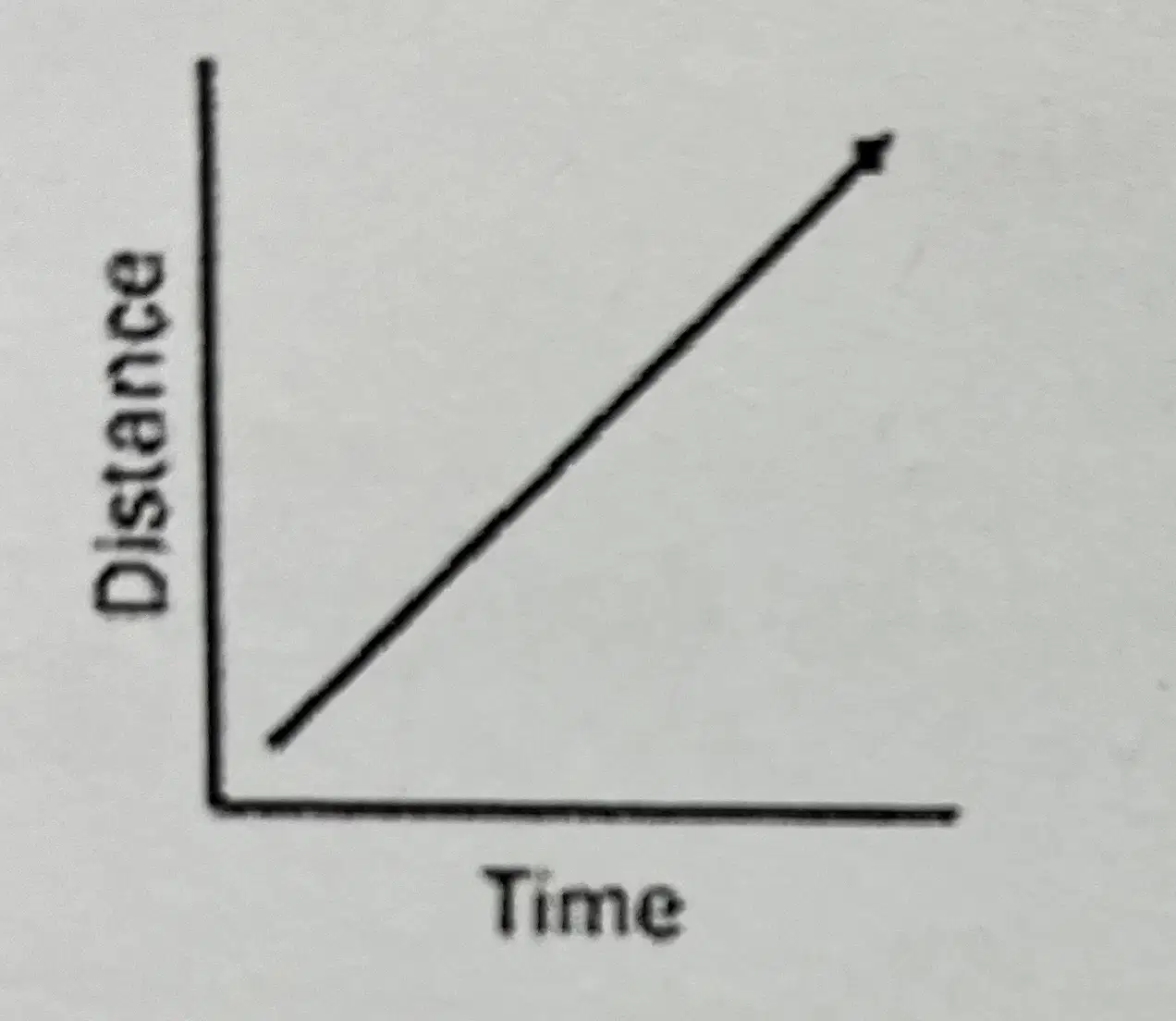
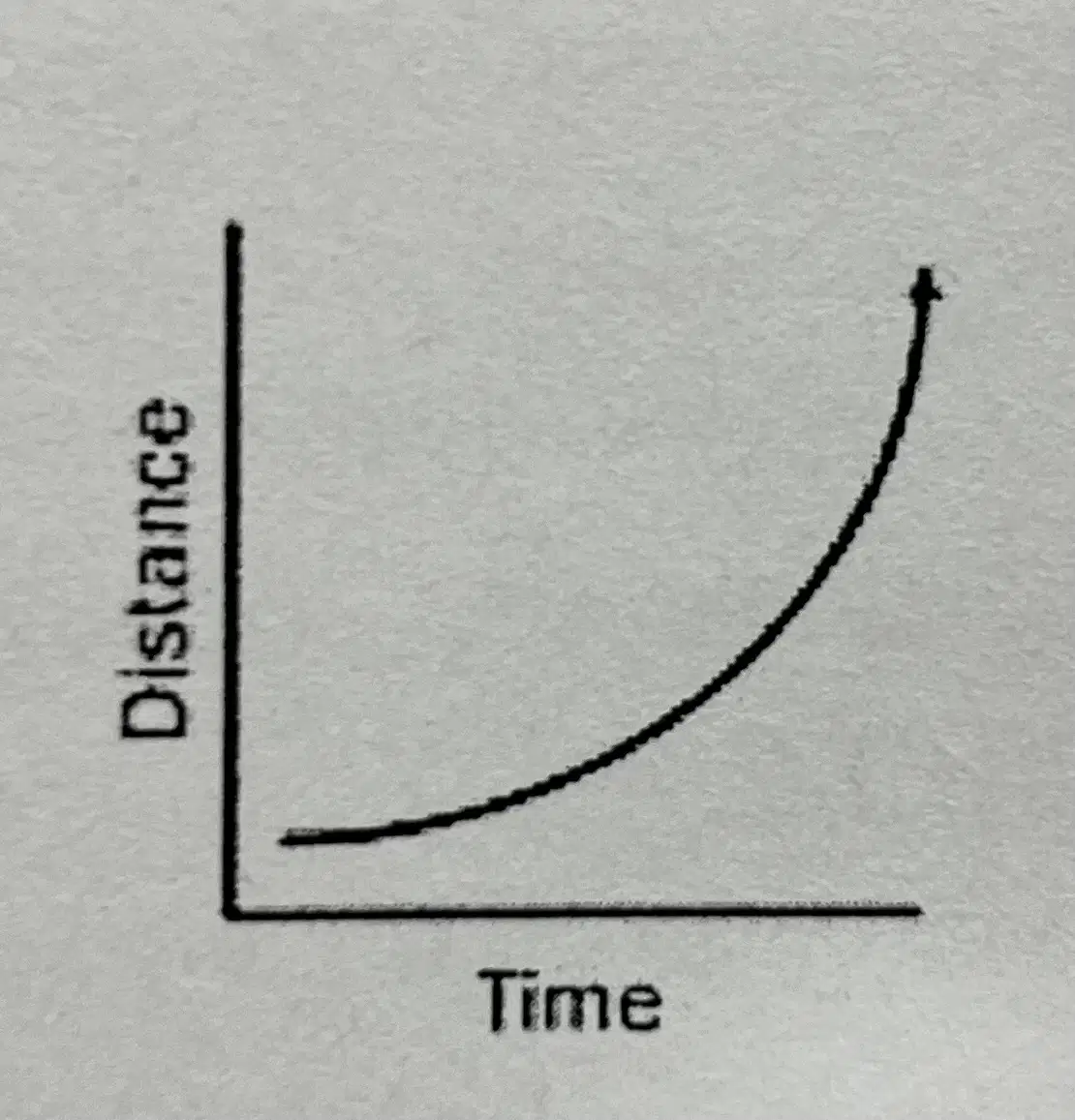
Which graph below shows and object traveling at a constant positive velocity?

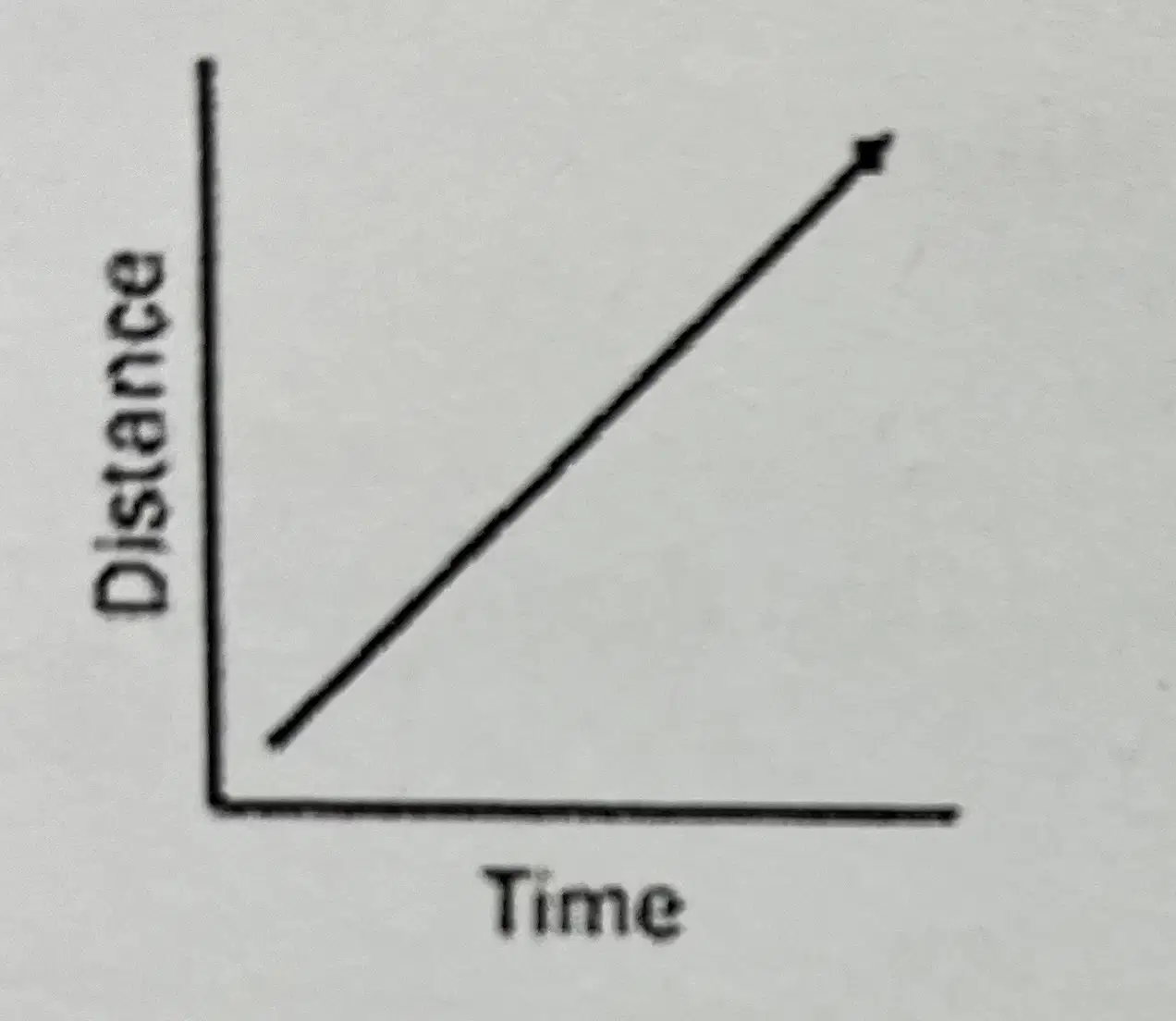
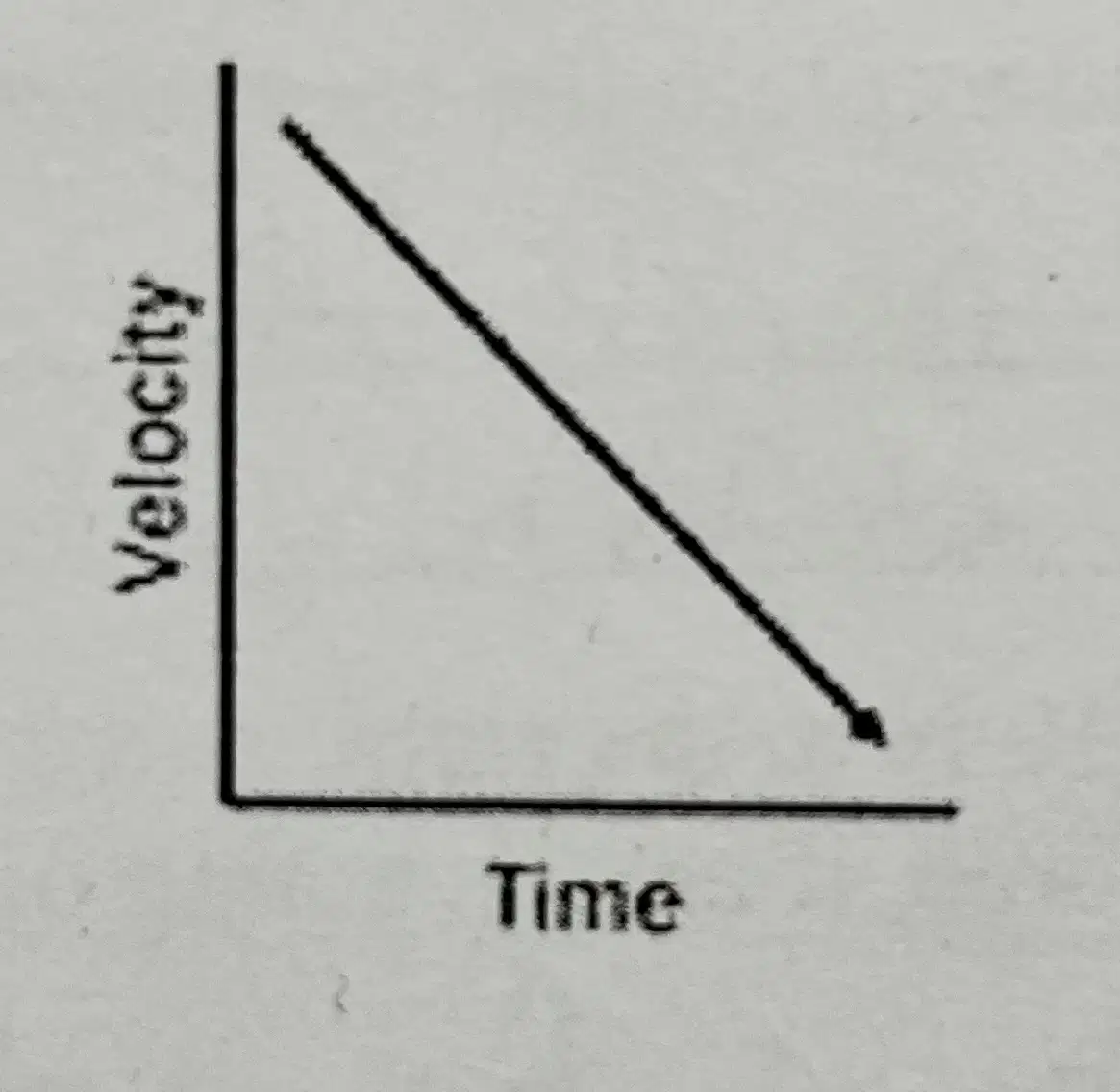
Which graph below shows negative acceleration?

(a) is the tendency of an object to resist any change in its motion.
A(n) (a) is a push of pull that one object exerts on another.
Newton's first law of motion states that an object stays in constant motion unless a(n) (a) force acts on it.
Friction always acts in a direction (a) to the direction of motion.
According to Newton's second law of motion, a larger force acting on an object causes a greater (a) of that object.
When you throw a ball into the air, (a) causes the ball to experience vertical acceleration
If you triple the net force on an object, the acceleration will (a)
Mike has a mass of 60 kg. He pulls on a wagon of mass 30 kg with a force of 20 N. The wagon remains motionless. The wagon exerts a force of (a) on Mike
Action-reaction forces always act on (a) objects.
To keep a sled accelerating downhill, the force of gravity must be greater than the (a) force.
If you double the force of an object, the object's change in speed will also double. Explain how force and acceleration are related.
The are directly proportional.
They are not proportional.
A book and a piece of paper the same size fall at different rates. How can you change the shape of the paper so that it will fall nearly as fast as the book?
You can't.
Fold the paper up to reduce air resistance
Crumple the paper up into a loosely ball to reduce air resistance.
Crumple the paper up in to a tight ball to reduce air resistance.

