
Font size
 Worksheets
Year 9 Physics Revision - Thermal Energy, Light & Sound
Total questions: 235
Worksheet time: 4hrs 38mins
Which picture shows an example of sound energy?


Which picture shows an example of light energy?


Which picture shows an example of thermal energy?


Complete the sentence:
Energy in the form of heat always flows from hot to ______.
warm
cold
hot
mild
how is sound created?
when something vibrates or moves back and forth quickly
when particles zoom around
ups and downs in volume
vibrating particles transmit sound
true
false
sound can be transmitted through the following mediums... (select all that apply)
solid
liquid
gas
potato
a soundwave has two parts...
compressions and rarefactions
ups and downs
left and right
potato

what is this?
spring
soundwave
left to right
potato
a sound wave is a movement of alternating compressions and rarefactions
true
false
sound waves move in towards the object that is producing sound
true
false
a drum produces sound by...
the skin of the drum vibrating
the drum stick hitting the skin
the outside of the drum
potato

Transverse wave is when the vibration is at right angles to the direction of the wave
true
false

what type of wave is this?
longitudinal
transverse
sound
spring
longitudinal wave is when the vibration happens in the same direction as the wave is travelling.
true
false
what determines the speed of sound?
how closely packed the particles are
how far away the sound is
how hot the weather is
potato
in dense substances, sound travels slower
true
false
what is NOT an example of an echo?
a 'coo eee' that is repeated off of cliffs
a thunderclap being heard twice
delay in music at a festival due to poor sound absorption
coughing twice
sound absoprtion reduces the impact of echoes. What is NOT an example of this?
a rug on the floor
curtains
soundproofing pads
metal stool

which image has a higher frequency?
top
bottom
will a bird chirp or a big burp be a higher pitch sound?
chirp
burp
potato
something that has a high frequency has a higher number or waves passing every second.
true
false

wavelength of a sound is the distance between successive peaks. which has the shortest wavelength?
top
bottom
neither
potato
as we age our hearing becomes...
stronger
weaker
superhuman
potato
ultrasound and SONAR work by bouncing sound off of objects to create a virtual image of what is unseen.
true
false

which instrument has the highest frequency?
piano
violin
sinewave
A flashlight gives off what kind of energy?
Sound
Light
Thermal
The drums give what kind of energy?
Thermal
Light
Sound
The sun gives off what energy?
Sound
Thermal only
Light only
Light and thernal
What gives off sound energy? Click all that apply
Tv
Radio
Blanket
clothes
What gives off light energy? Click all that apply
Purse
Lamp
Computer screen
Desk
What gives off heat (Thermal) energy?
clothes
lion
lamp
Fire
Click all the solids
Pillow
sand
milk
salt
Click all the liquids
Juice
Soap
Air
wind
Click all the gasses
Sand
Oxygen
(Air)
Water Vapor
(Steam)
Smoke
What is energy?
Force
Electricity
The ability to do work
The ability to transfer work
What type of energy allows us to hear?
Mechanical
Light
Thermal
Sound

What kind of energy is Fire?
Light
Thermal
Mechanical
Electrical
Betteries produce ______ energy.
Mechanical
Electrical
Light
Sound
Video gaming systems, like Xbox and PlayStation, and TVs need to be plugged into a socket in order for them to work. Which type of energy provides power for these systems?
Light
Sound
Thermal
Electrical
All of these are examples of light energy EXCEPT...
Light bulb
Sun
Mirror
Fire

What type of energy is this?
Mechanical
Electrical
Light
Sound
Mechanical energy is......
molecules that move faster to change the temperature
the energy produced by a machine or moving part.
vibrations that travel in waves
movement of electrically charged particles
Light Energy is...
The energy that travels in waves in a straight line through empty space
Vibrations that travel in waves
the energy that is produced through a moving part
Energy with electrically charged particles
What type of energy does a lamp provide?
Thermal and Mechanical
Thermal and light
ELectrical and Sound
Mechanical and Sound
A fan is an example of what type of energy?
Thermal
Light
Mechanical
Electrical
Listening to music is what kind of energy?
Sound
Electrical
Thermal
Mechanical
A bicycle in motion uses what kind of energy?
Light
Sound
Electrical
Mechanical
Thermal energy is...
molecules that move fast to increase the temperature
Molecules that move slowly to decrease the temperature
Molecules that travel in waves in a straight line
molecules that vibrate and travel in wves
Electrical energy is...
energy produced by a machine or moving part
movement of molecules traveling in waves
movement of electrically charged particles
energy produced by moving faster

This picture is an example of...
mechanical energy
light energy
electrical energy
sound energy
Which type of wave requires a medium to travel through?
Electromagnetic
Mechanical
Matter
Magnetic
An echo is an example of what type of property of waves?
Reflection
Diffraction
Pitch
Resonance
Pitch of a sound wave is the way we perceive...
(a)

This is an example of what type of property of waves?
Reflection
Diffraction
Pitch
Resonance
According to the Doppler Effect, the (a) you are to the source of a sound, the smaller the wavelength and (b) the pitch.
Match the following properties of waves with their example.

Refraction

Reflection

Doppler Effect

Diffraction

Resonance
Where is the crest of the wave?
Label the wave
Identify whether the primary colors
The law of reflection states that the (a) is (b) the (c)

If the (a) ray bends (b) the normal and (c) from the interface of the two mediums, then the refracted ray is traveling (d) .
This demonstrates the wave properties of light
Diffraction Pattern
Interference Pattern
Intensity Pattern
Doppler Pattern
Constructive interference produces (a) waves because each wave is (b)
What is beat frequency?
a steady rhythm
a pulsating sound
the sound of two waves with different frequencies
∣f2−f1∣
(a) waves transport energy through (b) , while EM (c) transport energy via (d)
Noise cancelling headphone use the principle of (a) interference to cancel out noise
Why to hotdogs come in packages of 10 while hotdog buns come in packages of 8?
Describe polarization in 2 or more sentences.
An mariachi band is playing on a float in a parade. When the float is moving away from you, the (a) of the music sounds (b) because of (c)
Driving towards a rock concert, the (a) of it seems (b) due to the (c)
An electromagnetic wave is a (a) of conjoined waves in the (b) field, each (c) to the other and both (d) to the direction of wave motion.
Reorder the following from longest wavelength to shortest
Radio waves
Microwaves
Visible light
X-rays
Gamma Rays
Sound is a:
Particle
Longitudinal Wave
Transverse Wave
Amplitude
In soundwaves, compression occurs when:
The amplitude gets larger
The air particles are pushed into each other
The amplitude gets smaller
The air particles are further apart

When screaming, Tom's voice is louder than Jerry's. The soundwaves of Tom's voice has a:
smaller amplitude than Jerry's
larger amplitude than Jerry's
smaller frequency than Jerry's
larger frequency than Jerry's
Which medium does sound travel the fastest in?
Solids
Liquids
Gases
In soundwaves, pitch is defined/affected by:
Compression
Amplitude
Wavelength
Frequency
Light moves as a:
trough
transverse wave
longitudinal wave
crest
When moving from air to water, a ray of light will:
speed up & bend towards the normal
speed up & bend away from the normal
slow down & bend towards the normal
slow down & bend away from the normal

The bending of light is called:
(a)
Objects that appear green:
absorb green light waves & reflect all other light
reflect green light waves & absorb all other light
bend green light & reflect all other light
reflect green light & bend all other light
Some fighter jets are 'supersonic'. When they fly past you, you will hear the roar of their engine/turbines a few moments after you see them. With reference to sound waves and light waves, explain why this happens.
How does temperature affect the speed of sound?
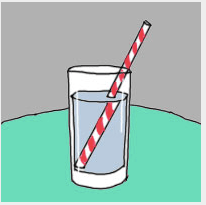
Why does the straw appear to be bent?
light is reflected
light is absorbed
light is turned
light is refracted
Why does the straw appear to be bent?
light is reflected
light is absorbed
light is turned
light is refracted
What do we call a material that light can travel through?
air
water
medium
pathway
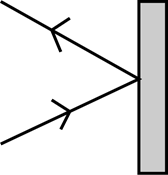
In the illustration, the light ray striking the object is-
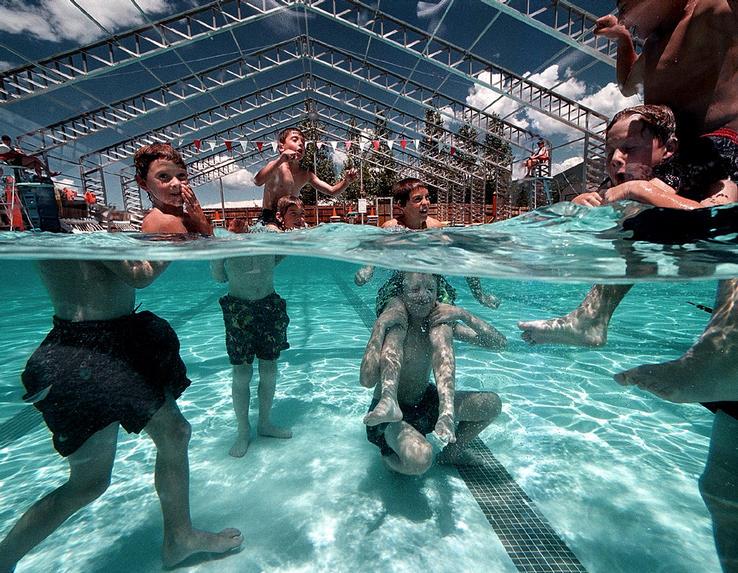
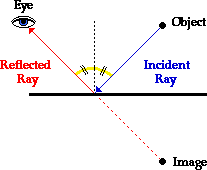
What is the angle of reflection equal to?
The angle of refraction
The angle of incidence
The angle of absorption
The angle of light

What might explain why light travels in a straight line?
If there is nothing to interfere with light waves, they should travel in a straight line.
Light waves will always travel in a straight line, even if they come into contact with another object.
Light waves don't travel in a straight line.
Light waves travel in a straight line because sound waves travel in a straight line.

What is the angle of incidence?
The angle at which light bends in water.
The angle at which light hits a surface.
The angle at which light is absorbed by an object.
The angle at which light bounces off a surface.
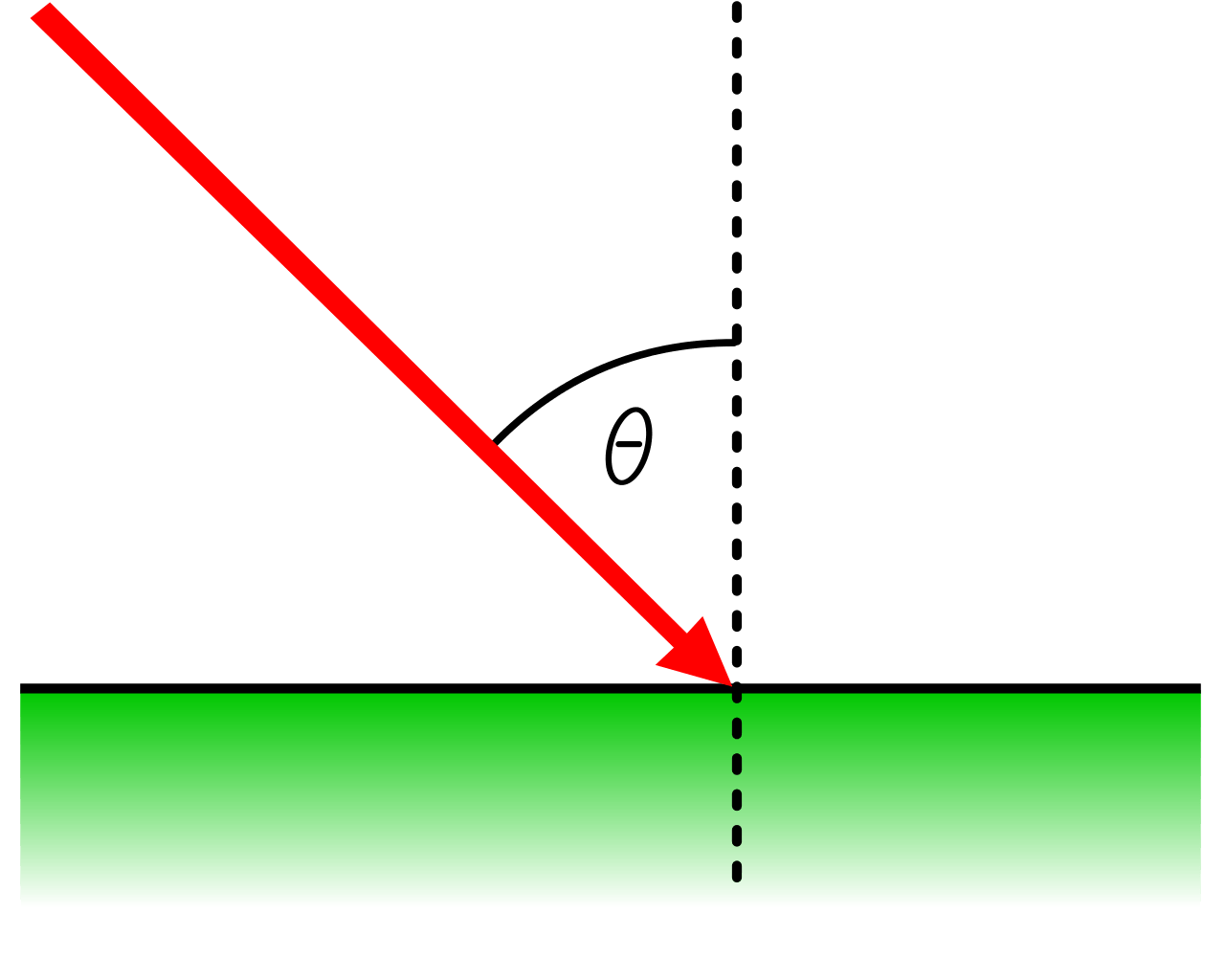


What is the angle of reflection (θr) in the image?
56o
90o
124o
34o
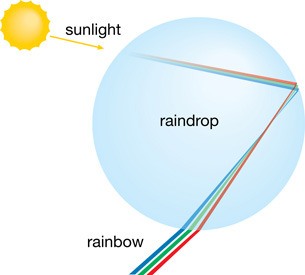
A beam of light bends when it passes from air into water, and more when it passes from water into glass. What can you conclude from this fact?
Air is denser than glass
Water is denser than glass
Glass is denser than water
Air is denser than water
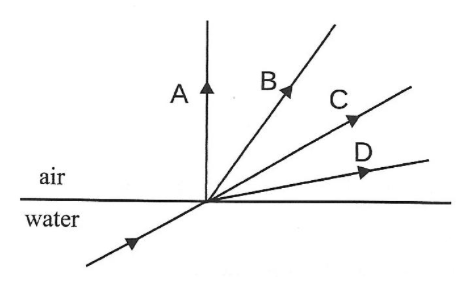
A light ray is incident from water to air. Which of the refracted rays is correct?
A
B
C
D
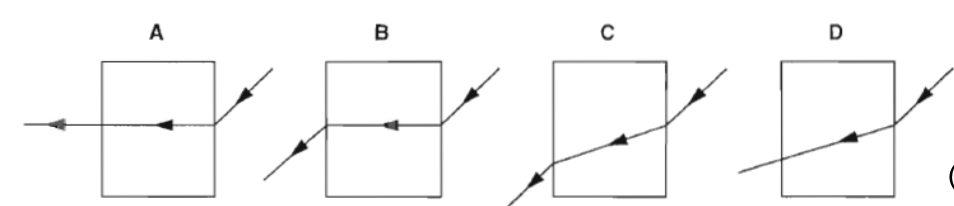
A ray of light travels from air into a glass block.
Which diagram correctly shows the path of the ray through the glass block?
A
B
C
D
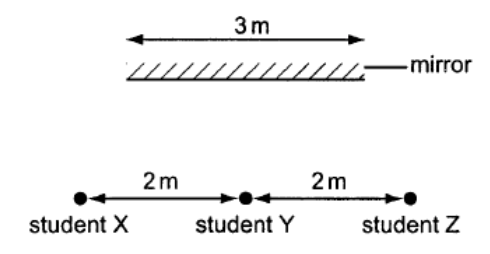
Three students stand 2 m apart in front of a plane mirror which is 3 m long.
Student Y is standing opposite the mid-point of the mirror.
How many students can see the images of the other two?
0
1
2
3
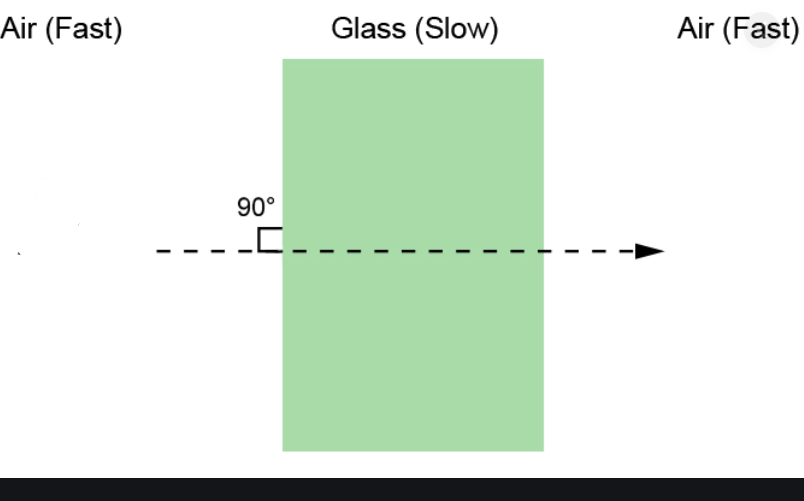
The line 90 degress through the refracting or reflecting surface is called?
Medium
Normal
Incidence
Reflection
Which type of wave requires a medium to travel through?
Electromagnetic
Mechanical
Matter
Magnetic
An echo is an example of what type of property of waves?
Reflection
Diffraction
Pitch
Resonance
Pitch of a sound wave is the way we perceive...
(a)
This is an example of what type of property of waves?
Reflection
Diffraction
Pitch
Resonance
According to the Doppler Effect, the (a) you are to the source of a sound, the smaller the wavelength and (b) the pitch.
Match the following properties of waves with their example.
Refraction
Reflection
Doppler Effect
Diffraction
Resonance
Review:
Which of these affect a sound wave's pitch?
Amplitude
Frequency
Volume
Transverse
Which of these is true for electromagnetic waves?
They are transverse waves.
They need air to travel.
They travel at the speed of light.
They are longitudinal waves.
They do not need a medium.
Which of these EM waves do we normally use to heat up our food?
Visible light
X-rays
Radio waves
Microwaves
Which of these is the EM wave with the highest frequency?
Gamma rays
UV rays
Radio waves
Visible light
Which of these EM waves has the lowest frequency?
Infrared waves
Radio waves
X-rays
UV rays
What is the original source of the most of the energy that people use?
By radiation from the sun.
By convection from the sun.
By radiation from the Earth's core.
Conduction from Earth's core.
Which best explains how this roasting marshmallows happens?
Heat from the fire is conducted into the marshmallow.
Heat from the fire is radiated into the marshmallow.
The coolness of the marshmallow is conducted into the fire.
The coolness of the marshmallow is radiated into the fire.
Which of the following is an example of convection?
Hair dryer is drying up your hair
When a car engine turns hot after being turned on.
A spoon placed in the cup filled with cold coffee.
Boiling spaghetti noodles in water.

What heat transfer happens when you put the pan in the open stove?
Conduction
Convection
Radiation
None

Warm air rises and the cool air sinks demonstrates this type of heat transfer.
Conduction
Convection
Radiation

Heat transfers from an area of ________ temperature to an area of _______ temperature.
high to low
low to high
high to high
low to low
Walking on a warm sand with your bare feet shows this type of heat transfer.
conduction
convection
radiation
Ironing a shirt is an example of:
condensation
evaporation
conduction
convection
Clark accidentally grabbed the handle of the hot pt. This shows ______________.
radiation
conduction
convection

This is the transfer of thermal energy through "space".
conduction
radiation
convection
spaceship


What kind of heat transfer is occurring when the sun warms the sand?
Conduction
Convection
Radiation
All of them

Heat transfer always moves ...
cold to hot
east to west
hot to cold
north to south
Match

radiation

radiation AND conduction

convection
Select all that apply. Which of the following are examples of radiation?

microwave

Sunlight

Fire

touching a piece of hot metal
Select all that apply: Which of these are examples of conduction?

touching hot metal

warming a spoon makes it easier to dip

an egg cooks on hot pavement

sunlight feels warm
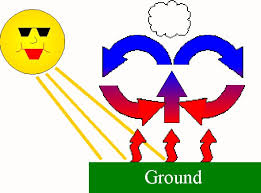
Select 4 answers. Which of the following is an example of Convection?

Convection currents

The energy driving the water cycle

lava lamp ^v

water boiling

hitting hot metal
Match these
Heat transfers through waves/rays
Radiation
Liquid (or air) heats up, speeds up and spreads out, becoming less dense. As it rises, it cools, slows, and comes back together. This increases density, making it sink again.
Convection
Heat transfers from objects that are touching.
Conduction
What is the definition of CONVECTION
When heat transfers through waves.
When heat transfers from objects that are touching.
The transfer of thermal energy in a fluid (liquid/gas) by movement of warm / cool fluids.
Heat traveling from the sun

The transfer of energy through molecules in direct contact is ...
Heat
Conduction
Convection
Radiation


As you touch a hot stove the heat transfers -
from your hand to the stove by conduction.
from the stove to your hand by conduction.
from your hand to the stove by radiation.
from the stove to your hand by radiation.
Which sentence explains why a cold metal spoon placed in a pot of boiling water becomes hot?
Thermal energy is transferred from the spoon to the water by conduction
Thermal energy is transferred from the water to the spoon by conduction.
Thermal energy in the water is transformed into kinetic energy in the spoon by convection.
Thermal energy in the spoon is transformed into kinetic energy in the water by convection.


_________________ are observed in liquids and gases.
convection currents
radiation waves
thermal conductivity
conductors

The movement of thermal energy from a region of (a) temperature to a region of (b) temperature is called heat.

The rubber that makes up the handle on the pan is considered a thermal ___________________ because thermal energy moves poorly through this material.
conductor
insulator
regulator
resistor
Match the scenarios with the correct type of thermal energy transfer.
The attic is warmer than the basement
Convection
The Sun heating the Earth
Radiation
Your feet getting burned by hot sand
Conduction
Match the scenarios with the correct type of thermal energy transfer.
A hot air balloon rises
Convection
A fireplace heating a room
Radiation
Warming your hands with a hand warmer
Conduction
Match the scenarios with the correct type of thermal energy transfer.
Frying an egg on a skillet
Conduction
Reheating pizza in the microwave
Radiation
Thunderstorms
Convection
As thermal energy increases, kinetic energy...
Increases
Decreases
Remains the same
Materials such as metal and wire are good ________________________ because heat can easily transfer through them
Conductors
Insulators
Two objects have different temperatures. Object A has a temperature of 42 degrees and Object B is 37 degrees. Which direction should the energy transfer between Objects A and B?
From Object A to Object B
From Object B to Object A
Energy will not transfer
Energy will transfer both directions
Thermal (a) is the condition where two substances in physical contact with each other exchange no heat energy. They are said to be the same temperature.
Many objects, such as train tracks and road joints, are specifically designed to allow extra space for (a)
Particles move faster and spread farther apart.
Particles move faster and move closer together.
Particles move slower and spread farther apart.
Particles move slower and move closer together.
Alex noticed that a metal door that sticks on hot days, does not stick when it cools off at night. This is because the metal contracts as it cools, causing the atoms to
(a) and (b)
What is the definition of potential energy?
The energy of an object based on its motion.
Stored energy.
Energy can never be created or destroyed, The amount of energy is a system remains constant.

Sitting by a campfire is an example of what kind of thermal transfer___________?
Radiation
Conduction
Convection

The kettles on the stove with the heat turned on and getting hot is an example of what kind of thermal transfer___________?
Radiation
Conduction
Convection

The steam coming out of the hot pot is an example of what kind of thermal transfer___________?
Radiation
Conduction
Convection

When an object heats up, it _______________.
When an object cools down, it ______________.
Hint: What happens to a balloon when you blow warm air into it? What happens when you let the air out?
You may pick more than one.
Expands
Disappears
Contracts
Triples in size
Thermal energy always moves from _______ to _______ energy.
Expands
Disappears
Contracts
Triples in size
What is the original source of the most of the energy that people use?
By radiation from the sun.
By convection from the sun.
By radiation from the Earth's core.
Conduction from Earth's core.
Which best explains how this roasting marshmallows happens?
Heat from the fire is conducted into the marshmallow.
Heat from the fire is radiated into the marshmallow.
The coolness of the marshmallow is conducted into the fire.
The coolness of the marshmallow is radiated into the fire.
Which of the following is an example of convection?
Hair dryer is drying up your hair
When a car engine turns hot after being turned on.
A spoon placed in the cup filled with cold coffee.
Boiling spaghetti noodles in water.
What heat transfer happens when you put the pan in the open stove?
Conduction
Convection
Radiation
None
Warm air rises and the cool air sinks demonstrates this type of heat transfer.
Conduction
Convection
Radiation
Heat transfers from an area of ________ temperature to an area of _______ temperature.
high to low
low to high
high to high
low to low
Walking on a warm sand with your bare feet shows this type of heat transfer.
conduction
convection
radiation
Ironing a shirt is an example of:
condensation
evaporation
conduction
convection
Clark accidentally grabbed the handle of the hot pt. This shows ______________.
radiation
conduction
convection
This is the transfer of thermal energy through "space".
conduction
radiation
convection
spaceship
What kind of heat transfer is occurring when the sun warms the sand?
Conduction
Convection
Radiation
All of them
Heat transfer always moves ...
cold to hot
east to west
hot to cold
north to south
Match
radiation
radiation AND conduction
convection
Select all that apply. Which of the following are examples of radiation?
microwave
Sunlight
Fire
touching a piece of hot metal
Select all that apply: Which of these are examples of conduction?
touching hot metal
warming a spoon makes it easier to dip
an egg cooks on hot pavement
sunlight feels warm
Select 4 answers. Which of the following is an example of Convection?
Convection currents
The energy driving the water cycle
lava lamp ^v
water boiling
hitting hot metal
Match these
Heat transfers through waves/rays
Radiation
Liquid (or air) heats up, speeds up and spreads out, becoming less dense. As it rises, it cools, slows, and comes back together. This increases density, making it sink again.
Convection
Heat transfers from objects that are touching.
Conduction
What is the definition of CONVECTION
When heat transfers through waves.
When heat transfers from objects that are touching.
The transfer of thermal energy in a fluid (liquid/gas) by movement of warm / cool fluids.
Heat traveling from the sun
The visible spectrum is
Colours which make up white light (ROYGBIV)
The amount of refraction that occurs when colour passes through a prism
The splitting up of white light through a prism
Also called a rainbow

This is _______________. The splitting up of white light into the colours of the spectrum
Refraction
ROYGBIV
Visible spectrum
Dispersion

This rainbow formed because
Only the droplets highest in the sky refracted all colours to our eyes
Sunlight was internally reflected from inside the droplets back to your eyes
The visible spectrum was dispersed with the sun in front of the rainbow
Only the droplets lowest in the sky refracted all colours to our eyes
The primary colours of light are
Red, blue, green
Blue, indigo, violet
Red, magenta, green
Magenta, cyan, yellow
The secondary colours of light are
Red, blue, green
Blue, indigo, violet
Red, magenta, green
Magenta, cyan, yellow
When only 2 primary colours overlap, you get a _________________
Visible specturm
Secondary colour
Absorbed colour
Refracted colour

We can see this calculator as white because it contains no pigments and
Reflects all colours
Reflects no colours
Absorbs all colours
Absorbs no colours

These shoes appear black because they contain a mixture of pigments which
Reflects all colours of the spectrum
Reflects no colours of the spectrum
Absorbs all colours of the spectrum
Absorbs no colours of the spectrum
Our eyes ____________ colours we don't want to see and ____________ colours we want to see
Absorb, refract
Absorb, reflect
Reflect, absorb
Refract, absorb

Why does this flower appear magenta to our eyes?
Only red and blue light are absorbed into our eye
Because all colours of the visible spectrum are absorbed
Because that's what colour the flower is
Only red and blue light are reflected into our eye
Which of the following is correct?
Blue + Maroon = Magenta
Green + Blue = Cyan
Red + Blue = Green
Yellow + Cyan = Green

Which colour light is being reflected?
Magenta
Red + Blue
Orange
All colours except for orange

This piggy bank appears as the colour it is because....
Blue and green light is being absorbed into your eyes
Blue and yellow light is being absorbed into your eyes
Blue light is being reflected into your eyes
Blue and green light is being reflected into your eyes

Which colour of light is reflected from this broccoli?
(a)
Review:
Which of these affect a sound wave's pitch?
Amplitude
Frequency
Volume
Transverse
Which of these is true for electromagnetic waves?
They are transverse waves.
They need air to travel.
They travel at the speed of light.
They are longitudinal waves.
They do not need a medium.
Which of these EM waves do we normally use to heat up our food?
Visible light
X-rays
Radio waves
Microwaves
Which of these is the EM wave with the highest frequency?
Gamma rays
UV rays
Radio waves
Visible light
Which of these EM waves has the lowest frequency?
Infrared waves
Radio waves
X-rays
UV rays

Which EM waves have the longest wavelength?
radio
x-rays
ultraviolet
gamma rays
Which EM waves have the shortest wavelength?
radio
x-rays
ultraviolet
gamma rays
Which EM waves are invisible? (more than one correct answer)
radio
visible
ultraviolet
gamma rays
Which EM waves are have a SHORTER wavelength than visible?
radio
none
infrared
x-rays
Which EM waves are have the lowest frequency?
radio
none
infrared
x-rays
Which EM waves are have the highest energy & are the most dangerous?
radio
gamma rays
infrared
x-rays
Which color waves have the lowest frequency?
red
yellow
green
violet
Which color waves have the shortest wavelength?
red
yellow
green
violet
What happens to frequency when wavelength decreases?
stays the same
decreases
increases
There is no relationship between wavelength & frequency.
Which type of electromagnetic wave travels fastest through a vacuum?
radio
gamma rays
visible light
They all travel at the same speed.

The diagram shows a person observing a thunderstorm located several kilometers away. The person hears the thunder several seconds after seeing the lightning. Which statement accurately explains the difference in observations of sound and light by the observer?
Human eyes see light faster than their ears can hear sound.
The medium the waves are traveling through is different for each type of wave.
Light waves travel faster than sound waves.
Sound waves travel faster than light waves.


How fast does light travel?
100,000 km/s
200,000 km/s
300,000 km/s
400,000 km/s
In the illustration, the light ray striking the object is-


The angle of incidence is _________ the angle of reflection


Perspex has a higher refractive index (density) than air. Light entering air from perspex will
slow down slightly and be bent towards the normal
slow down slightly and be bent away from the normal
speed up slightly and be bent towards the normal
speed up slightly and be bent away from the normal
When a pencil is viewed through water, it appears bent because light
slows down as it passes from water to air
is reflected at the surface of the water
is refracted away from the normal as it passes from water to air
is refracted towards the normal as it passes from water to air
What is the meaning of the formation of a REAL image?
you can see the image of an object
the image has the same size as the object
the image can be focused on a screen
the image that is formed by a plain mirror
Comparing microwaves and ultraviolet rays
microwaves have lower frequencies
ultraviolet rays have longer wavelengths
microwaves have more energy than ultraviolet rays
ultraviolet rays are more visible than microwaves
Which of the following colours of light is most strongly refracted?
red
yellow
green
violet

