
 Worksheets
USH STAAR EOC Review Units 1-10
Total questions: 68
Worksheet time: 47mins
How did the completion of the Transcontinental Railroad contribute to the settlement of the West?
By providing people with access to essential goods
By raising money to build factories along the routes
By giving funds to local leaders to build schools
By establishing military forts along the routes
What benefit resulted from the introduction of the Bessemer steel process?
Mechanical reapers to replace horse drawn reapers
Stronger and cheaper material for railroads and bridges
Transistors for radios
The electric lightbulb

Which voting practice requirement was specifically targeted by this act?
Providing proof of employment
Proving property ownership
Passing literacy tests
Taking religious test
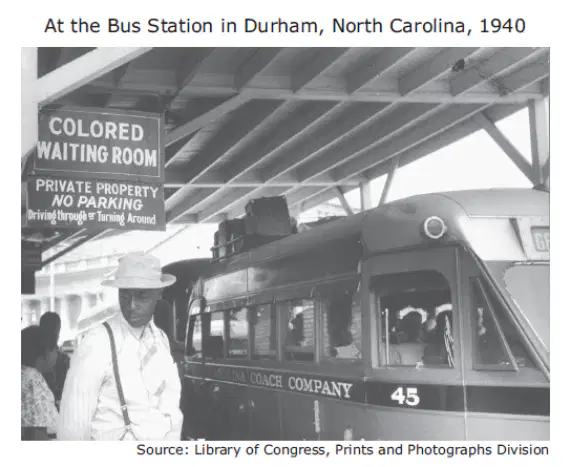
Study the photograph and answer the question.
What did the federal government do to address the social injustice shown in this photograph?
Enforced the Wisconsin v Yoder decision protecting First Amendment rights
Established the Congress of Racial Equality (CORE) to promote voting rights
Passed civil rights legislation banning segregation in public places
Issued an executive order prohibiting limits on interstate migration

How did the Voting Rights Act of 1965 contribute to the changes shown in the table?
It helped reduce voter discrimination at polling sites
It increased state revenues associated with poll taxes
It contributed to increased involvement of lobbyists in political campaigns
It helped voters determine educational policy based on literacy test results
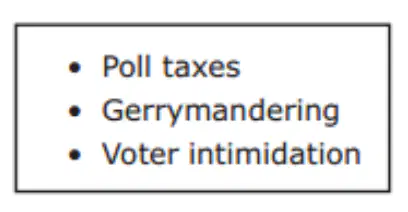
The passage of legislation to end these practices resulted in-
an increase in political participation by minorities
the adoption of electronic ballots in federal elections
a reduced number of congressional districts
the implementation of limits on lobbying

Study the illustration and answer the question that follows.
Which event led to the action shown in the illustration?
The revival of nativist policies
The ratification of the Fifteenth Amendment
The Supreme Court ruling in Plessy v Ferguson
The rise of Social Darwinism
During Reconstruction the Thirteen, Fourteenth, and Fifteenth Amendments were ratified. Which issue did these amendments address? (a)
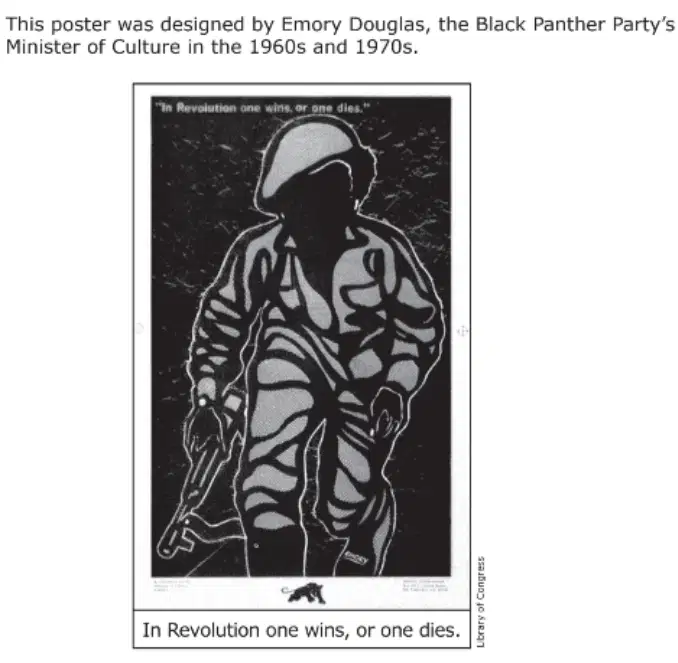
Based on the image, how did the Black Panther Party differ from Martin Luther King, Jr. and his followers?
The Black Panther Party focused attention only on issues in Southern states
The Black Panther Party believed in achieving equal voting rights for all
The Black Panther Party advocated both peaceful and militant actions to achieve its goals
The Black Panther Party worked willingly with government officials
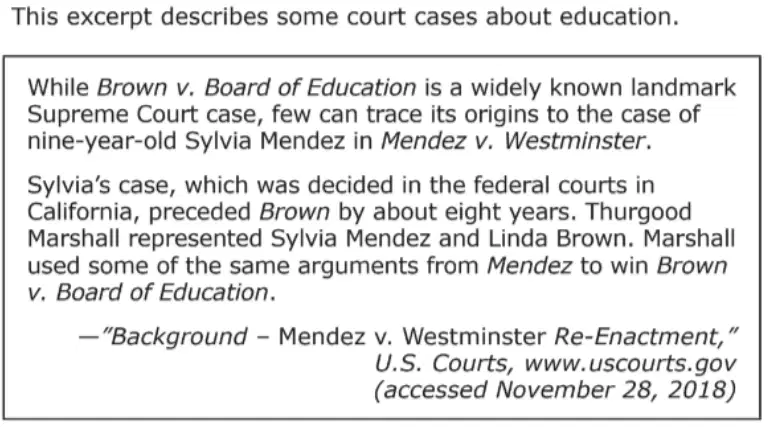
Why are the court cases described in this excerpt important to education in the United States?
The cases reduced racial segregation in schools
The cases established the use of quotas in school admissions
The cases ordered schools to provide accommodations for students with disabilities
The cases reduced inequities in school district financing

The list presents the work of a civil rights advocate.
Which accomplishment correctly completes the list?
(a)

Which factor contributed MOST to these changes?
The rising costs of national defense
Threats posed by immigrant radicals
Abuses of the spoils system by political machines
The inefficiency of large corporations
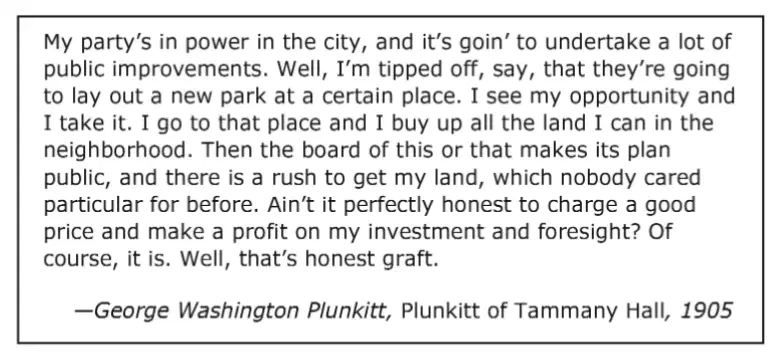
Which action is best described by this excerpt?
Elected leaders helped immigrants to assimilate to life in the United States
Political machines justified corruption while providing benefits to communities
Progressive leaders protested eminent domain laws in the United States
Muckrakers tried to uncover government scandals in urban communities
The primary objective of the Dawes Act was to -
promote cultural assimilation of American Indians
turn American Indian reservations into corporate farmland
end warfare between American Indians and the U.S. military
promote American Indian investment in private industry

Study the diagram and answer the question that follows.
Which trend of the late 1800s correctly replaces the question mark in the cause-and-effect diagram? (a)
How did Andrew Carnegie contribute to civil and social life in the United States?
By promoting spiritual and moral values in public schools
By supporting conservative ideals in federal legislation and foreign policy
By establishing philanthropic organizations dedicated to education and the arts
By creating a charitable foundation to end hunger
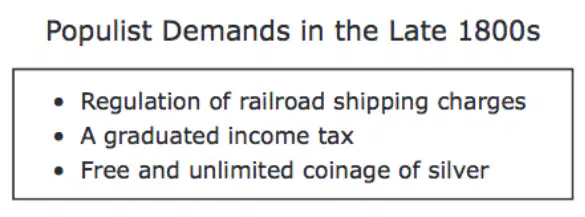
These demands most reflected the concerns of -
small farmers in need of affordable credit
robber barons pursuing higher profits
prominent bankers who controlled the money supply
immigrant workers seeking economic justice
Andrew Carnegie
Steel
John D. Rockefeller
Oil
J.P. Morgan
Banking
Cornelius Vanderbilt
Railroads
George Pullman
Rail Cars & Company Towns
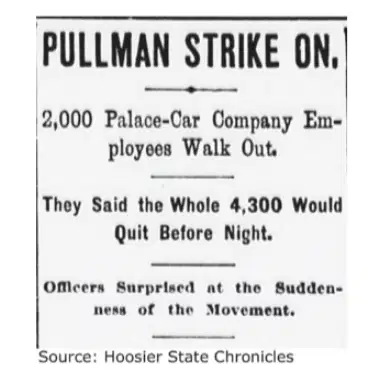
This newspaper headline describe an event that occurred in 1894.
What was one effect of the event described in the headline?
Increased support for gender equality in labor union membership
Decreased support for socialism in labor union members
Increased federal government involvement in labor union activities
Decreased federal government surveillance of labor union leaders

Which statement best completes this list?
Congress passed legislation imposing tariffs on imported beef.
Most of the cowboys' on cattle drives were European immigrants
The cattle industry was nationalized under the Department of Agriculture
The need to process large amounts of cattle made meatpacking a major industry
The demographic structure of the United States changed in the late nineteenth century with the arrival of -
immigrants from southern and easter Europe seeking industrial jobs
political refugees coming to the United States from the former Spanish colonies
migrants from Mexico seeking agricultural jobs during a worldwide depression
German immigrants fleeing Europe prior to the outbreak of the First World War
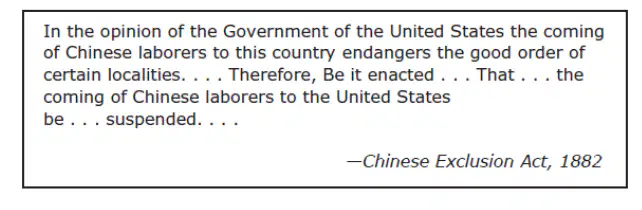
Read the excerpt and answer the question.
Which factor prompted the passage of this legislation?
Denial of labor union membership for unskilled workers
Increased nativism and anti-immigrant attitudes
Wage increases for workers in manufacturing positions
Increased U.S. involvement in foreign wars and conflicts
Mark the states where the Dust Bowl impacted and where people in those areas may have migrated to.

Match the following New Deal programs:
Federal Emergancy Relief Administration
Program that funded all states for citizen necessities
Agricultural Adjustment Administration
Program that funded and educated farmers
Civilian Conservation Corps
Program that hired young men for various community projects
Works Progress Administration
Program that funded public infastructure projects
Social Security Act
Program that created retirement pensions
What was one factor that helped turn the Great Plains into the Dust Bowl in the 1930s?
Paying farmers to plant native grasses
Increased demand for tobacco after WWI
Numerous tornadoes occurring in the region
Intense drought in the region
Reasons for the Great Depression
-Collapse of the Stock Market
-Loss of consumer confidence
(a)
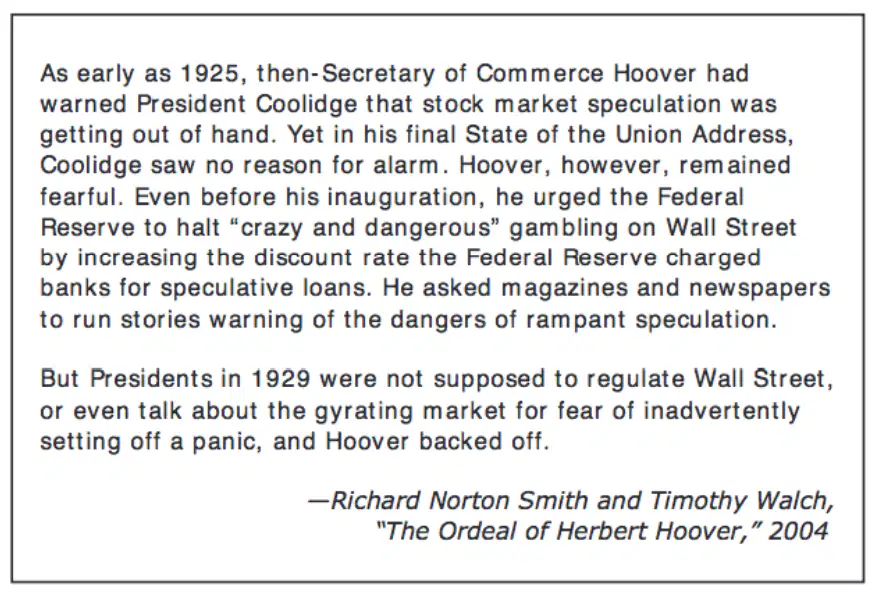
The economic conditions described in this excerpt contributed to -
a global economic depression
an increase in foreign investments in the U.S. market
the adoption of the gold standard
an increase in free market activity
How did the Great Depression affect American society?
The price of agricultural goods decreased, causing an increased in demand for farm labor
Manufacturing wages increased, causing businesses to concede to labor union demands
Demand for luxury goods increased, causing overproduction in manufacturing
Businesses were forced to close, causing widespread unemployment
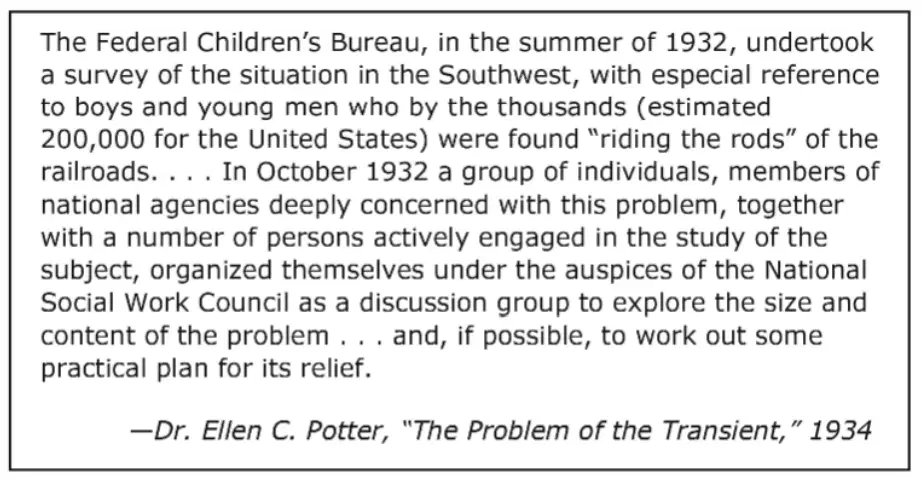
Which situation contributed to the problem described in this excerpt?
Migration caused by racial discrimination during World War I
Homelessness caused by unemployment during the Great Depression
Strict bank regulations made by the federal government during the New Deal
Rate increases imposed by the railroad industry during the Gilded Age
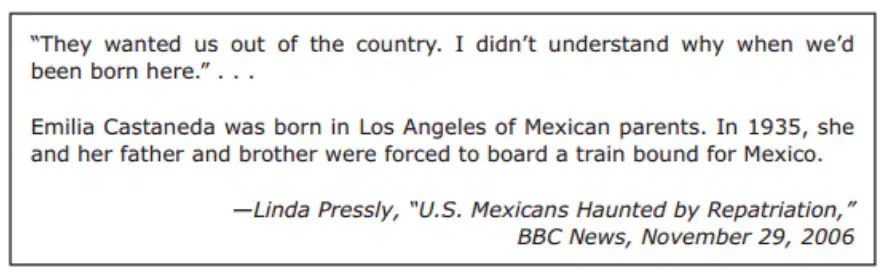
This excerpt describes an instance of deportation during the 1930s as part of a repatriation effort. Why did the federal government implement repatriation?
To fulfill the terms of a global peace treaty
To protect national security
To reduce competition for jobs
To prevent communist influence on labor unions
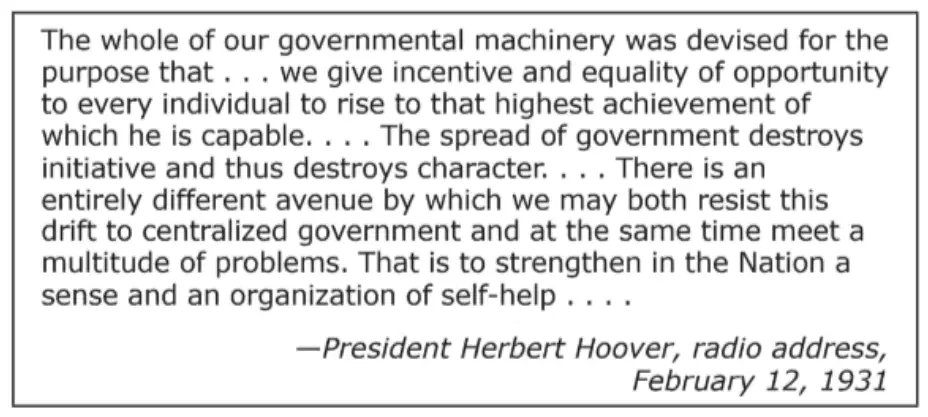
Read the excerpt and answer the question.
How did this response to the Great Depression differ from the ideas of Franklin D. Roosevelt?
Hoover wanted to implement social welfare programs to provide for the poor
Roosevelt wanted private charities to take responsibility for relief efforts
Hoover wanted to limit the role of the federal government in managing the crisis
Roosevelt wanted state governments to regulate private business activity
Some of President Franklin D. Roosevelt's New Deal programs were declared unconstitutional when the Supreme Court held that they -
required U.S. cooperation with foreign nations
prevented equal access to the judicial system
granted privileges to religious organization
infringed on the powers reserved to the states
How does the Federal Deposit Insurance Corporation (FDIC) continue to affect U.S. citizens?
By regulating loans made to investors who buy stocks on the margin
By changing interest rates to prevent people from paying higher prices for goods
By providing financial assistance to elderly people who are retired
By protecting the savings of bank customers during an economic crisis
Why did the Spanish-American War move the United States into the position of a world power?
The United States acquired Spanish territories in the Caribbean and the Pacific
The United States proved its nuclear capabilities against Spain in Southeast Asia
The United States stopped the spread of communism in Spain
The United States ended Spanish trade in the Eastern hemisphere
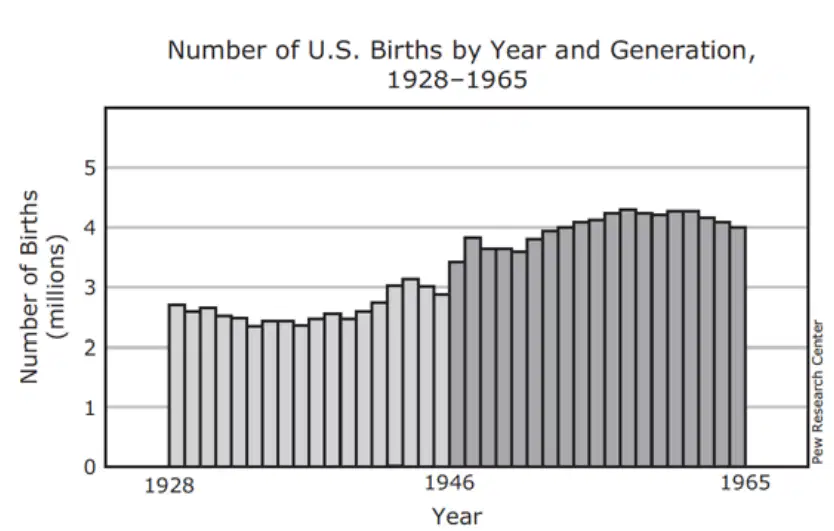
Which occurrence was a result of the shirt in the number of births that began in 1946?
The decline of family farming
The spread of new diseases
The growth of suburbs
The reduction of defense spending
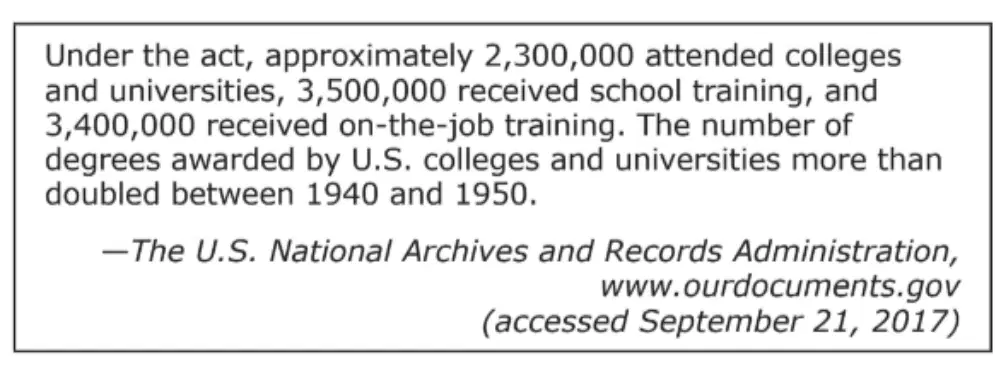
Read the excerpt and answer the question.
Which government action directly contributed to these changes?
Passage of the Federal Reserve Act
Passage of the National Security Act of 1947
Passage of the Servicemen's Readjustment Act of 1944
Passage of the Central Intelligence Agency Act
What prompted the House Un-American Activities Committee (HUAC) to target the "Hollywood Ten"?
Support for American isolationism in the years leading up to World War II
Increased political pressure from racial groups regarding civil rights legislation
Growing anxiety related to the economic effects of the Great Depression
Fear of communist infiltration within the American entertainment industry
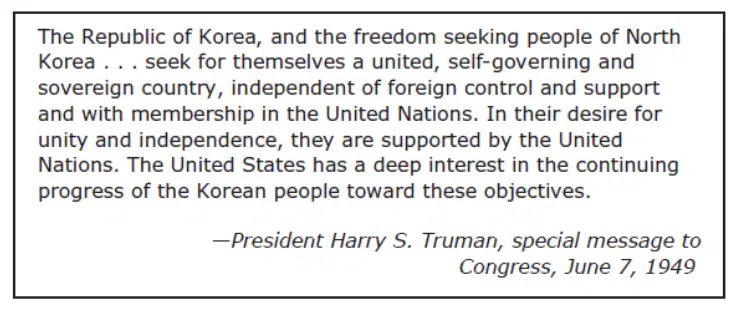
Read the excerpt and answer the question that follows.
What was the PRIMARY goal of the foreign policy described in this excerpt?
To increase U.S. colonization of Asia
To prevent the spread of communist influence in Asia
To end trade sanctions against Asian countries
To protect U.S. soldiers stationed in Asian countries
NATO was created in response to concerns about -
the Soviet Union and communism
Italy and Nazism
Germany and fascism
Japan and militarism
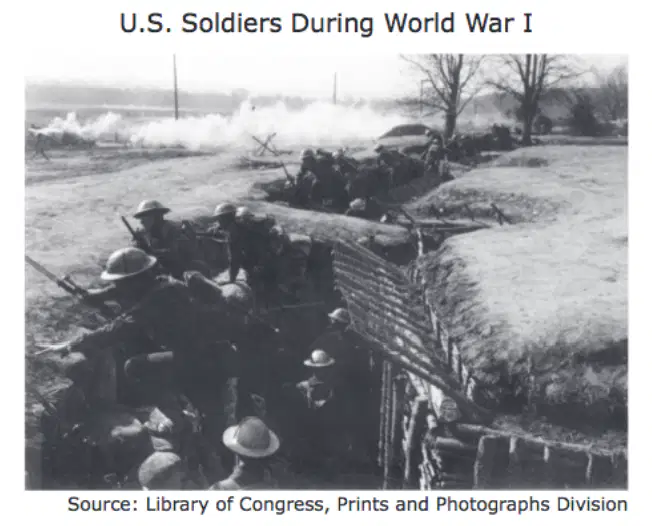
This photograph shows a military tactic that -
made troops more vulnerable to long-range missiles, resulting in heavy casualties
required highly skilled soldier, resulting in lengthy training periods
made frontal assaults difficult, resulting in long periods of stalemate
required the ability to attack quickly, resulting in a reliance on cavalry forces
Why did the U.S. senate refuse to ratify the Treaty of Versailles after World War I?
The Senate would not support America's participation in the League of Nations
The Senate believed the treaty did not punish Germany enough
The Senate thought the treaty did not have the power to prevent secret alliances
The Senate could not agree on military disarmament levels
What BEST completes this list?
President Woodrow Wilson's Reasons for Entering World War I
-Assert American rights to "freedom of the seas"
-Stop German plans to aid Mexico
(a)
Which territory did the United States gain by winning the Spanish American War?
How did the Roosevelt Corollary to the Monroe Doctrine affect the role of the United States in the world?
By establishing military alliances with Asian nations
By proclaiming a policy of isolationism
By creating a plan to stop the spread of communism
By announcing a willingness to intervene in the affairs of Western Hemisphere nations

After a blockade from the Soviet Union the United States flew supplies over West Berlin, this was known as the (a) that lasted nearly a year.
Why is the United Nations provided as part of a presentation on the Cold War?
The Soviet Union and the United States set aside their differences at the UN.
It became an arena of competition between the U.S. and the Soviet Union.
The United States and the Soviet Union would both try to direct United Nations policy
The United Nations would prevent the United States and Soviet Union from getting involved in surrogate wars

Which of the following is the effect of these two events?
Women play a new role in society by entering the workforce
The Civil Rights movement emerges
Fear of communism spreading increases
Suburbs are developed outside of large cities

This speech delivered by Senator Joseph McCarthy contributed to -
funding for the NASA space program to beat the Soviets to the moon
growing fear that Communists were secretly taking over the U.S. government
the resignation of President Truman
Americans supporting the war in Korea

Which of the following contributed to this headline?
The American government investing in aerospace technology
Jonas Salk researching viruses and developing vaccines
Americans traveling less due to the global unrest created by the Cold War
The World Health Organization encouraging people to wash their hands before eating

This speech was delivered in Houston, Texas in 1962. President Kennedy’s statements are about -
the Cold War
the Arms Race
the Space Race
the Truman Doctrine
What happened that ended the fighting in the Korean War? Select all the right answers.
North Korea surrendered.
Both sides agreed to an armistice to stop fighting.
A demilitarised zone was created alone the 38th parallel, which is the current border.
A peace treaty was signed to end the war.
N. Korea invades S. Korea
MacArthur invades at Inchon
MacArthur pushes N. Korea to the Chinese border
With the help of China, N. Korea pushes MacArthur back away from the Border
The war stalls out at the 38th parallel; DMZ established

Study the photograph and answer the question that follows.
What was one of President Nixon's goals for the meeting shown in this photograph?
To negotiate the withdrawal of U.S. and Chinese soldiers from Korea
To create a military alliance with China against the Soviet Union
To create an agreement limiting Chinese and Soviet development of nuclear weapons
To normalize relations between the United States and China
The policy objectives of Reaganomics were based on the theory that -
borrowing from foreign countries would help cover the costs of domestic programs
significant increases in government spending would help reduce unemployment
broad tax cuts and financial deregulation would promote economic expansion
reducing trade barriers would result in budget surplus
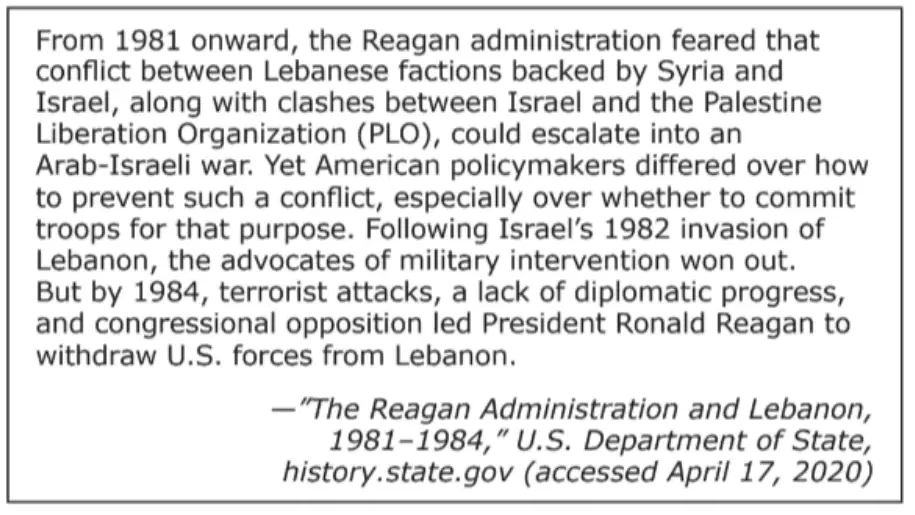
This excerpt is about the U.S. policy in Lebanon. Based on the excerpt, why were U.S. forces initially sent to Lebanon?
To regain control of vital oil fields
To provide military support to Syria
To provide military assistance to Israel
To help maintain peace between warring groups
Why was President Ronald Reagan criticized for the Iran-Contra Affair?
His administration supported a revolution against an elected leader in Iran
His policies involved the sharing of nuclear technology with Iran
His policies threatened petroleum trade agreements with Iran
His administration violated an embargo by selling weapons to Iran

These demonstrations led to —
a global energy crisis brought on by an OPEC oil embargo
the bombing of a Marine barracks, followed by retaliatory U.S. air strikes
a U.S. boycott of the Olympics in protest of events in Central Asia
a hostage crisis that severely damaged confidence in the Carter administration

How did President Jimmy Carter attempt to end hostilities between the groups that fought these wars?
He helped negotiate a peace treaty n
known as Camp David Accords
He deployed US troops to defeat the PLO
ordered a boycott of the 1980 Olympics
threatened to sever diplomatic ties with syria

Which action did the federal government take to recognize these soldiers?
Passing the GI Bill to give them educational benefits
Awarding them the Congressional Medal of Honor for actions above the call of duty
Providing them with monetary bonuses for demonstrating courage under fire
Awarding them battlefield promotions from enlisted to officer
What was the purpose of Jane Addam's settlement house movement?
women's suffrage
prohibition of alcohol
gain equality for African Americans
assimilate immigrants

What was the primary reason for the raids described in this excerpt?
To prevent workers from joining labor organizations
To block civil rights advocates from staging public protests
To suppress the teaching of evolution in colleges
To halt the spread of communist ideals by radicals
Marshall Plan
proposed that the US provide economic assistance to restore the economic system of postwar Europe
Truman Doctrine
principle that the US should give support to countries or peoples threatened by Communist
United Nations
avoid diplomatic failures that lead to conflict and wars

How did President Kennedy respond to the news that the Soviets had placed nuclear weapon installations in Cuba?
Asking the United Nations to approve economic sanctions for Cuba
Blockading ships from entering or exiting Cuba
Closing the US border
Asking Congress to declare war on Cuba

Plan to replace US troops with Vietnamese troops to end US involvement in Vietnam
Vietnamization
Gulf of Tonkin Resolution
Maddox Resolution
Agent Orange

The decision announced in this speech was based primarily on the -
assassination of Martin Luther King Jr.
growing violence in urban America
outbreak of terrorist attacks around the world
involvement of the United States in the Vietnam War

Put the events of World War II in chronological order
Germany invades Poland
Japan attacks Pearl Harbor
Japanese Americans forcibly interned
Allies invade Europe on D-Day
United States drops atomic bombs on Japan
Commander-in-Chief of the US Pacific Fleet
Admiral Chester Nimitz
US Army Commander in the Pacific
General Douglas MacArthur
US President at the end of WWII. Decides to drop atomic bombs
Harry Truman
Allied Troop Commander that led D-Day invasion
General Dwight Eisenhower
First Army Lieutenant. One of the 1st African American soldier to see combat. Recieved Congressional Medal of Honor 52 years later
Vernon Baker

