
Font size
 Worksheets
Unit 3 Reviewer
Total questions: 50
Worksheet time: 20mins
Which statement was NOT included in cell theory?
All living things are composed of cells.
Living cells come only from other living cells.
Each cell contains a cell membrane, cytoplasm, nucleus, mitochondria, and endoplasmic reticulum.
Cells are the smallest structure of living things that can perform the functions necessary for life.
Which instrument is credited for helping scientists develop cell theory?


This early cell theory scientist looked in a microscope and discovered "animalcules" in the gunk from his teeth and pond water.
Schleiden
Leeuwenhoek
Hooke
Schwann
Who discovered and named cells while looking at cork?
Robert Hooke
Matthais Schleiden
Rudolf Virchow
What was Schleiden convinced of?
All plants are made of cells
All animals are made of cells
All cells are prokaryotic
Who noted that all animals are made of cells and helped write the first two parts of cell theory?
Rudolf Virchow
Anton van Leeuwenhoek
Theodor Schwann
Robert Hooke
Who discovered that all cells come from other living cells and had research that lead to the last major principle of cell theory?
Matthias Schleiden
Theodore Schwann
Robert Hooke
Rudolf Virchow
What is the basic structural and functional unit of all living things?
atom
cell
bacteria
animalcules
Thick, clear, gel-like fluid that fills the region between the cell membrane and the nucleus
Mitochondria
Cytoplasm
Chloroplast
Nucleus

The organelle that is the control center of the cell and contains nearly all of the cell’s DNA:
Ribosome
Centriole
Nucleus
Rough Endoplasmic Reticulum

The organelle that assembles proteins in the cytoplasm:
Ribosome
Nucleus
Mitochondrion
Rough Endoplasmic Reticulum

The organelle which forms a maze of passageways in which proteins and other materials are carried from one part of the cell to another.
Endoplasmic Reticulum
Golgi Apparatus
Vacuoles & vesicles
Nucleus

The organelle that modifies, sorts, and packages proteins and other materials from the ER for storage in the cell or release from the cell:
Endoplasmic Reticulum
Golgi Apparatus
Vacuoles and Vesicles
Ribosome

The organelles that store materials like water, salts, proteins, and carbohydrates, and the other one that stores and moves materials between cell organelles, as well as to and from the cell surface:
Cytoskeleton
Lysosomes
Chloroplast
Vacuoles and Vesicles

It contains digestives enzymes which breaks down waste or worn-out cell parts.
Lysosome
Cytoskeleton
Golgi Apparatus
Chloroplast

The organelle that captures the energy from sunlight and converts it into chemical energy stored in food during photosynthesis:
Chloroplast
Mitochondrion
Cell Wall
Nucleus

The organelle that converts the chemical energy stored in food molecules into compounds that are more convenient for the cell to use:
Cell Wall
Cell Membrane
Mitochondrion
Centrioles

The organelle that acts as a strong supportive wall that shapes and protects the cell:
Cell Membrane
Cell Wall
Cytoskeleton
Centrioles

The organelle that regulates materials entering and leaving the cell, as well as supporting and protecting it:
Cell Wall
Cell Membrane
Centrioles
Cytoskeleton

The organelle that organizes cell division:
Nucleus
Centrioles
Cytoskeleton
Ribosome
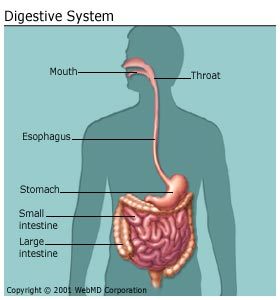
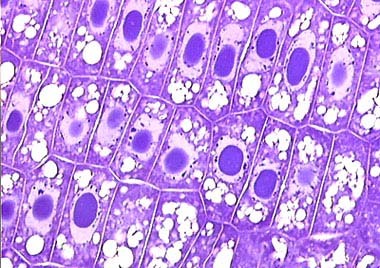
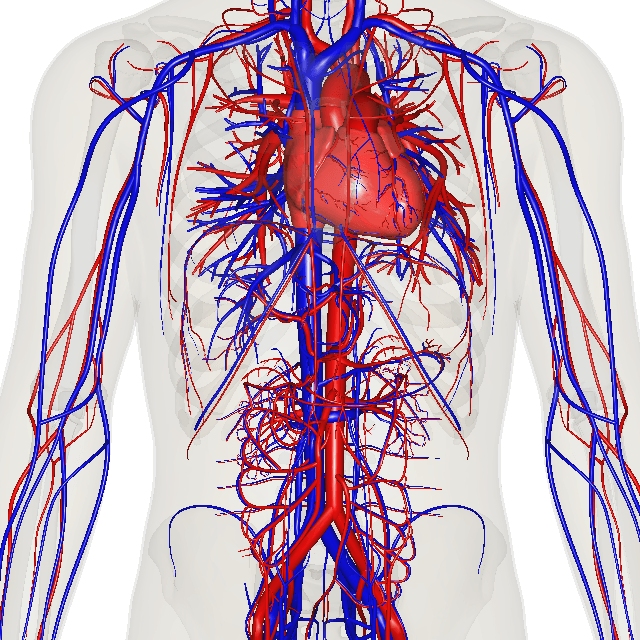
Which diagram represents the most complex level of organization?


Which statement best explains the relationship between structure and function in an organism?
Structure and function refer to the different tissue types within an organism.
Structure and function refer to the jobs of tissues, organs, and organ systems.
Structure and function refer to the locations of tissues, organs, and organ systems.
Structure and function refer to the locations and jobs of different tissues, organs, and organ systems working together.
The root and shoot systems together in plants form which level of organization?
cells
tissue
organ system
organism
What happens in interphase (choose 2)
Cell grows and developes
DNA lines up in middle
DNA pulls apart
DNA replicates
What happens in Prophase (choose 3)
DNA condenses (packs up)
Spindle fibers appear
Daughter cells separate
DNA lines up in middle
Nuclear envelope (membrane) dissolves
What happens in metaphase? (choose 1)
DNA splits apart
Cell divides
DNA lines up in middle
New nuclei form
What happens in anaphase? (choose 1)
DNA replicates
Chromatids pull apart to opposite sides
DNA lines up in middle
Cell divides
What happens in telophase? (choose 2)
Two new nuclei form
Daughter cells separate into two cells
DNA pulls apart to opposite sides
cytoplasm begins to pinch apart
What happens in cytokinesis? (choose 1)
Daughter cells separate completely as cytoplasm is split into two
Nuclear envelope dissolves
DNA separates apart to opposite sides of the cell
DNA replicates
The end result of mitosis is
4 Identical Cells are produced
4 genetically different cells are produced
2 identical cells are produced
2 genetically different cells are produced
The end result of meiosis is...
4 identical cells
4 genetically different cells
2 identical cells
2 genetically different cells
How many chromosomes do the daughter cells have in mitosis?
23
46
2
4
How many chromosomes do the daughter cells have in meiosis?
23
46
2
4
If an organism reproduces asexually, its offspring will most likely be...
genetically identical to the parent
genetically different from each other
produced from specialized cells known as gametes
A mutant
What is the correct order for the phases of mitosis?
Prophase, Anaphase, Telophase, Metaphase
Anaphase, Telophase, Prophase, Metaphase
Telophase, Anaphase, Prophase, Metaphase
Prophase,
Metaphase, Anaphase, Telophase
Which phase does the cell grow and develop?
Prophase
Interphase
Cytokinesis
Metaphase
Timmy fell off his skateboard and scraped his knee. Which cell process is going to be used to heal the wound?
Mitosis
Meiosis
The wound would not heal
Cell diffusion

