
 Worksheets
Y9 Heating and Cooling
Total questions: 17
Worksheet time: 12mins
The (a) variable is the one that you change
The dependent variable is the one that you (a)
The (a) variable is the one that you keep the same

Which of the following describes correctly the particles of solid?


None of the above
The faster the particles of a substance move, the ____the substance is
Colder
Hotter
Solid
Cooler
Heat is a form of
Substance
Energy
Strength
Efficiency
What happens to particles when they are heated?
They speed up and spread out
They slow down and compress
They stop moving
They move closer together
If you leave a cup of hot tea in the kitchen for a whole day what will happen to its temperature?
It will stay the same
It will get only a little bit cooler
It will be the same temperature as the air in the kitchen
It will be colder than the air in the kitchen
Match these heat transfers

Conduction

Convection

Radiation
Select all that apply: Which of these are examples of conduction?


warming a spoon makes it easier to dip

steak on a hot pan

sunlight feels warm
Match these
Heat transfers through waves/rays
Radiation
Liquid (or air) heats up, speeds up and spreads out, becoming less dense. As it rises, it cools, slows, and comes back together. This increases density, making it sink again.
Convection
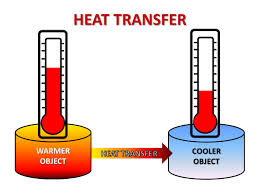
Heat transfers from objects that are touching.
Conduction

