
 Worksheets
Viruses and Dicotimous key
Total questions: 25
Worksheet time: 25mins
What domain do Eubacteria belong to?
Animilia
Archaya
Eukarya
Bacteria


Which of these statements is true?
A virus is unicellular, it has only one cell.
A virus may sometimes be multicellular, have many cells.
A virus has no cells
Which of the following is a risk of improperly using antibiotics to treat infections?
Bacteria may become resistant to antibiotics.
Antibiotics increase the rate of infection.
Antibiotics cause other diseases to develop.
Antibiotics only work once.

What Domain does the kingdom Animalia belong to?
Archaea
Eukarya
Bacteria
What domain does the kingdom Protista belong to?
Eukarya
Archaea
Eukarya
What domain does Archabacteria belong to?
Bacteria
Eukarya
Archaea
True or False: Kingdom Plantae belongs to the domain Bacteria
True
False
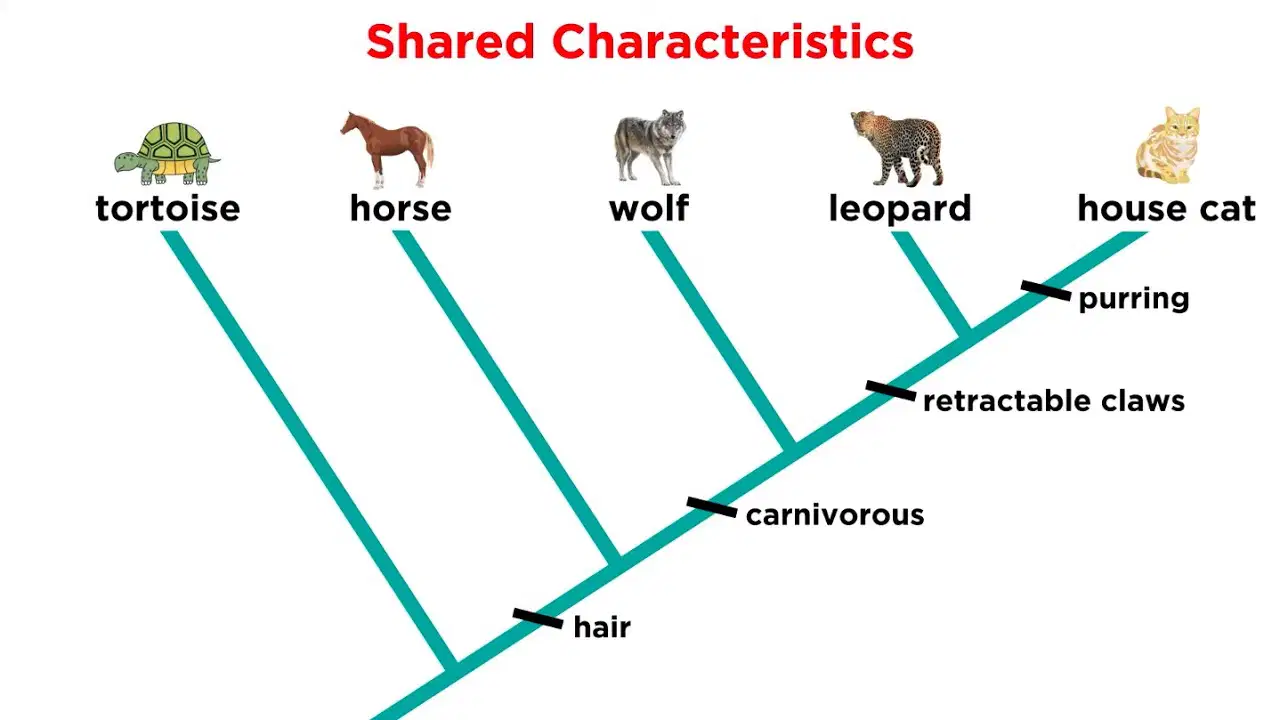
What is this image called?
Graph
Cladiscope
Cladogram
Amniotic Egg
True or False: DKPCOFGS means Domain, Kingdom, Phylum, Class, Order, Family, Genus, Species
False
True
What does Autotropic mean
Gets it from others
Does it yourself
Sun makes the food
All viruses are different, but what are two parts that a virus must have?
Genetic Information (DNA or RNA)
a lipid membrane
a nucleus
a protein coat
Bacteria are important to the environment because that break down waste materials. They are called _.
Decomposers
Heterotrophs
Autotrophs
Bacteria come in which of the following shapes?
rod, cone, spiral
rod, sphere, spiral
rod, sphere, cone
The common cold is caused by a
Bacteria
Virus

Cell membranes of living organisms are made of a bilayer (2 layers) of
lipids
proteins
carbohydrates
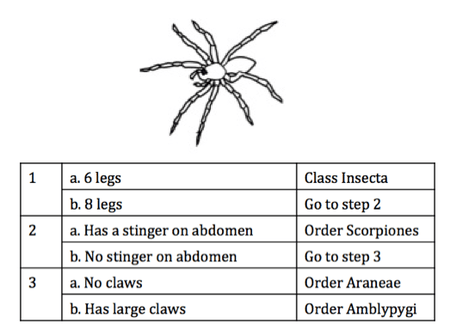

arachnids and insects?


What is the most reliable way to classify organisms?(more than 1)
Diet
Travel
Adaptions
Birth
What are the limitations of classifying organisms only by appearance (pick 2)
More than one type of the animal
Different body structures and DNA and body functions
Different ancestors
Analougs structures

