
 Worksheets
MODULE 3 QUIZ 2: GOALS, FITNESS TRAINING, & FITT
Total questions: 30
Worksheet time: 15mins
What are training principles?
People in charge of PEPF02 in the university.
Set of rules to help maximize the benefits of fitness training.
Specific exercises to include in workouts.
Using treats to make your dog sit & stay.
What is: "A gradual increase either in frequency, intensity, or time or a combo of all 3?"
Progression
Intensity
Type
Specificity
What does specificity mean?
Accurately describing your workout.
Using a lot of adjectives.
Working out with a lot of space.
Training according to what you are trying to accomplish.
Why is the use of training principles recommended?
Because my PEP02 professor said so.
They make your workout the most effective.
Some guy said it works.
They let you workout and feel smarter.
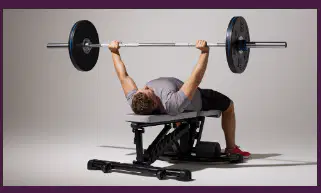
I am going to increase the weight I bench press every week by 1kg. What additional principle of training am I applying?
Progressive overload
Specificity
Adaptation
Individual needs
Which additional principle of training would occur if I stopped training for a long period of time?
Rest and recovery
Reaction
Repetition
Reversibility
When using the FITT principle. What is meant by "type"?
The type of facility used to train in
The type of shoes I wear
The type of training I will be doing
The type of resistance machines I will use
What additional principle of training could you incorporate into your program to stop you getting bored?
Specificity
Rest and recovery
Variation
Adaptation
"45 Minutes Total" is an example of a...
answer choices
Frequency
Intensity
Time
Type
"Soccer Dribbling Cone Drills", Jump roping, AMRAP, Tabata, EMOM are all examples of what in the FITT principle?
answer choices
Frequency
Intensity
Time
Type
What does FITT principle stand for?
Frequency, Intense, Timeline, Type
Frequency, Intense, Time, Type
Frequency, Intensity, Time, Type
Frequency, Intensity, Task, Type
What principle refers to how hard should we exercise?
Frequency
Intensity
Time
Type
What principle is a jog in place at first, then for the next round jog around with additional minutes?
Progression
Overload
Specificity
Variety
What principle is at the start jog for 3 minutes, then 5 minutes after some time?
Progression
Overload
Specificity
Variety
Applying this training principle will cause long-term adaptations, enabling our bodies to work more efficiently to cope with a higher level of performance the next time we train.
Overload
Training principles
Adaption
Reversibility
It is a principle that states that exercising a certain body part, a component of the body, or particular skill primarily develops that part or skill.
Overload
Individuality
Specificity
Progress
The principle of specificity is best illustrated by:
Lifting heavy weights to increase aerobic performance
Power walking to improve arm strength
Doing push-ups to reduce waistline size
Doing sit-ups to increase abdominal strength
Resolutions with a plan of action are goals.
TRUE
FALSE
A goal must be quantifiable and doable.
TRUE
FALSE
You can improve your level of fitness by incorporating variety of exercises.
TRUE
FALSE
Knowledge of the various exercises is useful, but having the means to design your individualized program is even better.
TRUE
FALSE
Your goals, exercise level and state of health are all unique to you.
TRUE
FALSE
Does getting into shape help you tone up, and shed few pounds?
YES
NO
Is becoming PHYSICALLY FIT a serious investment of time and work?
YES
NO
Short-term goals take four to six weeks to achieve your desired goals.
TRUE
FALSE
The purpose of setting short-term goals is to help you recognize your progression so you know that your hard work is moving you in the right direction.
TRUE
FALSE
If you're ready to change your lifestyle or get in shape, you must
set your goals
eat macronutrients
perform yoga
run a bit
Aside from establishing a plan, working toward it, and staying committed, you also need
motivation and specialized exercise
food as reward
indulge in junk food after working so hard
achieve in shorted amount of time
It can help you keep track and remind you of your fitness priorities.
SMART Goals
SMART Criteria
FITNESS Goals
LIFESTYLE Change
To avoid injury, all training programs should include a full WARM-UP and COOL-DOWN
TRUE
FALSE

