
 Worksheets
BHS 2022-2023 Final Review
Total questions: 70
Worksheet time: 54mins
The Byzantine emperors, such as Justinian, were known for supporting things like....
Greek and Roman learning and passing it on to Western and Eastern Europe
military power and strength
farming techniques to feed the empire and nothing else
discovering new ways to conquer enemies

Which of the following was one of the greatest accomplishments of Justinian?
The Twelve Tables
The Ten Commandments
The Eightfold Path
Justinian's Code
A major cause of the Great Schism of 1054 was...
Rights of the people to think for themselves.
Rights of laborers in the Byzantine Empire.
Rights of the nobility.
Rights of priests to marry.
Which empress improved women's rights and religious tolerance in the Byzantine Empire?
Justinian
Theodora
Constantine
Diocletian
In 1054, a schism, or complete break, separated
the Eastern and Western Churches
The South Slaves
Greeks and Byzantines
Browns with Cleveland

The Ottoman Janissaries were different from other military units because...
they were paid for their military service.
they were led by the Janissaries.
they converted Christian men to Islam.
they were located on the Anatolian Peninsula.
The Roman Church lost much of its credibility when it could not stop the Black Death.
True
False

The growth of feudalism in Europe was primarily caused by...
The collapse of a weak central government.
The need for people to feel more of a role in society.
The success of the Byzantine Empire.
The collapse of a strong central government.
The Hundred Years' War was between ________ and ________.
Germany; France
France; Sweden
Sweden; England
England; France
Christianity has most influenced the evolution of Western Civilization by...
Acting as a culturally unifying force.
Reinforcing the laws of the Church.
Forcing people to look to God for guidance.
Medieval author that wrote about the blend of faith and reason and developed scholasticism was...
The Medici Family
Thomas Aquinas
Justinian
Martin Luther with the 95 Theses
What is humanism?
A system of economics, focused in Italy.
An old way of thinking in the Middle Ages.
The wealthy ruling class in society.
a new way of thinking in the Renaissance.
Due process of law protects people from the government harming people of their rights in the legal process from...
Reasonable search and seizure and a right to a trial by ones peers.
Cruel and unusual punishment.
Obtaining a lawyer from the government.
Removing ones testimony from record.
Common Law is..
an Act
Law made by judge decisions
Law made by Parliament
- Basic rights of citizens
- Rule of law
- Representative assemblies
Due process is...
No one above the law
way to deal with legal issues to make sure people are treated fairly
Supreme Court's power to determine the constitutionality of laws
Separation of power between state and federal governments

What is the protection offered by the writ of habeas corpus
It provides for identification of witnesses against the accused.
It compels the Executive Branch to answer to the Judicial Branch why it is holding a person in custody.
It guarantees the accused the right to a speedy and public trial.
It guarantees the accused a second trial if s/he is convicted at the first trial.
The aspect of Islam that includes pilgrimage to Mecca is...
Kaaba
Muhammad
Hajj
Musa al-Khwarizmi
Musa al-Khwarizmi is known in the Islamic Golden Age for the development of...
Algebra
Hajj
Kaaba
Hijrah
Who is the Islamic physician that is credited with the advancing of science through the writing of medical text?
Al-Razi
Sunni
Muhammad
Caliphs
The Muslim office of _______ is best described as a political and religious position for government leaders.
Caliph
Shia
Muslim
Caesar
The effect of who's speech encouraged Christians to give aid to their Turkish and Arab brothers in the east and led to the First Crusade?
Saladin
Pope Urban II
Gregory VII
Richard I
Which were two of the most famous African Empires? (a)
______'s significance in West African history is that he traveled far and gained religious knowledge.
Ibn Battuta
Mansa Musa
Nelson Mandela
Ivan Tutsi
Agricultural practices by both the Inca and the Aztecs to ensure survival were...
Creating languages that were not obvious to individuals outside of their cultures.
Inventing farming methods that fit their unique geographic conditions.
Inventing farming methods that helped them repopulate endangered plant species.
The capital of the Inca Empire was at
Tenochtitlan
Texcoco
Copan
Cusco
Differences between Incan and Mayan cultures is that Mayans developed....
Language systems that involved complex cords and the Inca did not.
Farming techniques that were fit to geographic location and the Inca did not.
Written language and the Inca did not.
Sustainable farming and the Inca did not.
The ________ contributed to the Renaissance because they were patrons (wealthy buyers) of many important artists.
Medici Family
Monarchies of Europe
Wilhelm the II
Emperors of Incan society
Cutting flat steps or terraces into the side of a mountain to have more land to cultivate is known as
tribute
quechua
terrace farming
chinampas farming
The emphasis on _________ during the Renaissance led to the Scientific Revolution by leading people to question authority and seek answers through experimentation, observation, and reason.
Scholasticism
Individualism
Authoritarianism
Humanism
______ proposed the heliocentric theory.
Thomas Aquinas
Galileo Galilei
Nicholas Copernicus
Mansa Musa
He is best known for painting the ceiling of the Sistine Chapel and for carving the statue David
Leonardo da Vinci
Michelangelo
Ghiberti
Brunelleschi
_______ discovered the laws of gravity.
Leonardo da Vinci
Michelangelo
Ghiberti
Isaac Newton
______ translated the bible to vernacular languages and along with the printing press allowed people to read and make their own conclusions of who should have power in the Church.
Martin Luther
Castiglione
Machiavelli
Erasmus
Thomas More
What invention is most associated with Johannes Gutenberg?
Light bulb
Telephone
Assembly Line
Printing Press
An emphasis on worldly concerns; a belief that reason leads to knowledge.
scholasticism
humanism
monasticism
specialization

What was the Columbian Exchange?
The global exchange of plants, food, diseases, and people over continents
A method of currency created by Christopher Columbus
The exchange of slave labor from Africa to the Americas
The movement of people from the Americas to Europe
The ______ failed to reunite Protestants and Catholics because it created different rules for each group.
Council of Trent
Due Process
Supremacy Clause
Humanism

How did the Columbian Exchange affect Europe?
Many Native Americans traveled to Europe
Europeans could use coins for the first time because they had gold and silver
American food plants, such as corn and potatoes, improved the diet of Europeans
Transportation in Europe improved because of the horses brought from the Americas
The _______ was concerned with the Council of Trent because the Church wanted to clarify Catholic doctrine in response to the Protestant Reformation.
The Triangular Trade
Catholic Church
The United Nations
Midwest Passage
The event that finally led to the development of a constitutional monarchy was the...
French Revolution
American Revolution
Glorious Revolution of 1688
Human Exchange

July 14, 1789, a French mob stormed a prison. The mob successfully captured the gunpowder they were after.
Storming of the Bastille
The Great Fear
Storming of Pompei
Sandstorm
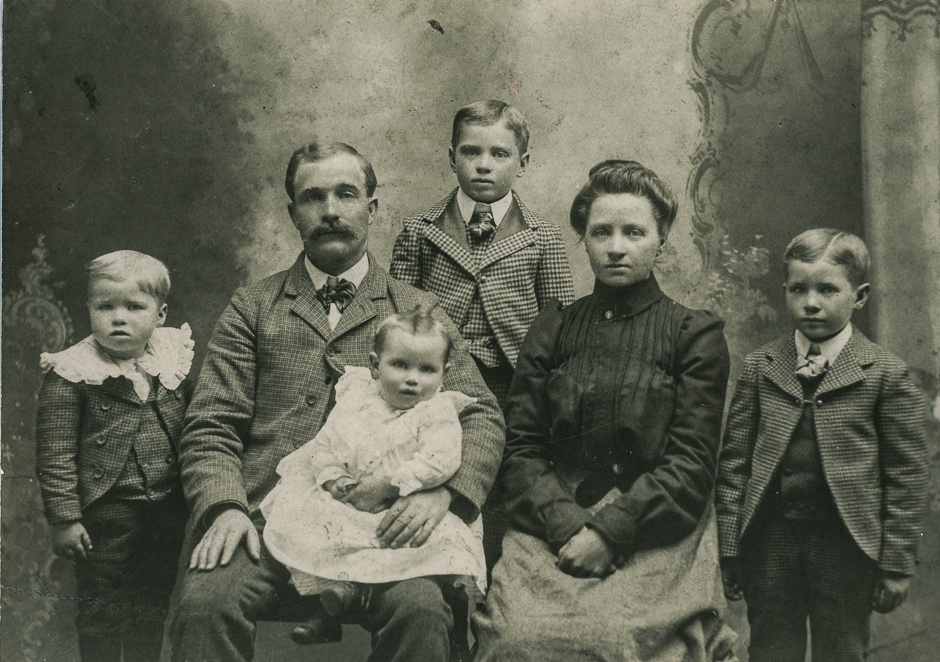
The Industrial revolution created a new ____________ class.
Upper
Poor
Lower
Middle

In which European country did the Industrial Revolution begin?
France
Britian
Prussia
Spain
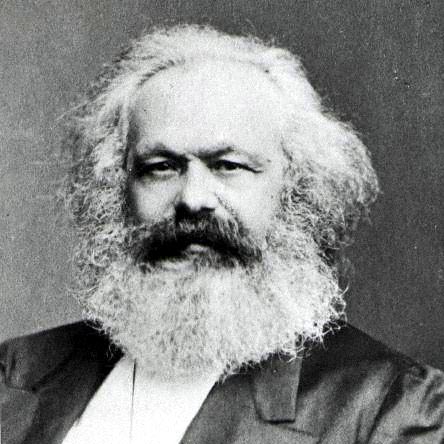
__________________ predicted a violent revolution that would result in the working class taking over in a classless political and economic systems known as communism.
John Adams
Thomas Smith
Karl Marx
Edward Jenner
One major cause of the __________ was that thinkers began to question traditional beliefs and customs.
Enlightenment
Reformation
A goal shared by (a) and the (b) was to contain the spread of communism.
During the Industrial Revolution, a new social and economic class that developed was the
serfs
rich, or the upper class
expanded lower class
middle class
People supported Napoleon Bonaparte because they hoped he would...
Get France and Britain to agree to combine African colonies.
Provide stability in England.
Win France back from Russia.
Provide stability for the nation.
Which of the following were important events of the French Revolution?
The Great Fear
The Reign of Terror
The Tennis Court Oath
The Storming of Bastille
The Collapse of Mali
How was the Roman Empire different from Western European feudalism?
The Roman Empire was a centralized government.
Feudalism was difficult to move through classes.
The Roman Empire was an unstable government.
Feudalism was easy to move among medieval social classes.
Who were the main Allied Powers during WWII?
Austria-Hungary, United States, Italy, Germany
Germany, Italy, Japan
United States, Soviet Union, Britain, France
What are effects of postwar prosperity?
suburbs grow
greater demand for housing
more consumer spending
the baby boom
Important changes that _______ brought to Mali was that he taxed traders and made the country rich.
Songhi
Mansa Musa
Nelson Mandela
Dezmon Tutu
The impact of European imperialism of all of Africa was it...
Created political borders without regard for historical powers or ethnic grouping.
Created class systems that fit more with feudal Europe than the native African cultures.
The __________ was considered the "powder keg of Europe" prior to WWI because nationalistic rivalries were increasing within the region.
Balfour Region
Berlin Region
Balkan Region
Battuta Region
Harsh conditions imposed by the Treaty of Versailles after WWI led to the...
Rise of democracy in Italy.
Rise of fascism in Germany.
Rise of fascism in the United States.
Rise of democracy in Russia.
A policy of ________ is when a country agrees to the demands of an aggressor.
Containment
Appeasement
Imperialism
Aggression
Which of the following are effects of WWII?
An awareness of the effects of genocide and atomic weapons.
The rise of fascist dictators that lead to another world war.
The crippling of the European economy leaving only two superpowers.
The creation of the United Nations to enforce peace.
How did allied leaders agree to handle Germany's surrender after WWII?
By keeping peace within Germany by sending United Nations troops.
By giving Germany the ability to restructure itself.
By allowing total control of Germany to the Soviet Union.
By dividing Germany into separate zones of occupation.
How did Enlightenment thinkers influence the American and French Revolutions?
They began new traditions and belief systems within the two countries.
They advocated for fascism and promoted the constitutional monarchy.
They advocated for freedom and questioned different traditional customs and beliefs.
They asked for help from established democracies to write new laws and constitutions.
The ________ is where the U.S. pledged FINANCIAL support to democratic countries that were trying to contain communism.
Truman Doctrine
Marshall Plan
Berlin Airlift
Watergate Scandal
Due to their ________, the Soviet Union was disadvantaged primarily because they could not fund the high cost of maintaining the arms race.
Mixed Market Economy
Free Market Economy
Democratic Socialism
Communist Economy
Which of the following were factors leading to the creation of Israel?
The Balfour Declaration
Holocaust
Pogroms in Eastern Europe and Russia
Fascism in Italy
Terrorist groups that involved al Queda and other international Muslim extremist groups have attacked which of the following?
Israel
Cuba
Russia
India

