
 Worksheets
3. Hardware - Data Storage: Computer Science CIE IGCSE
Total questions: 56
Worksheet time: 34mins
How fast can the read/write head move from the centre to the edge and back of a HDD platter?
550 times / minute
50 times /second
7000 times per second
1/s
How is data stored in an HDD?
sectors
tracks
pits
lands
Flash drives
HDD access time is fast compared to RAM
True
False
The time taken for a specific block of data on a data track to rotate around to the read/write head.
Latency
Spin time
Access time
Run-length
HDD latency is...
Long
Short
What can happen to HDDs over time?
(a)

Why are HDDs common?
They are water resistant
They can withstand shocks
They are cheap
They store a lot of data
Keeps track of where everything is on the HDD
PC
CIR
MDR
OS

What does SSD stand for?
Silly Sister Dictionary
Solid State Drive
Simplex Stratified Digital
Secure Sockets Device
Stores data by controlling the movement of electrons through NAND and NOR gates.
Optical Storage
Solid State Storage
RAM
Magnetic storage
What components does Solid State Storage use?
Read/write head
Laser
Transistors
Capacitors
NAND gates
Solid state storage is
Volatile
Non-volatile
Is solid state storage rewritable?
Yes
No
In solid state storage, what are transistors used as?
Capacitors
Flip-flops
Control Gates
Floating Gates
What technology do floating and control gates use?
CMOS NAND technology
Floating technology
Solid state technology
Magnetic technology
What is another name for solid state storage?
Flash memory
Optical memory
NAND technology
Magnetic Storage
What are the layers of floating and control gates?
Glass substrate
Control gate
Dielectric coating
Floating gate
Indium tin oxide coating
What are the layers of floating and control gates?
liquid crystals
tunnel oxide coating
electron source
substrate
battery
What allows the floating gate to retain its value
Dielectric coating
Tunnel oxide coating
Electron sourcd
Control gate
What are advantages of Solid State Storage?
Reliable - no moving parts to go wring
Light (suitable for laptops)
Doesn't have to "get up to speed" before it can work
Retains its value forever
Durable
What are advantages of Solid State Storage?
Low power consumption
Cooler than HDDs
Very thin due to no moving parts
Fast data access
Data can be over-written
What are disadvantages of Solid State Storage?
Must be used at least once a year, or charge leaks away
Less durable than HDD
Data cannot be over-written, but must be erased first
Unreliable
Heavy
What are examples of flash memory?
SSDs
Memory Sticks/pen drives
CDs
DVDs
HDDs
SSDs have
Increased Latency
Reduced Latency
How fast are SSD data transfer rates?
(a)
What is the maximum size of an SSD?
(a)

SSDs are
Cheap
Expensive
SSDs
Can be written to once
Can only be read from
Can be written to multiple times
SSDs store persistent data
True
False
SSDs can store data as long as HDDs can
True
False
How do memory sticks connect to a computer?
USB port
Ethernet cable
Bluetooth
What are memory sticks often used as?
Backup devices
Primary Memory
Virtual Memory
Secondary Memory
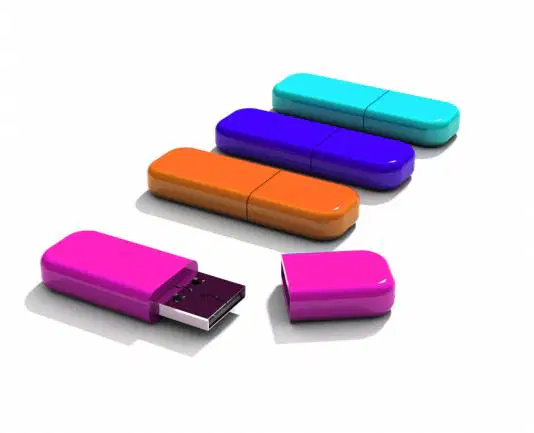
What are advantages of memory sticks?
Small
lightweight
good for transferring files between computers
cheap
easy to use
Uses lasers to create and read pits and lands
Optical storage
Flash memory
Solid state memory
Magnetic storage
What is the name for any type of removable storage?
(a)

What is an optical storage disk made of?
Plastic
Metal
Calcium carbonate
Indium tin oxide

What are optical disks coated with to make them reflective?
(a)
What does the surface of an optical storage disk have on it?
Concentric circles
One long track spiralling out
What do CD's and DVDs use to store data?
Indium Tin oxide
CMOS NAND technology
A thin layer of metal alloy/organic light-sensative dye
What does a pit represent?
1
0
What does a land represent?
1
0
What are CDs and DVDs divided into that allows for direct data access?
Pits
Lands
One long spiral track
Sectors
Which part of an optical disk runs faster?
The inside
The outside
Stores the least data
CD
DVD
Blu-ray
Stores the most data
CD
DVD
Blu-ray
What are CD transfer rates?
(a)
CDs have faster transfer rates than HDD
True
False
What colour laser do CDs use?
Red
Blue-violet
What wavelength do CDs use?
780 nm
1.6 µm
405 nm
650 nm

The shorter the wavelength
The greater the storage capacity
The smaller the storage capacity
What is CD track pitch
780 nm
1.6 µm
405 nm
650 nm
What colour laser do DVDs use?
Red
Blue-violet
Higher frequency means
Greater data storage
Smaller data storage
What wavelength do DVDs use?
780 nm
1.6 µm
405 nm
650 nm
What wavelength does Blu-Ray use?
780 nm
1.6 µm
405 nm
650 nm
What colour laser does Blu-Ray use?
Red
Blue-violet

