
 Worksheets
Ballistics Pre Board 2026
Total questions: 40
Worksheet time: 40mins
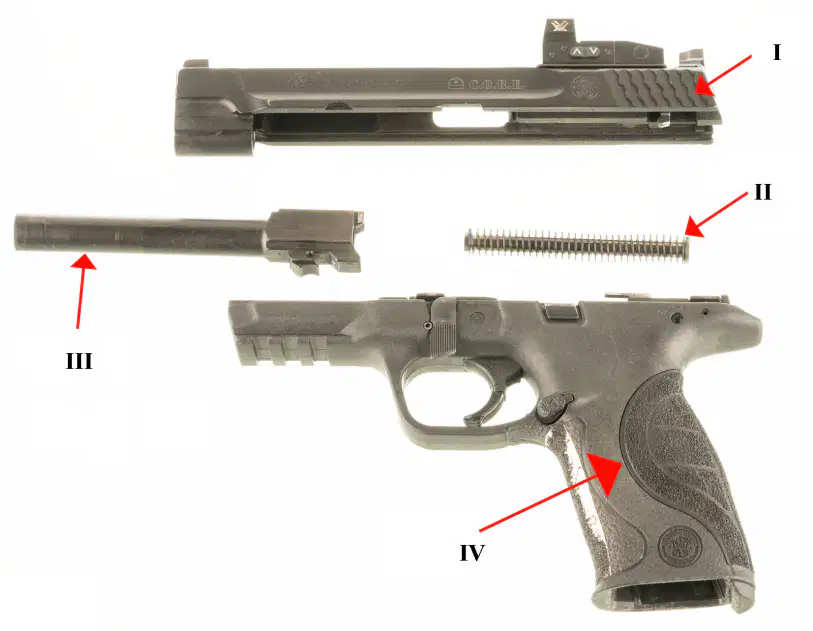
Select which is the frame of a firearm in the illustration?
I
II
III
IV
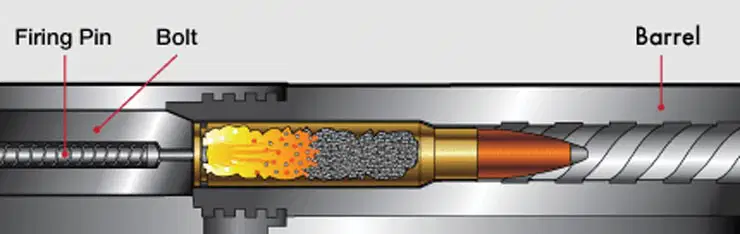
An illustration is an example of what?
Internal ballistics
External ballistics
Terminal ballistics
Forensic ballistics
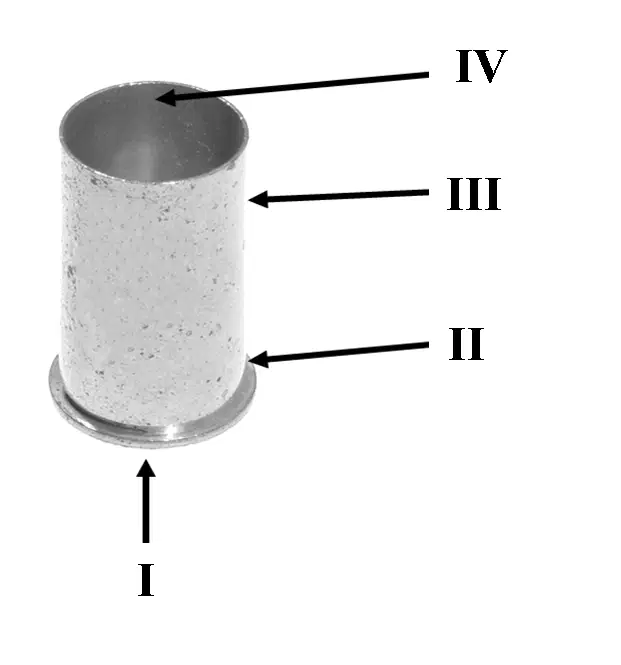
A cartridge shell evidence must be marked by the investigator where?
I
II
III
IV

Identify what object has rifling marks below.
I
II
III
IV

What illustration is an example of firing pin marks?
I
II
III
IV

What is an example of lever-type firearms in the Illustration?
I
II
III
IV
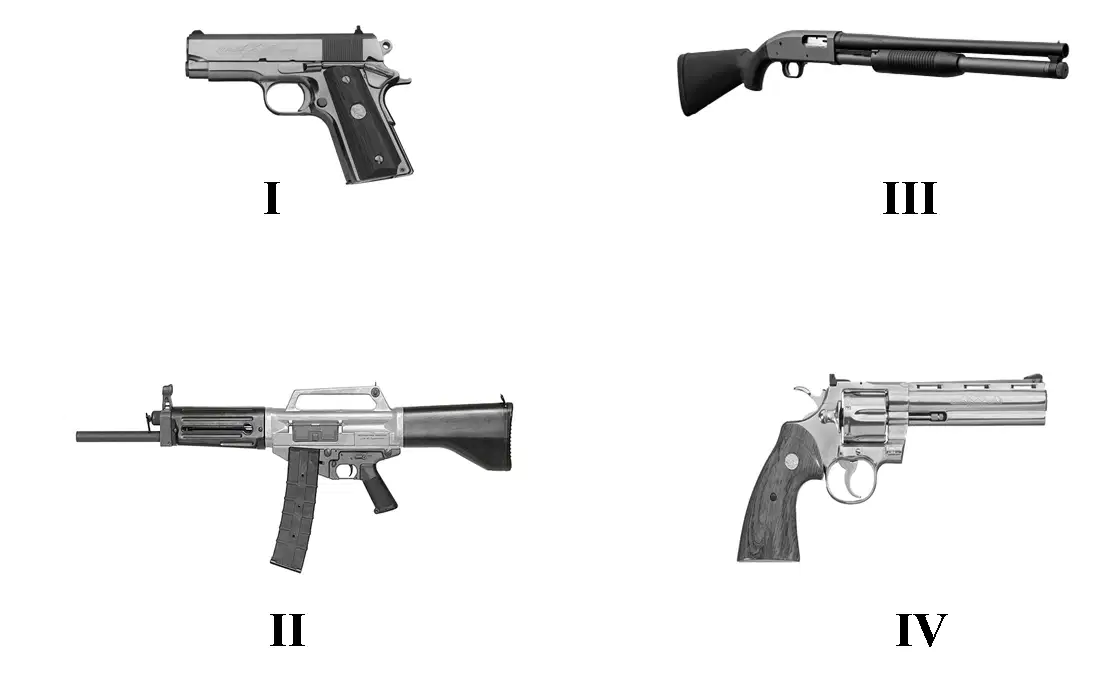
What is a smooth-bore firearm example in the Illustration?
I
II
III
IV
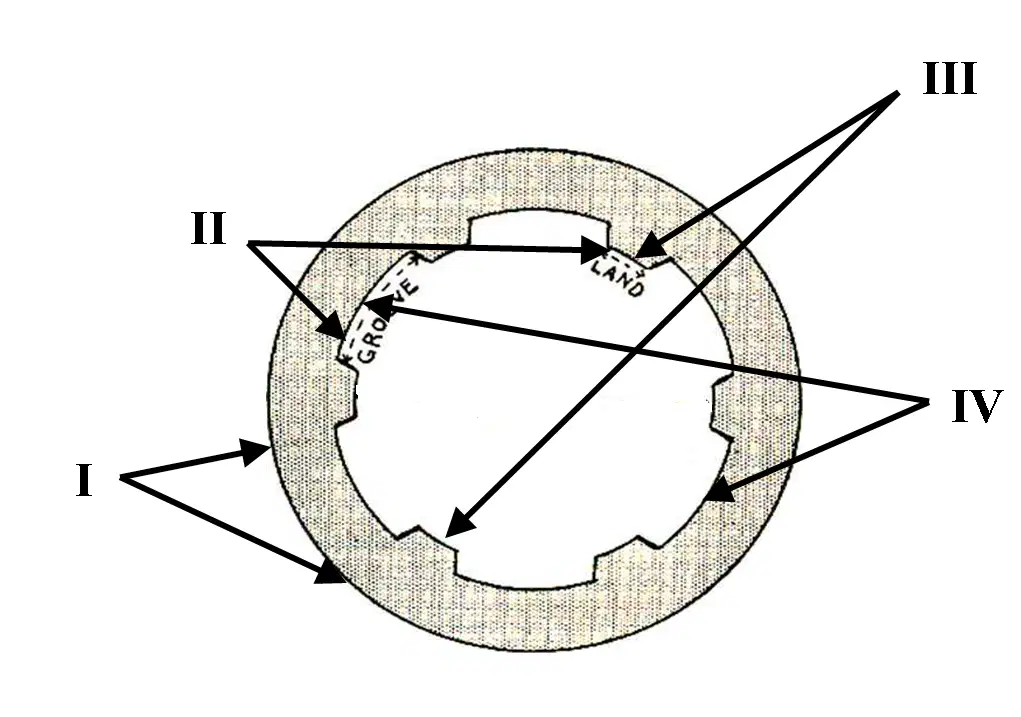
Find the basis for determining the caliber of a firearms in the illustration.
I
II
III
IV
What causes rifling marks on the bullet after it was fired from the firearms?
Land
Grooves
Firing pin
Hammer

In a crime involving the use of revolver, which of the empty shell below is more likely to be collected?
I
II
III
IV

Locate and identify the area in the cartridge where breechface marks can be found when it is fired in firearms.
I
II
III
IV

In the cross-cut illustration of cartridge, locate what number the primer is?
1
2
3
4
5
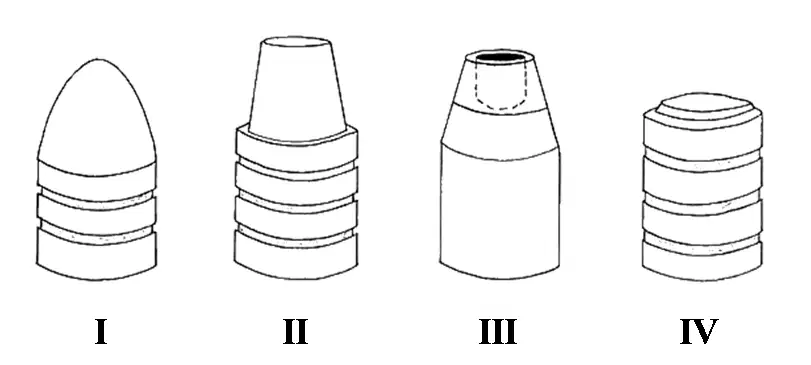
In the bullet illustration, which of them is an example of wad-cutter bullet?
I
II
III
IV
The following is the composition of blackpowder, EXCEPT what?
Potassium nitrate
Sulfur
Sodium nitrate
Charcoal

More likely, as investigator, the following are common appearance of a crime scene bullet below EXCEPT what?
I
II
III
IV

Which of the bullet in the illustration would you expect when you fired a gun in the bullet recovery box or drum?
I
II
III
IV

As ballistic examiner, which of the following is a probable crime scene bullet?
I
II
III
IV

What is in the illustration show both qualitative and quantitative likeness which means they are product of one and the same tools?
I
II
III
IV

In the illustrations, which of them is an example of juxtaposition?
I
II
III
IV
This is an act or instance of placing two elements close together or side by side. This is often done in order to compare/contrast the two, to show similarities or differences, what is this?
Juxtaposition
Superimposition
Side by side examination
Digital examination
What is that rear extremity of a firearm, which serves to block [at the rear end] the base of a cartridge such that it would not be loosened when it is fired and produces an identifying mark surrounding the firing pin marks and around the face of the primer?
Breechblock
Firing Pin
Barrel bore
Hammer

What is compared in this illustration?
Breechface marks
Firing pin marks
Rifling marks
Extractor marks
These are indications peculiar to one weapon, which can be seen on the cartridge case and or on the bullet fired from it, what is this?
Individual characteristics
Class characteristics
Unusual characteristics
Physical characteristics
They are found on the cylindrical portion of the fired bullets or slugs and are caused by the land inside the barrel of firearms.
Rifling marks
Skid marks
Firing pin marks
Stripping marks
What marks are commonly found on bullets or slugs through loose fit" barrels wherein the rifling’s are badly worn out?
Stripping marks
Rifling marks
Skid marks
Firing pin marks
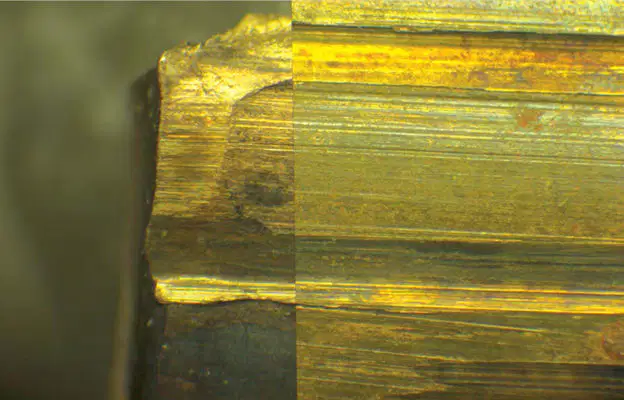
What marks in the bullet are being illustrated in the crime scene bullet below?
Rifling marks
Slippage
Fingerprint marks
Stripping marks
You are collecting a projectile at the scene of the crime, which among below does not belong to projectile?
Cartridges
Bullet
Shots
Slugs
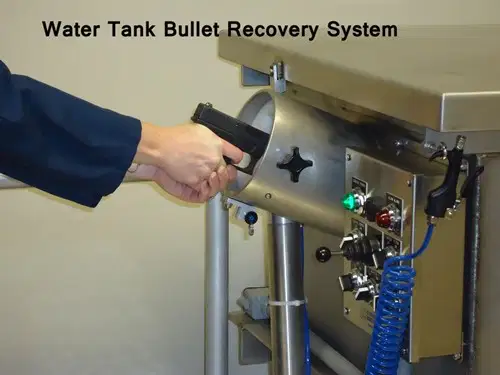
What is the purpose of illustration below?
To get a test bullet for comparison
To get a crime scene bullet
Comparing a test bullet from crime scene bullet
Testing the accuracy of the gun used in crime
Where do you mark your initial safely in a fired bullet collected at the crime scene?
Base
Nose
Ogive
Body
When a cartridge case is fired in a firearm what notable marks are produced?
Impressed action marks
Striated action marks
Double action marks
Single action marks
When a bullet goes out of the barrel of a rifled-bore firearms, what notable marks are produced?
Striated action marks
Impressed action marks
Double action marks
Single action marks
Examining rifling marks requires the use of what instrument?
Bullet comparison microscope
Magnifying lens
Onoscope
Shadowgraph
Which of the following terms do NOT fall under the category of striated marks from where the word striated action marks come from?
Impression marks
Friction marks
Abrasion marks
Scratch marks
What part of the firearms must be taken by the firearm examiner in determining the direction and pitch of twist including that the depth and width of the land and grooves?
Barrel of the suspected firearms
Frame or receiver of the suspected firearms
Magazine of the suspected firearms
Firing pin assembly of the suspected firearms
Which of the following statement is NOT a foundational techniques in "toolmark identifications"?
That both class and individual characteristics are the same
These characteristics will mark surfaces (e.g., locks, cut wires, fired bullets, etc.) with class and individual characteristics.
A tool is defined as the harder of two objects which, when brought into contact with each other, results in the softer object receiving a toolmark.
Tools (e.g., screwdrivers, firearms, bolt cutters, etc.) will bear unique microscopic characteristics due to the manufacturing processes they undergo and use and abuse.

Identify where primer is located in the illustration?
I
II
III
IV
Which of the component of the black powder has the largest amount?
Potassium nitrate
Charcoal
Sulfur
Nitroglycerine
What below is an example of primary explosives?
Primer
Blackpowder
Smokeless powder
Trinitrotoluene
What is an example of low explosives?
Blackpowder
Smokeless powder
Trinitrotoluene
Primer
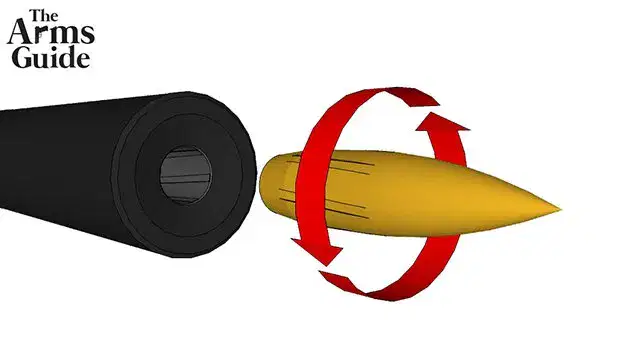
The illustration is an example, or what branch of ballistics?
Internal ballistics
External ballistics
Terminal ballistics
Forensic ballistics

