
 Worksheets
Review test - Chemistry 1.2
Total questions: 22
Worksheet time: 29mins
Draw Bohr atomic models and Lewis dot diagrams for the following elements: Si, P, Ar

Explain the difference between physical and chemical properties.
Most of the elements on the periodic table are classified as _____.
Metalloids
Periods
Nonmetals
Metals
These are found on the Periodic Table.
Bananas
Mixtures
Elements
Compounds
Copper is a common metal. Which of the following properties does this metal most likely have?
High conductivity, high malleability, and low luster
Low conductivity, low malleability, and low luster
High conductivity, high malleability, and high luster
Low conductivity, high malleability, and high luster
What element groups do you know, list them below?
Describe what is group and period of the periodic table?
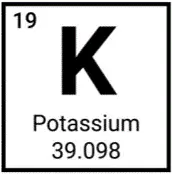
What is the Atomic mass of Potassium?
20.098
39.098
19
18
What's a valence electron?
the atomic number
electrons in the second energy level
electrons in the innermost energy level
electrons in the outermost energy level
What is Ionic bonding?
Bonding that is the result of two elements sharing electrons
Bonding involving only one atom
Bonding that is the result of an exchange of electrons between a metal and a nonmetal
Bonding between two metals
Which particle is responsible for bonding?
Protons
Neutrons
Electrons
Nucleus
Draw the Lewis Dot Structre for water molecule.
Which of the following is true about Covalent (non-polar) bonds? (select ALL true options)
High melting point
Low melting point
Can dissolve in water
Cannot dissolve in water
Can conduct electricity
When an atom loses an electron, it becomes a:
negative ion
positive ion
neutral ion
neutral atom
Magnesium (Mg) and Oxygen (O) form an ________ bond.
Ionic
Covalent
Metalic
Nothing
Calcium (Ca) and 2 chlorine (Cl) atoms make a covalent compound.
True
False
Generally, atoms form bonds so that _______________.
Each atom loses its electrons
Each atom has a stable electron configuration
Each atom has an unstable electron configuration
Each atom gains electrons
Balance this chemical equaction and determine the type of chemical reaction:
_Fe + _Cu(SO4)2 → _FeSO4 + _Cu
Balace the chemical equation and determine the type of chemical reaction:
_H2O2 → _H20 + _O2
Which skeleton equation is correct for this reaction?
Dicarbon hexahydride reacts with oxygen gas to produce Carbon dioxide and Dihydrogen monoxide.
CH4 + O2 → C2O4 + H2O
C2H6 + O2 → CO2 + H2O
CH4 + O → C2O4 + H2O
C2H6 + O → CO2 + H2O
How many atoms of phosphorus are in this compound?
3Al2(PO4)3
3 atoms
9 atoms
12 atoms
36 atoms
Which statement is true?
Breaking bonds is endothermic because energy is absorbed.
Breaking bonds is endothermic because energy is released.
Breaking bonds is exothermic because energy is absorbed.
Breaking bonds is exothermic because energy is released.

