
 Worksheets
Unit 6 Test Review
Total questions: 188
Worksheet time: 16hrs 40mins

The picture below shows the steps of DNA replication beginning with step one and ending with step three.
Because you are reusing the old, or parent, DNA strand DNA replication is said to be
Semi- Conservative
Semi-discontinuous
Continuous
Fully-Conserveative

The picture below shows an enzyme unwinding and unzipping DNA.
What is the name of this enzyme?
DNA Helicase
DNA Ligase
DNA polyermase
RNA Polymerase
Match he nucleotide with its complementary nucleotide. (DNA to DNA).
Adenine -
Thymine
Guanine
Cytosine
Match he nucleotide with its complementary nucleotide. (DNA to DNA).
Cytosine-
Thymine
Guanine
Adenine
Which enzyme is responsible for adding the free nucleotides to the replicating DNA?
DNA Helicase
DNA Ligase
DNA polyermase
RNA Polymerase

Which letter in the picture below depicts the leading strand in DNA replication?
A
C
B
None of the above
Which letter in the picture below depicts the lagging strand in DNA replication?
A
C
B
None of the above
Which letter in the picture below depicts the replication fork in DNA replication?
A
C
B
None of the above
If a person suffered from a disorder where their DNA fragments were unable to fill in the missing slots in between the fragments of the lagging strand, they would most likely have a disorder that affected which enzyme?
DNA Helicase
DNA Ligase
DNA polyermase
RNA Polymerase
DNA replication runs from ______' to _____' and is said to be ______________________
5, 3, antiparallel
3, 5, antiparallel
5, 3, parallel
3, 5, parallel
Okazaki fragments appear on which strand of DNA during DNA replication?
lagging
leading
The directionality of DNA is said to be ___________, because it is side by side by goes in opposite directions.
Anti-directional
Parallel
Anti-parallel
Anti-uniform
CAT TCA CTG
DNA replication results in
2 completely new DNA molecules
2 DNA molecules that each contain a strand of the original
1 new DNA molecule and 1 old
1 new molecule of DNA
Enzyme that breaks hydrogen bonds (unzips)
Ligase
Polymerase
Primase
Helicase
Site where replication begins
Polymerase action site
Replication fork
Replication Origin
In the front
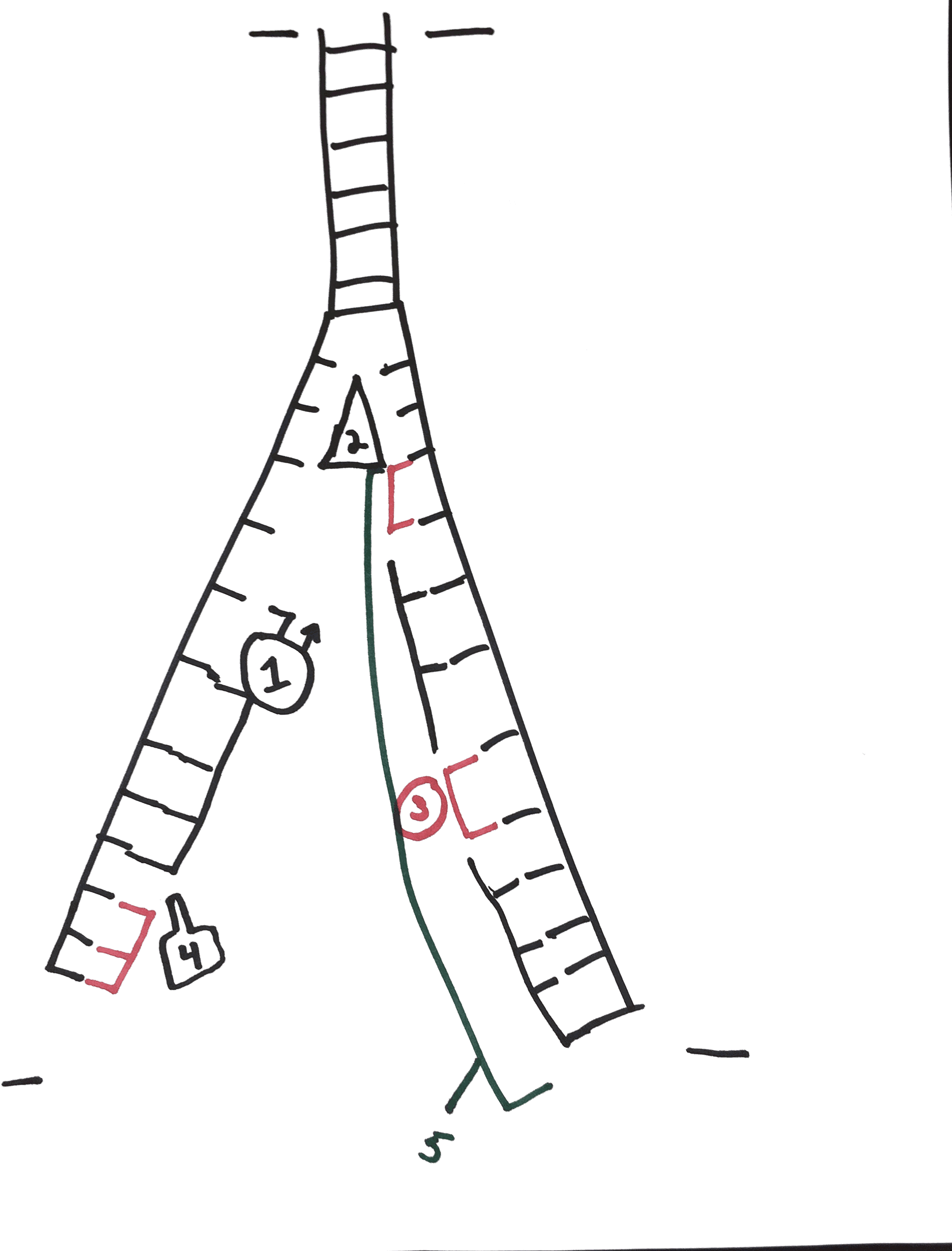
#1 in the picture above (builder)
Helicase
Primase
Polymerase
Ligase
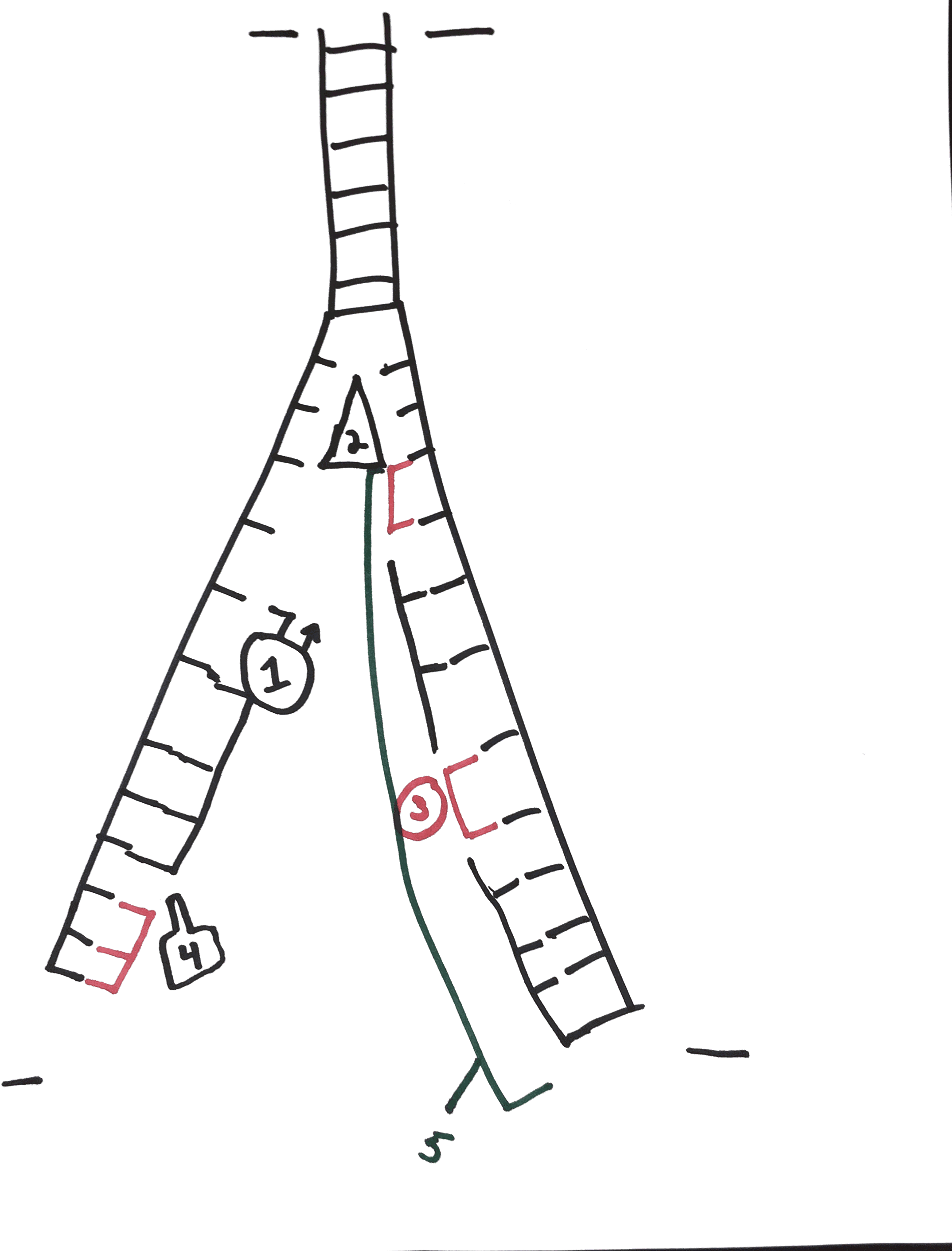
#4 in the picture
Polymerase
Primase
Helicase
Ligase
This enzyme helps helicase unzip DNA by relieving supercoiling
Topoisomerase
Exonuclease
DNA Primase
DNA Polymerase
This enzyme synthesizes short RNA sequences to guide DNA Polymerase
Primers
DNA Primase
DNA Polymerase
Topoisomerase
In what direction does the Leading strand run?
3' ----> 5'
5' -----> 3'
It doesn't matter
Both directions
Okazaki fragments are found on the _______________ strand
Leading
Lagging



What enzyme is A?
DNA Polymerase
DNA ligase
RNA primase
Helicase

This structure is an Okazaki fragment.
A
D
F
C
Replication is occurring AWAY FROM the replication fork on strand
I, the leading strand
I, the lagging strand
H, the leading strand
H, the lagging strand

Structure C is
helicase
primase
DNA polymerase III
gyrase
This enzyme synthesizes short RNA sequences to guide DNA Polymerase
Primers
DNA Primase
DNA Polymerase
Topoisomerase
Which of the following is NOT a benefit of DNA packaging?
all of a cell's DNA can fit into the nucleus
DNA is protected from damage
genes can be accessed as-needed
chromosomes can be reshuffled frequently
A nucleosome is best described as
nucleosomes coiled around each other
a DNA strand wrapped around histone proteins
one fully-packaged DNA molecule
one strand of DNA double-helix
Chromatin is best described as
nucleosomes super-coiled around each other
a DNA strand wrapped around histone proteins
one fully-packaged DNA molecule
one strand of DNA double-helix
Chromosomes are made of... (Choose all that apply.)
DNA
proteins
carbohydrates
lipids
All the genes in both a prokaryotic cell and a eukaryotic cell are expressed at the same time.
True
False
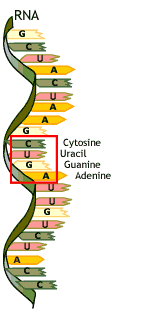
ATG GGA ACT CCA

A small organelle in the cell on which proteins are assembled, It is a type of protein.
Mitochondria
Ribosome
Nucleus
Lysosome
Transcribe the following DNA strand: CTG AAT
GAC TTA
CTG AAT
GAC UUA
CUG AAU
The monomers units of DNA and RNA are
amino acids
monosaccharides
nucleotides
fatty acids
The signal that marks the end of a gene and causes transcription to stop is
polymerase
ligase
a terminator
methionine
Which of the following enzymes catalyzes the linkage together of RNA nucleotides to form RNA?
polymerase
ligase
ribozyme
reverse transcriptase
The RNA codon AUG means
add amino acid methionine
start the protein here
add the amino acid tyrosine
end the polypeptide chain here
Which of the following sequences best describes the flow of information that takes place when a gene directs the synthesis of a cellular component?
RNA-DNA-RNA-PROTEIN
DNA-RNA-PROTEIN
PROTEIN-RNA-DNA
DNA-AMINO ACID-RNA-PROTEIN
Translation consists of which of the following?
conversion of genetic info from the language of nucleic acids to the language of proteins
conversion of genetic info from DNA to RNA
addition of nucleotides to a DNA template
DNA replication
Which of the following is required for translation to occur?
energy
ribosomes
tRNA
all of these
The info carried by DNA is in
an amino acid sequence
the sugars and phosphates that form the backbone
the order of bases in the molecule
the total number of nucleotides
A gene is
the same as a chromosome
the info for making a polypeptide
made of RNA
made of protein
During the process of translation, ____ matches a nucleic acid codon with the proper amino acid.
a ribosome
ATP
polymerase
mRNA
tRNA plays a role in which of the following ?
picking up the amino acid specified by the anticodon
recognizing the appropriate codons in mRNA
translating codons into amino acids
all of these are correct
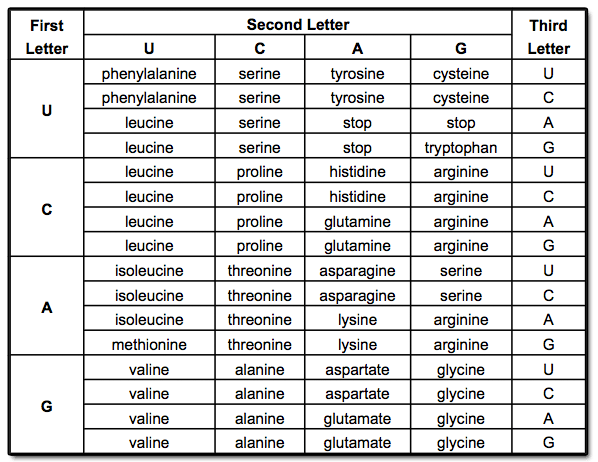
In RNA splicing in eukaryotes, _________ are removed and __________ are connected and remain as part of the mRNA molecule.
Introns; exons
Caps; tails
cytosines; guanines
Okazaki fragments; ligases
Transcription occurs in the _______ of prokaryotes, and in the _________ of eukaryotes.
Cytoplasm ; cytoplasm
Nucleus ; ribosome
Cytoplasm ; nucleus
Nucleus ; cytoplasm
What is the central dogma?
DNA --> mRNA --> tRNA --> rRNA
Template strand --> coding strand --> mRNA
Nucleus --> cytoplasm --> ribosome
DNA --> mRNA --> protein
Which of the following components is involved in the initiation of transcription?
Start codon
Origin
Promoter
Primer
Which of the following types of RNA codes for a protein?
mRNA
rRNA
dsRNA
tRNA
What is made during transcription?
tRNA
mRNA
Proteins
rRNA
Is this a nucleotide strand of DNA or RNA?
TACGGACTA
DNA
RNA
Impossible to tell


What is the name of the enzyme that will transcribe DNA into RNA?
RNA Polymerase
DNA Polymerase
TAP Polymerase
rDNA Polymerase
On which end of the RNA molecule (5' or 3') can additional bases be added to?
5'
3'
new bases can be added on both the 5' and the 3' ends
it depends on the gene
TRANSCRIBE this DNA sequence: 3' TACGT 5'
5' AUGCA 3'
3' AUGCA 5'
5' ATGCA 3'
5' TACGT 3'
What signals where transcription will begin?
replication fork
primase
promoter sequence
origin of replication
What signals where transcription will stop?
stop codon
terminator sequence
where the lagging strand is
red light
RNA polymerase moves along the template strand of DNA, reading it in the
5' to 3' direction
3' to 5' direction
leading strand direction
promoter direction
To begin transcription, RNA polymerase binds to
the promoter sequence of the template strand of DNA
the promoter sequence of the lagging strand of DNA
the start codon
Okazaki fragments
RNA nucleotides are added onto which end of the growing RNA strand?
5' end
3' end
the end that is nearest the replication fork
RNA nucleotides can be added onto either end
Spliceosomes are not found in cells of
Plants
Fungi
Animals
Bacteria
Poly A tail is present in
mRNA of bacteria
tRNA of eukaryotes
Promotor of bacteria
mRNA of eukaryotes
Splicing is one of the steps of post-transcriptional modifications which occurs in
nucleus
Cytoplasm
ER
Ribosomes
Assertion: Eukaryotic mRNA requires post-transcription processing for formation of functional mRNA.
Reason: Eukaryotic transcripts possess extra nonfunctional segments called introns.
Both Assertion and Reason are true and the Reason is the correct explanation of the Assertion.
Both Assertion and Reason are true but the C Reason is not the correct explanation of the Assertion.
Assertion is true but Reason is false.
Both Assertion and Reason are false
In eukaryotes, the capping and tailing in hnRNA occurs at
3’ and 5’ end respectively
5’ and 3’ end respectively
At any end
Both occurs at 3’ end always
Which process is used to make mRNA from the DNA in the nucleus?
Replication
Translation
Transcription
Duplication
Which RNA bases would pair with TACGAA in transcription?
TACGAA
AUGCUU
ATGCTT
AAGCAT
Enzyme required for transcription is
DNA polymerase
Helicase
Ligase
RNA polymerase
Which molecule contains the genetic code?
DNA
mRNA
tRNA
rRNA
Transcription occurs along a ____ template forming an mRNA in the ____ direction.
5' to 3'; 5' to 3'
5' to 3'; 3' to 5'
3' to 5'; 5' to 3'
3' to 5'; 3' to 5'
Transfer RNA's bind during translation by the
Codon
Anti codon
template
Of the ____ different possible codons and ____ signal stop.
46, 1
20, 3
20,3
64, 3
During translation, the ____ site within the ribosome hold the growing amino acid chain while the ____ site holds the next amino acid to be added to the chain.
P, A
A, P
E, A
E, P
Where in the cell would rRNA be found?
nucleus
cytoplasm
ribosome
chloroplast
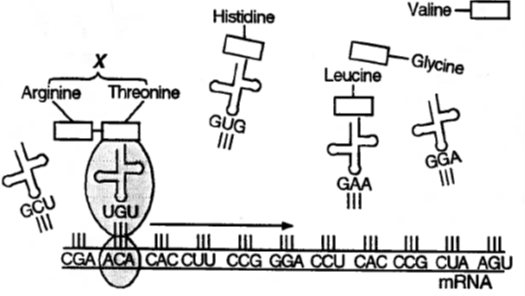
An mRNA codon has the following sequence: ACU. What is the corresponding tRNA sequence called, and what would the sequence be?
TGA
UGA
ACU
What is added to the 3'-end of many eukaryotic mRNAs after transcription?
intron
exon
poly tail A
capping

What is occurring in this picture?
Translation
Replication
Translocation
Transcription

ATG GGA ACT CCA

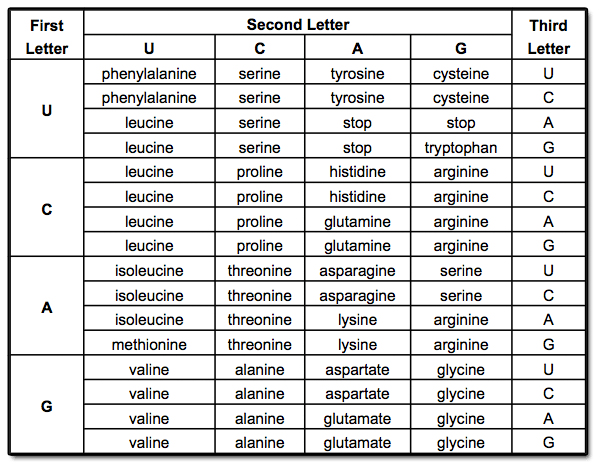


What is letter B in the picture?
mRNA
tRNA
ribosome
nucleus


The complete instructions for making an organism, consisting of all the genetic material in that organism's chromosomes.
Epigenome
DNA
genome
genetic markers
The study of the inherited changes in gene expression that occur without a change in gene sequence and influence how an organism's genes express themselves. Mechanisms are influenced by food and environment. They play an important role in the fetal basis of adult disease susceptibility.
bionomics
genomics
genetics
epigenetics
Protein molecules around which DNA is tightly coiled in chromatin
histones
casein
nucleosome
chromosome
A chemical modification of DNA that does not affect the nucleotide sequence of a gene but makes that gene less likely to be expressed.
activators
methylation
acetylation
proteins
Epigenetics refers to changes in:
DNA sequence
Gene structure
Gene expression
DNA frequency
Every cell has a copy of every gene
True
False
All genes are expressed in every cell
True
False
Which factor can affect the epigenome?
Diet
Exercise
Stress
Aging
True or False: Epigenetic changes are permanent.
True
False
True or False: Epigenetic changes can be passed on to future generations.
True
False
Acetylation _____________ access to the DNA, while methylation of lysine 9 & 27______________ access to the DNA.
allows, blocks
blocks, allows
does not change, inactivates
inactivates, does not change
A signal sequence on the polypeptide chain targets all but which proteins to the rough ER surface?
Golgi proteins
plasma membrane proteins
lysosomal
mitochondrial
Deletion
a different base or pair takes the place of what should have there
a base or segment is added to the strand
a base or segment has been deleted

The picture above represents
insertion
deletion
substitution

The picture above represents
insertion
deletion
substitution

The picture above represents
insertion
deletion
substitution
GAG-CTC-GAC-AGA
Mutant
GAG CTC-CAC-AGA
The mutated DNA segment is TTCGCAAG. This is an example of ___ mutation.
Which type of mutation is MOST LIKELY to cause the greatest disruption?
Frameshift
Silent
Point

What is 1 in the diagram?
RNA polymerase
Inducer
Repressor
Operator
What is 4 in the diagram?
RNA polymerase
Inducer
Repressor
Operator
What is 5 in the diagram?
RNA polymerase
Inducer
Repressor
Operator
In the top picture the operon is
on
off
In the bottom picture the operon is
on
off
All the genes in both a prokaryotic cell and a eukaryotic cell are expressed at the same time.
True
False
Prokaryotes regulate gene expression primarily
in order to maintain homeostasis
in response to changing environmental conditions
during development as cells specialize
Prokaryotes do not regulate gene expression. All genes are always on.
One way to regulate the expression of a gene is to control the formation of mRNA. This is called ___ control.
transcriptional
translational
post-transcriptional
post-translational
In order for a gene to be expressed, ___ must bind to the gene's ___, a specific sequence of nucleotides at one end of the gene, thus initiating transcription.
DNA polymerase, promotor
DNA polymerase, operator
RNA polymerase, promotor
RNA polymerase, operator
Which of the following is/are similarities between prokaryotic and eukaryotic gene expression?
both use proteins to interact with the DNA to control gene expression
both have histones complexed with their DNA
both separate the processes of transcription and translation spatially
all of the above
___ are DNA sequences which are often located far from the genes they regulate in eukaryotes where transcription activators can bind.
histones
promotors
enhancers
Which of the following are types of post-transcriptional control of genes in eukaryotes?
alternative RNA splicing or processing
gene silencing through RNA interference
destruction of ubiquitin tagged proteins
all of the above
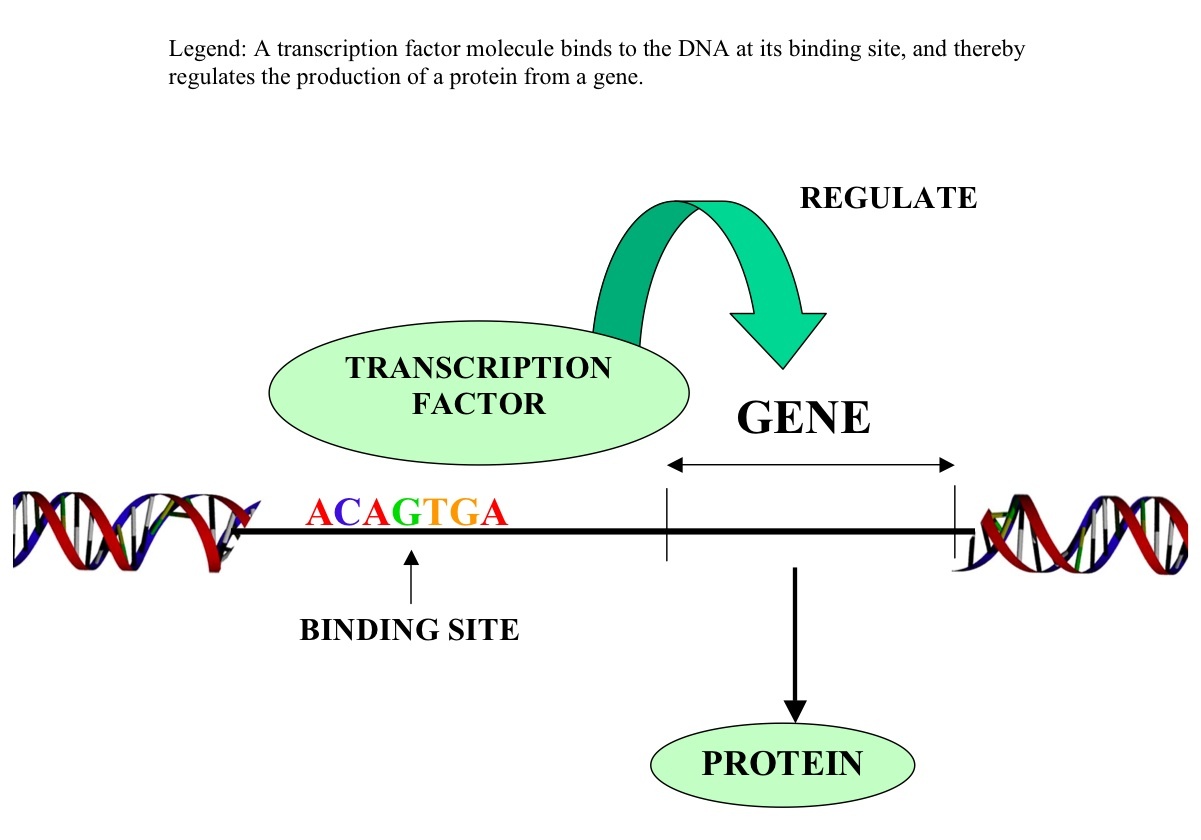
A mutation within the promoter region has occurred. What would potentially happen to transcription rate?
Mutated promoters decrease the rate of transcription.
Mutated promoters increase the rate of transcription.
Mutated promoters can increase or decrease the rate of transcription.
Mutated promoters cease transcription of the adjacent gene.
Muscle cells differ from nerve cells mainly because they
express different genes.
contain different genes.
use different genetic codes.
have unique ribosomes
Operons are found in which of the following organisms?
Bacteria(prokaryotes)
plants and animals(eukaryotes)
only animals
virsuses

What type of gene control is shown in this image?
processing control
transcriptional control
post translational control
mRNA stability control
In eukaryotes, an activator is a protein that...
bind the operon
binds the promoter
binds the enhancer
post-transcriptionally process RNA
Negative control of gene expression is mediated by __ and results in a(n) __ in the frequency of transcription.
activators, increase
activators, decrease
repressors, increase
repressors, decrease

