wayground logo

Free Printable Worksheets

Font size

S
M
L
XL
Worksheets

moon

Total questions: 68

Worksheet time: 34mins

Name
Class
Date
1.
Changes in the moon's appearance are
a)
phases
b)
eclipses
c)
stages
d)
cycle
2.
What causes the moon's phases
a)
Where you are standing on Earth
b)
the amt of sunlight reflected onto the moon from the sun
c)
The tilt of Earth
d)
how fast the moon is moving
3.
The Moon orbits Earth in a ________________ direction
a)
clockwise
b)
counterclockwise
c)
upwards
d)
downwards
4.
Define Waxing
a)
Moon is increasing and light part appears to be growing
b)
Completely illuminated
c)
dark side is facing earth
d)
Moon is decreasing and light part appears to be shrinking
5.
Define Gibbous
a)
Less than half of moon visible
b)
More than half of moon visible
c)
All of moon visible
d)
None of moon visible
6.
Define Full Moon
a)
None of moon is visible
b)
Half moon phase is visible
c)
Complete moon face is visible
d)
Less Than half of moon is visible
7.
Define New Moon
a)
None of moon is visible from Earth
b)
All of moon visible from Earth
c)
Moon is 1/2 visible from Earth
d)
Moon is more than Half Visible from Earth
8.
Define Quarter Moon
a)
None of moon visible
b)
Less than Half the moon is visible
c)
More than half of moon is visible
d)
Half of the moon is visible
9.
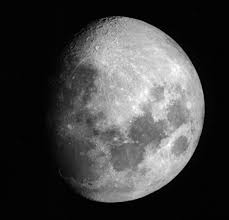
Name this moon phase
a)
Waxing Gibbous
b)
Waxing Crescent
c)
Waning Crescent
d)
Waning Gibbous
10.
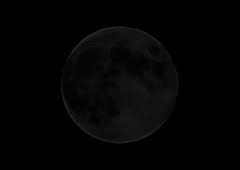
Name this moon phase
a)
Waning Crescent
b)
Waxing Crescent
c)
Waning Gibbous
d)
Waxing Gibbous
11.
The phase of the moon that occurs between the sun and Earth
a)
Full moon
b)
Waxing crescent
c)
Waning Crescent
d)
New Moon
12.
In which moon phase, can the moon not be seen at all?
a)
Waning crescent
b)
Full moon
c)
Waxing gibbous
d)
New moon
13.
The 1st Quarter moon is lit on the:
a)
Left Side
b)
Right Side
14.
What is the correct order of the moon phases?
a)
new, full, 1st quarter, 3rd quarter
b)
new moon, 1st quarter, full moon, 3rd quarter
c)
1st quarter, 3rd quarter, new moon, full moon
d)
new, 1st quarter, 3rd quarter, full
15.
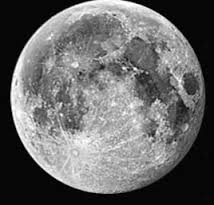
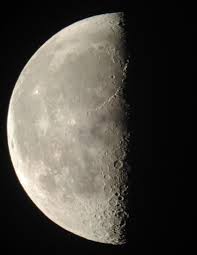
Name this moon phase
a)
waning crescent
b)
waxing crescent
c)
waning gibbous
d)
waxing gibbous
16.
Name this moon phase
a)
First Quarter
b)
Last Quarter
c)
New Moon
d)
Full Moon
17.
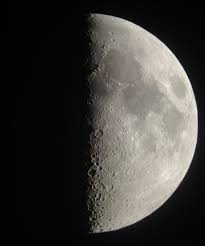
Name this moon phase
a)
First Quarter
b)
Last Quarter
c)
New Moon
d)
Full Moon
18.
Name this moon phase
a)
First Quarter
b)
Last Quarter
c)
New Moon
d)
Full Moon
19.
Name this moon phase
a)
First Quarter
b)
Last Quarter
c)
New Moon
d)
Full Moon
20.
What are the reasons for the season?
a)
Earth's tilt & rotation
b)
Earth's tilt & revolution
c)
Earth's rotation & revolution
d)
Earth's tilt & resolution
21.

What is the source of heat and light in our Solar System?

a)

the North star

b)

the moon

c)

the sun

d)

Earth

22.

A line, real or imaginary, around which something spins is called:

a)

rotation

b)

axis

c)

Atmosphere

23.

The path one object takes as it revolves around another object in space is called:

a)

revolution

b)

rotation

c)

orbit

d)

axis

24.

Does the Earth revolve or rotate around the Sun?

a)

revolve

b)

rotate

25.

The gravity that pulls us to the ground comes from the sun.

a)

true

b)

false

26.

The gravity that pulls us to the ground comes from:

a)

an axis

b)

Earth

c)

orbit

d)

the North star

27.

The Sun, Earth, and Moon all rotate on an axis.

a)

True

b)

False

28.

What do the Earth and the moon have in common?

a)

water

b)

atmosphere

c)

Sphere of rock

29.

About how long does it take the moon to orbit the Earth?

a)

27 days

b)

15 days

c)

1 day

d)

It doesn't.

30.

How long does it take the Earth to orbit around it Sun?

a)

29 1/4 days

b)

365 1/4 days

c)

1 day

d)

0 days

31.

How long does it take the Earth to rotate once?

a)

29 days

b)

365 days

c)

24 hours

32.

What is the diameter of the Earth at the equator?

a)

3,475km

b)

12,742km

c)

1,391,016km

d)

384,400km

33.

What is the diameter of the sun?

a)

12,742km

b)

384,400km

c)

1,391,016km

d)

400km

34.

Why does Earth appear to be the same size as the Moon in the sky?

a)

They are both the same distance from Earth.

b)

They are the same size.

c)

The Sun is about 400 times farther away from Earth than the Moon.

35.

What month does a leap year occur in?

a)

December

b)

January

c)

February

d)

March

36.

How big is the moons diameter?

a)

1,391,016km

b)

3,475 km

c)

12,742km

d)

2,578km

37.

The Moon has all weather patterns.

a)

True

b)

False

38.

The collection of dust, gas, and stars to which our solar system belongs.

a)

sun

b)

galaxy

c)

solar system

d)

moon

39.
What are the reasons for the season?
a)
Earth's tilt & rotation
b)
Earth's tilt & revolution
c)
Earth's rotation & rovolution
d)
Earth's tilt & resolution
40.
Why is it warmer in the summer?
a)
Closer to the sun
b)
More direct light from Earth's tilt
c)
Stronger light from the sun
d)
Earth spins slower
41.
What causes there to be longer number of hours of light during the summer
a)
Earth tilt's away from the sun in summer
b)
Earth's revolves slower in summer
c)
Earth tilts toward the sun in summer
d)
Earth is closer to the sun
42.

Why is June 21st an important day to remember?

a)

It is the longest day of the year

b)

We are on summer vacation

c)

It is Summer Solstice

d)

Earth is right above the sun

43.
The Earth's axis is tilted _____ degrees.
a)
23.5
b)
25.3
c)
30.2
d)
24
44.
At position A, which hemisphere would have summer?
a)
Northern hemisphere
b)
Southern hemisphere
45.
What happens when the area in which you live tilts away from the sun?
a)
It is summer.
b)
It is spring.
c)
It is winter.
d)
It is fall.
46.
The term equinox means....
a)
equal amount of day light and equal amount of night
b)
Equal amount of winter and summer
c)
Equal amounts of hot dogs for everyone
d)
The longest day of the year
47.
Why is the Equator warmest?
a)
Because it is closest to the sun.
b)
Because it receives the most direct sunlight
c)
Because no clouds form here.
d)
Because it is far from the sun
48.
Which season is taking place in the Southern Hemisphere in Position 1?
a)
Winter
b)
Spring
c)
Summer
d)
Fall
49.
Which season is taking place in the Northern Hemisphere in Position 1?
a)
Winter
b)
Spring
c)
Summer
d)
Fall
50.
Which season is taking place in the Northern Hemisphere in Position 2?
a)
Winter
b)
Spring
c)
Summer
d)
Fall
51.
Which season is taking place in the Northern Hemisphere in Position 3?
a)
Winter
b)
Spring
c)
Summer
d)
Fall
52.

Which hemisphere is shown above the equator?

a)

Eastern Hemisphere

b)

Western Hemisphere

c)

Northern Hemisphere

53.

Which hemisphere is highlighted in blue?

a)

Southern

b)

Northern

c)

Western

54.

Based on this picture, which two hemispheres do we live in on North America?

a)

Northern and Eastern

b)

Northern and Southern

c)

Northern and Western

55.

Which type of eclipse has a Full moon?

a)

solar eclipse

b)

lunar eclipse

56.

Which type of eclipse has a New Moon?

a)

solar eclipse

b)

lunar eclipse

57.

During a solar eclipse, you can look directly at the eclipse.

a)

True - you can look at a solar eclipse

b)

False - you cannot look at a solar eclipse

58.

During a lunar eclipse, you can look directly at the eclipse.

a)

True

b)

False

59.

What type of eclipse is in the Diagram?

a)

Solar Eclipse

b)

Lunar Eclipse

60.

What type of eclipse is in the Diagram?

a)

Solar Eclipse

b)

Lunar Eclipse

61.

Number one in the diagram, is pointing to what part of the Earth's Shadow?

a)

umbra

b)

penumbra

62.

Number two in the diagram, is pointing to what part of the Earth's Shadow?

a)

umbra

b)

penumbra

63.

Which type of eclipse happens during the day?

a)

solar eclipse

b)

lunar eclipse

64.

What type of eclipse happens at night?

a)

solar eclipse

b)

lunar eclipse

65.

When does a solar eclipse take place?

a)

when the sun moves into the Earth's shadow

b)

when Earth moves into the sun's shadow

c)

when Earth moves into the moon's shadow

d)

when the moon moves into the Earth's shadow

66.

Which statement explains how a lunar eclipse happens?

a)

when the sun moves into the Earth's shadow

b)

when Earth moves into the sun's shadow

c)

when Earth moves into the moon's shadow

d)

when the moon moves into the Earth's shadow

67.

Check all that apply for a Solar Eclipse.

a)

Moon is in the middle of the Sun and Earth (SME)

b)

Earth is in the middle of the Sun & Moon

c)

Happens during the day

d)

Happens at night

e)

Can't look directly at Solar Eclipse

68.

Check all that apply for a Lunar Eclipse.

a)

Moon is in the middle of the Sun and Earth (SME)

b)

Earth is in the middle of the Sun & Moon (SEM)

c)

Happens during the day

d)

Happens at night

e)

You can look directly at Lunar Eclipse