
 Worksheets
Unit 4: Molecular Compounds Review
Total questions: 41
Worksheet time: 14mins
SO2
SiO3
SiO2
SiO
How many total electrons are shared in a double bond?
2
3
4
6
Valence Structure of Electron Planes and Rotation
Varied Structures of Electrons Paired and Replaced
Valence Shell Energy of Protons and Radiation
Valence Shell Electron Pair Repulsion

What is the name for As4O10?
arsenic oxide
arsenide decoxide
tetraarsenic decoxide
arsenic decoxide
Touch the molecule that has 1 double bond and 2 single bonds
When drawing lewis structures the goal is use only valence electrons to (a) them so that every atom has (b) electrons.
Covalent bonds usually occur between:
metal and metal
metal and nonmetal
nonmetal and nonmetal
none of above

Which VSEPR structure will CO2 make?
Linear triatomic
Bent
Tetrahedral
Trigonal Pyramidal

Which VSEPR structure will NH3 make?
Trigonal Planar
Bent
Tetrahedral
Trigonal Pyramidal
Which of the following can form diatomic molecules held by a double covalent bond?
H2
N2
O2
F2
Pick the molecule that has a tetrahedral shape.

The red dots indicate ______________________.
lone pairs
bonded pairs
protons
covalent bonds
What is the OFFICIAL name for H2O
Hydrogen Oxide
Monoxygen Dihydride
Aguita para la pansita
Dihydrogen Monoxide
Match the following molecules with their 3D shape

linear triatomic

bent

trigonal planar

octahedral
Which of the following is NOT one of the 7 diatomic molecules?
F2
O2
S2
Br2

What kind of bonds are present in this molecule?
8 single bonds
6 single bonds and 1 quadruple bond
4 single bonds and 2 double bonds
4 single bonds and 2 triple bonds
Pick the molecule that has a bent shape.
Bonds between atoms in a molecule form as a result of the sharing of which?
energy
electrons
atoms
protons

Match the following (the brown lone pairs are ignored for the shape name)

linear

trigonal pyramidal

trigonal bipyramidal

tetrahedral
How many electrons does EACH atom share in a double bond?
1
2
3
4
How do covalent bonds form?
Donating & receiving valence e- between atoms.
Opposite slight charges attract each other between compounds.
Scientists are still not sure how they form.
Sharing valence electrons between atoms.
Which of these atoms is commonly found in molecules?
Sodium
Hydrogen
Silicon
Neon
A molecule that has a partial positive end and a partial negative end because of unequal sharing of electrons is a _______________.
nonpolar molecule
polar molecule
ionic compound
metalic compound
Atoms of a nonpolar molecule (such as CH4) share their atoms ___________.
Equally
Unequally
Polar molecules will dissolve in other polar molecules and nonpolar molecules will dissolve in other nonpolar molecules.
True
False
Polar molecules have
no charges.
slight positive and negative charges on opposite ends of the molecules.
only positive charges.
either positive or negative charges, but not both.
The attractions between separate water molecules are called __________________.
dipole-dipole interactions
dispersion forces
hydrogen bonds
I don't know!
Why is it difficult to wash oil from your hands with plain water?
Both substances are polar. Like polarities repel.
Both substances are nonpolar. Like polarities repel.
Water is nonpolar, and oil is polar, so they will not combine.
Water is polar, and oil is nonpolar, so they will not combine.
The melting points of molecular compounds are __________ than the melting point of ionic compounds.
lower than
equal to
higher than

In a hydrogen bond attraction, what does the hydrogen of one molecule attract to on another molecule?
another hydrogen atom on the other molecule
a lone pair of electrons on a slightly negative atom of another molecule
the slightly positive end of the other molecule
the nonpolar part of another molecule
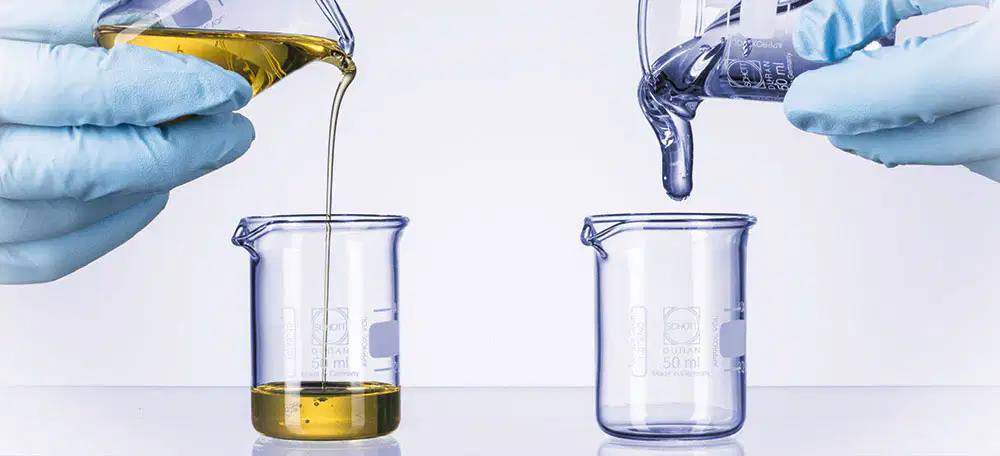
What is the term for a liquid's resistance to flow?
miscibility
viscosity
volatility
density
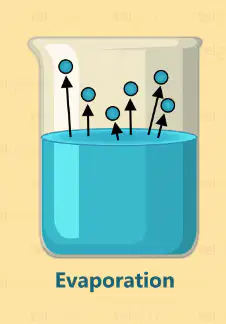
What is the term for how quickly a substance evaporates at room temperature?
viscosity
miscibility
volatility
polarity
What is the temperature at which a substance changes from the solid phase to the liquid phase?
melting point
freezing point
boiling point
condensation point
Density
High Surface Tension
Low volatility
Low viscosity
Which one is a property molecular compounds that contain carbon?
They can conduct electricity
They are flammable
They have high melting and boiling points
They are all solid
Low temperature
Surface Tension
Viscosity
Volatility

Water is attracted to glass, and this can be seen on a graduated cylinder because the water level is higher in the sides than in the middle. If water is attracted to glass, what can you conclude about glass?
glass must be nonpolar
glass must be polar
glass must be ionic
An unknown yellow liquid is added to clear mineral oil and it is miscible with it, becoming a lighter yellow color than before. What must be the polarity of the yellow liquid?
It must be polar
It must be nonpolar

