
 Worksheets
Exam 4
Total questions: 71
Worksheet time: 44mins
Methotrexate can be used for...? (SATA)
Decreasing immune system activity
Reducing inflammation
Lupus
Slowing growth of cancer cells
Adalimumab (Humira) is a...
DMARD
Corticosteroid
Biologic therapy
Antihistamine
What are the common side effects of corticosteroids? (SATA)
Edema
Hypertension
Weight gain
Delayed wound healing
Lupus is an autoimmune disease that causes exacerbations of systemic inflammation leading to tissue damage
True
False
Lupus is more common in men.
True
False
What are some environmental factors that contribute to Lupus? (SATA)
Excessive sun exposure
Pollution
Infection
Pesticides
Estrogen sensitivity
What are the most common clinical manifestations for lupus? (SATA)
Butterfly rash
Alopecia
Joint pain
Mouth ulcers
To be diagnosed with Lupus, you must have 4 or more positive results of the diagnostic criteria.
True
False
Preventative measures for Lupus exacerbations. (SATA)
Avoid people with infections
Bedrest
Avoid direct sun exposure
Increase protein and carb intake
Tumor lysis syndrome is caused by chemotherapy.
True
False
What is the goal for tumor lysis syndrome?
Prevent nadir
Prevent hypercalcemia
Prevent renal failure and electrolyte imbalance
Prevent dehydration
A manifestation of Tumor Lysis Syndrome is Hypercalcemia.
True
False
Treatment for Hyperkalemia include... (SATA)
Kayexalate
Lasix
IV insulin
Eliminating potassium in diet
What might a person with TLS need?
Chemo
Nephrectomy
Dialysis
Radiation
In Crohn's, bleeding is common during bowel movements.
True
False
In which condition is inflammation anywhere in the GI tract (from gum to bum)?
Ulcerative Colitis
Crohn's
Ulcers only penetrate the inner lining of the abdomen.
Ulcerative colitis
Crohn's
In Crohn's... (SATA)
Inflammation is in patches found in large sections of the bowel
Bleeding is common during bowel movements.
Inflammation is typically in the lower right abdomen
Inflammation is limited to the large intestine/colon.
In Ulcerative colitis... (SATA)
Inflammation is typically im the lower left abdomen
Inflamed areas are continuous with no patchiness
Bleeding is common during bowel movements
Ulcers penetrate the entire thickness of the abdominal lining.
In a diagnostic CBC for IBD, it would show a decreased WBC.
True
False
Which of the following are used as diagnostics for IBD? (SATA)
Barium enema
Colonoscopy
CT/MRI
CBC
Which medications can be used to treat IBD? (SATA)
Antimicrobials
Corticosteroids
5-aminosalicylates
Antibacterials
What are some goals and nursing management for IBD? (SATA)
Pain control
Bowel rest
Fluid and electrolyte balance
Cardiac monitoring
What could a patient with IBD do to help them identify their triggers?
Cut out carbs
Begin a vegan diet
Keep a food diary
Cut out all dairy products
What diet should someone with IBD follow? (SATA)
High calorie
High in fiber
Low in fiber
High protein
The best way to prevent IBD exacerbations is by identifying triggers.
True
False
Which condition can you see fistulas and strictures with?
Ulcerative Colitis
Crohn's
Some environmental factors that can lead to IBD are... (SATA)
Diet
NSAIDS
Stress
Antibiotics
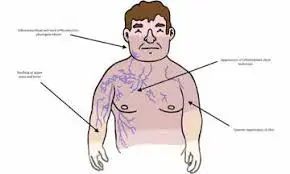
What condition is this?
Tumor Lysis Syndrome
Superior Vena Cava Syndrome
Spinal Cord Compression
Hypercalcemia
A cancer patient comes in to the ER complaining of new and worsening back pain, during your assessment they say they have numbness and tingling in their legs, which oncologic emergency could this be?
Superior Vena Cava Syndrome
Hypercalcemia
Spinal Cord Compression
Tumor Lysis Syndrome
While working on the oncology unit you get some lab results back on two of your patients, which one would you go see first?
Sally
Potassium: 7.2
Uric acid: 11
Phospate: 12.1
Calcium: 4.2
John
Potassium: 3.6
Uric acid: 6.5
Phosphate: 3.3
Calcium: 9.2
Which interventions would you do if you are caring for a patient at risk of TLS? (SATA)
Cardiac monitoring
Monitor labs
Give corticosterioids
Assess renal function
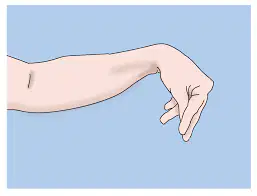
The CNA comes to find you after taking vitals on Mrs. Sally, she tells you that when she was taking her blood pressure on her left arm, her hand and wrist kept contracting. What does this indicate? (SATA)
Positive Chvostek sign
Hypocalcemia
Positive Trousseau sign
Hypercalcemia
What medication would you give to decrease uric acid levels in the body?
Lasix
Calcium Calcitriol
Kayexalate
Allopurinol
Which of the following oncologic emergencies is due to a tumor block? (SATA)
Tumor lysis syndrome
Spinal cord compression
Hypercalcemia
Superior vena cava syndrome
TLS and Hypercalcemia are due to...
Structural changes in the body
Metabolic/ Hematologic changes
Obstructive changes
After receiving report from night shift you go in to see your first patient Mr. Jones, when you walk in, he's tachypneic, has some periorbital edema, and has distended veins on his neck and chest. What oncologic emergency do you suspect?
Tumor lysis syndrome
Hypercalcemia
Superior vena cava syndrome
Spinal cord compression
Which treatment options would you use for a patient with Superior Vena Cava Syndrome? (SATA)
Anticoaglulants/Thrombolytics
Corticosteroids
Radiation
Endovascular shunts
What is a normal calcium level?
3.5-5
15-36
8.5-10.5
4-6
What would be considered HYPERcalcemia?
>10
>12
>8.5
<8
What could cause hypercalcemia? (SATA)
Kidney's are unable to excrete it
Drinking too much milk
Tumors cause the bones to release calcium
After receiving report on your patients, which patient would you go see first?
Liam who's vitals are:
Temp: 37.4
HR: 88
RR: 18
BP: 132/86
SPO2: 97%
Sally who's labs just came back:
Potassium: 3.7
Uric acid: 3.5
Phospate: 2.8
Calcium: 10
John who hasn't been able to have a bowel movement in 2 days and is complaining of abdominal pain.
Jackie who the CNA states is lethargic, has been vomiting for 30 minutes, and is experiencing sudden weakness and fatigue.
What are manifestations of hypercalcemia? (SATA)
Mental status changes
EKG changes
Polyuria
Depression
Nausea and Vomiting
When treating for hypercalcemia you should give thiazide diuretics.
True
False
What are some treatment options of hypercalcemia? (SATA)
Aggressive hydration
Loop diuretics
Calcitonin
Thiazide diuretics
Who is more affected by Rheumatoid arthritis? (SATA)
Women
Men
Age <60
Age 30-50
Rheumatoid arthritis only affects the joints.
True
False

You have a patient with Rheumatoid arthritis come in and say that every time they are exposed to cold weather or stress, their fingers turn pale or blue, and then turn bright red after being warmed, what is this called?
Pleuritis
Environmental response
Diarthrodial
Raynaud's phenomenon
What develops in rheumatoid arthritis that causes a lot of the extraarticular manifestations?
Pericarditis
Rheumatoid factor
Rheumatoid nodules
Synovial fluid
CCP can be found in a patient's blood 5 to 10 years before they even show symptoms of RA.
True
False
What diagnostic labs would they do for RA? (SATA)
CRP/ESR
CCP
RF
CMP
ANA
Which diagnostic tests can they do for RA? (SATA)
CT
Doppler ultrasound
X-Ray
Joint fluid analysis
MRI
For the diagnostic criteria for RA, you must have 4 of the 7 present for a minimum of 2 weeks.
True
False
Which of these patients is showing 4 of the 7 diagnostic criteria for RA?
Patient A:
Joint pain
Mouth sores
Arthritis
Swelling in hand joints
Patient B:
Rheumatoid nodules
Symmetrical joint swelling
Photosensitivity
Serositis
Patient C:
Antinuclear antibody
Renal disorder
Erosions on x-ray
Positive RF
Patient D:
Decalcification on x-ray
Morning stiffness >1 hour
Rheumatoid nodules
Symmetrical joint swelling
What is the goal for RA treatment?
Remove nodules
Decrease the RF factor
Preserve joint function
You are providing education to a patient with RA on ways to relieve pain, which of the following are good pain control measures? (SATA)
NSAIDS
Go on a run
Paraffin wax dips
Warm baths/showers
When educating your patient with RA on preserving joint function, which statement indicates a need for further teaching?
I will perform ROM exercises three times a day.
When getting ready for bed I will place a pillow under my knees to help my joints.
I will alternate scheduled rest periods with activity.
I can apply heat to my joints for 20 minutes at a time.
Diagnostic criteria for SLE include...? (SATA)
Malar rash
Neurological disorders
Arthritis
Erosions
Photosensitivity
What cancer is characterized by the abnormal, uncontrolled proliferation of one type of hematopoietic cell?
Lymphoma
Leukemia
Multiple Myeloma
Pancreatic cancer
What are the 4 types of leukemia? (SATA)
CLL
CLM
AML
CML
ALL
A patient comes in with the following manifestations, which leukemia do you think they have?
Decreased platelets, mild splenomegaly, lymphadenopathy, no sternal tenderness.
CML
CLL
You have a patient who you suspect may have leukemia, which diagnostic studies do you anticipate the doctor will order? (SATA)
PET scan
CT scan
MRI
Lumbar puncture
A patient who is in remission comes in for a visit, they show no symptoms and have a normal peripheral blood smear, there is still evidence of disease in the bone marrow. What kind of remission is this?
Complete
Partial
Relapse
The amount of times a person relapses does not affect their prognosis.
True
False
What are the chemotherapy phases for leukemia treatment? (SATA)
Pre-induction
Intensification
Post-induction
Maintenance
Induction
While providing education to a patient recently diagnosed with Leukemia, which statement by the patient indicates understanding?
I cannot receive any other treatment while getting chemo.
I will not be receiving chemotherapy because it does not work for Leukemia.
I will receive chemo but can also receive other drugs and treatments to help.
The only way to achieve remission is if I receive a stem cell transplant.
Non-Hodgkin's lymphoma is typically seen in the age range of 50-60.
True
False
What are some similarities between the two types of lymphomas? (SATA)
Painless lymph node enlargement.
Prognosis is good.
Chemo can be used for treatment.
Reed Sternburg cells are present.
Can be diagnosed with a lymph node biopsy.
You are educating a patient who just got a new diagnosis of Hodgkin's lymphoma. They ask what could have caused them to get it, what would be the most appropriate response?
"It commonly occurs in people who are immunocompromised."
"There really isn't a known cause for it. But it can be due to certain viruses or genetic components."
In Hodgkin's lymphoma, radiation therapy cures about 95% of patients.
True
False
In non-Hodgkin's the patients typically have widespread disease by the time of diagnosis.
True
False

