
 Worksheets
создание исследования
Total questions: 102
Worksheet time: 56mins
How to deal with overgeneralization?
Measurement devices add precision
Replicate a study to make sure the same results are produced each time
Find cases that do not fit the general pattern
Use systems of logic explicitly
Principle of Falsification (by Popper):
Use of induction
All knowledge is certain (only until refuted)
Rejection of deduction
All knowledge is uncertain (explanations are true until they are refuted)
Problem is
lack of knowledge
hypothesis to be tested
From specific observations (=empirical research) to the discovery ofa pattern among all the given events (=axiom, theory building)
Induction
Deduction
3 elements of scientific theory:
Premises
Hypothesis
Testing
Assumptions
Model
Hypothesis
Design
Testing
Conclusions
Body of knowledge
Model
Hypothesis
Design research aim:
reaching conclusion
characteristics of event
finding reasons of success/failure
suggested solution to a practical problem
Under which conditions will citizens comply with the social distancing norm imposed by theDutch government in 2020?
Design aim
Explanatory aim
Diagnosing aim
Testing aim
Did the leadership of Mark Rutte and Hugo de Jong contribute to the success or failure of theCOVID crisis management in the Netherlands in 2020?
Diagnosis aim
Design aim
Explanatory aim
Testing aim
What measurement level is used in Richter scale:
Nominal
Ordinal
Interval
Ratio
income, age are examples of measurement on ... level
nominal
ordinal
interval
ratio
Guttman scale:
answer categories go from totally disagree to totally agree (5 or 7 points). Total score is divided by number of items to produce 1 score (ordinal level)
answers (often yes=1/no=0) are added to one total score (ordinal level)
Main aim in regulative cycle (unlike empirical cycle)
new knowledge
improve/change existing situation
Ontological position (in philosophy of science)
suitable for natural sciences
"free will"
wether the reality truly exists
there is no "one" reality (сколько людей, столько и мнений)
methodological position (in philosophy of science)
is suitable only for social sciences
is suitable for all sciences
is suitable only for natural sciences
Stratified sampling:
from known population "by chance" (random)
from groups (share same characteristics) "by chance" (random)
fixed numbers/%
1 class in 3 schools in 2 provinces is an example of ... sampling:
snowball
random
stepwise
quota
Types of non-probability sampling:
random
stratified
purposive
quotum
purposive
snowball
two-step
quotum
random
Cohort longitudinal design:
one homogeneous group is measured at different moments in time
one heterogeneous group is measured at different moments in time
one fixed homogeneous group is measured at different intervals
one fixed heterogeneous group is measured at different intervals
What type of longitudinal design is used in experiment?
cohort
panel
cross-sectional
pretest-posttest
according to Black (laws of probability), a ... sample is a representative of the population
quotum
sufficient
sufficiently large
Internal validity involves
operationalization
proven causality
accuracy
consistency
Question: "Will your findings hold for other situations that you did not study?" relates to
internal validity
accuracy
external validity
consistency
Which statement/s is true?
1. Accuracy stands for the choice of used methods for data collection and measurement level
2. Replicability relates to the external validity
both correct
1 correct
2 false
1 false
2 correct
both false
Research outside the lab (less control of interference) is a threat to
validity
reliability
Researcher's Bia's can affect
replicability
accuracy and validity
external validity
deductive research, limited number of variables, full control
survey
case study
desk research
experiment
Hawthorne effect:
researcher's bias
subject's behavioral change
ethical conflict
a variable whose state is independent of the state of other variables in a system (external to the situation)
dependent
independent
intervening
exogenous
is a variable whose state is independent of the state of other variables in a system (already existing)
dependent
independent
exogenous
intervening
flaws of experiment
too much variables
lack of validity (selection of variables)
objective in observations
lack of control
unstructured observation is
deductive
inductive
schematic
"Going native" relates to
selectivity in observation
presence in the situation (validity threat)
subjectivity
large sampling, standardized measures, generalization of findings (high external validity)
case study
experiment
survey
desk research
survey is used for
editing existing knowledge
getting new data
evaluating exiting data
non-response (in surveys) is a threat to
reliability
internal validity
external validity
desk research uses information which
was collected for reasons other than research
was collected for research reasons
was already used in research
desk research "accumulates" new data
no enrollment in the situation results in
lower validity and reliability
higher validity and reliability
has no effect
desk research is valued for
transparency
high level of control
efficience&validity
operationalization problem
which one is NOT a method for data analysis?
meta-analysis
secondary analysis
empirical analysis
content analysis
operationalization problem occurs in
content analysis
secondary analysis
meta-analysis
facts, exploration, qualitative&quantitative
content analysis
secondary analysis
meta-analysis
quantitative analysis, no exploration, re-use of data
content analysis
secondary analysis
meta-analysis
complexity (of case study) refers to
Low number of units of study
Researcher has no control over the situation
High number of variable
Researcher is often part of the situation
case study is valued for
in-depth (high internal validity)
limited generalization
no control over the situatio
Methods of data collection for a case study:
interviews, observation,
field experiment
interviews, observation, content analys
interviews, observation, secondary analys
oral questionnaire, observation, content analys
Delphi study
6-12 respondents, interviewed by moderator, openor semi-structured
experts as respondents, multiple rounds of semi-structured questions and reports, aimed towards consensus
5-10 respondents, multiple rounds of semi-structured questions and reports, testing aim
interview transcript excerpt, images/recordings are examples of
structured data
unstructured data
Data collected by the researchers themselves
secondary
primary
Techniques for qualitative data analysis:
Manual analysis & Statistical analysis
Statistical analysis & Specific techniques
Specific techniques & Manual analysis
Manual analysis & supported by software
Operationalization is starting point in
coding in deductive research
saturation in deductive research
coding in inductive research
saturation in inductive research
Coding in multiple rounds is done in
deductive research
inductive research
Abduction is
combination of primary and secondary data
combination of deductive & inductive codings
variation of deductive coding
is not part of coding
2 phase of coding of qualitative data
Situational coding
Axial coding
Thematic coding
Situational, descriptive and interpretative codes are part of ... phase of coding
1
2
Counting (in coding) refers to
similarities and differences between respondents
the higher the frequency, the more valid the observation of the variable
the role of the theoretical variable
/predict the phenomen
In deductive research,
the researcher can answer the research questio
the researcher will formulate conclusions as axioms tobuild new theory
Collection and analysis are separate stages of ... research
qualitative
quantitative
inspection of data refers to
checking for errors, division, outliers
creating scales and index scores
descriptive analysis
code book is:
arrangement of data by units and variables
standard deviation
an overview of all variables + their accompanying variables
arithmetic mean is
number of units divided by total sum of scores
total sum of scores divided by number of variables
total sum of scores divided by number of units
the distance between the certain score and the mean
Exploratory statistics is
descriptive
inferential
Cross-tabulation, correlation and T-Test relate to
descriptive statistics
inferential statistics
juxtaposing 2 variables is
correlation
variance analysis
T-test
crosstab
Inferential statistics:
Crosstabs
Regression analysis
T-test
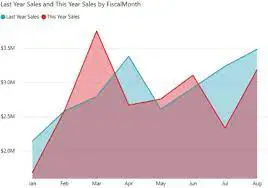
scattergram:


Variance analysis is based on
latent relations
correlation
principle of falsification
ANOVA is
variance analysis on 1 variable
variance analysis on multiple variables
factor analysis on 1 variable
factor analysis on multiple variables
statistical analysis is
an end of the research
not a part of research
is a "mean: to an end
qualitative data is
objective
subjective
numerical
Paradigm is
body of knowledge
viewpoint/approach
matrix
philosophy of being
ontology
epistemology
model of man
methodology
Epistemology is
deterministic VS individual free will
natural science as ideal VS subjective
philosophy of knowledge
philosophy of being
viewpoint about science/discipline in general
paradigm (p)
Paradigm (P)
Normal science:
group of researcherwith the same paradigm
shared paradigm, common methods, accumulation of knowledge
objective, "one real" science
Ontology from Positivist approach
Knowledge is objective, or at leastintersubjective
Everybody sees reality differently, there is notone reality
Reality exists, is tangible and can bemeasured objectively
Which approach does not fit with applied research?
post-positivist
constructivist
empirical-analytical
positivist
code of conduct is
a set of rules outlining the norms, rules, and responsibilities or proper practices
codified guidelines for writing a scientific paper
???
Integrity code (VSNU) states for:
ethical regulations of Academia
honesty,
transparency,
independence,
responsibility
research methods/guidelines
Academia has come under pressure:
capitalist interest
politicians involved
Fraud,
AFM
positivism
changing data to your benefit, lying to respondents relates to
Wrongful conduct
Plagiarism
Manipulation
Causes of fraud in Academia
loss of reputation, prosecution
pressure for performance (competition), financial interests
Alternative facts movement
... are the most important sources of scientific knowledge
books
journals
e-books
lectures
‘open science’ trend
transparent data
every scientific paper have to accumulate new knowledge
make data sets available (method, techniques, coding)
What is Holism?
the idea that various systems should be viewed as wholes, not merely as a collection of parts
that everyday "lay" concepts and those from the social sciences have a two-way relationship
what we observed in our study is not usually present
With which kind of research aim does the main question, "Does employee performance pay lead to higher motivation?" fit?
Prescription
Description
Explanatory
Testing
Panel longitudinal design
fixed heterogeneous group is measured at different moments in time
fixed homogenous group is measured at different moments in time
homogenous group is measured once
heterogeneous group is measured once
Which statement about hypotheses is correct:
1) A hypothesis is a testable proposition
2) A hypothesis is derived from empirical reality
both are wrong
only statement 1 is correct
only statement 2 is correct
both are correct
Which two phases make up the empirical cycle?
Intervention and evaluation
Analysis and interpretation
Deduction and Induction
Hypothesis and observation
Empirical-analytic researchers are usually not in favor of action research. Why not?
No questionnaires or experiments can be used in action research
Empirical-analytic researchers value studying a situation in its entity
Empirical-analytic researchers believe that researchers should not be part of the research situation
Action research can only be descriptive or exploratory
According to critics, what is the biggest risk of interpretation research?
Going native
Triangulation
Double hermeneutics
Holism
Research often takes place at a single point in time. Yet there are also forms of research in which multiple measurements take place. This is called longitudinal research. There are different forms of longitudinal research, such as cohort studies. What are they?
Cohort studies are studies that compare the results of a pre-and post-measurement between two groups
Cohort studies are surveys of a homogeneous group of research units. Multiple measurements take place with members of this group, without necessarily involving the same members each time.
Cohort studies are studies in which multiple measurements take place on the same research units each time
Cohort studies are surveys in which the researcher asks about events that took place in the past, at the same time for all individuals e.g. their 20e birthday
The values of a variable are increasing, but we do not know the difference between two variables
Nominal
Ordinal
Interval
Ratio
Inter-researcher reliability refers to
The overlap between measurements of one subject by multiple researchers
The accuracy and consistency of multiple measurements by one researcher
The integrity of a researcher in designing and conduction research
Having multiple researchers pre-test a chosen research design
Items in a questionnaire should be clear and unambiguous. Why?
If items are not clear, the respondent can give multiple answers
If items are not clears, there is a risk of double hermeneutics
If items are not clear, respondents give no answer
If items are not clear, internal validity is at risk
Homogenous cases contribute to the replication of findings and thus greater reliability
True
False
Heterogenous cases contribute to the variation but therefore threaten internal validity
True
False
One of the pieces of advice given to researchers when embarking on a case study is to keep a database or logbook. In what way does this contribute to the reliability and validity of case studies?
By accurately recording everything, respondents or clients can verify that the researcher made the right decisions
Accurately recording everything increases the verifiability and replicability of the research
All three answers are correct
By accurately recording everything, fellow researchers can better assess the quality of the research
Police monitor database + report from Ministry of Justice
secondary analysis
regression analysis
meta analysis
content analysis
A researcher asked which party people voted for in 2020 elections. The researchers score answers: A=1, B=2, C=3, D=4 and so on. Statistical analysis shows that the average is 2.7. How should researcher interpret the score?
Chances that people voted for 2 or 3 are less than 5%
This score makes no sense cause it's a nominal value
50% of people either voted 2 or 3
Voters voted C most often as 2.7 is rounded off to 3
What are artefacts?
By-products of statistical calculations
Replications of previous research
Operationalization of nun-numerical variables
Unintended effects
Which type of codes does not exist?
Selective
Thematic
Interpretative
Situational
Recommendations are the capstone of prescriptive research. With which research aim does giving recommendations does not fit?
Exploration
Evaluation
Design
Explanation

