
NEW
Font size
 Worksheets
Tectonic Plates
Total questions: 20
Worksheet time: 10mins

An illustration of the major tectonic plates is provided. Which of the labeled plates in the illustration is the Eurasian Plate?
A
B
C
D

A force caused the continents to drift apart over time. Once scientists figured out what that force was, the theory of plate tectonics was born! The image above shows what Geologists think the Earth looks like millions of years ago. What name was given to this landmass?
Plate Tectonics
Oceana
Pangea
North America
A tectonic plate division of the lithosphere that includes the continental crust of Africa and the surrounding oceanic crust.
African Plate
South American Plate
North American Plate
Eurasian Plate
An illustration of the major tectonic plates is provided. Which of the labeled plates in the illustration is the Indo-Austrslian Plate?
A
B
C
D

Which continental tectonic plate lies underneath X?
Pacific Plate
South American Plate
Nazca PLate
Antarctic Place
What is the name of the massive pieces of the lithosphere (solid rock) that floats on the partially melted rocks of the mantel.
Orogenesis
Tectonic Plate
Volcanoe
Earthquake
What forms continents and the bottom of the oceans?
Orogenesis
Tectonic Plate
Volcanoe
Earthquake
What can be entirely oceanic like the Pacific Plate?
Orogenesis
Tectonic Plate
Volcanoe
Earthquake
What can be mixed (partly oceanic, partly continental like the South American Plate?
Orogenesis
Tectonic Plate
Volcanoe
Earthquake
How do the tectonic plates move?
Immense pieces of lithosphere move against each other.
Plates collide with each other.
Plates move apart from each other.
Plates rub against each other.
All of the answers
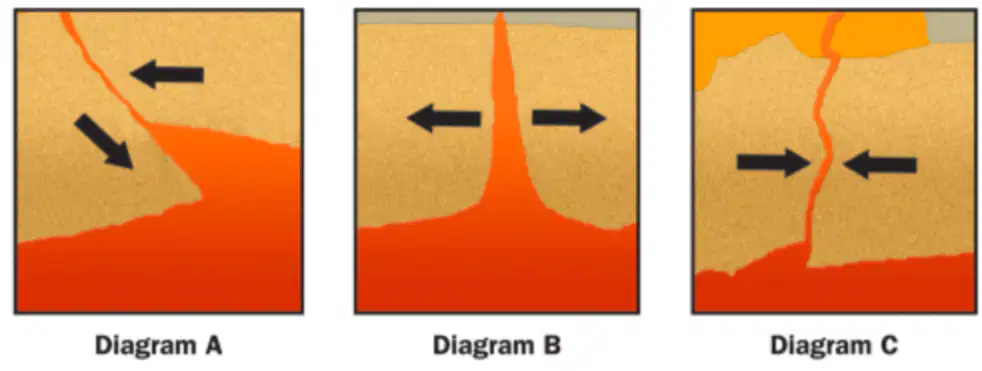
What is the type of movement for diagram A?
Collision
Rubbing
Seperation
What is the type of movement for diagram B?
Collision
Rubbing
Seperation
What is the type of movement for diagram C?
Collision
Rubbing
Seperation
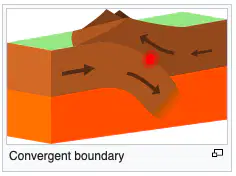
This type of movement causes orogenesis.
Collision
Rubbing
Seperation
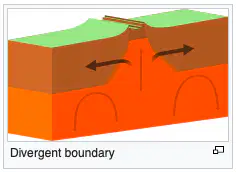
This type of movement leads to the formation of underwater mountain ranges (mid-oceanic ridges) and new oceanic crust. It can also cause earthquakes.
Collision
Rubbing
Seperation
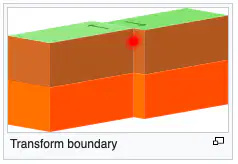
This type of movement causes earthquakes, but it's not usually associated with volcanic activity.
Collision
Rubbing
Seperation
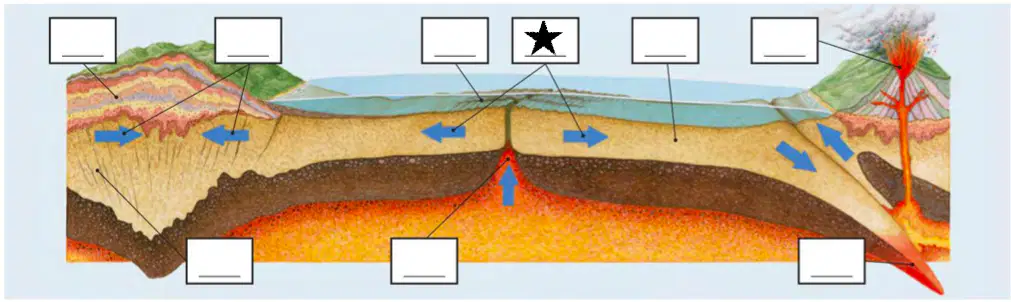
What is the star representing?
Formation of a mountain
Separation
Collision
Volcano
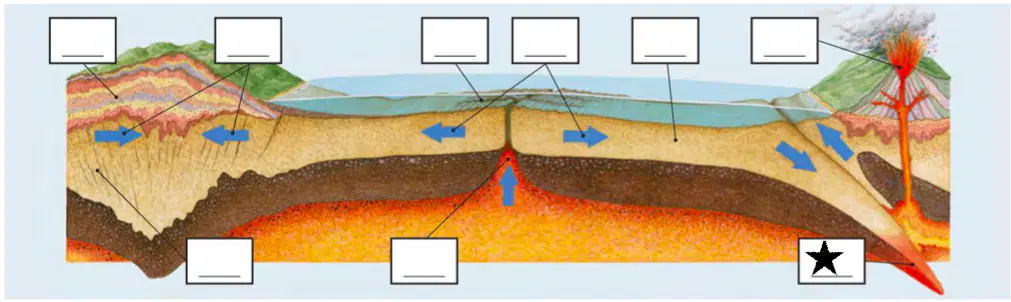
What is the star representing?
Separation
Subduction zone
Volcano
Oceanic crust
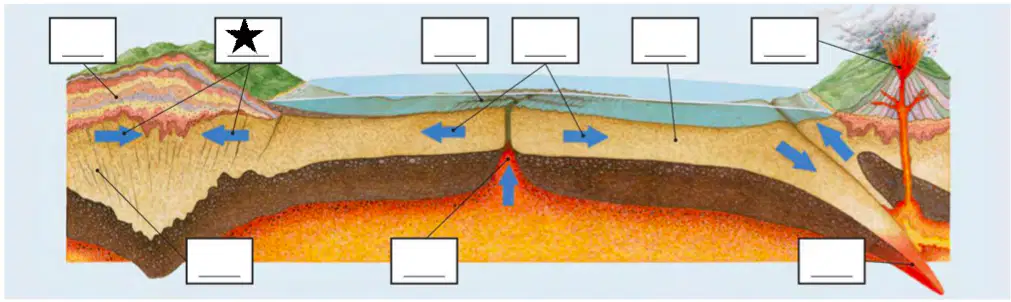
What is the star representing?
Subduction zone
Volcano
Oceanic crust
Collision
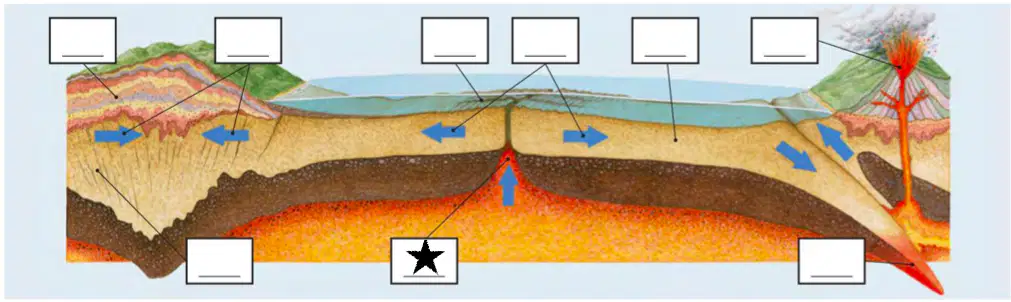
What is the star representing?
Collision
Magma
Subduction zone
Continental crust

