
 Worksheets
Ethics and CSR Stakeholder Management / Employees / Consumers
Total questions: 9
Worksheet time: 5mins
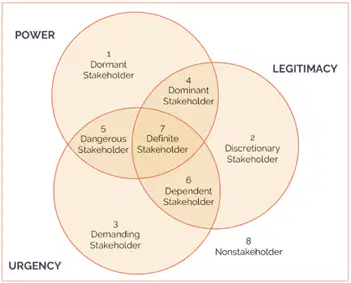
Which of the following statements accurately describe the stakeholder classification in the given figure based on Mitchell et al. (1997)?
Latent stakeholders are the most important group and are given immediate priority.
Expectant stakeholders have moderate importance and are highly engaged.
Definitive stakeholders are low importance and have little to no resources.
Expectant stakeholders are given higher priority than definitive stakeholders.
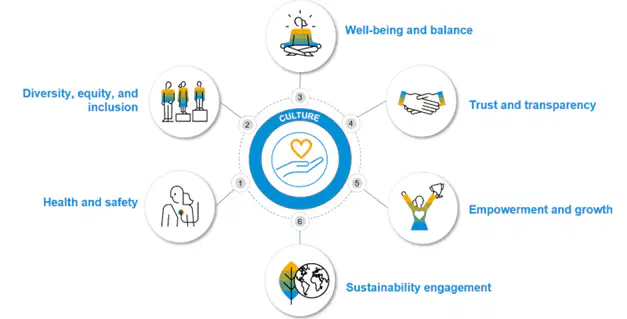
There is a beneficial relationship between sustainability management and employees, as indicated by a positive and subjective perception of CSR.
TRUE
FALSE
Which of the following statements accurately describe the effects of CSR on employees and organizations, based on the empirical studies by Y.Wang et al. (2020) and Zhao et al. (2022)?
CSR has a negative influence on organizational trust
Employees' perception of CSR is not connected to organizational justice
Perceived CSR is positively related to turnover intentions, organizational cynicism, and organizational deviation
CSR has a positive correlation with organizational identification
_________ can be another driver, general perception of acceptable behavior, trying to conform with expectations, group norms favor sustainable over unsustainable norms
Awareness
Social norms
Moral and prosocial motives
Personal norms
Personality traits with negative connotations can never be beneficial for corporate sustainability.
TRUE
FALSE
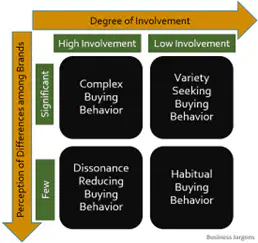
Which type of consumer behavior involves a high level of commitment and few differences between brands, making the decision-making process easier for the consumer?
Complex buying behavior
Habitual buying behavior
Dissonance reducing buying behavior
Variety seeking buying behavior
Which of the following is true about feelgood purchases according to the Green Purchase Perception Matrix?
They have high confidence and high compromise
They have high confidence and low compromise
They have low confidence and high compromise
They have low confidence and low compromise
The sharing economy emphasizes the ownership of goods rather than renting or borrowing them.
TRUE
FALSE
Which of the following are categories of collaborative consumption?
B2C models where companies offer sharing services to consumers
P2P models where individuals share their own resources with each other
B2B models where companies can share workspaces or utilize truck capacity
All of the above

