
 Worksheets
Unit 8: South Asia Review - WG
Total questions: 172
Worksheet time: 2hrs 39mins

Which two factors have the greatest effect on climate? (4.A)
Soil type and altitude
Longitude and vegetation
Mountain barriers and amount of arable land
Latitude and distance from water

Which statement should be used to complete the graphic organizer? (WG.4A)
Summer monsoons are important to the agricultural economy of India.
A balance of wet and dry seasons is critical for agriculture in the region.
People throughout region grow different crops to adapt to winter monsoons.
Modifying how people grow crops can help to increase agricultural production

Which group of factors influences the distribution of climate regions across the continents? (WG.4A)
elevation, latitude, wind systems, mountain barriers
landforms, revolution of the Earth, volcanic eruptions, elevation
the equator, latitude, tectonic forces, wind systems
soil-building processes, wind systems, latitude, temperature
Place the country on the map
What do the summer monsoons bring into South Asia?
Moist, warm air that brings in lots of rain
Large Tsunamis
Cold, dry air that causes droughts
Cold, dry air that brings in snow
Which of the following is a cash crop in South Asia
Wheat
Tea
Potatoes
Rice
Which of the following industries benefits from the large populations of South Asian countries?
Manufacturing
Automotive
Pharmaceutical
Agricultural

What does this map show us?
Monsoon activity in South Asia
Population density of South Asia
Religions of South Asia
Natural Resources in South Asia

A monsoon is a
seasonal wind
hurricane
drought
band instrument

Monsoons are seasonal winds, but the word can also be used to mean the
tsunami warnings
dry season
rainy season
high tide

The wet season monsoons are extremely important to South Asia's
schools
malls
textile industry
agriculture

Monsoons also help provide power to industries through cheaper
solar fields
hydroelectricity
coal production
oil drilling

The summer (wet season) monsoons blow in off of the
Indian Ocean
Himalayas
Indo-Gangetic Plain
Indus River

When the wet season monsoons bring ______________ rains, it is beneficial because it fills the rivers, aquifers, and wells with fresh water.
adequate (just enough)
torrential
weak
late

When the wet season monsoons bring ____________ rains, it is harmful because it causes flooding and mudslides.
late
adequate (just right)
weak
torrential (heavy)

When the wet season monsoons bring __________ rains it is harmful because there will be drought and crops will die.
adequate
torrential
heavy
weak or late

The dry season monsoons blow in from
Antarctica
the ocean
the land
all sides

The monsoons create two distinct seasons:
Rest and Work
Planting and Harvesting
Autumn and Spring
the wet season and the dry season

One way that farmers adapt to the wet season and the dry season is to
plant the same crops all year long
plant drought hardy plants in the dry season and water loving plants in the wet season.
plant drought hardy plants in the wet season and water loving plants in the wet season
not plant at all during the dry season

What physical feature is this?
Bay of Bengal
Mt. Everest
Brahmaputra River
Himalayas
The movement of cool moist air from the Indian Ocean to South Asia creates what?
summer monsoons
fall tsnamis
winter earthquakes
spring hail storms
A rain shadow refers to what?
a dry area on the downwind side of a mountain
a wet area on the upwind side of a mountain
a place where it rains year round.

What is the #1 reason that farming is difficult in Bangladesh?
Insects like grasshoppers
disease
flooding from monsoons
dry desert conditions

The ocean just below South Asia is the
Atlantic Ocean
Pacific Ocean
Arctic Ocean
Indian Ocean

Wearing warm clothes when it is cold, wearing sunscreen, and stilt fishing are examples of
changing the environment
modifying the environment
helping the environment
adapting to the environment

Monsoons can be a good thing and help by (select all that apply)
allows fishing from the front door of your house
irrigation
opening trade routes
water for drinking

How is the winter monsoon formed?
Blows from land to sea, dry air and cooler temperatures causing a drought.
Wind blows from sea to land wet and hot air.
Wind blows both from land to sea and from sea to land.
There is no movement of wind.

Why is the wet summer monsoon formed in India?
The land heats up faster than ocean water.
The air over land warms.
Area of high pressure.
Cooler air heats up and rises then results in heavy precipitation and thunderstorms.

Effects of the Summer Monsoon: The Good rains help the agriculture of South Asia by?
Irrigate crops
Wash Away Trash
Provide water to clean cars

Winter monsoon is a wind system that blows across the (Land) Himalayas toward the ____?____.
Deserts
Mountains
Sea

summer monsoon is a wind system that blows across the Indian Ocean toward ____?____ South Asia
Desert
Sea
Land
When water overflows or too much rain has fallen to be absorbed by the ground in a normally dry area, a ________________ can occur.
Monsoon
Hurricane
Flood
Earthquake
Which statement accurately describes monsoons in India?
Summer monsoons are fairly dry, while winter monsoons bring heavy rain.
Monsoons bring heavy rainfall in all seasons in India.
Winter monsoons are fairly dry, while summer monsoons bring heavy rain.
Monsoons only affect the coastal regions of the Indian subcontinent.
Choose THREE impacts of monsoons
irrigation for crops
destruction of homes and villages
water for hydroelectric power
decreased forced migration

Looking at the climograph, when is the peak season for the Monsoon Summer?
May
June
July
August

Looking at the graph, which months are mostly Monsoon winter?
January and February
March and April
June and July
September and October

What is a major concern during the Monsoon Summer?
Droughts
Famine
Floods
Pests

What is a major concern during the Monsoon Winter?
Drought
Flooding
Freezing weather
Pests
the pattern or spread of people in a given area
census
death rate
population distribution
demographics

Sparely populated areas have ____ people living in it, while densely populated areas have ____.
many; few
few; few
few; many
many; many
Which is [likely to be] more densely populated?
temperate climate (where we live)
polar climate (Antarctica)
What is another name for a city?
rural area
urban area
suburban area
Which of the following is NOT a challenge to a growing population?
Overcrowding
Housing shortages
Overuse of resources
Increased food supplies
Sparsely populated areas such as the country side
Urban areas
Rural areas
Suburbs
Urbanization


True or False: Most people in the world live along coast lines
True
False
What do the summer monsoons bring into South Asia?
Moist, warm air that brings in lots of rain
Large Tsunamis
Cold, dry air that causes droughts
Cold, dry air that brings in snow
Which of the following industries benefits from the large populations of South Asian countries?
Manufacturing
Automotive
Pharmaceutical
Agricultural

amount of land for agriculture
amount of clean water
number of people who are unemployed
all of the above
amount of air pollution in society
Why are human populations distributed the way they are?
soils
vegetation
climate types
the availability of resources
all of the above
There are factors that determine where people choose to live. Which one is NOT a factor?
Weather & Climate
Geographic Location
Access to Shopping Malls
Access to Natural Resources

What are Geographic Factors?
When people change the environment to meet their needs.
How landscapes and climate effect where people live.
When people change their behavior to adjust to the environment.
Math equations that help you build your house to resist bad weather.
What are the reasons that a country might be densly populated?
There are deserts.
There is a water source, like a river or ocean.
There are natural resources available.
The climate in moderate/mild.
Why have many people migrated to live near large cities?
Large cities have access to ships so that people can travel.
Large cities are located on rivers
Large cities are safer places to live than in the country
Large cities have more jobs and the things people need
Which picture depicts an urban area?
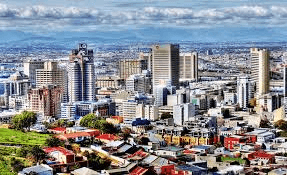
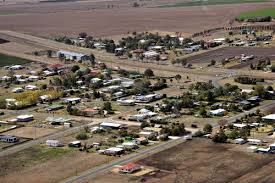
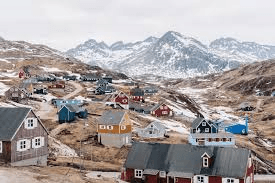
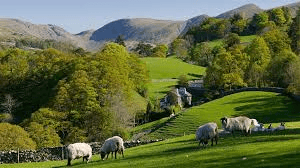
What human factors affect population distribution?
climate
standard of life
Safety
all of the above
How do physical factors affect population distribution?
limit the location that people can settle
they make people have to work harder
depends on the people's culture
they can never settle
a physical characteristic is ...
mountain
city
farm
all of the above

Which factor best explains the growth in urban populations?(WG.7C)
Less pollution
Climate change
Economic opportunities
Higher birth rates

Climate, landforms, and vegetation are types of ________ features.
physical
human
absolute
technological

Population, economic activity, and land use are types of _______ features.
technological
physical
human
absolute

What type of feature is this?
Human Feature
Physical Feature

What type of feature is this?
Human Feature
Physical Feature
These regions have the mildest temperatures due to not being the furthest away from direct sunlight and due to not receiving direct sunlight. This is where majority of the world's population lives.
Temperate
Prime Meridian
International Date line
Location
Which physical feature usually has the highest population density?


Effort to use modern techniques in science to increase food production in poor countries
Green revolution
jute
Cottage industry
Outsourcing
What is the main river in India?
Ganges
Indus
Brahmaputra
What is the main mountain range in South Asia?
Deccan Plateau
Ganges
HImalayas

Formerly known as East Pakistan, what nation is highlighted on the map?
Nepal
Bangladesh
Maldives
Pakistan

What nation is highlighted on the map?
Bhutan
Nepal
India
Pakistan

What nation is highlighted on the map?
India
Nepal
Maldives
Pakistan
How are India’s waters both polluted and losing water?
Industrial waste pours into rivers and Acid rain
Human waste pours into rivers and shrinking glaciers in the Himalayas
Poisoned wells and organic plant food
Runoff from farm fertilizers and monsoons

How do monsoons affect the climate in South Asia in the summer?
Winds from the Thar Desert make it hot and dry
Winds from the Himalayas bring cool breezes
Winds from the Indian Ocean and Arabian Sea bring heavy rain
Winds from the Himalayas cause drought.

India went through a ___________Revolution but now practices ___________ agriculture.
Industrial /sustainable
Green/ sustainable
Green/ fixed
Industrial/ fixed
Which of the following agricultural inputs were the most recent technological innovations employed in less developed countries during the Green Revolution?
Metal plows and harvesting equipment
Irrigated farm fields
Seed hybrids and animal breeds
Chemical fertilizers and pesticides
Terracing in highland terrain

1. What is the Green Revolution?
a large increase in crop production in developing countries achieved by the use of fertilizers.
a large decrease in crop production in developing countries achieved by the use of fertilizers.
Biotechnology production.
I don’t even know.

2. What problem did The Green Revolution attempt to solve?
They didn’t solve anything.
The problem the green revolution attempted to solve was biotechnology.
The problem the green revolution attempted to solve was hunger.
The problem the green revolution attempted to solve was world peace.

3. Was The Green Revolution successful? (THERES TWO ANSWERS, PICK TWO)
No, because the chemicals harmed the environment.
Yes, the green revolution was successful, BUT some disagreed due to the impact on the environment.
Yes, the green revolution was successful, feeding millions by helping the poorest countries.
No, because the problem wasn't solved.

4. According to the GRAPH, did India's GRAIN production increase or decrease?
YES India's GRAIN production increased.
NO India's GRAIN production decreased.
NEITHER India's GRAIN production increased or decreased.
In Green Revolution the traditional farming techniques were replaced by ______________________ and the farming became more scientific.
Seeds
Machinery
Carts
Old methods
Few people live on the Tibetan Plateau due to its climate. Which are true about the Tibetan Plateau's climate? (a) (b)
Name three reasons why the areas around rivers are so heavily populated. (a) (b) (c)
Why are many minority groups found along China's borders?
Minority groups such as the Tibetans and the Uighurs stay near the border in order to easily escape China's harsh dictatorship.
Minority groups such as the Tibetans and the Uighurs cannot afford to live in eastern China.
Chinese emperors made laws designed to keep minority groups in their homelands, forbidding them to move to eastern China.
Chinese emperors conquered new lands, coming to control people who often kept many of their own customs and stayed near their traditional homelands.
What significant event happened to Tibet in 1950?
Tibet conquered India
Mongolia occupied Tibet
The current Buddha was found
China invaded Tibet

Who is the political and religious leader of Tibet expelled from his country in 1959?
13th Dalai Lama
15th Dalai Lama
12th Dalai Lama
14th Dalai Lama
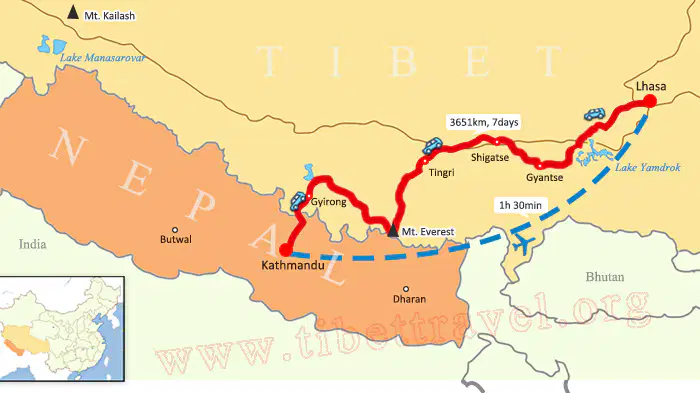
Tibetans migrating to India across the Himalayan Mountains in order to practice Buddhism freely is an example of ____________ factors that affect population settlements.
human
physical
technological
crazy
What is the oldest practiced religion in the world?
Buddhism
Christianity
Islam
Hinduism
Who led the successful India Independence movement?
Gandhi
Buddha
Zafar II
Mughal

This image is most closely associated with wich religion/philosophy
Judaism
Hinduism
Buddhism
Daoism
Karma
good deeds
Dharma
one's job
Reincarnation
rebirth
Moksha
heaven
Ahimsa
non-violence
Reorder the following from highest caste to lowest
Brahmin
Kshatryia
Viasya
Sudra
Untouchable
True or false: In Hinduism, the caste you are born into is the same caste you will die in.
True
False

This map is an example of
The Indian Ocean Complex
Trade Routes
Cultural Diffusion
Ahimsa
What is a shared belief of Hindusim and Buddhism?
Caste system
Prayer 5 times a day
Cast away desires
reincarnation

This statue is most closely associated with which philosophy
Buddhism
Hinduism
Judaism
Islam
Who was the spiritual leader of the Indian National Congress party, known for his methods of peaceful protest?
Jawaharlal Nehru
Muhammad Ali Jinnah
Mohandas Gandhi
Louis Mountbatten
Which country became a Muslim-majority state due to the events of Partition?
Pakistan
Bangladesh
Bengal
Sri Lanka
Which nation was responsible for the colonization of India, and was responsible for overseeing the partition of India into two different countries?
Great Britain
United States
France
Portugal
In what year did Partition go into effect?
1944
1919
1857
1947
What was the cause of most deaths during the migration period of partition?
A widespread plague
Violence from civil unrest
Violence from British soldiers
Starvation from famine
Which of the following do Hindus believe in?
Dharma
All Choices Are Correct
Social Hierarchy
Reincarnation


Ganges river is considered sacred in Hinduism for thousands of years. Millions of Hindus perform religious rituals, such as purification rites and the disposal of the deceased, in the river. How have these long-practiced rituals affected the river today?
The Ganges has become one of the most visited places in the world
Muslims have adopted the Ganges as their most sacred in Islam
It has caused the river to flood more periodically
The river has become one of the most polluted in the world.
a measure of a country's standard of living, including health and education
Death Rate
Life Expectancy
Human Development Index (HDI)
Gross Domestic Product (GDP)
Once India gained its independence from Britain, it caused more tension between which two religions.
Judaism and Sikhism
Christianity and Buddhism
Islam and Shintoism
Islam and Hinduism
Why do many Kashmir residents do not want to be ruled by India?
they tend to be Hindu and India is dominated by Muslims
they want to be ruled by the British
they tend to by Muslim and India is dominated by Hindus
they do want to be ruled by India
A form of government where the people's votes directly count towards creating laws.
Democracy
Communism
Republic
Imperialism
Why do women in many Southwest Asian countries have fewer political and social rights than men?
Religious and cultural beliefs are a part of the law in these countries.
These countries believe that women are less intelligent than men.
The governments believe women should have no rights.
The societies are trying to protect women from negative influences in the world

According to the map, the Buddhist religion originated in — (WG.17B) (WG.21B) (WG.21C)
Southern Japan
Central Afghanistan
Southern China
Northern India

The majority of India’s population belongs to the __________ religion. (WG.17B)
Hindu
Muslim
Jain
Jewish

The Sikh religion recognizes only one deity, meaning it is (WG.17B)
Nontheistic
Atheistic
Monotheistic
Polytheistic

The majority of the population in Bangladesh and Pakistan belong to which religious group? (WG.17B)
Hindu
Buddhist
Muslim
Christian

Which phrase best describes the Hindu caste system? (WG.17B)
a system that is at odds with individual freedoms and principles of democracy
a part of the Hindu religion that is a relatively new practice
an idea that had its start when India broke its colonial ties with Europe
an internationally accepted practice that has been adopted by other cultures

Which religion is described by the graph and narrative? (WG.17B)
Islam
Buddhism
Christianity
Chinese traditional

According to the map, what is the relationship between culture and religion on the Indian subcontinent? (WG.17A) (WG.21C)
A.
B.
C.
D.
Most people in India practice the same religion for their entire lives.
The major religions practiced in India seem to have links to one language.
For many in India, the Hindu religion is a core element of their culture.
Religions practiced by the people of India are part of other cultures.
80% of the population of India belong to what religion?
Hinduism
Islam
Buddhist
Jainism
Which religion of South Asia has developed over thousands of years?
Hinduism
Buddhism
Jainism
Sikhism
The Vedas are the holy text in which religion?
Hinduism
Buddhism
Sikhism
Jainism
Believers of Hinduism believe in
many gods
one god
Which religion teaches the "4 Noble Truths?"
Buddhism
Hinduism
Jainism
Sikhism
Sikhism mixes elements of Hinduism and what other religion?
Islam
Christianity
Judaism
Jainism
A tenant, or follower of Sikhism, seeks the equality of all humans.
true
false
It is tradition in Sikhism for males to cover their hair with a turban at all times.
true
false
Belief in ahimsa or nonviolence towards all living things is central to which religion?
Jainism
Judaism
Hinduism
Islam
Which of these religions was not founded in India?
Christianity
Jainism
Hinduism
Buddhism

Which cultural institution has historically guided the moral and social life for most people in India?
Islam
Jainism
Sikhism
Hinduism
What is the name of one of the Hindu sacred texts?
Four Noble Truths
Vedas
Quran
Torah
The two religions that originated in India were _____ and _____.
Hinduism and Confucianism
Buddhism and Shintoism
Buddhism and Islam
Hinduism and Buddhism
Which religion believes in the caste system?
Confucianism
Buddhism
Islam
Hinduism
What is the Hindu belief in reincarnation?
The worship of sacred animals who are
believed to have souls.
The belief that men should treat others
with kindness.
the belief that there is only one god
The belief that a soul returns to life in
another body after death.
Who was the founder of Buddhism?
Siddhartha Gautama
Abraham
Muhammed
Confucius
Nirvana is the ultimate goal in this religion.
Confucianism
Islam
Buddhism
Hinduism
What are the Five Pillars?
Muslim followers
Rules of the caste system
Basic beliefs of Islam
what Muslims and Hindus have in common


Polytheistic (believe in many gods and goddesses)
Buddhism
Hinduism
Jainism
Sikhism

Believe in reincarnation (returning to live a new life after death).
Buddhism
Christianity
HInduism
Islam
Judaism

The oldest of the religions in South Asia.
Buddhism
Christianity
Hinduism
Islam

Shiva, Brahmin, and Vishnu
Buddhism
Hinduism
Islam
Sikhism

This symbol represents:
Buddhists
Hindus
Muslims
Sikhs

India's biggest and most important holiday of the year.
Christmas
Diwali
Easter
Rosh Hoshanah
Vaisakhi

No one knows who started this religion.
Buddhism
Hinduism
Islam
Sikhism

Founded by Guru Nanak.
Buddhism
Hinduism
Sikhism

