wayground logo

Free Printable Worksheets

Font size

S
M
L
XL
Worksheets

Ecology

Total questions: 124

Worksheet time: 2hrs 16mins

Name
Class
Date
1.

Radiation

a)

Biotic

b)

Abiotic

2.

magnetism

a)

Biotic

b)

Abiotic

3.

Nitrogen

a)

Biotic

b)

Abiotic

4.

The ability of the ecosystem to support organisms.

a)

Carrying Capacity

b)

Limiting factor

c)

Tolerance range

d)

Optimum range

5.

This prevents the survival of organism

a)

Carrying Capacity

b)

Limiting factor

c)

Tolerance range

d)

Optimum range

6.

range of values that is needed for organism survival

a)

Carrying Capacity

b)

Limiting factor

c)

Tolerance range

d)

Optimum range

7.

at this range particular system works at maximum level and gives maximum products.

a)

Carrying Capacity

b)

Limiting factor

c)

Tolerance range

d)

Optimum range

8.
Members of a species in a defined area
a)
Ecosystem
b)
community
c)
biodiversity
d)
population
9.
Study of interactions between organisms and their environment 
a)
niche
b)
community 
c)
ecology
d)
ecosystem
10.
Non-living factor that affects an ecosystem
a)
biotic factor
b)
abiotic factor
c)
food chain 
d)
biome
11.
A collection of organisms that belong to different populations but all live in the same area and interact with one another.
a)
Population
b)
Ecosystem
c)
Community
d)
Ecosphere
12.
Individuals that can breed with one another make up a
a)
species
b)
population
c)
community
d)
ecosystem
13.
Organisms that relies on other organisms for food; consumer
a)
herbivore
b)
decomposer
c)
heterotroph
d)
species
14.

Organisms that can make their own food using only chemicals.

(a)  

15.

Organisms that rely on lights to make their own food.

(a)  

16.

Organisms that make their own food using abiotic factors (you may select more than one answer)

a)

autotrophs

b)

heterotrophs

c)

producers

d)

consumers

17.

Organisms that eat other organisms (you may select more than one answer)

a)

autotrophs

b)

heterotrophs

c)

producers

d)

consumers

18.

Which of the following organisms recycle materials from dead organisms and their waste products?

a)

autotrophs

b)

heterotrophs

c)

scavengers

d)

decomposers

19.

Organisms that only eat producers

a)

Herbivores

b)

Carnivores

c)

Scavengers

d)

Omnivores

20.

Organisms that only eat consumers

a)

Herbivores

b)

Carnivores

c)

Scavengers

d)

Omnivores

21.

Organisms that eat both producers and consumers

a)

Herbivores

b)

Carnivores

c)

Scavengers

d)

Omnivores

22.

What is the ultimate source of energy for most organisms?

a)

The Sun

b)

The Earth

c)

Plants

d)

Producers

23.
In the food chain, which of the pictures is a PRODUCER?
a)
Sun
b)
Plants
c)
Ladybug
d)
Chicken
24.

A food _______ consists of many overlapping food ________.

a)

web, chains

b)

chain, webs

c)

pyramid, webs

d)

web, pyramids

25.

In the energy pyramid, what is the bottom level composed of?

a)

Producers

b)

First-Level Consumers

c)

Second-Level Consumers

d)

Third-Level Consumers

26.
An organism that lives by breaking apart dead organic matter into simpler parts is...
a)
scavenger
b)
consumer
c)
decomposer
d)
carnivore
27.

An arctic blast pushed its way through several of the Northern state in the United State. The temperatures dropped below freezing for several days. Temperature is an example of which type of factor?

a)

Biotic

b)

Abiotic

28.

An angler fish has a fleshy growth on its head that gives off light. This part acts as a lure to help the angler fish catch its prey. An anglerfish is an example of which type of factor?

a)

Biotic

b)

Abiotic

29.

Precipitation (rain, snow, sleet, hail)

a)

Biotic factor

b)

Abiotic factor

30.

Weather (sunny, rainy, windy, snowy)

a)

Biotic factor

b)

Abiotic factor

31.

Bacteria

a)

Biotic factor

b)

Abiotic factor

32.

The food web supports which statement?

a)

Organisms are independent from one another.

b)

Each organism has its own, unique food source.

c)

Matter cannot move from one organism to

another.

d)

Matter can be recycled between organisms

and their environment.

33.

In the diagram, which organism provides nutrients for the

largest number of other organisms?

a)

Seal

b)

Herring

c)

Snapper

d)

Bluefish

34.
The efficiency of energy transfer from a lower trophic level to the next highest level is roughly
a)
1%
b)
10%
c)
100%
d)
1000%
35.
Trophic levels are represented by 
a)
squares
b)
circles
c)
pyramids
d)
lines
36.
In the energy pyramid here, how much of the energy in each level gets lost as heat or used by the organism for survival?
a)
80%
b)
90%
c)
10%
d)
20%
37.
The arrows in a food chain or web represents what?
a)
They point to the organism that is being eaten.
b)
It shows how sunlight flows within an ecosystem.
c)
They show what direction the energy is flowing between organisms. 
d)
They represent how water is transferred within a habitat.
38.
Eat primary consumers (can be carnivores and omnivores)
a)
Tertiary Consumers
b)
Secondary Consumers
c)
Quaternary Consumers 
d)
Top Predators 
39.
Biomass refers to
a)
Chemical Energy
b)
Light Energy
c)
Rank in the feeding heirarchy
d)
Amount of living tissue at the tropic level
40.
The process of plants using energy from the sun to create the first trophic level is called?
a)
Photosynthesis
b)
Chemosynthesis
c)
Cellular Respiratation
d)
Primary Producers
41.

What are "producers" producing?

a)

the energy for the food chain

b)

the insects for the food chain

42.

The word "primary" means "first."

If that's true, what does primary consumer mean?

Hint: look carefully at the food chain!

a)

the first organism in a food chain

b)

the first organism that consumes something else for energy

43.

If the amount of food or resources available increases, the carrying capacity for an animal.....

a)

Stays the same

b)

Increases

c)

Decreases

d)

Fluctuates

44.

This is the largest number of individuals of a population that the environment can support...

a)

carrying capacity

b)

population crash

c)

lag phase

d)

mutualism

45.

When a population grows past the ecosystem's carrying capacity, what happens to the population?

a)

Continues to grow

b)

The population starts to die off to return to carrying capcity

c)

The population will go extinct due to lack of resources

d)

The population grows then finds a new carrying capacity

46.
How will competition affect the carrying capacity of an ecosystem for the animal in competition?
a)
Decrease
b)
Increase
c)
Will show not affect
d)
Competition does not exist in nature
47.

Water, sunlight, shelter, and space are resources that are often........

a)

abiotic limiting factors

b)

biotic limiting factors

c)

non-limiting factors

d)

exponetial factors

48.
What type of relationship is shown here
a)
Commensalism
b)
Predation
c)
Parasitism
d)
Mutualism 
49.
A relationship between two organisms in which one organism benefits and the other is unharmed
a)
Mutualism 
b)
Competition
c)
Parasitsm 
d)
Commensalism 
50.
Barnacles create home sites by attaching themselves to whales.  The whale is unaffected.  
a)
commensalism
b)
mutualism
c)
predation
d)
laziness
51.
Honey guide birds alert and direct badgers to bee hives.  The badgers then expose the hives and feed on the honey first.  Then the honey guide birds eat.  
a)
mutualism
b)
commensalism
c)
predation
d)
competition
52.
A cuckoo may lay its eggs in a warbler's nest.  The cuckoo's young will displace (or move) the warbler's young and will be raised by the warbler.  
a)
Parasitism
b)
Commensalism
c)
Predation
d)
Competition
53.
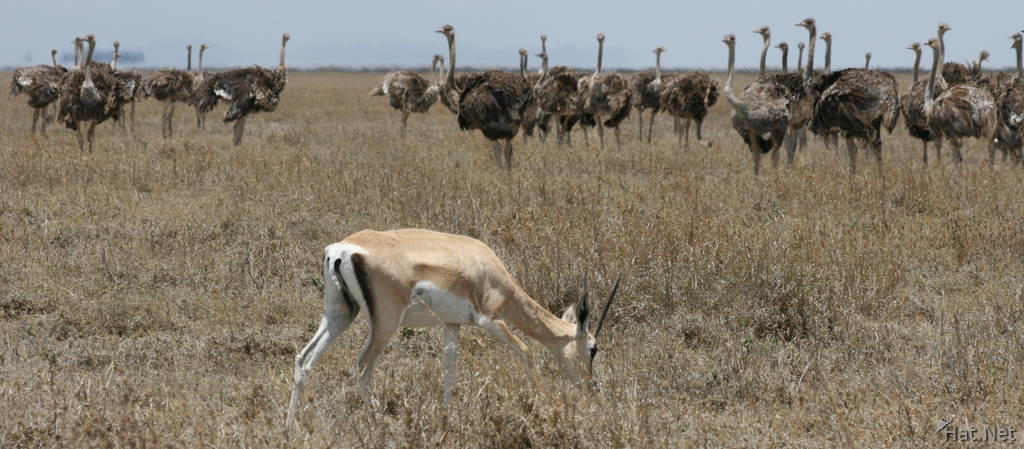
Ostriches and Gazelles feed next to each other.  They both watch for predators and alert each other to danger.  Since the visual abilities of the two species are different, they can each identify threats the other animal would not as readily see.  
a)
Parasitism
b)
Commensalism
c)
 Mutualism 
d)
Competition.  
54.
A bird makes a nest in a tree.  The bird gets a house, but the tree is unharmed.
a)
commensalism
b)
mutualism
c)
Parasitism
d)
predation
55.
A squirrel hides his acorns from the chipmunks for the winter.
a)
commensalism
b)
parasitism
c)
competition
d)
mutualism
56.
A bear eats fish out of the river.
a)
mutualism
b)
parasitism
c)
predator / prey
d)
host / parasite
57.
In the relationship between a lion and a gazelle, who is the prey?
a)
Gazelle
b)
lion
c)
grass
d)
none
58.
What is the substance a poisonous snake might use to stun its prey?
a)
saliva
b)
slime
c)
sticky sap
d)
Venom
59.
The close external resemblance of an animal or plant to another animal, plant, or object.
a)
Camouflage
b)
Hide
c)
Mimicry
d)
Invisible
60.
To blend in with surroundings or background.
a)
Invisible
b)
Mimicry
c)
Hiding
d)
Camouflage
61.
To a monkey food, water, and living space are valuable ______.
a)
resources
b)
living space
c)
competition
d)
waste
62.
Most animals have ________ for food, water, and living space.
a)
competition
b)
fun
c)
predation
d)
commensalism
63.
Dwarf mistletoe is a plant that grows into the bark of a tree to obtain water and nutrients. The mistletoe is a ______________
a)
prey
b)
parasite
c)
predator
d)
niche
64.
What type of symbiosis?
  * Hummingbirds feed on nectar from flowers.
 * 
Flowers are pollinated by hummingbirds as they move from flower to flower.
a)
commensalism
b)
mutualism
c)
parasitism
d)
predation
65.
What type of symbiosis?
*
The tick lives on dog and feeds on its blood and tissue.
*
  The dog gets skin irritation and can pick up diseases carried by tick.
a)
commensalism
b)
mutualism
c)
parasitism
d)
predfation
66.
What type of symbiosis?
*
Remora use suckers to attach temporarily to large marine animals such as sharks, manta rays, whales, turtles, or large fish.
*
The shark provides free transportation, protection, and dropped food and feces which the remora feeds on. The host is not injured.
a)
commensalism
b)
mutualism
c)
parasitism
d)
predation
67.
What type of symbiosis?
*
The plover picks and eats scraps of meat from the crocodile’s teeth.
*
The crocodile gets a free teeth-cleaning!
a)
commensalism
b)
mutualism
c)
parasitism
d)
predation
68.
Barnacles create home sites by attaching themselves to whales. This neither harms nor benefits the whales.  What kind of relationship is this?
a)
Mutualism 
b)
Parasitism 
c)
Commensalism 
69.
A frog eats a fly. The frog and fly are demonstrating ________.
a)
mutualism
b)
competition
c)
predator/prey
d)
parasitism
70.
What type of relationship is shown here
a)
Commensalism
b)
Predation
c)
Parasitism
d)
Mutualism 
71.
A relationship between two organisms in which one organism benefits and the other is unharmed
a)
Mutualism 
b)
Competition
c)
Parasitsm 
d)
Commensalism 
72.
Barnacles create home sites by attaching themselves to whales.  The whale is unaffected.  
a)
commensalism
b)
mutualism
c)
predation
d)
laziness
73.
Honey guide birds alert and direct badgers to bee hives.  The badgers then expose the hives and feed on the honey first.  Then the honey guide birds eat.  
a)
mutualism
b)
commensalism
c)
predation
d)
competition
74.
A cuckoo may lay its eggs in a warbler's nest.  The cuckoo's young will displace (or move) the warbler's young and will be raised by the warbler.  
a)
Parasitism
b)
Commensalism
c)
Predation
d)
Competition
75.
Ostriches and Gazelles feed next to each other.  They both watch for predators and alert each other to danger.  Since the visual abilities of the two species are different, they can each identify threats the other animal would not as readily see.  
a)
Parasitism
b)
Commensalism
c)
 Mutualism 
d)
Competition.  
76.
A bird makes a nest in a tree.  The bird gets a house, but the tree is unharmed.
a)
commensalism
b)
mutualism
c)
Parasitism
d)
predation
77.
A squirrel hides his acorns from the chipmunks for the winter.
a)
commensalism
b)
parasitism
c)
competition
d)
mutualism
78.
A bear eats fish out of the river.
a)
mutualism
b)
parasitism
c)
predator / prey
d)
host / parasite
79.
In the relationship between a lion and a gazelle, who is the prey?
a)
Gazelle
b)
lion
c)
grass
d)
none
80.
What is the substance a poisonous snake might use to stun its prey?
a)
saliva
b)
slime
c)
sticky sap
d)
Venom
81.
The close external resemblance of an animal or plant to another animal, plant, or object.
a)
Camouflage
b)
Hide
c)
Mimicry
d)
Invisible
82.
To blend in with surroundings or background.
a)
Invisible
b)
Mimicry
c)
Hiding
d)
Camouflage
83.
To a monkey food, water, and living space are valuable ______.
a)
resources
b)
living space
c)
competition
d)
waste
84.
Most animals have ________ for food, water, and living space.
a)
competition
b)
fun
c)
predation
d)
commensalism
85.
Dwarf mistletoe is a plant that grows into the bark of a tree to obtain water and nutrients. The mistletoe is a ______________
a)
prey
b)
parasite
c)
predator
d)
niche
86.
What type of symbiosis?
  * Hummingbirds feed on nectar from flowers.
 * 
Flowers are pollinated by hummingbirds as they move from flower to flower.
a)
commensalism
b)
mutualism
c)
parasitism
d)
predation
87.
What type of symbiosis?
*
The tick lives on dog and feeds on its blood and tissue.
*
  The dog gets skin irritation and can pick up diseases carried by tick.
a)
commensalism
b)
mutualism
c)
parasitism
d)
predfation
88.
What type of symbiosis?
*
Remora use suckers to attach temporarily to large marine animals such as sharks, manta rays, whales, turtles, or large fish.
*
The shark provides free transportation, protection, and dropped food and feces which the remora feeds on. The host is not injured.
a)
commensalism
b)
mutualism
c)
parasitism
d)
predation
89.
What type of symbiosis?
*
The plover picks and eats scraps of meat from the crocodile’s teeth.
*
The crocodile gets a free teeth-cleaning!
a)
commensalism
b)
mutualism
c)
parasitism
d)
predation
90.
Barnacles create home sites by attaching themselves to whales. This neither harms nor benefits the whales.  What kind of relationship is this?
a)
Mutualism 
b)
Parasitism 
c)
Commensalism 
91.
A frog eats a fly. The frog and fly are demonstrating ________.
a)
mutualism
b)
competition
c)
predator/prey
d)
parasitism
92.

Define mutualism

a)

One organism benefits, one is unaffected

b)

Both organisms benefit

c)

One benefits, one is harmed.

93.
Which of the following symbiotic relationships is considered parasitic?
a)
Ticks feeding on a dog
b)
Bees transporting pollen from flowers
c)
Pilotfish swimming under sharks
d)
Birds eating the insects fromo the back of hippo
94.
Occurs when 2 or more organism use the same resource
a)
Competition
b)
Mutualism
c)
Commensalism
d)
Parasitism
95.
Relationship where one organism benefits and the other is neither harmed nor helped
a)
Commensalism
b)
Parasitism
c)
Mutualism
d)
Competition
96.
An organism where one organism benefits and another is harmed
a)
Commensalism
b)
Parasitism
c)
Mutualism
d)
Competition
97.
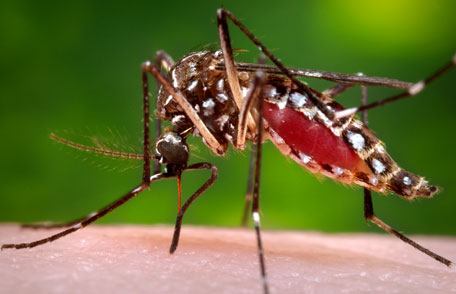
When a mosquito bites you, you are the __________ and the mosquito is the  ____________.
a)
host, hostess
b)
parasite, host
c)
host, parasite
d)
prey, predator
98.

One organism hunts and eats another organism.

a)

predation

b)

mutualism

c)

carnivore

d)

parasitism

99.

Two male deer fight over a female. This is an example of

a)

Symbiosis

b)

competition

c)

predation

100.

Hermit crabs use the shells of dead snails for homes. What type of interaction is this?

a)

mutualism

b)

commensalism

c)

parasitism

101.

A type of symbiosis in which both species benefit is called...

a)

mutualism

b)

commensalism

c)

parasitism

102.
Barnacles create home sites by attaching themselves to whales.  The whale is unaffected.  
a)
commensalism
b)
mutualism
c)
predation
d)
laziness
103.

The word symbiosis has a Greek origin. What is the MOST LIKELY translation of the word in Greek?

a)

hiding

b)

building

c)

making food

d)

living together

104.

The ecological role an organism performs in their specific environment is considered the organism's...

a)

Habitat

b)

Population

c)

Biome

d)

Niche

105.
What is this biome?
a)
Arctic Tundra
b)
Desert
106.
What is this biome?
a)
Grassland
b)
Desert
107.
What is this biome?
a)
Desert
b)
Arctic Tundra
c)
Tropical Rainforest
108.
What is this biome?
a)
Desert
b)
Arctic Tundra
109.
What is this biome?
a)
Deciduous Forest
b)
Tropical Rainforest
110.
What is this biome?
a)
Coniferous Forest
b)
Desert
111.

Deciduous means

a)

"to fall off"

b)

"to add"

c)

"to stay attached"

d)

"to be active"

112.

Which biome is hot all year with wet and dry seasons?

a)

tropical rainforest

b)

arctic tundra

c)

temperate grassland

d)

desert

113.

Biome with plants and grasses, but no trees.

a)

grassland

b)

desert

c)

forest

d)

arctic tundra

114.
Type of forest biome near the equator; receives a lot of rain; temperatures are warm all year.
a)
desert
b)
tropical rain forest
c)
arctic
d)
temperate rain forest
115.

Which biome is represented by the rainfall amounts in letter C?

a)

desert

b)

prairie

c)

deciduous forest

d)

tropical rain forest

116.
A biome is......
a)
Like a snowglobe that you shake and can see different types of animals.
b)
A large region of earth with a certain type of climate
c)
An area of earth only found in the United States.
d)
A community of living things.
117.
True of False?  
Animals that live in the desert have adapted to live with little water since the desert gets little rainfall.
a)
True
b)
False
118.
The earth's coldest biome is the....
a)
Antartica
b)
Grasslands
c)
Tundra
d)
Freshwater
119.
The climate in a tropical rain forest can be described as
a)
cold and wet 
b)
warm and dry 
c)
cold and dry 
d)
warm and wet 
120.

Which biome has the most biodiversity(variety of life)?

a)

Desert

b)

Temperate Deciduous Forest

c)

Savanna

d)

Tropical Rainforest

121.

__________ are trees that have cones and needle-like leaves.

a)

Canopy

b)

Conifers

c)

Deciduous

d)

Ferns

122.

What is one of the main reasons a biome is different from another?

a)

Sunlight

b)

Altitude

c)

Biodiversity

d)

Precipitation

123.

What biome is found in between a forest and a desert?

a)

Outback

b)

Grasslands

c)

Taiga

d)

Tundra

124.

A group of ecosystems with similar climates and types of organisms is called

a)

Ecosystem

b)

Biome

c)

Community

d)

Hemisphere