
 Worksheets
Interpersonal Skills
Total questions: 150
Worksheet time: 1hrs 18mins
Body language can also be called:
Attitude
Extrovert
Non-verbal communication
Verbal communication
Who came up with a sequential theory on group/team dynamics?
Argyle
Tuckman
Maslow
Johari
What is the first stage of Tuckman's team dynamic?
Norming
Storming
Performing
Forming
Adjourning
What is the second stage of Tuckman's team dynamic?
Norming
Storming
Performing
Forming
Adjourning
What is the third stage of Tuckman's team dynamic?
Norming
Storming
Performing
Forming
Adjourning
What is the fourth stage of Tuckman's team dynamic?
Norming
Storming
Performing
Forming
Adjourning
What is the fifth stage of Tuckman's team dynamic?
Norming
Storming
Performing
Forming
Adjourning
Who introduced a communication cycle, that can be helpful in understanding in why communication breaks down in healthcare settings?
Argyle
Tuckman
Maslow
Johari
What are the stages of Argyle's communication cycle?
Idea, Decode, Send, Receive, Encode, Understand
Idea, Encode, Send, Receive, Decode, Understand
Encode, Idea, Send, Receive, Decode, Understand
Encode, Idea, Receive, Send, Decode, Understand
Who introduced a 'hierarchy of needs' that can be used to guide healthcare practice?
Argyle
Tuckman
Maslow
Johari
Before a service user or patient feels safe, what needs must be satisfied first?
Physiological
Self-actualisation
Love and belonging
Esteem
At which level in the 'hierarchy of needs' can a service user or patient can discuss their needs, be creative and accept themselves fully?
Physiological
Self-actualisation
Love and belonging
Esteem
Whose reflective model has 3 stages: What?, So What?, Now What?
Gibbs
Atkins and Murphy
Driscoll
Why is it important for healthcare professionals to reflect on their interpersonal skills?
Poor communication costs the NHS over £1 billion a year
It can help improve weak areas and improve practice
It can improve a patient's recovery
All of the above - and more!
How often do nurses and midwives have to reflect on their practice, in order to 'revalidate' and maintain their registration with the NMC?
Every year
Every 2 years
Every 3 years
Every 4 years
In healthcare, people we may interact with include,,,,,,,,,,?,
(choose the most unlikely answer)
Clients
Client's families
MDT
Teachers
Showing empathy, respect, compassion, a good attitude, good communication skills are all examples of interpersonal skills?
True
False
--------- is the ability to understand the feelings, thoughts and behaviours of others?
(a)
Therapeutic relationships involve ...........???? ( choose more than one answer)
Active listening
Honesty and Trust
Speedy assessment
Privacy and confidentiality
Interpersonal issues that may arise in healthcare include ...??
Conflict clients or families or colleagues
Behaviourial challenges
Communication challenges
All of the above
Having good interpersonal skills enables to work well as part of a team and deliver quality care?
True
False
(a) on our performance can help us be more self-aware and develop our interpersonal skills??
Interpersonal skills are the skills required to interact and build relationships with others?
True
False
Which of the following statements DOES NOT apply to IQ?
Inherited
Problem solving
Not inherited
Logical thinking
Which of the following are Goleman's EQ components?
Self-awareness, empathy, social skills
Self-esteem, self-awareness, social skills
Self-esteem, self-awareness, empathy
Self esteem, self-awareness, self-regulation
The ability to stick with something.
self motivation
persistence
optimism
self control
Often it's important to express how you feel. But managing your reaction means knowing when, where, and ___________ to express yourself.
why
who
how
Emotional intelligence is something that develops as we get _________________.
older
smarter
more college degrees
Which stage of negotiation do many people consider the most important part of the process:
Preparation
Concession
Assessment
Mediation
Your coworker Tim tells you that he has been experiencing a lot of stress at work lately. What is the best
advice that you could give Tim that may help him more effectively manage his stress on a daily basis?
Suggest that he reassign some of his work to others
Tell him to use deep breathing and visualization techniques
Encourage him to take on additional projects so he doesn't focus on the stress
Persuade him to take an unpaid leave of absence
Eric sends staff members an email stating that their department's performance during the third quarter
exceeded the company's goals, so each of them will receive a $200 bonus. What technique is Eric using
to motivate staff members to continue the good work?
Financial incentive
Verbal encouragement
Acknowledgment plaque
Public recognition
A serious disagreement or argument
Conflict
Interpersonal
Attitude
Listening
Something that blocks your way
Conflict Management
Deadline
Obstacle
Body Language
Assistance provided by a company for people who buy their products
Nonverbal Communication
Social Skills
Emotional Intelligence
Customer Service
Empowerment skills is perceived differences resulting in some form of interference or opposition.
TRUE
FALSE
In order to make empowerment effective the leader need to clarify the assignment.
TRUE
FALSE
Empowerment not allow employees to make decisions.
TRUE
FALSE
Relationship conflict relates to the goals and content of the work.
TRUE
FALSE
Traditional view of conflict assumes that all conflicts is not bad and must not be avoided.
TRUE
FALSE
Human relations view of conflict argue that conflict is natural and inevitable.
TRUE
FALSE
_______________ is the process in which two or more parties have differences preferences must make a joint decision and come to an agreement.
Empowerment
Negotiation
Conflict management
Presentation
___________________ can be defined as a set of abilities that enable an individual to interact with audience, transmit the messages with clarity, engage with audience and interpret and understand the mindsets of the listeners.
Negotiation skills
Empowerment skills
Conflict management skills
Presentation skills
__________________ is a perceived differences resulting in some form of interference or opposition.
Conflict
Empowerment
Presentation
Negotiation
______________________ sometimes call as delegation and it's the assignment of authority to another person to carry out specific activities.
Negotiation skills
Presentation skills
Empowerment skills
Conflict management skills
Communication process involve the transfer and understanding of meaning from one person to another.
TRUE
FALSE
Encoding is the process by which the receiver interprets the message.
TRUE
FALSE
Information overload happen when the amount of data that can be processed is exceeded.
TRUE
FALSE
The element of channel in the communication process is to checking how successful a message has been transferred.
TRUE
FALSE
Organizational intranet is an organizational communication network that uses technology, but is accessibility only by organizational employee.
TRUE
FALSE
Decoding is a step in the communication process which is carried out by the _______________.
sender
receiver
channel
all parties in communication
When an employee tells his or her manager exactly what the manager wants to hear, the employee is ____________ the information.
encoding
decoding
filtering
communicating
The ___________ is the carrier of the message of the means by which the message sent.
encoder
decoder
noise
channel
The process by which the receiver interprets the message and translate it into meaningful information is called _______________.
coding
decoding
encoding
none of the above
Which of the following choices correctly identifies the basic components of the communication process?
sender, channel, message, receiver, feedback, noise
sender, encoder, facilitator, decoder, end-user
sender, facilitator, medium, processor, receiver
sender, encoder, decoder, end-user, non-feedback
The four elements of communication are:
Message, sender, receiver and feedback
Sender, message and receiver
Message, feedback, verbal and nonverbal
Books, television, computers and radio
You can help control prejudice by:
believing your first impression and not allowing others to influence your thoughts.
believing only what your parents taught you about other races.
evaluating all information before making a judgement.
doing all of the above.
Good listening skills include:
a message, a sender, and a reveiver.
labeling, cultural sensitivity, and talking slowly.
verbal message, written communication and a receiver
showing interst, hearing the message, and not interrupting
It is a communication between individuals in a personal relationship which builds through time and involves their thoughts and feelings to a certain level.
Intrapersonal communication
Public communication
Interpersonal communucation
Small group communication
In this type of communication you think and learn about yourself, talk and reason with yourself, and evaluate yourself.
Public communication
Interpersonal comunucation
Online communication
Intrapersonal communication
In this communication, you think and learn about each other, talk and reason with each other, and evaluate each other.
Intrapersonal communication
Interpersonal communication
Online communication
Machine-assisted communication
Having a face-to-face conversation with your friend is an example of what type of communication?
Intrapersonal communication
Interpersonal communication
Small group communication
Public communication
You meet with your group mates to talk about your project. What type of communication do you have?
Intrapersonal communication
Interpersonal communication
Small group communication
Public communication
In this principle of communication, all elements interact and affect each other.
Communication has no opposite.
Communication is dynamic.
Communication is unrepeatable and irreversible.
Communication is competence-based.

Essence of communication is
intent implementation impact
thoughts feelings and emotions
sharing caring and progressing
interaction and reaction
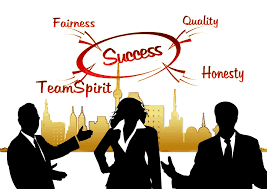
How we sit, stand, and use facial expressions all send nonverbal messages.
True
False
Emotional intelligence is ________________________________.
being smart about emotional situations
the ability to understand, use, and manage our emotions.
never getting angry
A high EQ can predict success in social and emotional situation, help us build strong relationships, make good decisions, and deal with difficult situations.
True
False

Communication is a _____-way process or exchanging of information between the sender and the receiver of the message.
one
two
three
four

___________ is a the process of exchange of information, ideas and feelings between two or more people through verbal or non- verbal methods.
Conversation
Dialog
Interview
Interpersonal Communication

It is a spoken exchange of thoughts, opinions and feelings.
Conversation
Interview
Dialog
Communication

Interpersonal communication is dyadic in nature but it is often extended to a small group such as family. Dyadic in nature means?
Two persons are involved in communication.
Three persons are involved in communication.
Four persons are involved in communication.
Five persons are involved in communication.
These are an examples of conversation EXCEPT.........
siblings recalling fond memories
friends talking about various topics
writing articles
family buying at the shopping malls
Emotional barrier happens to most of us
Yes
No
Perceptual is not a barrier in communication
Yes
No
The four elements of communication are:
Message, sender, receiver and feedback
Sender, message and receiver
Message, feedback, verbal and nonverbal
Books, television, computers and radio
You can help control prejudice by:
believing your first impression and not allowing others to influence your thoughts.
believing only what your parents taught you about other races.
evaluating all information before making a judgement.
doing all of the above.
Good listening skills include:
a message, a sender, and a reveiver.
labeling, cultural sensitivity, and talking slowly.
verbal message, written communication and a receiver
showing interst, hearing the message, and not interrupting
It is a communication between individuals in a personal relationship which builds through time and involves their thoughts and feelings to a certain level.
Intrapersonal communication
Public communication
Interpersonal communucation
Small group communication
How we sit, stand, and use facial expressions all send nonverbal messages.
True
False
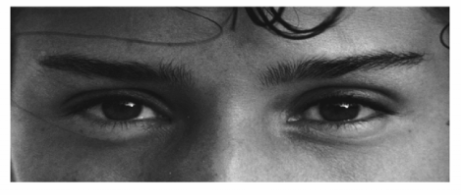
What emotion are the eyes showing?
Playful
Comforting
Irritated
Boring
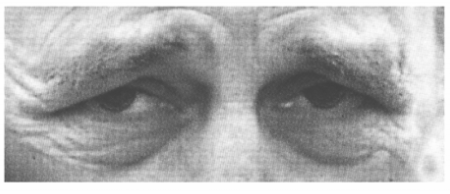
What emotion are the eyes showing?
Terrified
Upset
Arrogant
Annoyed
Listening improves business by
Increases interpersonal trust
Encourages timely feed back
Increases perceptions of integrity
improves costumer service and loyalty
All of the above
For the activity described, indicate the direction of the formal communication.
Human Resources sends an email to all employees to clarify the casual Friday policy.
Upward Communication
Downward Communication
Lateral Communication
Telepathy Communication
For the activity described, indicate the direction of the formal communication.
A sales manager prepares a weekly sales report to submit to the division vice president.
Upward Communication
Downward Communication
Lateral Communication
Telepathy Communication
old ways of communication:


Choose all you need ................... to send a letter.
book
stamp
bag
envelope

when you speak with your friends , this is ................... communication.
Formal
Informal
When you talk to the seller, this is ....................... communication.
Formal
Informal

Emotions ...........
Verbal communication
non- verbal communication

Talking is............ communication
Verbal
non-verbal

when you speak to the seller, this is ................... communication.
Formal
In-formal
Business communication is ___________.
anything written in the form of an email or memorandum.
the process of sharing information between people within and outside a company in order to promote an organization’s goals, objectives, aims, and activities, as well as increase profits.
any verbal communication used in conference calls and meetings.
when the leader of the organization speaks to his/her employees.
What is informal communication?
structured and official flow of information between leaders, employees, and colleagues
communication that sounds aggressive and loud
spontaneous, casual, and an unofficial flow of information
a soft spoken conversation
Which communication style is a structured and official flow of information?
Formal communication
Leadership communication
Diagonal communication
Informal communication

What type of communication does the picture describe?
Informal Communication
Formal Communication
Business Meeting
Lateral Communication
What is non-verbal communication?
A type of communication other than words.
Communication that conveys the feeling, emotions, and attitude of a person to another.
Communication that uses gestures, facial expressions, and eye contact.
All of the choices.
A video chat with your best friend.
FORMAL COMMUNICATION
INFORMAL COMMUNICATION
It involves personal and ordinary conversations with friends, family members, or acquaintances about anything under the sun.
Informal Communication
Organizational Communication
Extended Communication
You are Inviting your old teacher to an event to give a short speech for 10 minutes. What type of email are you going to send?
Formal Email
Informal Email
Both
10. Delivering a formal speech takes the longest time of preparation.
TRUE
FALSE
An insurance agent convincing a customer to avail of life insurance.
FORMAL COMMUNICATION
INFORMAL COMMUNICATION
Monica shares her personal frustrations with Chandler.
Regulation/Control
Social Interaction
Information
Emotional Expression
Phoebe shares her insights on how to live peacefully despite a
complicated life.
Social Interaction
Motivation
Information
Emotional Expression
The geometry teacher lectures about mathematical concepts.
Regulation/Control
Social Interaction
Motivation
Information
Clean the room, then you can go to the mall.
Regulation/Control
Information
Motivation
Emotional Expression
Very nice! Keep up the good work.
Motivation
Information
Regulation/Control
Social Interaction
You really need to take 3 glasses of milk a day in order to keep the baby healthy.
Regulation/Control
Information
Emotional Expression
Motivation

What communication function is presented in this image?
Regulation/Control
Social Interaction
Emotional Expression
Motivation
Information Dissemination

What communication function is presented in this image?
Regulation/Control
Social Interaction
Emotional Expression
Motivation
Information Dissemination

What communication function is presented in this image?
Regulation/Control
Social Interaction
Emotional Expression
Motivation
Information Dissemination

What communication function is presented in this image?
Regulation/Control
Social Interaction
Emotional Expression
Motivation
Information Dissemination

What communication function is presented in this image?
Regulation/Control
Social Interaction
Emotional Expression
Motivation
Information Dissemination
Don't be afraid to fail because we strive for progress, not perfection.
Regulation/Control
Information
Emotional Expression
Motivation
The one who sends the message.
Speaker
Receiver
Message
The process of converting the message into words, actions, or other forms that the speaker understands.
Decoding
Channel
Encoding
Interference that keeps the message from being understood or correctly interpreted by the receiver.
Setting
Channel
Barrier/Noise
The means or way on how the sender sends the message to other person.
Feedback
Channel
Message
It is caused by people’s emotional response / reaction to words.
Feedback
Setting
Message
The receiver’s response to the message he/ she received.
Feedback
Channel
Barrier/Noise
It is the process to converts those words into thought to understand the message.
Encoding
Decoding
Message
The process of interpreting the encoded message of the speaker by the receiver
Message
Decoding
Encoding
Is made up of ideas and feelings that sender-receivers want to share.
Channel
Message
A communication barrier causes enhances the communication process.
True
False
Barriers caused by both sender and recipient can result from:
incomplete understanding of the information
incomplete understanding of the situation
the vocabulary and attitudes of the other party
all of these
none of these
Distortion occurs only when a message is being decoded.
True
False
Barriers that lead to negative communication experiences very rarely lead to negative consequences for the patient
True
False
One way a message may be unclear for the receiver is if there is a difference between verbal and non-verbal cues
True
False
One way to help you build credibility is through effective nonverbal communication.
True
False
There are certain words that are only appropriate at certain times and places.
True
False
To achieve clarity, we must speak the same language as our listeners.
True
False
The use of too many fillers can distract your listeners.
True
False
Verbal communication is better than nonverbal communication.
True
False
When you talk to others, you should not assume too quickly that they understand the
message that you convey.
True
False

