
 Worksheets
Question Bank for Grade 5 Science
Total questions: 124
Worksheet time: 1hrs 12mins
James wants to seperate the salt from the water in his glass of salt water. What seperation method should James use?
Magnets
Evaporation
Filter
Using his hands
Nicole wants to dissolve a substance in water. Which substance will dissolve the easiest?
Rocks
sugar
pepper
sand
What item could a magnet separate from a mixture of garbage?
Old metal fork
An apple core
Pieces of paper
A juice can
What change occurs when cook pancakes for breakfast?
Physical Change
No change
Chemical Change

What mixture could you use this tool to best separate that mixture?
Sugar and Salt
Sand and rocks
Apples and grapes
Sand and clay are an example of a mixture of solids.
True
False
The air around us is a mixture of gases.
True
False
If you had a mixture of rocks and sand and needed to separate them what method would work best?


You have a glass of salt and water, what is the best method to separate the salt out of the water?


True or False: You can use your hands or tweezers to separate salt from water.
True
False
True or False: The best way to separate rocks and sand is to use a sieve to sift the sand, this will allow the sand to fall through and the rocks to stay.
True
False

A student mixes four solutions by dissolving different amounts of a solid into water.
Using the data in the table, record the letter of the solution with the greatest concentration of
the solid in the water.
S
T
W
X
A student plans to add a solid to a container of water. The student wants the solid to
dissolve quickly.
Which two actions would help the solid dissolve the most quickly into the water?
stirring the water after adding the solid
placing a lid on the container after adding the solid
placing the container with the solid and water in a dark area
placing the container in a bowl of ice before adding the solid
crushing the solid into smaller pieces before adding it to the water
A student plans to add a solid to a container of water. The student wants the solid to dissolve quickly.
What is the dependent variable in this investigation?
size of solid
time to dissolve
amount of water
temperature of water
Which action is an example of a chemical change?
melting ice
tearing paper
mowing grass
baking brownies

A student is given four containers, each with a different material.
The student claims that these materials can be used to demonstrate
the law of conservation of mass.
Which statement supports the claim?
The mass of the pretzels is more than the mass of the popcorn.
The mass of the crackers is the same as the mass of the peanuts.
The mass of the peanuts plus the mass of the crackers is the same before and after they
are mixed.
The mass of the peanuts minus the mass of the pretzels is less than the mass of all the
ingredients combined.

A student conducts the first trial of an investigation using a ramp and 5 books. The student
places a ball at the top of the ramp and records how long it takes the ball to roll down
the ramp.
For the second trial, the student removes two books. How will removing two books most likely
affect the motion of the ball for the second trial?
The ball will travel at a slower speed.
The ball will travel at a faster speed.
The ball will travel at various speeds.
The ball will travel at a constant speed.

A person is trying to move a refrigerator. The refrigerator does not move when the person uses a force to push on it. The diagram shows the forces acting on the refrigerator. Which statement explains the most likely reason the refrigerator does not move when pushed?
A noncontact force is pulling the refrigerator toward the person.
A noncontact force is acting on the person pushing the refrigerator.
A contact force is pushing the refrigerator up and away from the floor.
A contact force is acting in the opposite direction of the person’s push.

Four investigations and their results are shown.
Identify whether each investigation produced balanced or unbalanced forces
Investigation 1
Balanced Forces
Unbalanced Forces
Four investigations and their results are shown.
Identify whether each investigation produced balanced or unbalanced forces
Investigation 2
Balanced Forces
Unbalanced Forces
Four investigations and their results are shown.
Identify whether each investigation produced balanced or unbalanced forces
Investigation 3
Balanced Forces
Unbalanced Forces
Four investigations and their results are shown.
Identify whether each investigation produced balanced or unbalanced forces
Investigation 4
Balanced Forces
Unbalanced Forces

The Sun is a yellow star.
The Sun is the hottest star.
The Sun is the closest star to Earth.
The Sun is the farthest star from Earth.

The orbit of Earth on its axis shifts Orion to the daytime sky.
The rotation of Earth on its axis shifts Orion to the daytime sky.
The orbit of Earth around the Sun places the Sun between Earth and Orion.
The rotation of Earth around the Sun places the Sun between Earth and Orion.
In the 17th century, Galileo invented a telescope that could magnify distant objects ten times.
Galileo used the telescope to observe the Moon’s surface. He noticed that it was covered in
bumps and craters. As technology advanced, others made improvements on the telescope.
Which statement best supports the claim that the telescope can be used to observe objects in
the sky?
Galileo pointed the telescope toward the sky.
Galileo invented the telescope in the 17th century.
Galileo invented a telescope that could magnify distant objects.
Galileo noticed that the Moon was covered in bumps and craters.
A student was researching an area in a U.S. national park. The student reported the following
characteristics about this ecosystem.
Ecosystem Characteristics
• located at a high elevation above sea level
• rocky soil with few nutrients
• long winters and short summers
• low amount of precipitation
• few plants or grasses and no trees
• animals include elk, coyotes, mountain lions, and bighorn sheep
Which type of ecosystem was the student most likely researching?
forest
desert
tundra
grassland

Which two organisms would most likely increase in population size if the shrew population
were eliminated by disease?
owl
aphid
beetle
caterpillar
wood louse
Which process is the least harmful way to remove oil from the water?
Leave the oil alone so it can spread out naturally.
Use floating devices to enclose and collect the oil.
Light the oil on fire so it burns off the water rapidly.
Add chemicals to the water to break down the oil.

After an oil spill, a large number of seabirds and aquatic mammals may die.
Which statement describes the most likely effect of an oil spill on organisms in the chart?
The fish population will decrease due to aquatic plants being healthier with the addition of oil.
There will be an increase in the fish population because there will be fewer predators in
the food web.
The populations of seabirds and mammals will increase because they will have more prey
to consume.
There will be a decrease in the phytoplankton population because more sunlight will be
able to enter the water.
A student researches the properties of a substance.
Substance Properties
• It is transparent.
• Its temperature is 20°C.
• It fills its container.
• The filled container feels light.
Based on these properties, which statement best describes the substance?
The substance is a liquid because it feels light.
The substance is a gas because it fills its container.
The substance is a gas because it is solid at 20°C.
The substance is a liquid because it is transparent.

Students performed an investigation using a candle, a container of water, and a ball of clay.
The students predicted that the ball of clay would sink.
Which statement best explains the reason the students’ prediction was correct?
The ball of clay sank because it has a lower mass than the water.
The ball of clay sank because it has a greater mass than the candle.
The ball of clay sank because it has a lower density than the candle.
The ball of clay sank because it has a greater density than the water.
A student mixed a tablespoon of orange-colored drink powder into a glass of water.
After stirring for a few minutes, the student observed the mixture.
Which observation would best provide evidence that the mixture is a solution?
The water became orange with nothing on the bottom of the glass.
The water remained colorless with nothing on the bottom of the glass.
The water became orange with some powder on the bottom of the glass.
The water remained colorless with some powder on the bottom of the glass.

Based on the model, how does the tilt of Earth cause different seasons?
by changing the distance between Earth and the Sun
by changing the intensity of sunlight at a location on Earth
by changing the speed of rotation of Earth on its axis
by changing the speed of revolution of Earth around the Sun

Figure 1 shows Ptolemy’s model of the solar system, and figure 2 shows Galileo’s model.
Scientists have accepted Galileo’s model over Ptolemy’s. What is the primary reason for this?
Ptolemy’s model has Earth at the center.
Galileo’s model has more planets in the solar system.
Galileo’s model has equal distances between all planets
Ptolemy’s model has perfectly circular orbits for planets.

If Earth is located near position L in June, in which position will Earth be located in December?
J
K
L
M
Approximately how long does it take the moon to complete one revolution around the Earth?
day
month
week
year

The student concludes that at the positions of Earth and the Sun shown in the model, countries in the Northern Hemisphere are experiencing winter. Which factor helps the student draw this conclusion?
the size of Earth
the tilted axis of Earth
the distance between Earth and the Sun
the rotation of Earth on its axis

At which position is the Northern Hemisphere most likely experiencing winter?
1
2
3
4

A student observes the night sky and tracks the days on which he sees four different phases of the Moon. The table lists his observations.
Based on the data, which phase of the Moon would be visible on February 1?
crescent Moon
full Moon
new Moon
quarter Moon

A student marks point X on a globe and shines a flashlight on point X, as shown in the image.
What should the student do to show the occurrence of night at point X?
Move the globe towards the flashlight.
Move the globe away from the flashlight.
Revolve the globe around the flashlight until point X faces towards the flashlight
Rotate the globe until point X faces away from the flashlight
What change would likely happen on Earth if its axis was not tilted?
Earth would no longer have seasons.
The two hemispheres would have opposite seasons.
Earth would take more time to spin on its axis.
The number of daylight hours would change throughout the year.

Which location on the Earth has the greatest number of daylight hours in this position?
A
B
C
D
Which diagram shows the alignment of the Earth, the Moon, and the Sun during a new Moon?


Based on the calendar, when would an observer on Earth experience a full moon?
September 2
September 24
between September 12 and 15
between September 27 and 30

Which season would the Northern Hemisphere experience at position T?
winter
spring
summer
fall
A student constructs a diagram to demonstrate the phases of the Moon as viewed from Earth. Which diagram best illustrates all of the phases of the Moon?


Which phase would be observed on April 17?


A student constructs a diagram to demonstrate the phases of the Moon as viewed from Earth. Which diagram best illustrates all of the phases of the Moon?
first quarter
full
new
third quarter
What is the main cause of daily change in tide levels on the Earth?
the gravitational pull of the Sun on the Moon
the gravitational pull of the Earth on the Moon
the gravitational pull of the Earth on the Sun
the gravitational pull of the Moon on the Earth
The Earth revolves around the Sun.
How long does it take Earth to make 1 complete trip around the Sun?
365 days
24 hours
30 days
12 hours
Jarrod enjoys fishing in the sound near Hilton Head, South Carolina. He notices the water is sometimes deeper than at other times of the day.
What best explains the differences in water level in the sound?
The Moon’s gravitational pull on the Earth causes tides in the sound to rise and fall.
The tilt of the Earth causes water levels in the sound to rise and fall.
The speed of the Earth’s rotation varies, which causes water levels in the sound to rise and fall.
The amount of reflected light from the Moon varies, which causes tides in the sound to rise and fall.
Which of these shows the correct order needed for a solar eclipse to happen?
Sun, Earth, Moon
Sun, Moon, Earth
Moon, Sun, Earth
Moon, Earth, Sun
When you measure the volume of irregular shaped objects you place the object in water and observe how much the water rises. What is this called?
water replacement
water displacement
dunking
density
If you were making solutions, select all of the following that would be considered a solute.
sugar
water
salt
koolaid powder
milk
Matter is anything that has mass and takes up space.
True
False
A solution is _____ if it is has a large amount of solute.
concentrated
diluted
saturated
solubility
If a solution cannot dissolve any more solute it is _____.
concentrated
diluted
saturated
solubility
Select all of the examples of mixtures (not solutions).
salad
cereal and milk
hot chocolate
trail mix
sweet tea
Ozone (O3) is an example of what?
atom
element
compound
molecule
_____ is what you should always think of when you are reading about substances forming layers.
volume
solubility
density
physical changes
Melting, boiling, and freezing are examples of what?
physical change
chemical change
Photosynthesis is an example of what?
physical change
chemical change
When a new substance forms what kind of change has taken place?
Physical
Chemical
The measure of how much space an object takes up.
density
mass
volume
Dissolving is an example of what kind of change?
Physical
Chemical
The smallest substance that something can be broken down into without losing its properties.
atom
element
molecule
compound
What is the best way to separate sand, gravel, and water?
magnetism and evaporation
evaporation and filtration
magnetism and sifting
evaporation and sifting
Select all of the subatomic particles.
molecule
electron
solution
proton
neutron
What is the smallest unit of matter?
molecule
mass
atom
compound
A ____ has a neutral or no charge.
proton
neutron
electron
This state of matter has a definite volume and a definite shape.


This state of matter has a definite volume but not a definite shape.


What is the definition of matter?
anything that takes up space
anything that has mass and takes up space
anything that looks pretty
anything that has density and volume
How many atoms are in H2O?
2
3
4
1
What is the smallest amount of atoms that can make a molecule?
1
2
3
4
A molecule that is made up of DIFFERENT kinds of atoms is called a ____.
atom
matter
compound
molecule
When a molecule of H2O changes from a liquid, solid, or a gas, what happens to the molecule?
no changes are made to the H2O molecule
the H2O melts
the H2O dissolves
the H2O freezes
A ____ has a positive charge.
proton
neutron
electron
A _____ has a negative charge.
proton
neutron
electron
A neutron has what type of charge?
positive
negative
neutral or no charge
You are in a Science lab testing a subatomic particle. When you test the charge you find that it has no charge. What particle must it be?
proton
neutron
electron
In order to be a molecule it must be made of at least __ atoms.
1
2
3
4
If you want to remove energy from matter and slow the molecules down, what should you do?
increase the temperature (make it warmer)
decrease the temperature (make it lower)
What are the forms in which a material can exist?
Senses
States of matter
Properties
Physical changes
Select the three states of matter:
Solid
Liquid
Gas
Mass
Volume
What kind of matter spreads to fill a space?
Solid
Liquid
Gas
Which state of matter has a definite shape and volume?
Solid
Liquid
Gas
Which state of matter has a definite volume and takes the shape of its container?
Solid
Liquid
Gas
What is a change in which matter changes to look different but does not become a new kind of matter?
Physical
Chemical
What is a change in which new substances are formed?
Physical
Chemical
What is the gas form of water called?
Oxygen
Water vapor
Gas
Liquid
What kind of change is the decaying of food?
Physical
Chemical
If something burns, what kind of change is it?
Physical
Chemical
If something rusts, what kind of change has it undergone?
Physical
Chemical
When baking and cooking, what kind of changes do you see?
Physical
Chemical
Can you reverse a physical change?
Yes
No
Can you reverse a chemical change?
Yes
No
What kind of change is it when liquid water freezes into ice?
Physical
Chemical
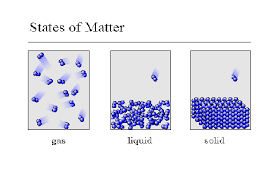
A gas
has a definite shape but no definite volume
has a definite volume but no definite shape
has no definite shape and a definite volume
has no definite shape and no definite volume
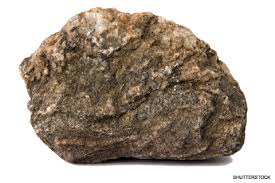
Which state of matter has tightly packed molecules?
solid
liquid
gas
plasma
Particles (molecules) in a ______________________ have more energy than the other states of matter.
Solid
Liquid
Gas
Plama


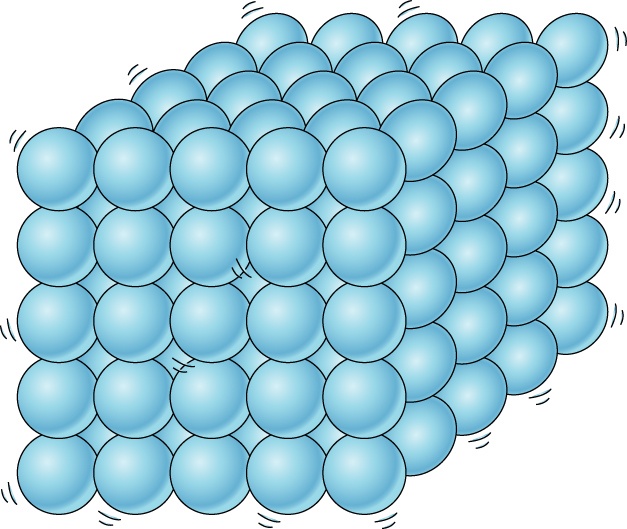
What state of matter?
Solid
Liquid
Gas
Plasma!!!
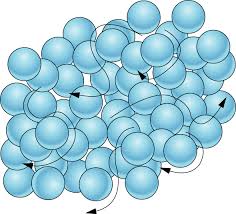
What state of matter?
Solid
Liquid
Gas
Plasma
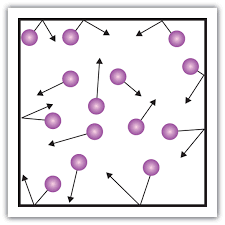
What state of matter?
Solid
Liquid
Gas
Plasma
Which process could cause a material to change state from gas to liquid?
Adding heat
Adding energy
Removing particles
Removing energy
If I add heat to a solid, how will the motion of the particles be affected?
They will move slower
They will stop moving
They will move faster
They will move to a different container
How can you stop the movement of particles?
Increase the temperature
Decrease the temperature
You can't.
Hold them still with your hands.
What is evaporation?
solid to a gas
liquid to a gas
solid to a liquid
liquid to a solid
What is melting?
Solid to a gas
Gas to a solid
Liquid to a solid
Solid to a liquid
Removing energy from particles makes the particles
move faster
move slower
stop moving all together
remain the same
Anything that takes up space and has mass is
meter
energy
mass
space

