
 Worksheets
6th Grade MCA Review 2023
Total questions: 20
Worksheet time: 10mins
A ball will be rolled four times. In which of the following situations will some of the kinetic energy of the ball be converted into potential energy as the ball rolls?


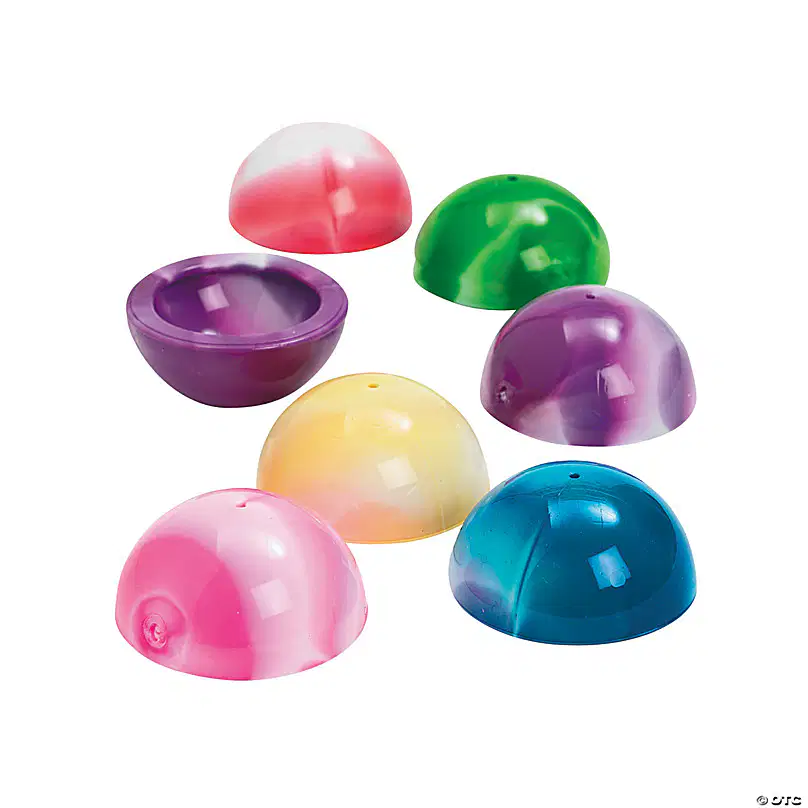
When does the popper have potential energy?
When it is flying in the air
When it is turned inside out
When it lands
When it goes to the beach
When does the popper have kinetic energy?
When it is flying in the air
When it is turned inside out
When it lands
When it goes to the beach
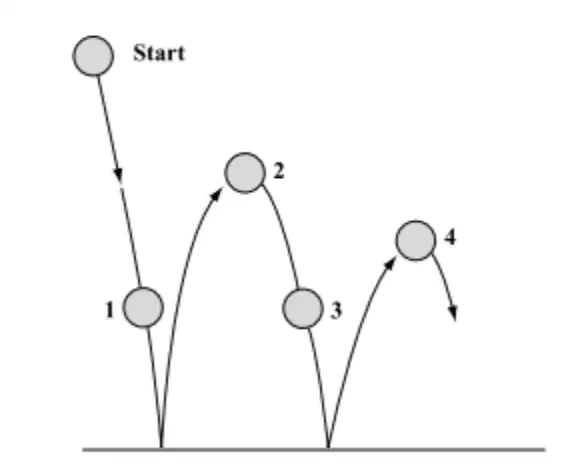
The diagram shows the path of a ball bouncing on the ground. Four locations in the path are identified with numbers.
At which location does the ball have the greatest amount of kinetic energy?
Location 1
Location 2
Location 3
Location 4
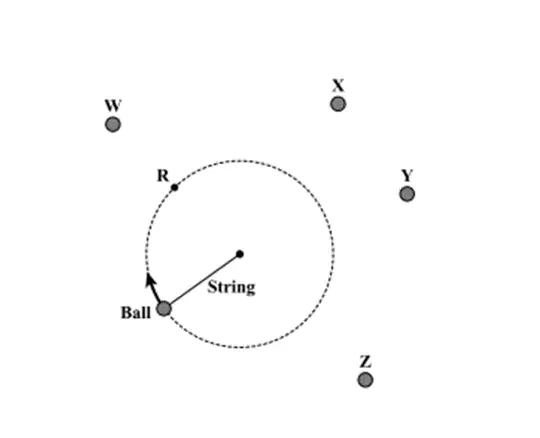
A boy has a ball on a string. He swings the ball in a circle above his head. The diagram is a top view of this situation. If the boy releases the string when the ball is at point R, at which point will the ball land?
Point W
Point X
Point Y
Point Z
A rock is dropped from a window 5 m above the ground. The rock hits the ground 1.0 s later. What is the speed of the rock during this time?
5 m/s
8 m/s
15 m/s
50 m/s
Tobias rode his bike on a road for a 1 hr period. On average, he passed a 1 km marker every 3 min during this period. Which of the following was his speed for this 1 hr period?
10 km/hr
15 km/hr
20 km/hr
25 km/he
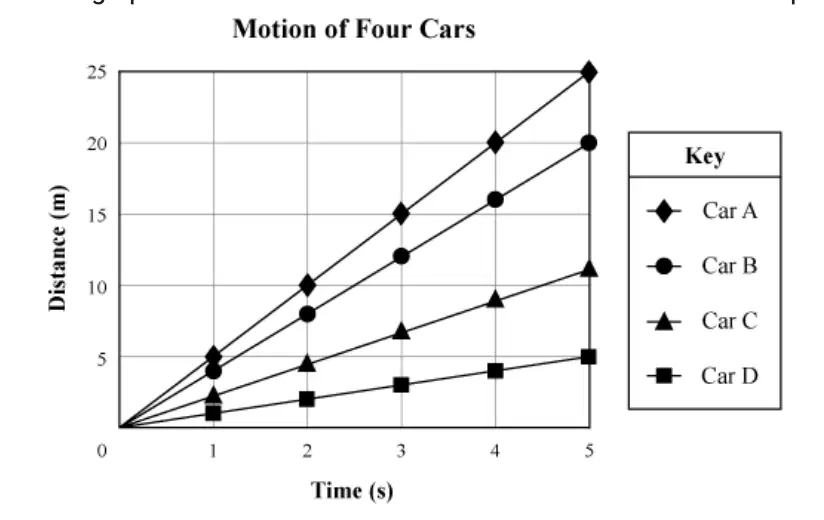
The graph shows the motion of four different cars over a period of 5 s.
Which car had an average speed of 4 m/s?
Car A
Car B
Car C
Car D
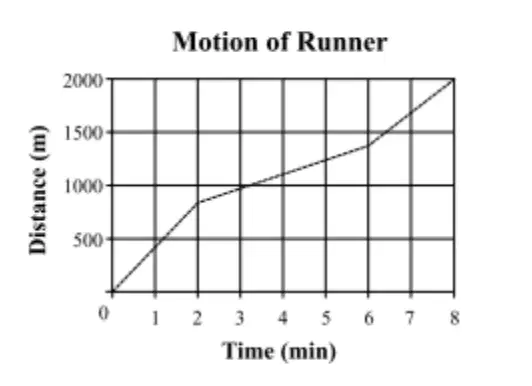
The graph represents the motion of a runner during a 2000-meter race.
During which of the following time periods is the runner’s speed constant?
0–8 min
2–8 min
4–8 min
6–8 min
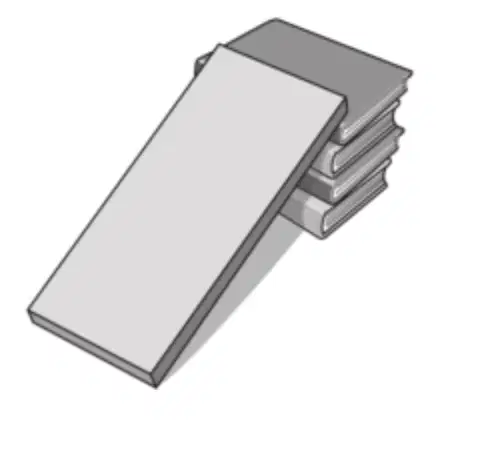
A student rolls a ball down the ramp shown in the picture The ramp is supported by four stacked books.
The student removes two books from the stack supporting the ramp and rolls the ball down the ramp again. Which of the following statements best describes how the ball’s motion is different after the books are removed?
The ball accelerates more quickly down the ramp.
The ball has a higher speed at the top of the ramp.
The ball takes more time to reach the bottom of the ramp.
The ball has a higher average speed when it rolls off the ramp.
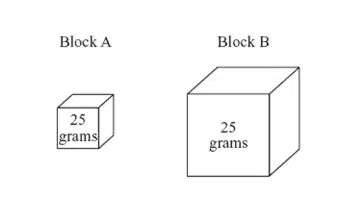
The diagram illustrates two blocks composed of different materials. If Block A is located on the Moon and Block B is located on Earth, what property do these two blocks have in common?
They have the same mass.
They have the same weight.
They have the same volume.
They have the same surface area.
Which of the following units best represents the density of an object?
Kg
Hr
M/S2
g/cm3
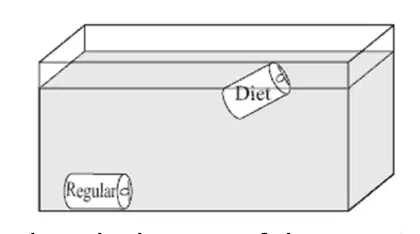
The diagram below shows what occurred when a can of diet soda and a can of regular soda were dropped into a container of water. The can of regular soda sank to the bottom of the container, but the can of diet soda floated. Which of the following statements best explains this observation?
The can of regular soda is less dense than the can of diet soda.
The can of regular soda is more dense than the can of diet soda.
The can of regular soda has a larger volume than the can of diet soda.
The can of regular soda has a smaller volume than the can of diet soda.
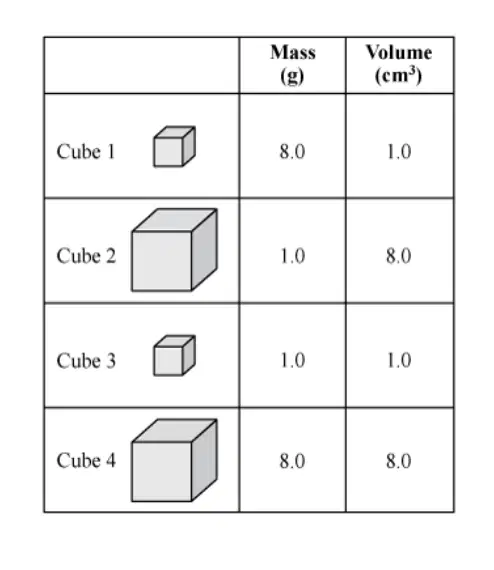
The table shows the masses and volumes of four cubes made of different materials.
Which cube has the greatest density?
Cube 1
Cube 2
Cube 3
Cube 4
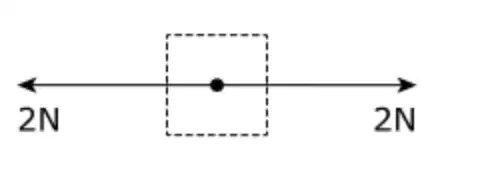
Four objects have different forces applied to them. All of the horizontal forces acting on each object are shown in the diagrams below. Which diagram shows that the speed is not changing?
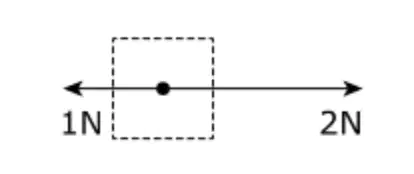
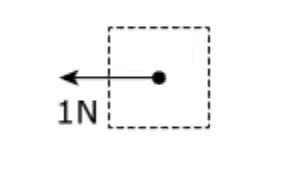
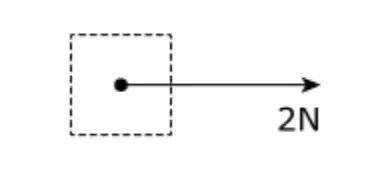
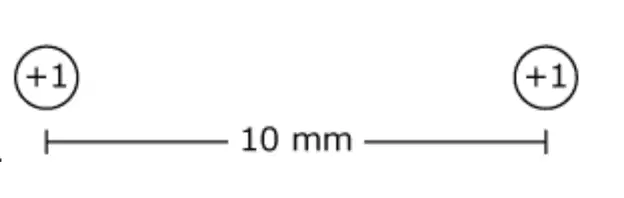
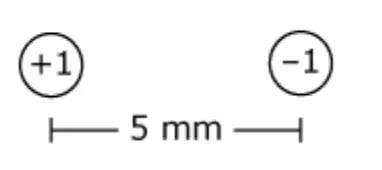
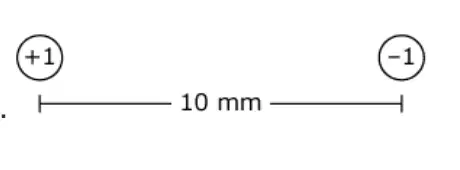
Which of the following models has the greatest attractive electric force between the charged particles?

Which of the following examples best describes one type of energy changing into another?
A magnet sticking to a refrigerator
Sound traveling through a solid wall
An electric heater warming up a cold room
Light rays bending as they pass through glass
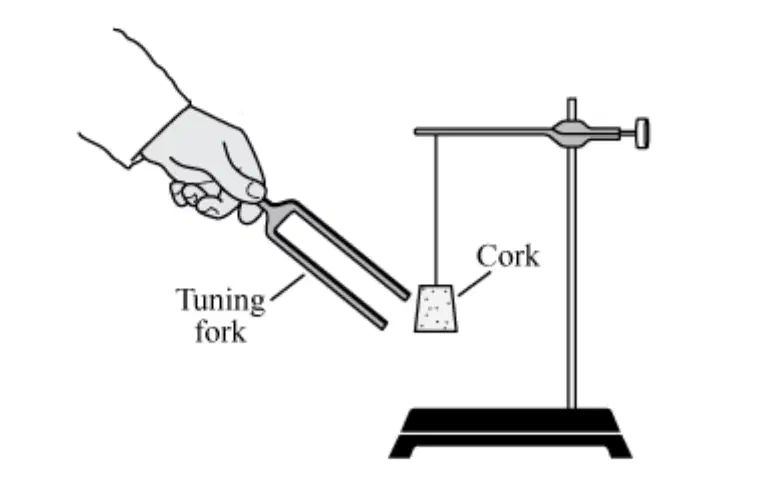
In a science investigation, a student holds a vibrating tuning fork near a piece of cork, as shown in the picture.
The student observes that the cork moves. Which of the following conclusions can be made from this investigation?
Sound is a form of energy
Sound does not travel in air.
Sound cannot travel through the cork.
Sound is transformed into magnetic energy.
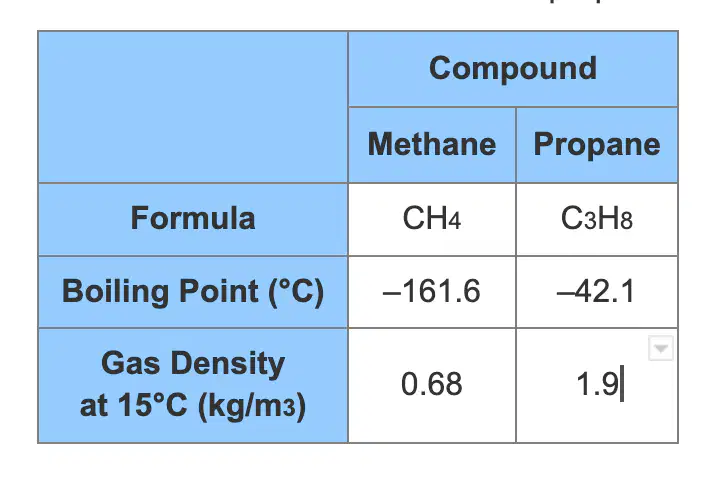
Methane and propane are two compounds that are composed only of carbon and hydrogen atoms. The table below shows some of the properties of these two compounds.
Which of the following conclusions is best supported by the information in the table?
When two elements combine, the mass of each element changes.
When two compounds are mixed, the state of matter of the mixture changes.
Two elements can combine to produce different substances with different properties.
Two compounds can be mixed together to produce different materials with different properties
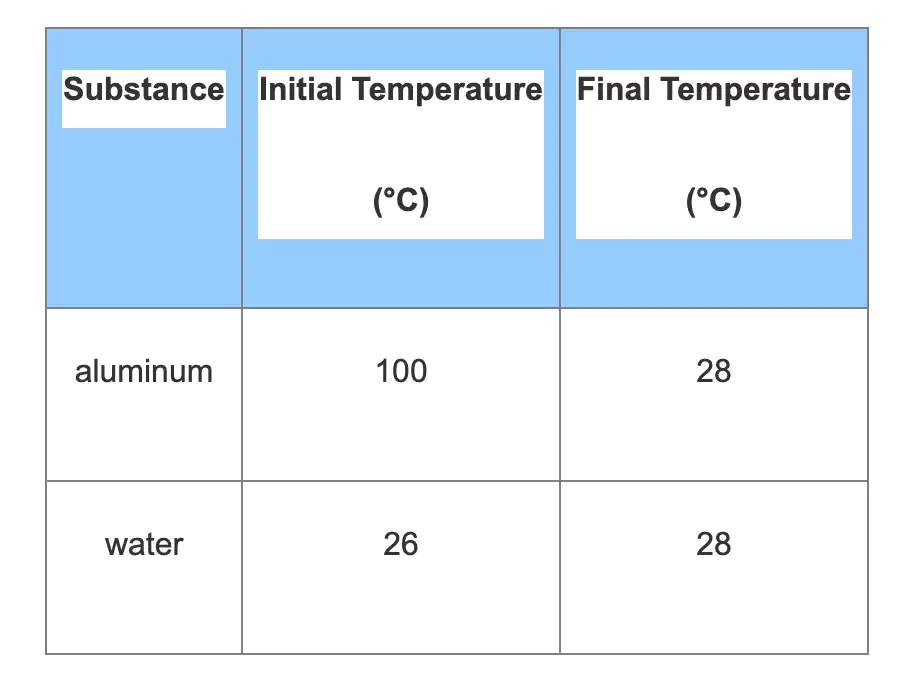
A teacher performs an investigation by heating a 5.4 g piece of aluminum and placing it into a beaker of water. The table shows the temperatures before and after the aluminum was placed in the water.
The teacher repeats the investigation using a larger, 20 g piece of the aluminum heated to 100°C. Which of the following best explains what will happen to the final temperature of both the water and the 20 g piece of aluminum?
The temperature will be 28°C because both pieces of aluminum transfer heat energy at the same rate.
The temperature will be 28°C because both pieces of aluminum are heated to the same initial temperature.
The temperature will be lower than 28°C because the smaller piece of aluminum transfers heat energy more quickly than the larger piece of aluminum.
The temperature will be higher than 28°C because the larger piece of aluminum transfers more heat energy to the water than the small piece of aluminum.

