
Font size
 Worksheets
Earth Layers and Climate Review
Total questions: 23
Worksheet time: 46mins
Which of the following parts of Earth may act like a liquid?
inner core
crust
outer core
lithosphere
From least to most dense, what is the correct order of Earth's four major layers?
crust, outer core, inner core, mantle
This is the result of incorrectly thinking the mantle is the densest layer of Earth.
inner core, outer core, mantle, crust
This is the result of incorrectly thinking the density decreases going towards the center of Earth.
crust, mantle, outer core, inner core
This is correct. The density of each layer increases going towards the center of Earth.
mantle, inner core, outer core, and crust
This is the result of incorrectly thinking the mantle is the least dense layer of Earth and the crust is the most dense.
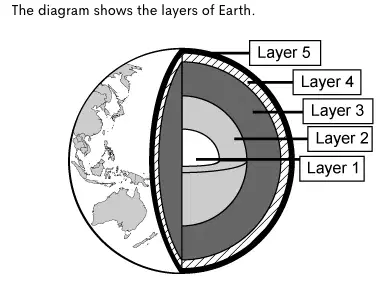
Which statement best describes Layer 3 and Layer 5?
Layer 3 is the crust and Layer 5 is the mantle; both layers are hotter than Layer 1.
Layer 3 is the mantle and Layer 5 is the crust; both layers are hotter than Layer 1.
Layer 3 is the mantle and Layer 5 is the crust; both layers are cooler than Layer 1.
Layer 3 is the crust and Layer 5 is the mantle; both layers are cooler than Layer 1.
Which of the following properties of minerals is described with the Mohs scale?
luster
fracture
fluorescence
hardness
Mr. Adinyira is teaching his students the differences between rocks and minerals. Which table should Mr. Adinyira use to best show the differences?


Molly and Ricky are studying soil in their science class. They perform two different soil investigations described below.
Investigation 1
1. Dig up 1 cup of soil from the school garden with a small shovel.
2. Place the soil on a white paper towel.
3. Use a hand lens to observe the soil.
4. Make a list of all the moving parts you see in the soil.
Investigation 2
1. Scoop up some soil from the school garden.
2. Place the soil in your hand.
3. Add 3 small drops of water into the soil in your hand until the soil is moist but not wet.
4. Move the moist soil around in your hand.
5. Record observations about how the soil feels (examples: gritty, smooth, sticky).
Which pair BEST identifies the evidence that could be collected by each investigation?
Investigation 1: how much the soil can be compacted
Investigation 2: how long it takes water to soak through the soil
Investigation 1 is a test to observe soil parts and not soil compaction as there is no pressure added to the soil. Investigation 2 is a test to measure soil texture and not soil percolation.
Investigation 1: how much of the same is made of clay
Investigation 2: which organisms live in soil
This option switches the two identifications. Investigation 1 could help identify how much is made of clay, but not as well as touching the soil. Also, Investigation 2 would be less likely to be used to see organisms than using a hand lens as many of the organisms are small.
Investigation 1: which organisms live in the soil
Investigation 2: how much of the sample is made of clay
Investigation 1 provides evidence about the parts of soil, including weathered rock and organisms. Investigation 2 provides evidence about soil texture, namely whether the soil is predominately sand, silt, or clay.
Investigation 1: how long it takes water to soak through the soil
Investigation 2: how much the soil can be compacted
Investigation 1 is a test to observe soil parts and not soil percolation. Investigation 2 is a test to measure soil texture and not soil compaction.
Which soil horizon sample is most likely correct?


A very dark colored soil sample is taken from the Okefenokee Swamp. What is most likely the majority of the composition of the soil?
sand and stones
rocks and minerals
dust and weathered rocks
decomposed organic matter
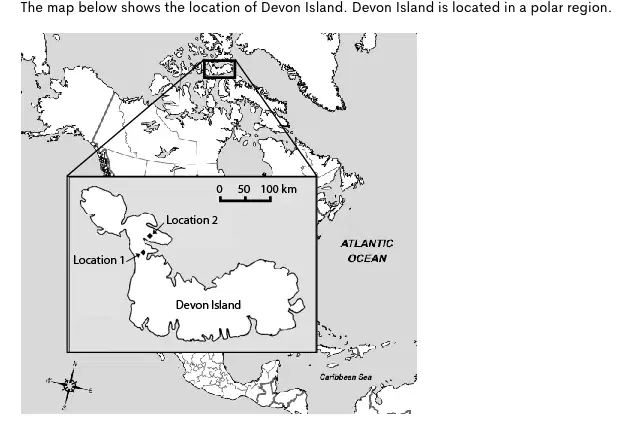
Scientists have discovered fossils of corals on Devon Island at Locations 1 and 2 shown on the map. Corals are ocean organisms that can only survive in warm waters. Which claim is BEST supported by the coral fossil evidence collected by scientists on Devon Island?
Devon Island was once part of the surrounding landmass of Canada.
This claim is not supported by the coral fossil evidence provided. The evidence suggests something about past local water temperatures, but not about splitting apart of landmasses.
The ocean waters surrounding Devon Island were once warmer than they are today.
The discovery of the fossil remains of warm water-dwelling corals indicates that the environmental conditions in this area, at one time, supported marine life that inhabit warmer waters.
Devon Island was once part of the surrounding landmass of Greenland.
This claim is not supported by the coral fossil evidence provided. The evidence suggests something about past local water temperatures, but not about splitting apart of landmasses.
The ocean waters surrounding Devon Island were once cooler than they are today.
This may have been true at some point in Earth's history, but this claim is not supported by the coral fossil evidence.
What is the most likely reason that the bones of a Mesosaurus are found on the eastern coast of South America and on the western coast of Africa?
flooding
geographic isolation
plate tectonics
analogous structures
Where do scientists find evidence that the Earth's crust has been lifted above its original level?
heavy rocks in deep oceans
heavy rocks on mountain tops
fossils of sea animals found on mountaintop
fossils of sea animals deep in oceans
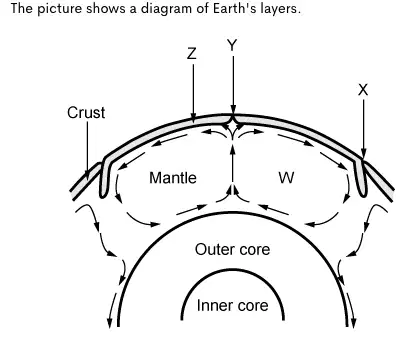
What kind of activity is most likely at point X?
massive storms, as the weak crust allows heat to spread from the mantle to the atmosphere and increase ocean temperatures
strong drought, as the movement of material under the crust heats the waterways on the surface, causing them to evaporate
earthquakes and volcanoes, as convection in the magma beneath the crust pulls the plates against each other
the formation of large valleys, as the rotation of Earth about its axis causes a downward pull on the plates
What causes earthquakes to occur?
erosion moving rocks and soil
the movement of tectonic plates that release energy
violent wind and rains shaking the ground
underground currents of water flowing quickly
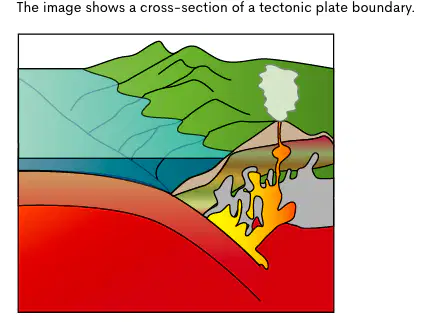
How does tectonic plate movement cause a volcano to form at this type of boundary?
How does tectonic plate movement cause a volcano to form at this type of boundary?When a tectonic plate collides with another tectonic plate of the same density, the rocky crust is pushed upward.
Two continental plates colliding without subduction causes mountain ranges, not volcanos.
When a tectonic plate slides against another tectonic plate, released energy travels through the rocky crust in waves.
Two tectonic plates sliding against each other causes earthquakes, not volcanos.
When a tectonic plate moves away from another tectonic plate, hot magma rises through the cool crust to form new crust.
Two oceanic plates separating describe a divergent boundary.
When a tectonic plate moves under another tectonic plate, the rocky crust melts, which causes hot magma to rise to the surface.
When subduction occurs at a convergent boundary, the cool crust sinks into the mantle, and hot magma rises, causing a volcano to form.
Why is the mantle important to the movement of Earth's plates?
Conduction from the core creates strong magnetic fields in the mantle, which help to move Earth's plates.
While magma in the mantle is heated by the core through conduction, the heated magma rises through convection currents, not magnetic fields, which help to move Earth's plates.
Pressure from the core creates convection currents in the mantle, which help to move Earth's plates.
Convection currents occur when heated magma rises to the top of the mantle and cooler magma sinks to the bottom of the mantle; pressure does not cause this.
Heavy metals in the mantle create strong magnetic fields, which help to move Earth's plates.
While the mantle is primarily made of heavy metals, their movement creates convection currents, not magnetic fields.
Temperature differences in the mantle create convection currents, which help to move Earth's plates.
Magma in the mantle is heated by the core and rises while cooler magma sinks nearer to the core, creating convection currents. The flow of magma in these currents helps to move Earth's plates.
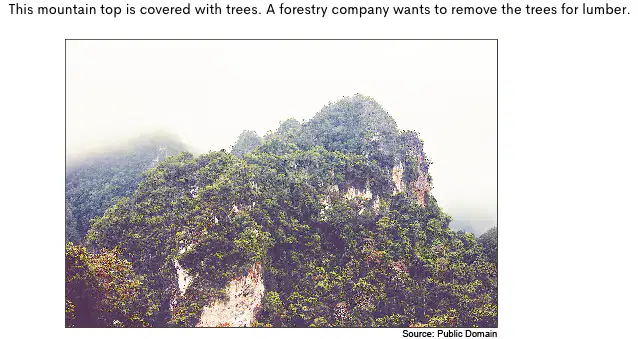
Which will most likely happen to the rocks on the mountain if the trees are removed?
Wind and rain will begin to erode the rocks and the mountain will flatten over time.
New trees will grow back very quickly and the mountain rocks will not be changed.
The mountain will quickly become much smaller without the protection of the trees.
The mountain will grow as additional sedimentary rocks are formed.
Select all of the human activities that contribute to erosion.
building parking lots
building roads
clearing land
planting grass
surface mining
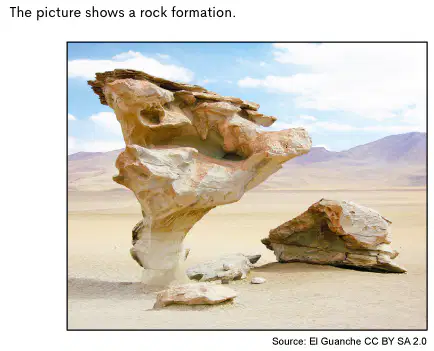
What most likely caused this rock formation?
wind erosion over many years
erosion by waves over many years
the rock was chipped away by animals
high temperatures that melted the rock
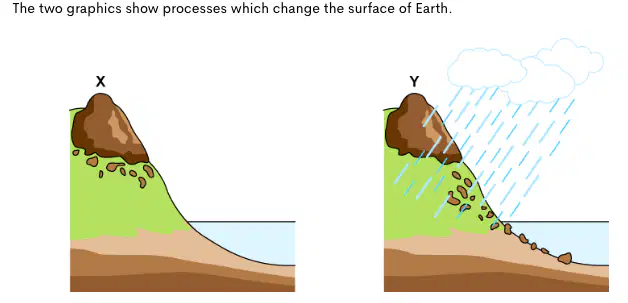
Which best describes the processes in the graphics?
Graphic X shows sediment being moved through erosion, and graphic Y shows rocks being broken down through deposition.
Graphic X shows rocks being broken down through weathering, and graphic Y shows sediment being moved through erosion.
Graphic X shows rocks being broken down through deposition, and graphic Y shows sediment being moved through weathering.
Graphic X shows sediment being moved through weathering, and graphic Y shows rocks being broken down through sedimentation.
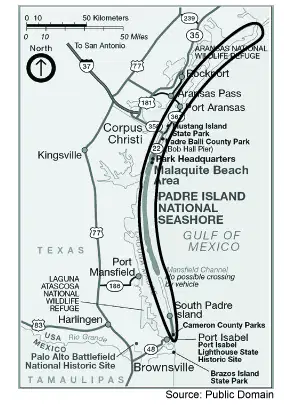
The map is of a part of the Gulf Coast Prairies and Marshes off the coast of the Gulf of Mexico. The circled portion represents islands in this region.
Q: Which of the following best explains how these islands formed?
They formed by weathering as sediment collected in large piles along the tops of underwater reefs.
They formed by deposition as water carried and dropped sand from the shore as it slowed down.
They formed as underwater volcanoes erupted and deposited lava.
They formed as hurricanes deposited sand from distant regions.
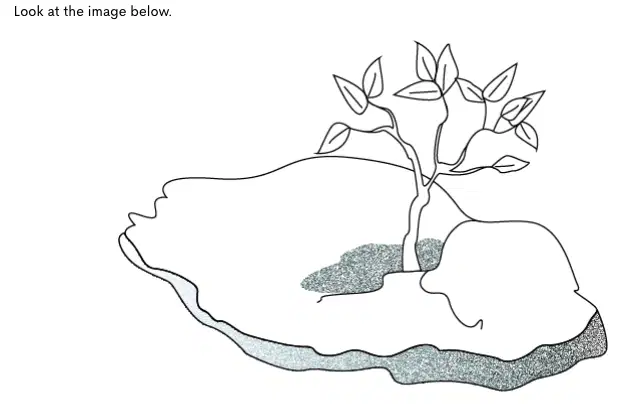
Which of the following has most likely happened?
The plant has dissolved the rock
The plant has eroded the rock.
The plant has eaten away the rock.
The plant has weathered the rock.
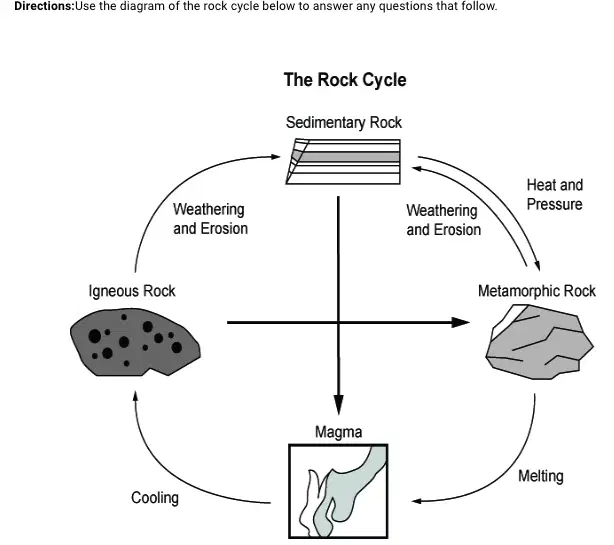
Igneous rock is formed from cooling magma. Which process will change igneous rock into sedimentary rock?
heat and pressure
melting
cooling
weathering and erosion
Ms. Quary made bread by mixing flour, water, and yeast together and then baked it. How does the example of bread tell the difference between rocks and minerals?
The bread would be a mineral. The flour, water, and yeast would be rocks.
The bread, flour, water, and yeast would all be rocks.
The bread would be a rock. The flour, water, and yeast would be minerals.
The bread, flour, water, and yeast would all be minerals.

