
Font size
 Worksheets
Question Bank for Grade 5 Science
Total questions: 171
Worksheet time: 2hrs 7mins

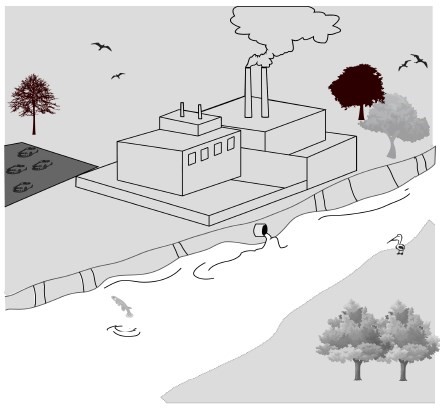
What does conserving resources mean?
Using as many of the resources as you can
Wasting resources
Saving resources and using them wisely
Using a lot of resources

What was the most widely used NONRENEWABLE resource in 2009?
Natural gas
Biomass
Petroleum
Hydropower
What determines if a resource is renewable or nonrenewable?
The rate at which they are replenished
The cost of the resources
How much pollution it causes
How the resource will be used
Fuels that are formed over many years from dead organisms, and are used to produce different types of energy .
Pollution
Resources
Fossil Fuels
To ___________means to use less of something.
reduce
reuse
recycle
It is made into a new product.
reduce
recycle
reuse
Burning fossil fuels can cause:
Air pollution
Water pollution
Land pollution
What is pollution?
When small materials get into the environment
When clean materials get into the environment
When harmful materials get into the environment

What pollution is this?
Land
Air
Sound
Water

What pollution is this?
Noise
Land
Sound
Water

Car emission gases causes air pollution
True
False

Open burning does not cause air pollution
True
False
Air pollution can also happen inside your house.
True
False
What happens to fossil fuels to create electricity?
They are stored
They are burned
They are melted
They are frozen
What is the problem with using fossil fuels?
They release too much carbon
They don't create a lot of electricity
They are renewable
Which one of these is not a fossil fuel?
coal
oil
natural gas
nuclear energy
How long does it take for fossil fuels to form?
A few weeks
A year
A hundred years
Millions of years
Burning coal can cause what environmental problem?
erosion
acid rain
deforestation
loss of habitats
Which two of these things are needed in order to create fossil fuels?
Water
time
pressure
space


Where do plants get the energy for photosynthesis to take place?
nutrients in the soil
the sun
chlorophyll
bee pollination
What part of the plant soaks up water for photosynthesis?
roots
petals
leaf
stem
What is the food manufacturing process in plants?
respiration
chlorophyll
glucose
photosynthesis
Where do the leaves and stems of plants get their green color from?
glucose
oxygen
carbon dioxide
chlorophyll
When the sun gets higher in the sky, shadows get ______.
longer
gone
shorter
darker
When the sun gets lower in the sky, shadows get______.
longer
gone
shorter
darker
Shadows are longest during _______.
morning and evening
noon
night
Shadows are shortest around______.
morning and evening
noon
night
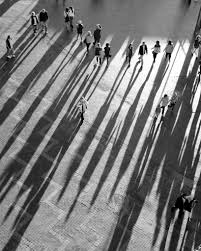
When was this picture most likely taken?
(Hint: think about the shadow's length)
morning or evening
night
noon
afternoon

If the sun is setting in the western part of the sky, in which direction will we find the shadow of an object?
north
south
east
west

You can tell where the sun is by looking at a shadow because the sun is always on the __________ side of the object.
same
opposite
right
left

Which answer correctly completes this statement?
Just before sunset, a shadow is very ________ and it points _______.
short, west
short, east
long, west
long, east
During which season does the sun travel in its highest path across the sky?
winter
spring
summer
fall
Which time of day would the shadow be the lowest?
4 am
sunrise
noon
3 pm

Which picture shows the shadow of a pole at noon?


What time of day would you find the SUN in the western part of the sky?
Check all of the correct responses.
8 am
11 am
1 pm
4 pm

In the winter, the sun's path is (a) in the sky, so the shadows are longer.
Any object with mass experiences gravity
True
False
Gravity is the force between two objects
True
False
Earth's gravity pulls everything toward:
North
South
East
The center of the earth
As mass increases, gravitational forces:
Increase
decrease
stay the same
disappear
When you drop a hammer and a feather, why does the feather fall slower?
air resistance causes the feather to slow down
gravity pulls harder on the hammer than the feather
gravity pulls harder on the feather than the hammer
air resistance causes the hammer to fall slower
What keeps the planets in orbit around the sun?
gravity
friction
density
distance
Earth spinning on its own axis its called as ....
Rotation
Revolution
Simulation
Transformation

The imaginary line that connects the North and South poles is called ....
Line
Axis
Gear
Wheel

The sun APPEARS to move across the sky, during the day. Which of the following causes shadows to change length throughout the day?
earth's rotation
earth's revolution
sun's revolution
earth's orbit

What is Earth's revolution?
The Earth spins on its own axis.
The Earth movement around the sun on its orbit.
The Earth movement around the sun on its axis.
The Earth spins on its own orbit.

Earth revolution can cause several effects. One of these effects is the direct and indirect sunlight that causing the changes of ...
constellation
sun positions (solstice)
equinox
seasons

The movement of Earth around the Sun is also called as ....
Rotation
Circulation
Revolution
Simulation
Which of the following images shows revolution or orbiting?


How long does it takes for Earth to complete one revolution around the Sun?
1 year
24 hours
2 years
12 hours
True or False. One REVOLUTION or ORBIT is equal to 365 days or one year.
True
False

In order to finish one complete revolution, Earth takes ... days.
1
365 1/4
24
366


What season is letter C in the northern hemisphere?
What causes the moon's phases
Where you are standing on Earth
the amount of sunlight reflected onto the moon from the sun
The tilt of Earth
how fast the moon is moving

What is the source of the moon's light?
Earth
the sun
the moon
Mars
During which phase does the moon appear as a bright round circle?
First Quarter
New Moon
Third Quarter
Full Moon
What causes the phases of the moon?
Earth's movement around the sun
the moon's movement around Earth
Earth's movement around the moon
the sun's movement around the moon


What moon phase comes after this?


When the lit part of the moon is getting smaller, we call that ...
Waxing
Waning
When the moon is waxing it is ____________________.
Growing or getting bigger
Shrinking or getting smaller
What is a constellation?
A group of patterns that form a star
A group of stars that form a pattern
Fine Italian cuisine
A star

Stars like the sun appear to move across the sky due to Earth _________________ on it's axis
Revolving
Wobbling
Rotating
Jumping
Some dim stars appear brighter than bright stars because the dim stars may be closer to the Earth.
True
False
We see different stars in the sky depending on the season.
True
False


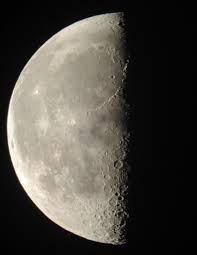

What is the missing phase?


What is the missing phase?


What is the missing phase?

When the lit part of the moon is getting bigger, we call that ...
Waxing
Waning

Which moon phase is shown?
Waxing Crescent
Waning Gibbous
Full Moon
Waning Crescent

Which moon phase is shown?
First Quarter
Third or Last Quarter
Full Moon
Waning Crescent

Which moon phase is shown?
Waxing Gibbous
Waxing Crescent
New Moon
Third or Last Quarter

Which moon phase is shown?
Waxing Crescent
Waning Crescent
Waning Gibbous
Waxing Gibbous
When the moon is waning it is __________________.
Growing, or getting bigger
Shrinking, or getting smaller
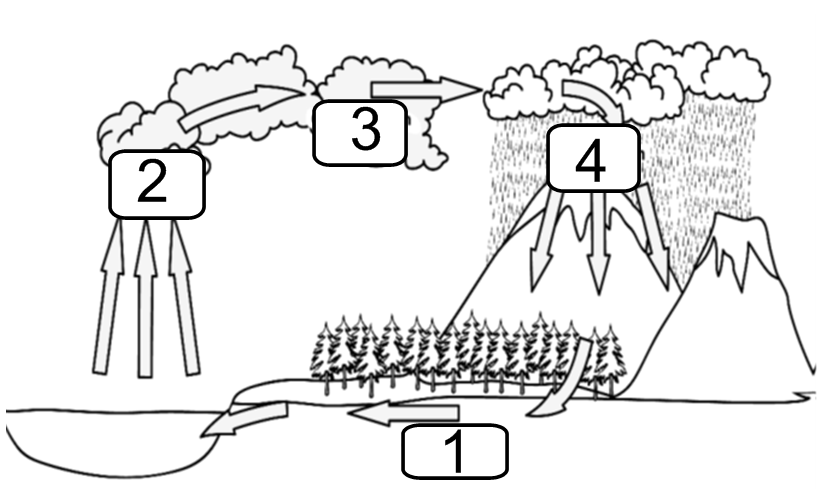
What is the energy source for the water cycle?
sun
wind
rain
oceans

What are formed when water vapor condenses?
Clouds
Mountains
Transpiration
Valleys

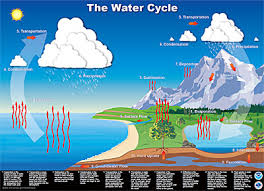
run off/collection


How much of earth's water is salt water?
97%
100%
3%
60%
How much of earth's water is freshwater?
97%
100%
3%
60%
Why is freshwater not equally distributed across the globe?
It is equally distributed
Because some areas get more precipitation than others
Because areas have different temperatures
Because areas have different amounts of trees
Which area is more likely to have MORE freshwater:
A desert
A rainforest
What factor determines whether precipitation falls as rain or snow?
Distance
Temperature
Height of clouds
Type of clouds
A reservoir is a
man-made place to collect and store freshwater
naturally occurring underground location to collect water
a pool
a lake
An aquifer is
a man-made place to collect and store freshwater
a pool
a lake
a naturally occurring underground place to store groundwater
Most freshwater can be found in
Groundwater
ice caps and glaciers
Most surface freshwater an be found in
lakes
rivers
streams
pools
How much of the earth is covered in water?
75%
25%
60%
90%
What is the force that pulls precipitation out of clouds and down to the surface of the earth?
precipitation
gravity
condensation
collection
Examples of chemical changes
Gas forming when baking s
Cutting paper
Freezing water
Lighting a match
A chemical change is when
a substance changes some properties, but it does NOT form a new subt
a substance changes some properties, AND a new substance forms
A physical change is when
a substance changes some properties, but it does NOT form a new subt
a substance changes some properties, AND a new substance forms
Which of the following are physical changes?
Boiling water on the stove
Burning a marshmellow into ash
Cheese melting on a pizza
Shredding paper
Rust is an example of a
Chemical change
Physical change
Thermal change
When you mix baking soda and vinegar in a covered container (balloon on top), will the mass after the change be the same as before?
Yes, the balloon captures the gas and no matter is lost
No, the gas is matter disappearing
No, the gas will leak through the glass
Six oxygen atoms weigh 6 units, and a small piece of iron weight 10 units. When the iron rusts, the oxygen binds to the iron. What is the new mass of the rusted piece of iron?
16 units
10 units
4 units
60 units
What are signs of chemical changes?
A new smell
A release of heat, light, or flame
Change in color
Release of gases
Why is trail mix a mixture?
It is a combination of several substances that can be easily separated
It is a combination of several substance that cannot be easily separated
What method could you use to separate a mixture of iron filings and sawdust?
Evaporate the sawdust
Use a magnet to pull up the iron filings
Dissolve the sawdust
Describe the particles of a solid
No fixed volume or shape; particles moving at a fast speed
Fixed volume and shape, particles are barely moving
Fixed volume, but no fixed shape; particles move at a medium speed
Describe the particles of a liquid
No fixed volume or shape; particles moving at a fast speed
Fixed volume and shape, particles are barely moving
Fixed volume, but no fixed shape; particles move at a medium speed
Describe the particles of a gas
No fixed volume or shape; particles moving at a fast speed
Fixed volume and shape, particles are barely moving
Fixed volume, but no fixed shape; particles move at a medium speed
Which state of matter will always fill the shape of its container?
Solid
Liquid
Gas
What happens when a substance boils?
The particles slow down and vibrate in place
The particles speed up and move farther apart
The particles speed up and move closer together
What happens to the particles when a substance freezes?
They slow down and move closer together
They slow down and spread out
They speed up and spread out
They speed up and move closer together
Which state of matter can flow but will not expand to fill the shape of its container?
Solid
Liquid
Gas
Why does sugar dissolve faster in boiling water?
The particles are moving very slowly and work hard to spread out the sugar
The particles are moving very quickly and easily spread out the sugar
The conservation of matter says
Matter can talk to other matter
Matter can never be created or destroyed, only change forms
Matter can create or destroy itself
We can create matter out of nothing
A 50 gram ice cube melts in a glass. The conservation of matter says the mass of the now liquid water weighs
25 grams
100 grams
50 grams
An oreo weights 25 grams. For a recipe, you crumble it up. How much does it weigh now?
25 grams
20 grams
15 grams
30 grams
Examples of chemical changes
Dissolving
Burning paper
Baking cookies
Melting ice
What happens when a substance boils?
The particles slow down and
THe part
The particles speed up and move closer together
Which state of matter can flow but will not expand to fill the shape of its container?
Solid
Li
Gas
Examples of chemical changes
Dissol
Burning paper
Baking cookies
Melting ice

