
 Worksheets
Mega awesome Units 5-6 AP Macroeconomics review
Total questions: 499
Worksheet time: 8hrs 19mins

what is the purpose of Monetary Policy?
contribute to economic growth and stability
keep rich people from getting too rich
Functions like Fiscal Policy
give Congress and the political parties more control of the economy
These are IOUs from the U.S. government to people that finance a little piece of the government's debt in exchange for a very small amount of interest
Government Bonds, or Securities
Government Credit
Government Cash
Government Holdings
Fiat money is
money is checking accounts.
money that has intrinsic value on its own.
specially created from the Federal Reserve.
money that is only valuable because the government says it is.
Money loses its value when it
becomes too plentiful
becomes too portabale
is divisible
is durable
____________ is the price paid for the use of money.
Gold
Monetary policy
Fiscal policy
The interest rate

Based on the Required Reserves that Reserve Ratio must be
5%
10%
20%
19%
none of the above

If the reserve requirement is 10%, this bank could create _______ in loans.
$1900
$8100
$900
$9000
not enough information.

If this bank were to purchase securities from the Fed, it could currently purchase _______ in securities.
$810
$1710
$1900
$190
$90

If the reserve requirement is 10%, this bank has _______ in excess reserves
$52
$100
$47
$48
$32
If the reserve requirement is 20%, this bank has _______ in excess reserves
$12
$100
$10
$40
$32
If the reserve requirement is 10%, this bank can increase the money supply by increasing
securities by $20.
loans by $100
loans by $320
securities by $100
loans by $32

This bank has a reserve requirement of
9%
4.5%
10%
20%
7%

The reserve ratio here is....
10%
20%
5%
27%
25%

The reserve requirement at this bank is
10%
80%
20%
5%
15%
This bank can lend
$100
$20
$80
$300
$400
This bank can create up to _______ in the money supply
$100
$20
$80
$300
$400
If $100 is is deposited into this bank the excess reserves will grow to
$100
$20
$80
$120
$40
If $200 is is deposited into this bank the excess reserves will grow to
$100
$260
$180
$120
$160
If the reserve ratio at this bank was lowered to 10%, the required reserves would be
$80
$20
$100
$40
$160
If the reserve ratio at this bank was lowered to 10%, this bank could create up to _____ in the money supply.
$800
$200
$600
$400
$1600

If this bank sold $100 in Securities it's ________ would rise to _____ and its Demand Deposits would ______.
Securities; $200; remain the same
Reserves; 140; remain the same
Loans; $180; increase by $100
Securities; $200; increase by $100
Reserves; $140; increase by $100

This shift could occur with
an increase in bank lending.
the purchase of securities in the open market by the Fed.
a decrease in the discount rate.
an increase in the Federal Funds rate.
a decrease in the reserve ratio.

This shift could be caused by
an increase in government spending.
a decrease in deficit spending.
an increase in the discount rate.
the net export effect.
a decrease in the discount rate.

A shift from MD1 to MD2 could be caused by
customers wishing to hold more cash and use credit cards less.
a decrease in the discount rate.
an open market operation sale of bonds to the Fed.
the GDP falling.
an open market operation purchase of bonds by the Fed.

To decrease the equilibrium interest rate to 8% the Fed could
sell bonds.
raise the discount rate.
raise the Federal Funds rate.
lower the reserve requirement.
decrease the GDP.

To raise the interest rate to 12% the Fed could
buy bonds.
increase the discount rate.
decrease the reserve ratio.
decrease the nominal interest rate.
decrease the Federal Funds rate.

The shift in the graph could be caused by
a recession.
government deficit spending.
an increase in savings.
positive feelings about the future of the economy.
the Fed selling securities in an open market operation.

A movement from D3 to D2 could be caused by
an increase in personal wealth.
an increase in the money supply.
a negative view of the future of the economy.
a decrease in household savings.
a government budget surplus.

The shift on the graph could be caused by
a lowering of default risk on loans.
an increase in the desire of companies to invest.
positive expectations about the future of the economy.
a government budget deficit.
a decrease in household savings.

The shift in the graph could be caused by
the crowding out effect.
positive expectations about the future of the economy.
an increase in government budget deficit spending.
a decrease in consumer wealth.
a decrease in household savings.

The shift in the graph could be caused by
an decrease in the federal funds rate.
a lowering of the discount rate.
a government budget surplus.
a decrease in household savings.
an increase in positive opinions on the economic future.

The shift in the graph could be caused by
the Federal Reserve increases the discount rate.
the Federal Reserve makes an open market sale of securities (bonds).
the government increases spending without a corresponding increase in taxes.
the Federal Reserve makes an open market purchase of securities (bonds).


(monetary / fiscal)
Which of the following statements is true?
Contractionary monetary policy would increase government revenue & slow down the economy.
Contractionary fiscal policy would decrease the reserve requirement & slow down the economy.
Contractionary fiscal policy would lead to a decrease in national debt.
Contractionary monetary policy leads to a budget deficit.
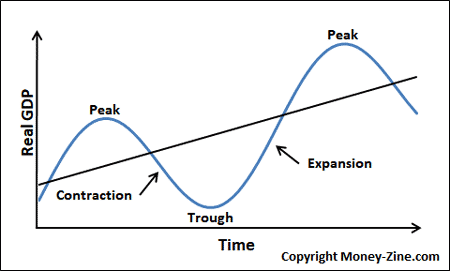
Which fiscal policy tool would be used if the economy were in a trough?
decrease reserve requirement
increase individual tax rate
sell bonds through open market operations
increase government spending

Which of the following fiscal policy tools would decrease the national debt?
increase income taxes
decrease income taxes
increase money supply
decrease money supply

Which of the following are fiscal policy tools (select more than one)?
adjusting the reserve requirement
adjusting the discount rate
changing government spending
changing income taxes
buying/selling bonds via open market operations
Which monetary policy tool would speed up the economy?
increasing reserve requirement
decreasing income taxes
increasing government spending
decreasing interest paid on reserves
Which combination of fiscal and monetary policy would speed up the economy?
increase taxes; decrease reserve requirement
decrease taxes; decrease discount rate
increase spending; increase interest on reserves
decrease spending; sell bonds via open market operations
Which monetary policy tool would be expansionary?
decrease reserve requirement
increase discount rate
increase interest paid on reserves
selling bonds via open market operations
If the government is concerned about unemployment, which tool would they use?
increase spending
increase taxes
increase reserve requirement
increase discount rate
How are monetary policy and fiscal policy similar?
They are both done by the President.
They are both done by the Fed.
They are both used to keep the economy stable.
They both use four tools.
The Federal Open Market Committee sells bonds. What type of policy is this?
Contractionary Fiscal
Expansionary Fiscal
Contractionary Monetary
Expansionary Monetary


These are IOUs from the U.S. government to people that finance a little piece of the government's debt in exchange for a very small amount of interest
Government Bonds, or Securities
Government Credit
Government Cash
Government Holdings
Assume that the velocity of money in Theopolis is 3 and the aggregate supply curve is vertical at $100 million.
What impact will an increase in the money supply have on real output?
Real output will increase by 30%
Real output will increase by 10%
Real output will increase by 3%
Real output will increase by 3/10%
There will be no impact on real output
Which of the following would cause the long-run Phillips curve to shift to the right?
A decrease in frictional unemployment
An increase in cyclical unemployment
An increase in structural unemployment
An increase in aggregate demand (AD)
A decrease in aggregate demand (AD)
The natural rate of unemployment in Mithrim is 5%, and the current rate of unemployment is 2%. Also, the consumer price index (CPI) has been increasing rapidly.
Which of the following combinations of monetary and fiscal policy would be appropriate to return this economy to full employment?
Increasing taxes; lower the discount rate
Decreasing taxes; buy bonds
Increase government spending; sell bonds
Increasing taxes; increasing government spending
Increasing taxes; open market sales

The current state of the economy of Te Rehunga is represented in the graph shown above.
Let point B in the options below represent the current combination of inflation and the unemployment rate.
Which of the following graphs best depicts the Phillips curve model of Te Rehunga based on this AD-AS model?


In the graph of the Phillips curve above, an economy moved from point 1 to point 2 to point 3.
Which of the following would be the most likely reason for the movement from point 2 to point 3 shown in this graph?
A change in the natural rate of unemployment
An increase in aggregate demand
A decrease in aggregate demand (AD)
A decrease in short-run aggregate supply (SRAS)
An increase in short-run aggregate supply (SRAS)
The economy of Burginville has experienced high rates of inflation over the past 10 years.
According to the quantity theory of money, which of the following is the most likely explanation for the sustained inflation during this period?
Better banking technology that has decreased the velocity of money
Contractionary monetary policy
Expansionary monetary policy
Strong economic growth
A money supply that has increased at the same pace as real output
What is the primary cause of deflation according to monetarist theory?
A stable quantity velocity of money
Any decrease in the money supply.
A rapidly changing velocity of money
The money supply decreases faster than real output decreases.
The money supply increases too rapidly for a long time.

The economy of Rivendell experienced the AD shock shown in this graph.
Which of the following combinations of monetary and fiscal policy would be appropriate to combat the effect on the price level shown in this graph?
Increase taxes; open market sales
Sell bonds; increase the reserve requirement
Decrease taxes; increase government spending
Decrease taxes; decrease the reserve requirement
Increase taxes; decrease the reserve requirement
The economy of Mithrim is experiencing a severe recession. As a result, the government is conducting expansionary fiscal policy. The central bank of Mithrim is considering expansionary monetary policy to aid in the recovery efforts.
Which of the following is an example of a monetary policy action that would work with the expansionary fiscal policy to close the output gap?
Increasing government spending
Increasing the discount rate
Increase taxes
Selling bonds
Open market purchases
King Thranduil of the Woodland Realm is trying to rescue the kingdom from a severe recession by engaging in expansionary fiscal policy. As a result of the expansionary fiscal policy, the Woodland Realm now has a budget deficit. Meanwhile, the president of the central bank is Smaug, who wants to maintain a steady interest rate.
What is the appropriate action for the central bank to take in order to reduce the impact of the expansionary fiscal policy on interest rates?
Increase taxes
Decrease taxes
Increase the reserve requirement
Buy bonds
Sell bonds
The economy of Isengard is experiencing high inflation and a rate of unemployment below the natural rate.
Which of the following combination of fiscal and monetary policy actions would be the most appropriate response to this output gap?
Decrease government spending; decrease the money supply
Buy bonds; decrease the reserve ratio
Increase government spending; decrease taxes
Decrease taxes; increase the money supply
Increase taxes; buy bonds
Which of the following actions would most likely lead to a shift to the left of the short-run Phillips curve, or SRPC?
A strong central bank commitment to reducing inflation
A strong central bank commitment to decreasing cyclical unemployment
A strong government commitment to engage in expansionary fiscal policy
A strong central bank commitment to increasing the money supply
A strong government commitment to reducing structural unemployment
Which of the following represents how a positive aggregate demand shock would impact the Phillips curve model?


What causes the long-run Phillips curve to shift?
Changes in cyclical unemployment
Changes in expectations about inflation
Changes in structural or frictional unemployment
Shifts in the short-run aggregate supply (SRAS) curve
Shifts in the aggregate demand curve
The natural rate of unemployment in Elizaland is 5%. The citizens of Elizaland expected inflation to be 2% and unemployment to be 5% during 2018. However, inflation turned out to be 6% and unemployment 1.5%.
What happens in the long run as people begin to expect a permanantly higher rate of inflation?
The short-run Phillips curve (SPRC) shifts to the left.
The long-run Phillips curve (LRPC) shifts to the left
The long-run Phillips curve (LRPC) shifts to the right
A movement to the right along the short-run Phillips curve (SRPC)
The short-run Phillips curve (SRPC) shifts to the right
According to the quantity theory of money, changes in which variable(s) from the equation of exchange determine(s) the rate of inflation in the long run?
Y only
V only
Y and V
M only
P only
According to monetarist theory, what happens if the money supply increases more rapidly than real output?
The velocity of money increases.
Deflation occurs.
The velocity of money decreases.
Inflation occurs.
Nominal output decreases.
Assume that wages and prices are fully flexible and all inflation is correctly anticipated.
According to the quantity theory of money, what would be the impact of expansionary monetary policy on real output and the price level?
Real output increases, no impact on price level
Real output decreases, price level decreases
Real output increases, price level increases
No impact on real output, price level increases
No impact on real output, no impact on the price level
According to the quantity theory of money, which of the following best describes what determines the rate of inflation in the long run?
The rate of change of the velocity of money
The rate of growth of the money supply
The growth of the price level
The growth of real GDP per capita
The rate of inflation is constant in the long-run
The economy of Burginville has been running budget deficits which it paid for by borrowing.
What is the likely impact of government borrowing on spending on capital goods and economic growth in Burginville?
Increase in spending on capital goods; no effect on economic growth
A decrease in spending on capital goods; a decrease in economic growth
Increase in spending on capital goods; an increase in economic growth
No effect on spending on capital goods or economic growth
A decrease in spending on capital goods; no effect on economic growth
An economy has a budget deficit, and you want to show the impact of the budget deficit on the real interest rate.
What model would you use, and what would be the impact on the interest rate?
The AD-AS model; the real interest rate is not impacted
The money market; the real interest rate decreases
The money market; the real interest rate is not impacted
The loanable funds market; real interest rate decreases
The loanable funds market; real interest rate increases
The government of Tatooine had a balanced budget last year. However, an unanticipated recession triggered by the wanton destruction of Jabba’s Palace leads to a decrease in tax revenues, even though government spending and transfer payments did not change.
What happens to the budget balance and national debt in Tatooine as a result of the decrease in tax revenues?
There is a budget deficit; the debt will increase
There is a budget deficit; no impact on national debt
There is a budget surplus; no impact on national debt
There is a budget surplus; national debt will decrease
There is a balanced budget; national debt will increase
Which of the following changes would cause a balanced budget to move to a budget surplus?
An increase in transfer payments
A decrease in transfer payments
An increase in government spending
A decrease in tax revenue
A decrease in national income

The AD-AS model of Snaximus changed as shown in the graph above.
Which of the following illustrates what would also be occuring in Snaximus’ production possibilities curve?


The average years of education per person in Islandia increased by 3 years over the period 2010 - 2015.
What determinant of productivity changed, and how would that impact Islandia’s long-run aggregate supply curve (LRAS)?
Technology increased; no impact on LRAS
Technology increased; LRAS increased
Human capital increased; LRAS shifts right
Labor increased; no impact on LRAS
Capital increased; LRAS increased
Which of the following measures is typically used to approximate the productivity of an individual unit of labor in a country?
The consumer price index (CPI)
Real GDP
Real GDP per capita
Nominal GDP
The unemployment rate
The aggregate production function is used to describe which of the following relationships?
The tradeoff between the production of capital goods and consumption goods
The relationship between output supplied and the price level
The relationship between unemployment and inflation in the long run
The tradeoff between unemployment and inflation in the short run
The relationship between output and inputs (labor, capital, and technology)
Winterfell and Dorne have no restrictions on the flow of financial capital. An increase in business optimism in Dorne has lead to a higher real interest rate in Dorne.
What effect does this have on real interest rates and long-run economic growth in Winterfell?
Lower interest rates and higher economic growth in Winterfell.
Higher interest rates and lower economic growth
Lower interest rates and lower economic growth.
Neither interest rates nor economic growth in Winterfell are affected.
Higher interest rates and higher economic growth
Which of the following is LEAST likely to be associated with a higher rate of economic growth?
strong protection of property rights
encouraging the replenishment of natural resources
higher consumption
taxes on savings and investment
policies that discourage immigration
Which of the following is the most likely effect of a government policy that leads to more development of technology used by firms throughout an economy?
a negative supply shock and a higher price level
a positive demand shock and a lower growth rate
a positive supply shock and higher growth rate
a positive supply shock and a higher price level
a negative demand shock and a lower price level
Higher taxes have reduced disposable income in Fredland.
What happens to household savings and the real interest rate in the short run, and potential output in the long run?
Household saving increases; the real interest rate decreases, and potential output increases.
Household saving decreases; the real interest rate decreases, and potential output increases.
Household saving decreases; the real interest rate decreases, and potential output increases.
Household saving decreases; the real interest rate increases, and potential output decreases.
Household saving increases; the real interest rate decreases, and potential output is unaffected.
Which of the following policies is most likely to increase potential output in the long run?
Policies that encourage more household spending.
Policies that encourage more saving for retirement.
Taxes on business investment.
Weakening protections on intellectual property
Taxes on the gains from the sale of assets.
The current rate of unemployment in Hamiltonia is 7%. Economists estimate that frictional unemployment is 4% and structural unemployment is 1%.
Which of the following best describes the amount of cyclical unemployment in Hamiltonia and current output in the economy?
Cyclical unemployment is 2%; output is more than full employment output.
Cyclical unemployment is 0%; output is less than full employment output.
Cyclical unemployment is 2%; output is less than full employment output.
Cyclical unemployment is 0%; output is equal to full employment output.
Cyclical unemployment is 7%; output is equal to full employment output.

Before experiencing the supply shock shown in this graph, Maxistan was in long-run equilibrium. The marginal propensity to consume (MPC) Maxistan is 0.75.
Which of the following is a fiscal policy action that would be the best choice to return the economy to full employment output?
increase taxes by $75 million
decrease taxes by $25 million
decrease government spending by $25 million
increase government spending by $25 million
decrease government spending by $75
Justinia is a country that produces three goods: guitars, physics books, and sandals.
Which of the following would definitely cause an increase in nominal GDP but not a change real GDP in Justinia?
The quantity of goods produced increases; prices stay the same
The quantity of goods produced increases; prices decrease
The quantity of goods produced increases; prices increase
The quantity of goods produced decreases; prices stay the same
The quantity of goods produced stays the same; prices increase
Which of the following would be the FIRST change to occur when a central bank conducts open market purchases of bonds?
Aggregate demand increases
Bank reserves increase
The money supply increases
The monetary supply decreases
The interest rate decreases
Ygritte loaned Mans $100. Mans paid her back $110
one year later. The annual rate of inflation was
3%.
What was the real interest rate that Ygritte earned on this loan?
$10
10%
$100
7%
3%
You borrow $200 from the First Bank of Westeros to purchase Kraken repellant. The bank charges a fixed nominal interest rate of 18% per year and you will repay them in one year. You and the bank both anticipate that there will be 7% inflation. However, after the loan agreement is signed, the rate of inflation turns out to be 9%.
Who is hurt by this unanticipated inflation, and why are they hurt by it?
The bank is hurt because the value of what is repaid has decreased
You are hurt because the value of what is repaid has decreased
The bank is hurt because the value of what is repaid has increased
You are hurt because the value of what is repaid has increased
We cannot tell without more information
Which of the following would cause the value of a nation's GDP to increase in a given year?
An increase in sale of illegal goods in the economy
Households spend more on domestic air travel
An increase in the sale of used cars
More people choose to stay at home to raise their children rather than using paid childcare
An increase in volunteer work
Which of the following best describes why the money supply curve is vertical?
Individuals hold less money when interest rates increase
The central bank responds to increases in the interest rate by increasing the quantity of money supplied
Central banks determine the monetary base independent of the interest rate
Savers want to supply more money when interest rates are high
The central bank sets interest rates and changes the quantity of money accordingly
How does a decrease in the price level affect real wealth and aggregate demand?
Real wealth increases; the quantity of aggregate demand decreases
Real wealth decreases; aggregate demand increases
Real wealth increases; aggregate demand increases
Real wealth increases; the quantity of aggregate demand increases
Real wealth decreases; the quantity of aggregate demand increases

The figure above shows the result of a change in the market for loanable funds.
Which of the following is the most likely to have caused the shift shown here?
Firms invest less in plant and equipment
Foreign savers view this country as a desirable place to send assets.
Optimism by firms increases investment in physical capital.
Domestic saving decreases.
The government runs a budget surplus.
A banking innovation has made it easier for people in Hamsterville to convert their assets into money. As a result, the demand for money has decreased, and this has changed the nominal interest rate.
If the central bank wants to counteract this change, which of the following is an appropriate open market operation to achieve that?
Buy bonds.
Increase the reserve requirement.
Decrease taxes.
Sell bonds.
Lower the discount rate.
If unemployed workers decide to stop looking for a job and instead enroll in further education, how will the number of employed workers and the unemployment rate change?
The number of employed workers does not change; the unemployment rate decreases
The number of employed workers does not change; the unemployment rate does not change
The number of employed workers increases; the unemployment rate decreases
The number of employed workers decreases; the unemployment rate increases
The number of employed workers does not change; the unemployment rate increases
What is included in the monetary base?
All deposits in banks and money in circulation
Money held in bank vaults and money held by the public
Any asset of any value including cash, stocks, and bonds
Only paper currency and coins
Only money held by the public

Which of the following best describes what will happen to this economy in the long run?
The LRAS curve will shift out and full employment output will increase from Yf to Y1.
Wages and prices will decrease and the full employment level of output will increase
Wages and prices will decrease and output will decrease from
Y1 to Yf.
Wages and prices will decrease and output will increase from
Y1 to Yf.
Wages and prices will increase and output will remain at
Y1.
Assume that milk is an inferior good.
Assuming all other factors remain constant, if the income of milk buyers increases, what will happen to the equilibrium price and quantity of milk?
We cannot determine what happens to price, but quantity will increase
Price will decrease and quantity will increase
Price will decrease and quantity will decrease
Price will increase, but we cannot determine what happens to quantity
Price will increase and quantity will decrease

P increased
Q unknown
P decreased
Q unknown
P increased
Q stays the same
P increased
Q increased
Q increased
P stays the same

Neither country would be willing to buy or sell boats given these terms of trade because the prices of these goods are not given in money.
Country A would want to buy boats, and Country B would want to sell boats.
Country A would want to sell boats, and Country B would want to buy boats.
Both countries would want to sell given these terms of trade, so there will be no exchange.
Neither country would be willing to sell given these terms of trade because neither country has the comparative advantage in either good.

In a country that has a low rate of inflation is that a good economy or a bad economy?
Good economy
Bad economy
What is the Federal Reserve's primary goal?
To keep inflation at a low and steady rate.
To have full employment.
Economic growth.
Economic Freedom.
If the rate of inflation rises above their target level what does the Federal Reserve do?
Increasing bond prices
They put more money into circulation
Decreases interest rates
They take excess money out of circulation
What is Cost-push inflation?
The decrease prices of the factors of the production leads to decreased supply of these goods.
The increase prices of the factors of the production leads to a decreased supply of these goods.

What is commonly described as "too much money chasing too few goods."
Demand-pull inflation
Cost-push inflation
It involves publicly announcing an inflation forecast which the BSP promises to achieve.
Monetary policy
Inflation Target
Price Stability
Financial Stability
_________ is a decrease in the rate of inflation.
Hyperinflation
Disinflation
Deflation
Stagflation
__________ refers to a decrease in price level.
Hyperinflation
Disinflaation
Deflation
Stagflation
__________ occurs in the economy when unemployment and inflation are both high.
Hyperinflation
Disinflation
Deflation
Stagflation
The Taylor rule sets the target federal funds rate based on which of the following?
the inflation rate only
the unemployment rate only
the output gap only
both the inflation rate and the unemployment rate
both the output gap and the inflation rate
An inflation tax is the result of
the federal government running a budget surplus.
the Federal Reserve raising the federal funds rate.
an increase in the demand for money.
printing money to cover a budget deficit.
contraction fiscal policy.
Which of following is true when the output gap is negative?
Aggregate output is above potential output.
The unemployment rate is below the natural rate.
The economy is experiencing inflation.
Potential output is above aggregate output.
The natural rate of unemployment is decreasing.
The short-run Phillips curve shows the relationship between the inflation rate and the
GDP growth
unemployment rate
employment rate
real interest rate
nominal interest rate
An increase in expected inflation has what effect on the short-run Phillips curve?
a movement up and to the left along the curve
a movement down and to the right along the curve
an upward shift of the curve
a downward shift of the curve
an increase in the slope of the curve
The long-run Phillips curve is
horizontal.
vertical.
upward sloping.
downward sloping.
U-shaped.
The long-run Phillips curve illustrates which of the following?
a positive relationship between unemployment and inflation
a negative relationship between unemployment and inflation
that unemployment will always return to the NAIRU
that unemployment will adjust so that the economy experiences 2% inflation
that output will adjust so that there is no unemployment or inflation in the long run
The process of bringing down the rate of inflation that has become embedded in expectations is known as
disinflation.
deflation.
negative inflation.
debt deflation.
monetary policy.
A liquidity trap occurs when conventional monetary policy is ineffective because
the short-run Phillips curve is negatively sloped.
the public will not buy or sell Treasury bills.
the unemployment rate can't go below 5%.
the nominal interest rate can't be negative.
the real interest rate can't be negative.
What is seignorage?
The right of the US government to tax its citizens
The right of the US government to tax businesses
The right of the US government to print money
The right of the US government to less treasury bonds
When a government uses seignorage as a way to pay off its debt, it is actually imposing an inflation tax on those with money.
True
False
In the USA, seignorage accounts for about ___ percentage of the US government's budget.
0-1%
3-5%
6-8%
+10%
Misusing seignorage can cause
inflation
hyperinflation
disinflation
deflation
Long Run Phillips Curve
Wages and Resource Costs will increase as price levels increase.
Measures the effect of the economy on inflation and unemployment with an inverse relationship
No tradeoff between inflation and unemployment, represented by a vertical line at the NRU.
Government spending might cause unintended effects that weaken the impact of the policy.
Wages and Resource Costs will not increase as price levels increase.
Crowding Out Effect
Wages and Resource Costs will increase as price levels increase.
Measures the effect of the economy on inflation and unemployment with an inverse relationship
No tradeoff between inflation and unemployment, represented by a vertical line at the NRU.
Government spending might cause unintended effects that weaken the impact of the policy.
Wages and Resource Costs will not increase as price levels increase.
The Phillips curve shows what type of relationship between inflation and unemployment?
negative
positive
parabolic
symmetric
Which of the following causes movement along the short run Phillips curve?
Any changes to aggregate supply.
Any changes to aggregate demand.
Any changes in frictional or structural unemployment
All of the above
Which of the following causes a shift in the short run Phillips curve?
Any changes to aggregate supply.
Any changes to aggregate demand.
Any changes in frictional or structural unemployment
All of the above
Which of the following causes a shift in the long run Philips curve?
Any changes to aggregate supply.
Any changes to aggregate demand.
Any changes in frictional or structural unemployment
All of the above
According to the the Philips curve, if the inflation rate increases from 4% to 6%, and if the unemployment rate is 5% when the inflation rate was 4%, we can expect the unemployment rate in the short run to...
stay the same
increase to 8%
decrease to 3%
The long run Philips curve is also known as the
real output rate
natural rate of inflation
natural unemployment rate
real interest rate
According to the Phillips curve, there is
a trade-off in inflation and unemployment in the short run, but not the long run.
a trade-off in inflation and unemployment in both short and long run.
no trade-off in inflation and unemployment in both short and long run.
a trade-off in inflation and unemployment in the long run, but not the short run.

A movement from A to B would represent
an increase in AS in the AS/AD model.
a decrease in AS in the AS/AD model.
stagflation.
an increase in AD in the AS/AD model.
a decrease in AD in the AS/AD model.

A decrease in AD would cause a(n)
downward movement on the Phillips Curve.
upwards movement on the Phillips Curve.
a rightward shift of the Phillips Curve.
a leftward shift of the Phillips Curve.
stagflation.

The movement from B to C would be reflected on the AS/AD model as
a decreasing shift of AD from an inflationary gap to full employment.
an increasing shift of AS from an inflationary gap to full employment.
a decreasing shift of AS from an inflationary gap to full employment.
an increasing shift of AD from a recessionary gap to full employment.
a decreasing shift of AS from a recessionary gap to full employment.

The movements on each graph could be caused by
a major technological innovation.
a decrease in the reserve requirement.
an increase in government spending.
a decrease in taxes.
an increase in the cost of a major resource such as oil.

The shift from AS1 to AS2 would cause a
movement along the SRPC towards inflation.
movement along the SRPC towards unemployment.
a downward movement along the LRPC.
a leftward or downward shift of the SRPC.
a rightward or upward shift of the SRPC.

The shift from AD1 to AD2 would cause a
movement along the SRPC towards inflation.
movement along the SRPC towards unemployment.
a downward movement along the LRPC.
a leftward or downward shift of the SRPC.
a rightward or upward shift of the SRPC.

Which of the following would cause a movement from point S to point R on the short-run Phillips curve above?
An unanticipated increase in government spending
An unanticipated adverse supply shock
A decrease in net investment
An increase in real interest rates
An increase in the labor-force participation rate
what is the purpose of Monetary Policy?
contribute to economic growth and stability
keep rich people from getting too rich
Functions like Fiscal Policy
give Congress and the political parties more control of the economy
These are IOUs from the U.S. government to people that finance a little piece of the government's debt in exchange for a very small amount of interest
Government Bonds, or Securities
Government Credit
Government Cash
Government Holdings
____________ is the price paid for the use of money.
Gold
Monetary policy
Fiscal policy
The interest rate
This shift could occur with
an increase in bank lending.
the purchase of securities in the open market by the Fed.
a decrease in the discount rate.
an increase in the Federal Funds rate.
a decrease in the reserve ratio.
A shift from MD1 to MD2 could be caused by
customers wishing to hold more cash and use credit cards less.
a decrease in the discount rate.
an open market operation sale of bonds to the Fed.
the GDP falling.
an open market operation purchase of bonds by the Fed.
To decrease the equilibrium interest rate to 8% the Fed could
sell bonds.
raise the discount rate.
raise the Federal Funds rate.
lower the reserve requirement.
decrease the GDP.
To raise the interest rate to 12% the Fed could
buy bonds.
increase the discount rate.
decrease the reserve ratio.
decrease the nominal interest rate.
decrease the Federal Funds rate.
The shift in the graph could be caused by
a recession.
government deficit spending.
an increase in savings.
positive feelings about the future of the economy.
the Fed selling securities in an open market operation.
Which of the following statements is true?
Contractionary monetary policy would increase government revenue & slow down the economy.
Contractionary fiscal policy would decrease the reserve requirement & slow down the economy.
Contractionary fiscal policy would lead to a decrease in national debt.
Contractionary monetary policy leads to a budget deficit.
Which of the following fiscal policy tools would decrease the national debt?
increase income taxes
decrease income taxes
increase money supply
decrease money supply
Any good Macroeconomist will tell you that when a country's economy is growing, the government should utilize _____ policy and when a country's economy is shrinking the government should utilize ______ policy.
expansionary, expansionary
contractionary, contractionary
expansionary, contractionary
contractary, expansionary
Which of the following is NOT an implicit liability of the US Government
Social Security
Medicare
Medicaid
Military Budget
Which of the following is NOT a direct tool of the Fed Reserve?
Open Market Operations
Setting the Discount Rate
Setting the Federal Funds Rate
Setting the Reserve Requirement
If the Fed wanted to lower the interest rate, the way it would do that is by
increasing taxes
decreasing taxes
increasing the money supply
decreasing the money supply
The main tool for economic stabilization policy is
monetary policy because it has more lag time
monetary policy because it has less lag time
fiscal policy because it has more lag time
fiscal policy because it has less lag time
Monetary policy, like fiscal policy is subject to
lag times, but those times are greater
lag times, but those times are smaller
the will of the President of the United States
the will of the US Congress
Most countries try to maintain an inflation rate of ______ per year.
One percent or less
Two to three percent
Four to five percent
Six to seven percent
The Federal Reserve does have an explicit inflation target of 2% per year
True
False
What is the difference between inflation targeting and the Taylor rule?
Inflation targeting is backward-looking while the Taylor rule is forward-looking
Inflation targeting is forward-looking while the Taylor rule is backward-looking
Inflation targeting is less restrictive, while the Taylor rule is more restrictive
The Central Bank's success is easier to judge using the Taylor rule
In the short run, an increase in the money supply will _______ prices and __________ real GDP
increase, increase
decrease, decrease
increase, decrease
decrease, increase
In the short run, a decrease in the money supply will _______ prices and __________ real GDP
increase, increase
decrease, decrease
increase, decrease
decrease, increase
In the long run, a decrease in the money supply _______ prices and __________ real GDP
won't change, increase
won't change, decrease
increases, won't change
decreases, won't change
In the long run, an increase in the money supply _______ prices and __________ real GDP
won't change, increase
won't change, decrease
increases, won't change
decreases, won't change
According to money neutrality, the only long run effect of an increase in the money supply is to _____
raise aggregate price level by an equal percentage
lower aggregate price level by an equal percentage
In the short run, an increase in the Money Supply pushes interest rates _______________, while in the long run interest rates __________
down, increase
down, don't change
up, increase
up, don't change
In the short run, a decrease in the Money Supply pushes interest rates _______________, while in the long run interest rates __________
down, increase
down, don't change
up, increase
up, don't change
Country X's economy is in an inflationary gap. Which of the following combinations of fiscal and monetary policy actions would restore full employment in the short run?
A decrease in income taxes and a decrease in the required reserve ratio
A decrease in government spending and open-market purchases
An increase in income taxes and open-market sales
An economy is in a recessionary output gap. Which of the following combinations of policy actions would definitely move the economy toward long-run equilibrium?
A decrease in government spending and an increase in income taxes
A decrease in the money supply and an increase in income taxes
A decrease in income taxes and an increase in the money supply
An open-market purchase of government bonds accompanied by a decrease in income taxes will result in which of the following in the short run?
A decrease in real output
A decrease in the price level
A decrease in unemployment

Use the graph of a Phillips Curve to answer the question. Which of the following points illustrates an inflationary gap?
X
Y
Z
An increase in the the aggregate costs of production will cause which of the following?
A rightward shift in the short-run Phillips curve
A rightward movement along the short-run Phillips curve
A leftward shift in the short-run Phillips curve
Suppose that an economy with flexible wages and prices is in long-run equilibrium when the central bank contracts the money supply. What is the long-run effect on real output in the economy?
Real output falls.
Real output is unchanged.
Real output rises.
Assume an economy is in long-run equilibrium and the central bank engages in an expansionary monetary policy for a prolonged time period. If the velocity of money is constant, which of the following is true according to the quantity theory of money?
Price level will increase at the same rate as the money supply.
Real output will exceed full employment in the long run.
The actual unemployment rate will exceed the natural rate of unemployment.
If tax revenues are less than the total of government spending plus government transfer payments, which of the following will happen?
The spending multiplier will increase.
The national debt will increase.
The government budget will be in surplus.
Which of the following terms describes the adverse effect that results when private sector investment spending competes with government deficit financing?
Crowding out effect
Multiplier effect
Interest rate effect
Assume policy makers increased spending and cut taxes to stimulate the economy. If the government’s budget was initially in balance, which of the following will occur?
There will be a budget deficit, real interest rates will increase, and investment spending will be crowded out.
There will be a budget deficit, real interest rates will decrease, and investment spending will increase.
There will be a budget surplus, real interest rates will increase, and investment spending will be crowded out.
Which of the following changes is most likely to cause economic growth?
A decrease in labor productivity
A decrease in physical capital
An increase in human capital
How will a nation’s production possibilities curve (PPC) and long-run aggregate supply (LRAS) curve change as a result of an increase in both the labor force and productivity?
The LRAS curve will shift to the right, and the PPC will shift inward.
The LRAS curve will shift to the right, and the PPC will shift outward.
The LRAS curve will shift to the left, and the PPC will shift inward.
If economic growth through investment in the economy's infrastructure is desirable, which of the following policies will most likely achieve this objective?
Decreasing spending on education and training of workers for higher-income jobs
Reducing subsidies for business investment in research and development
Granting tax credits for businesses in the construction sector
Which of the following policies will most likely promote long-run economic growth?
Decreasing government spending on infrastructure
Increasing funding for research and development
Decreasing funding for primary education
Which of the following is true regarding the short-run Phillips curve (SRPC)?
A rightward shift in aggregate demand will cause the SRPC to shift leftward
The SRPC is upward sloping showing the positive relationship between price and output
The SRPC shows the inverse relationship between interest rates and unemployment
The SRPC is vertical when the economy has no cyclical unemployment
The SRPC shows the inverse relationship between inflation and unemployment
According to the long-run Phillips curve, which of the following is true?
Unemployment increases with an increase in inflation.
Unemployment decreases with an increase in inflation.
Increased automation leads to lower levels of frictional unemployment in the long run.
Changes in the composition of the overall labor force tend to be deflationary in the long run.
The natural rate of unemployment is independent of inflation
The quantity theory of money suggests that
An increase in spending will always lead to inflation
An increase in the amount of money will lead to a proportional increase in prices
Hyperinflation is due to an increase in the cost of key resources
Demand-pull inflation will occur as countries produce more output
The quantity of money times the velocity of money equals the real GDP
The velocity of money is best described as:
The number of times the average dollar is spent in a year
Equivalent to nominal GDP
Equivalent to the Price level
Equivalent to real GDP
Another term for the spending multiplier
When government spending causes an increase in real interest rates, gross private domestic investment
Will increase at the same rate as the increase in government expenditures
Will increase the amount of capital stock and cause economic growth in the economy
Will experience crowding-out
Will not change
Will decrease at the same rate as the increase in government expenditures
A decrease in government spending by a given amount accompanied by a decrease in taxes by the same amount will cause which of the following?
Aggregate demand to increase
Aggregate demand to decrease
Aggregate demand to stay the same
Aggregate supply to increase
Aggregate supply to decrease
Which of the following is true regarding budget deficits?
The national debt is the accumulation of budget deficits and surpluses over time
Budget deficits occur when tax revenues are greater than government expenditures
Budget deficits are often greater than the national debt
Large budget surpluses can cause the crowding-out effect
Budget deficits occur when imports are more than exports
A decrease in interest rates resulting in the increase in capital stock will likely cause which of the following in the long-run?
Decrease in only aggregate demand
Decrease in only aggregate supply
Increase in only aggregate demand
Increase in only aggregate supply
Increase in aggregate demand, aggregate supply, and long-run aggregate supply
Which of the following will most likely result in economic growth?
Increased wages
Decreased savings
Increased business taxes
Increased labor productivity
Decreased unemployment
Which of the following to occur in the short-run if the economy is at full employment and the central bank conducts an open market purchase of bonds?
The short-run Phillips Curve will shift to the right
The short-run Phillips Curve will shift to the left
The long-run Phillips Curve will shift to the right
There will be a movement to the right along a short-run Phillips Curve
There will be a movement to the left along a short-run Phillips Curve
Which of the following to occur in the long-run if the economy is at full employment and the central bank conducts an open market purchase of bonds?
The short-run Phillips Curve will shift to the right
The short-run Phillips Curve will shift to the left
The long-run Phillips Curve will shift to the right
There will be a movement to the right along a short-run Phillips Curve
There will be a movement to the left along a short-run Phillips Curve
When government spending cause an increase in real interest rates, gross private domestic investment
Will increase at the same rate as the increase in government expenditures
Will increase the amount of capital stock and cause economic growth in the economy
Will experience crowding-out
Will not change
Will decrease at the same rate as the increase in government expenditures
A pair of shoes that costs $80 last month costs $100 this month. Which of the following BEST describes this economic condition?
inflation
recession
deflation
expansion
Which of the following is a subject matter of Macroeconomics?
Studies Employment & Unemployment
Promotes Economic Growth & Development
Determination of National Income
All of the above options
It is the study of the nations economy as a whole.
Microeconomics
National economy
National output
Macroeconomics
It is the measure of a country's total production of final goods and services in a given period of time.
Gross National Product
Gross Domestic Product
Exports
Imports
What do you call an economic policy that is designed to influence the aggregate demand in order to control the economy?
Spending policy
National policy
Fiscal policy
Monetary policy
It is the continuing increase of the general price level in the market.
Inflation
Deflation
Stagflation
Recession
It is the decrease in the general level of prices of basic commodities.
Inflation
Deflation
Stagflation
Stagnation
This happens when there is an increase in the production of goods and services.
Economic Development
Economic Progress
Economic Growth
Economic efficiency
It captures the prices of goods and services that consumers typically buy.
Total Weighted Price
Weighted Price
Consumer Price Index
Consumer Product Index
If a company lays off half of its employees during a recession, what can you reasonably conclude?
The employees were bad at their job
Another company wanted to higher the employees
The company couldn't afford to pay the employees
The employees were overqualified for their jobs

Based on the graph, in which of these years would you have had the toughest time finding work?
2001
2004
2007
2010
How does a government-funded construction project stimulate spending?
By requiring construction workers to buy equipment
By providing construction workers with regular income
By selling leftover materials to construction workers
By creating homes for construction workers to rent
Which of the following typically rises during a recession?
Unemployment
Average income
Production
Stock prices
Most countries try to maintain an inflation rate of ______ per year.
One % or less
Two to three %
Four to five %
Six to seven %
The national debt is equal to which of the following?
The value of all government bonds held by the nation’s central bank
The value of all loans in the nation’s banking system
The current government budget deficit
The sum of all past government budget deficits and surpluses
When a government it spending more money than it is making, it is operating in a...
deficit
surplus
IOU
interest
When the US is is making more money than it is spending, it is operating in a
deficit
suprlus
interest
IOU
Revenue means this:
Credit
Income
Taxes
Bankruptcy
The total amount of money that a country's government has borrowed, by various means
National Debt
Social Security
Grants
Stock options
The U.S. National debt is an immediate cataclysmic event that could topple the government any day now
True
False
Who is in charge of Monetary Policy
The Government
The Federal Reserve System
The states
The Department of the Treasury
Monetary Policy is the Federal Reserve Systems attempt to...
control the amount of money in circulation
control the Federal Government's debt
control state governments' spending
none of these answers are correct.
An expansionary policy means that the Fed is attempting to
increase the size of the nation's money supply
decrease the size of the nation's money supply
A contractionary policy means that the Fed is attempting to
increase the size of the nation's money supply
decrease the size of the nation's money supply
Who "owns" most of the U.S. debt?
American citizens
India
England
The International Monetary Fund

When Obama became president, he inherited a __________________
Recession
Expansion
Surplus
Deflation
When Trump became president, he inherited a __________________
Recession
Expansion
Surplus
Deflation

Who was President the last time America had a "surpulus"
Reagan
Bush
Trump
Clinton

What is the rule to profit maximize when hiring workers?
MR = MC
MRC = MRS
MRP = MRC
S = D

What is the shape of the Supply curve for workers in a p.C. Firm?
horizontal
perfectly horizontal
Vertical
Downward sloping
What is MRC?
Marginal Revenue Cost
Marginal Resource Counting
Marginal Resource Cost
Mad, Risky, Customers
Factor Markets designate
productivity
input
price
output

Factor Markets determine how (please pick 2)
Many items to produce
many workers to hire
Wage to be paid
Price to charge for products
The two types of factor markets are
Monopoly
Oligopoly
Monopolistic Competition
Perfect Competition & Monopsony
A monopsony pays _____ & hires ____ than a P.C. Firm
much more & tons of workers
more & more
less & less
the same & fewer

labor market and product market are perfectly competitive and that the product’s price is $5 per unit, the firm should do which of the following?

Which of the following would cause the wage for computer programmers to increase?
A decrease in the amount of physical capital per computer programmer
An improvement in the education of computer programmers
An increase in the social prestige associated with being a computer programmer
A decrease in the value that computer programmers place on leisure
A minimum wage set below the equilibrium wage in the market for computer programmers
Which of the following is a firm’s demand for labor?
the firm’s marginal factor cost (MFC) curve
the firm’s long-run average total cost (LRATC) curve
the firm’s marginal revenue product of labor (MRPL) curve
the firm’s marginal revenue (MR) curve
the firm’s marginal revenue product of capital (MRPK) curve

The table below shows the marginal revenue product of labor (MRPL) of a firm producing pillows. The firm uses various amounts of labor, and it can sell as many pillows as it wants for $10.
What is the marginal product of the fourth worker?
10 pillows
20 pillows
50 pillows
1 pillow
15 pillows
If the wage rate decreases, which of the following is the most likely outcome?
people decide to equalize their leisure and labor usage
people decrease their leisure and increase their supply of labor
people don’t change the quantity of labor supplied; firms increase the quantity of labor demanded
people increase the quantity of labor supplied; firms decrease the quantity of labor demanded
people decrease the quantity of labor supplied; firms increase the quantity of labor demanded

Blammo Inc. produces greeting cards in a perfectly competitive market. The table below shows the total number of greeting cards produced using different amounts of labor. The market price for a greeting card is $4.
What is the marginal revenue product of labor (MRPL) of the fifth worker?
$4
$60
$160
$400
$0
Which of the following best describes a firm’s marginal revenue product of capital (MRPK)?
the marginal product of capital multiplied by the marginal revenue gained
the horizontal sum of every firm’s demand for capital
the additional revenue gained from the sale of one more unit
the additional cost associated with using an additional unit of capital
the additional output gained from using one more unit of capital

The table gives output, marginal product, and average product of a firm producing novelty T-shirts using different numbers of workers. The firm produces t-shirts in a perfectly competitive market where the price of a t-shirt is $10.
What is the marginal revenue product of labor (MRPL) of the fourth worker?
$700
$1,300
$400
$100
$500
China- phones
China- ipads

Ecuador can produce 1 ton of sugar using 5 acres of land or 1 ton of avocados using 4 acres.
Which country should produce avocados?

Which country has the absolute advantage in producing airplanes?
What conclusion can be drawn from this situation?
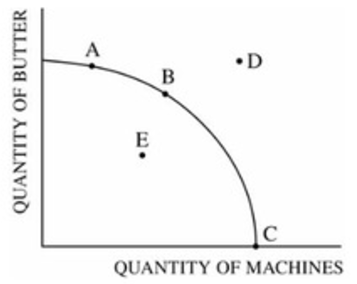

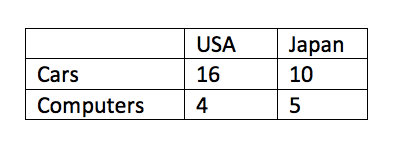
What is a 'Fixed Exchange Rate'
the government/central bank entirely or predominantly determines the exchange rate.
the forex market entirely or predominantly determines the exchange rate.
the trading partners entirely or predominantly determines the exchange rate.
the importing countries entirely or predominantly determines the rate.
A floating exchange rate is a regime where the currency price is set by the
forex market based on demand for the currency compared with other currencies.
forex market based on supply and demand compared with other currencies.
central banking authority
the country who is trading with our country
What is the difference between a fixed and a floating exchange rate?
A fixed exchange rate is set by the monetary authority with respect to a foreign currency or a basket of foreign currencies, a floating exchange rate is determined in foreign exchange markets depending on demand and supply, and it generally fluctuates constantly.
There is no difference between them, both determined by the central bank.
A fixed exchange rate is better than the floating exchange rate in determining the exchange rate of a particular country's currency.
All of the answers above.

The graph shows a(n)
depreciation of the dollar and appreciation of the Euro.
appreciation of the dollar and depreciation of the Euro.
appreciation of the dollar and appreciation of the Euro.
depreciation of the dollar and depreciation of the Euro.

The shift in the graph could be caused by
an increase in the Supply of Euros.
an increase in the Demand for Euros.
a decrease in the Supply of Euros.
the crowding out effect.
The shift in the graph could be caused by
an increase in the Supply of dollars.
deflation in Europe.
people in Europe become wealthier.
inflation in the US.
European companies launch new popular products.

The shift in the graph could be caused by
interest rates rising in Mexico.
an increase in American tariffs.
speculators demanding more pesos.
the launch of a popular product by an American company.
inflation in the US.

All of the following could cause the shift in the graphs for the Japanese Yen and US Dollar except:
an increase in interest rates in the US.
the release of hot new video game console by Japanese producer Nintendo.
speculators desiring Japanese currency.
inflation in the US.
an increase in GDP in the US.
What could cause the shift in the graphs for the Japanese Yen and US Dollar?
deflation in the US.
inflation in Japan.
Japanese company Sony creates a holographic TV system.
a decrease in Japenese interest rates.
an increase in the Japanese GDP.
The shift in the graph would cause
a US trade deficit.
an increase in American tariffs.
speculators demanding more pesos.
an appreciation of the dollar.
inflation in the US.

An increase in interest rates in the US would cause
D for the $ to increase and D for the Real to increase
D for the $ to increase and S for the Real to increase.
S for the $ to increase and D for the Real to increase.
S for the $ to increase and S for the Real to increase.
A recession in the US would cause
D for the $ to increase and D for the Real to increase
D for the $ to increase and S for the Real to increase.
S for the $ to increase and D for the Real to increase.
S for the $ to increase and S for the Real to increase.
Speculators for-see a future increase in the Brazilian GDP we would expect
D for the $ to increase and D for the Real to increase
D for the $ to increase and S for the Real to increase.
S for the $ to increase and D for the Real to increase.
S for the $ to increase and S for the Real to increase.
Brazilians decide to travel in massive tours at Orlando area theme parks, we expect the following in the ForEx market
D for the $ to increase and D for the Real to increase
D for the $ to increase and S for the Real to increase.
S for the $ to increase and D for the Real to increase.
S for the $ to increase and S for the Real to increase.
Massive inflation strikes the US, we expect
D for the $ to increase and D for the Real to increase
D for the $ to increase and S for the Real to increase.
S for the $ to increase and D for the Real to increase.
S for the $ to increase and S for the Real to increase.
A large increase in the value of real estate occurs in Brazil making Brazilians feel wealthier. We expect
D for the $ to increase and D for the Real to increase
D for the $ to increase and S for the Real to increase.
S for the $ to increase and D for the Real to increase.
S for the $ to increase and S for the Real to increase.
Real incomes rise in the US, we expect
D for the $ to increase and D for the Real to increase
D for the $ to increase and S for the Real to increase.
S for the $ to increase and D for the Real to increase.
S for the $ to increase and S for the Real to increase.
The U.S. increase imports of tractor wheels from Canada.
A Ukrainian businesswoman buys a majority share of ownership in a U.S. clothing company.
An American working in Saudi Arabia sends his wife, who lives in Atlanta, money so she can buy a new car.
An American receives quarterly dividend payments (profits) from stock she owns in a German company.
Which of the following would be INCLUDED when calculating the GDP for the U.S.?
Toys that Wal-Mart has imported from their factories in China
A used car bought from Frontier Motors
Getting $20 from your mom for mowing the lawn
A Tesla car that has been manufactured in California
Average GDP per Capita is better known as:
A country's standard of living
How much a country makes on average from imports
The average amount businesses spend on the stock market
The average amount of investment done by citizens
Real GDP is
GDP at the current prices
GDP that has been adjusted for inflation
A measure of the total production of goods in other countries
The same thing as nominal GDP
All of the following would be considered employed except:
Someone who has only a part-time job
Someone on maternity/paternity leave
An owner of a new business who isn't making a profit yet
A prisoner at a state prison who makes commissary money from working in the prison laundry
A general rise in the price level of products is known as:
Hyperinflation
Cost-Push phenomenon
Inflation
Deflation
Which of the following would be considered unemployed?
A recent college graduate looking for a job
A stay-at-home parent
A 14-year-old student who babysits for extra cash
A retired grandmother
When the economy is working properly, and at a normal rate of growth, the unemployment rate is usually around:
0-2 percent
2-8 percent
4-6 percent
15-20 percent
Nominal GDP is calculated with:
Just government spending
Business and Consumer Spending
Everything that is sold in a country, regardless of origin
The stuff that is sold in a country, with the amount of imports subtracted
A lifeguard is hired on at Pensacola Beach for the summer, and is told the job will end in August. This is an example of ______ unemployment.
Frictional
Seasonal
Structural
Cyclical

What is the name of the economic visual aid?
The Economic Cycle
The Growth and Contraction Cycle
The Business Cycle
The GDP Cycle

What does point #1 represent?
Trough
Peak
Contraction/Recession
Growth/Expansion
What does point #2 represent?
Trough
Peak
Contraction/Recession
Growth/Expansion
What does point #3 represent?
Trough
Peak
Contraction/Recession
Growth/Expansion
What does point #4 represent?
Trough
Peak
Contraction/Recession
Growth/Expansion
The Consumer Price Index (CPI) is a measure of inflation, with one tool being a "market basket." What is a market basket, in reference to the study of economics?
How much baskets cost currently
A metaphorical object to represent the purchases by the average urban consumer
The cost of goods when an economist goes to the store and calculates the price changes and inflation level
The differences in price for the same good bought in 1963, like McDonald's hamburgers
The process by which the Federal Reserve controls the supply, availability, and cost of money in order to keep the economy stable is _________________________.
Fiscal Policy
Monetary Policy
the Interest Rate
the Discount Rate
Monetary policy is BEST described as ...
benefits received by employees in addition to wages and salaries
actions by the Federal Reserve System to expand or contract the money supply
a system that relies on supply and demand to determine the value of one currency to another
actions by the federal government to use spending and revenue collection to influence the economy
When the Federal Reserve sells government securities on the open market, what effect does this action have on the nation's money supply and interest rates?
Money Supply - Decreases / Interest Rates - Increase
Money Supply - Increase / Interest Rates - Increase
Money Supply - Decrease / Interest Rates - Decrease
Money Supply - Increases / Interest Rates - Decrease
What is the name of the "central bank" of the United States?
Bank of the U.S.
The Federal Reserve
U.S. Congressional Bank
The Federal Bank of America
The Federal Reserve wants to increase the money supply in the United States. What is the Federal Reserve likely to do to accomplish this?
reduce the discount rate
sell securities on the open market
increase the reserve requirement for banks
require banks to hold a reserve for all types of deposit
What would MOST LIKELY happen if the Federal Reserve decided to increase the reserve requirement in banks?
The amount of federal taxes people owe would decrease
The amount of federal taxes people owe would increase
The amount of money circulating in the economy would decrease
The amount of money circulating in the economy would increase
All of these are ways in which the Federal Reserve System can...
control the stock market
regulate the money supply
decrease consumer spending
challenge Presidential power
Which of these actions of the Federal Reserve can slow economic growth?
The Federal Reserve regulates the amount of money that flows into and out of the nation's economy
The Federal Reserve buys securities, which puts money back into the hands of people who can spend it in the marketplace
The Federal Reserve decreases the reserve requirement and banks have more money to loan to people to save rather than to spend
The Federal Reserve increase the discount rate, which causes interest rates to rise and people to save rather than to spend
What consumer behavior is the Federal Reserve Board trying to encourage when it implements a loose monetary policy?
increased saving and spending
decreased saving and spending
increased saving and reduces spending
decreased saving and increased spending
What is the term for the situation where more money is available for borrowing and investment?
loose money
open market
tight money
fiscal policy
If the federal government wants to encourage businesses and consumers to spend more money, it would MOST LIKELY
increase the tax rate
decreases the tax rate
increases the reserve requirement
decrease government spending on goods and services
Which of these is MOST LIKELY to occur after the government increases taxes?
Annual deficits increase
The national debt increases
Consumer spending decreases
Government programs decrease
Unemployment insurance, Welfare, Medicare, Medicaid, and Social Security are key components of
fiscal policy
monetary policy
supply-side policy
A tax that takes a larger percentage of income from high-income groups than from low income groups is known as a...
Progressive Tax
Proportional Tax
Regressive Tax
Excise Tax
A tax that takes the same percentage of income from all income groups, such as sales tax, is an example of a ...
Progressive Tax
Proportional Tax
Regressive Tax
Excise Tax
Which pairs of operations BEST fit with fiscal policy?
government spending and taxation
taxation and open market operations
discount rate and government spending
open market operations and discount rate
One of the primary goals of stabilizing the economy is to
increase income levels
maintain low unemployment
raise the standard of living
increase profits and spending
How will a contractionary fiscal policy affect a budget deficit?
not affect it
grow the deficit
shrink the deficit
change monetary policy
With regards to economic growth, what is the goal of an expansionary fiscal policy?
to increase trade deficits
to increase economic growth
to decrease economic growth
to maintain current economic levels
A tax that takes a larger percentage of income from low-income groups than from high-income groups is a ...
Progressive Tax
Proportional Tax
Regressive Tax
Property Tax
All of the following are counted in a nation's current account (CA) except
$50,000 car imported from Italy
$500 of cheese exported from France
A $50 million Chinese factory purchased by a Canadian
$1 million donated in first aid supplies to Indonesia
$1,000 sent to Russia from a Russian working in the US
Which of the following would decrease the U.S. capital and financial account (CFA)?
A boat purchased by a British investment banker in Florida
A ski chateau purchased in Switzerland by an American entrepreneur
An American earns $1000 in the Japanese stock market
The purchase of $1000 of US Treasury bonds by a Chinese investor
The purchase of a foreign car by an American diplomat living in Costa Rica
Which of the following are included in a nation's balance of payments accounts?
I. International trading
II. International lending
III. Domestic investment
I, II, and III only
I and II only
I and III only
II and III only
I only
Which of the following is true regarding international trade
A country that exports more than it imports has a trade deficit
A country that exports more than 30% of their GDP has a trade surplus
A deficit in the current account is offset by a surplus in the capital and financial account
A country that exports more than it imports will have a financial account surplus
A country with a trade deficit will have a current account surplus
An increase in Korea’s demand for U.S. goods would cause the US dollar to
Depreciate because of inflation
Depreciate because the U.S. would be selling more dollars to Korea
Depreciate because the U.S. money supply would increase as exports rise
Appreciate because Korea would be buying more U.S. dollars
Appreciate because Korea would be selling more U.S. dollars
If the demand for the British Pound increases relative to the U.S. dollar, then the
US dollar would appreciate
Supply of US dollars would decrease
Quantity supplied of Pounds would decrease
British pound would appreciate
British pound will depreciate
Suppose incomes fall in the United States, but not in Japan. Which of the following will occur?
The US dollar will appreciate and the Japanese Yen will depreciate
The US dollar will appreciate and the Japanese Yen will appreciate
US imports from Japan will increase
The US dollar will depreciate and the Japanese Yen will appreciate
Japanese exports to the US will increase
Suppose price level increases more in the United States than it does in Indonesia. What is the short-run impact on U.S. net exports, the value of the U.S. dollar, and the value of the Indonesian rupee?
Net Exports / U.S. dollar / Indonesian rupee
Increase / depreciate / depreciate
Net Exports / U.S. dollar / Indonesian rupee
Decrease / depreciate / appreciate
Net Exports / U.S. dollar / Indonesian rupee
Increase / depreciate / appreciate
Net Exports / U.S. dollar / Indonesian rupee
Decrease / appreciate / depreciate
Net Exports / U.S. dollar / Indonesian rupee
Increase / appreciate / depreciate
Suppose interest rates fall in the United States, but they don't fall in Mexico. What is the short-run impact on the value of the U.S. dollar (USD) and the value of the Mexican Peso (Peso)?
USD / Peso
Appreciate / appreciate
USD / Peso
Appreciate / depreciate
USD / Peso
Depreciate / depreciate
USD / Peso
Depreciate / appreciate
USD / Peso
Depreciate / no change
An increase in a country’s interest rate relative to other country’s interest rate will most likely cause which of the following?
An decrease in the demand for the country’s currency
An increase in the supply of the country’s currency
The depreciation of the country’s currency
An increase in the amount of domestic investment
Capital inflow into the country to exceed capital outflow
Assume that the supply of loanable funds increases in Canada. The international value of Canada’s currency and Canada’s exports will most likely change in which of the following ways
Value of the Canadian Dollar Exports
Decrease Decrease
Value of the Canadian Dollar Exports
Decrease Increase
Value of the Canadian Dollar Exports
Increase Decrease
Value of the Canadian Dollar Exports
Increase Increase
Value of the Canadian Dollar Exports
Not change Not change
Which of the following is an example of direct foreign investment?
An increase in the demand for US dollars by foreigners
A decrease in the supply of US dollars by Americans
The purchase of American planed by a Mexican company
The sale of financial service to a foreign investor by a US bank
A Chinese company buying a microprocessor factory in Korea
An increase in net exports for country X will most likely be caused by which of the following?
An increase in consumer spending
An increase in direct foreign investment
A decrease in the international value of the currency in country X
An increase in the international value of the currency in country X
An increase in the price level in country X
All of the following are true regarding international trade except
Countries experience a trade deficit when imports are greater than exports
Net exports will increase when that country's currency depreciates
Exports are considered a debit in a country's balance of trade
The balance of payment is a summary of a country's transactions with other countries
The primary components of the balance of payments are the current account and the capital (financial)
Which of the following would definitely move a country toward a current account deficit?
An increase in exports
An increase in imports
An larger capital account deficit
An increase in capital outflow
A decrease in foreign aid provided to other countries
Which of the following is the best example of foreign direct investment?
The Chinese government buying United States Treasury bonds
A business in the United States selling machinery to a company in Japan
A United States citizen buying Mexican pesos.
The United States sending earthquake relief aid to Haiti
A Japanese software company buying a factory in the United States
The value of a country's currency relative to another country's currency is called
capital flow
purchasing-power parody
the inflation rate
the exchange rate appreciation
appreciation
If there is a large increase in the number of Europeans traveling to the United States while US citizens’ travel to Europe remains unchanged, which of the following is true
The euro will depreciate because the demand for euros will decrease
The euro will depreciate because the supply of euros will increase
The euro will appreciate because the demand for euros will increase
The dollar will appreciate because the demand of dollars will decrease
The dollar will appreciate because the supply of dollars will increase
Assume the inflation rate in Mexico is significantly higher than its trading partners. Which of the following will occur to the demand, supply, and international value of the Mexican Peso?
Demand Supply Value
Increase Increase Depreciate
Demand Supply Value
Increase Decrease Appreciate
Demand Supply Value
Decrease Increase Appreciate
Demand Supply Value
Decrease Increase Depreciate
Demand Supply Value
Decrease Decrease Depreciate
Assume the real interest rate in country X increases relative to other countries. What will happen to the value of the currency and net exports in country X?
Value of Currency Net exports
Appreciate Decrease
Value of Currency Net exports
Depreciate Increase
Value of Currency Net exports
Stay the Same Stay the Same
Value of Currency Net exports
Appreciate Increase
Value of Currency Net exports
Depreciate Decrease
Trade Surplus
The difference between the purchase of foreign assets and domestic assets purchased by foreigners
Exporting more than is imported
Measures the purchase and sale of financial assets abroad (things that continue to earn money).
Exporting less than is imported (a.k.a Trade gap)
Measures trades of goods and services, investment income, and net transfers
Trade Deficit
The difference between the purchase of foreign assets and domestic assets purchased by foreigners
Exporting more than is imported
Measures the purchase and sale of financial assets abroad (things that continue to earn money).
Exporting less than is imported (a.k.a Trade gap)
Measures trades of goods and services, investment income, and net transfers
Net Capital Outflow
The difference between the purchase of foreign assets and domestic assets purchased by foreigners
Exporting more than is imported
Measures the purchase and sale of financial assets abroad (things that continue to earn money).
Exporting less than is imported (a.k.a Trade gap)
Measures trades of goods and services, investment income, and net transfers
Current Account
The difference between the purchase of foreign assets and domestic assets purchased by foreigners
Exporting more than is imported
Measures the purchase and sale of financial assets abroad (things that continue to earn money).
Exporting less than is imported (a.k.a Trade gap)
Measures trades of goods and services, investment income, and net transfers
Capital Financial Account
The difference between the purchase of foreign assets and domestic assets purchased by foreigners
Exporting more than is imported
Measures the purchase and sale of financial assets abroad (things that continue to earn money).
Exporting less than is imported (a.k.a Trade gap)
Measures trades of goods and services, investment income, and net transfers
Net Exports
Considers ALL international transactions
Exports – Imports
Inflow > Outflow
Includes only goods and service
Inflow < Outflow
Balance of Payments
Considers ALL international transactions
Exports – Imports
Inflow > Outflow
Includes only goods and service
Inflow < Outflow
Balance of Trade
Considers ALL international transactions
Exports – Imports
Inflow > Outflow
Includes only goods and service
Inflow < Outflow
Account Surplus
Considers ALL international transactions
Exports – Imports
Inflow > Outflow
Includes only goods and service
Inflow < Outflow
Account Deficit
Considers ALL international transactions
Exports – Imports
Inflow > Outflow
Includes only goods and service
Inflow < Outflow
Exchange Rate
The market determines the value of the country’s currency
The government activity manages the country’s currency
The increase of value of a country's currency with respect to a foreign currency (becomes stronger)
The loss of value of a country's currency with respect to a foreign currency (becomes weaker)
The price of one currency in terms of the other currency
Depreciation
The market determines the value of the country’s currency
The government activity manages the country’s currency
The increase of value of a country's currency with respect to a foreign currency (becomes stronger)
The loss of value of a country's currency with respect to a foreign currency (becomes weaker)
The price of one currency in terms of the other currency
Appreciation
The market determines the value of the country’s currency
The government activity manages the country’s currency
The increase of value of a country's currency with respect to a foreign currency (becomes stronger)
The loss of value of a country's currency with respect to a foreign currency (becomes weaker)
The price of one currency in terms of the other currency
Fixed Exchange Rate
The market determines the value of the country’s currency
The government activity manages the country’s currency
The increase of value of a country's currency with respect to a foreign currency (becomes stronger)
The loss of value of a country's currency with respect to a foreign currency (becomes weaker)
The price of one currency in terms of the other currency
Floating Exchange Rate
The market determines the value of the country’s currency
The government activity manages the country’s currency
The increase of value of a country's currency with respect to a foreign currency (becomes stronger)
The loss of value of a country's currency with respect to a foreign currency (becomes weaker)
The price of one currency in terms of the other currency
When banks make loans between banks the interest rate is called the __________. (federal funds rate or discount rate?)
federal funds rate
discount rate
______ the discount rate is expansionary monetary policy. (Increasing or decreasing?)
Increasing
Decreasing
When banks make loans from the Federal Reserve the interest rate is called the __________. (federal funds rate or discount rate?)
federal funds rate
discount rate
Which policy would help fight unemployment?
Expansionary
Contractionary
When lowering the discount rate, inflation increases and unemployment ____________. (decreases or increases?)
increases
decreases
I. A progressive personal income tax
II. Unemployment compensation
III. Congressional action that increase tax
A rightward shift of the short-run Phillips curve is most likely due to
an increase in aggregate demand
a decrease in aggregate demand
a decrease in the expected rate of inflation
an increase in the expected rate of inflation
an increase in aggregate supply
A reduction in inflation can best be achieved by which of the following combinations of fiscal and monetary policy?
Fiscal Policy: Increase Taxes
Monetary Policy: Sell government bonds
Fiscal Policy: Decrease taxes
Monetary Policy: Buy government bonds
Fiscal Policy: Decrease Taxes
Monetary Policy: Lower margin requirements
Fiscal Policy: Decrease government spending
Monetary Policy: Lower discount rate
Fiscal Policy: Increase government spending
Monetary Policy: Raise discount rate
According to the short-run Phillips curve, a contractionary fiscal policy will result in
a decrease in both unemployment and prices
a decrease in inflation and an increase in unemployment
a decrease in both wage rates and unemployment
an increase in both wage rates and unemployment
an increase in unemployment due to crowding out
The shift in the graph could be caused by
an increase in the Supply of Euros.
an increase in the Demand for Euros.
a decrease in the Supply of Euros.
the crowding out effect.
The shift in the graph could be caused by
interest rates rising in Mexico.
an increase in American tariffs.
speculators demanding more pesos.
the launch of a popular product by an American company.
inflation in the US.
All of the following could cause the shift in the graphs for the Japanese Yen and US Dollar except:
an increase in interest rates in the US.
the release of hot new video game console by Japanese producer Nintendo.
speculators desiring Japanese currency.
inflation in the US.
an increase in GDP in the US.
What could cause the shift in the graphs for the Japanese Yen and US Dollar?
deflation in the US.
inflation in Japan.
Japanese company Sony creates a holographic TV system.
a decrease in Japenese interest rates.
an increase in the Japanese GDP.
The shift in the graph would cause
a US trade deficit.
an increase in American tariffs.
speculators demanding more pesos.
an appreciation of the dollar.
inflation in the US.
A Ukrainian businesswoman buys a majority share of ownership in a U.S. clothing company.
An American receives quarterly dividend payments (profits) from stock she owns in a German company.

When one country completely stops trading with another country. Usually used as a punishment/protest against that country
Tariff
Quota
Embargo
Subsidy

Goods or services a country gets from another country
Import
Export

A tax on any good or service coming into a country.
Tariff
Quota
Sanction
Subsidy

When one country places restrictions on trading with another country, usually as punishment, but may not block trading with them completely
Embargo
Tariff
Subsidy
Sanctions

Goods or services a country sells to another country
Import
Export

All of the following are probable effects of tariffs EXCEPT:
they make imported products more expensive
they reduce the amount of trade between nations
they protect domestic producers from foreign competition
they create an incentive for countries to trade more with each other

A type of economic policy that attempt to protect businesses in a country from foreign competition, usually by putting tariffs on goods from other countries to make them more expensive
Free trade
Protectionism
Interdependence
Specialization

Free trade increases worldwide standards of living.
True
False

As a result of growing international economic interdependence, economic conditions and policies in one nation increasingly affect economic conditions and policies in other nations.
True
False

Barriers to international trade usually impose more benefits than costs.
True
False
An increase in which of the following will most likely promote economic growth?
Taxes on investment
The price level
Human capital
An increase in a country’s current account surplus will result in which of the following in the short run?
A decrease in the country’s financial account deficit
An increase in the country’s net financial capital outflows
A decrease in the country’s national savings
Which of the following is true about inflation and interest rates?
The higher the inflation rate, the lower the nominal interest rate.
The higher the inflation rate, the higher the real interest rate.
If there is no actual or expected inflation, the nominal and real interest rates are equal.
Economic growth is shown by a rightward shift in
the long-run Phillips curve
the production possibilities curve
the short-run aggregate supply curve
If businesses become optimistic about the profitability of investments in an economy, which of the following will happen in the loanable funds market in the short run?
The supply and demand for loanable funds will increase.
The real interest rate will increase.
The real interest rate will decrease.
Which of the following measures the opportunity cost of holding currency?
The forgone interest on alternative assets
The nominal wage rate
The average income tax rates
A contractionary monetary policy combined with an expansionary fiscal policy will
increase both income and consumption
increase the interest rate and decrease investment
increase both the interest rate and investment
Ms. Smith withdraws $1,000 from her safe and deposits the money in a bank. If the bank holds no excess reserves and the reserve requirement is 10%, how will this deposit increase the bank’s required reserves and the bank’s loans?
Required Reserves $1,000; Loans $9,000
Required Reserves $1,000; Loans $10,000
Required Reserves $100; Loans $900
A country can have an increased surplus in its balance of trade as a result of
declining imports and rising exports
an increase in domestic inflation
an appreciating currency
Fred Jones withdraws $1,000 in cash from his savings account. What immediate effect does this transaction have on the monetary aggregate measures of M1 and M2?
M1 Increases; M2 Decreases
M1 Increases; M2 No Change
M1 Decreases; M2 No Change
Which of the following transactions is included in the financial account of Country X’s balance of payments accounts?
An individual in Country X sends money monthly to family members in Country D.
A firm in Country X sells robots to a firm in Country A.
An individual in Country X buys new government bonds issued by Country E.
The short-run Phillips curve implies there is a trade-off between
monetary and fiscal policies
inflation and unemployment
interest rates and investment
Country X’s government increases its spending without raising taxes. Which of the following is true about the effect on Country X’s real interest rates and its subsequent effect on Country X’s net exports?
Real interest rates increase and net exports decrease.
Real interest rates increase and net exports increase.
Real interest rates decrease and net exports increase.
Which of the following shifts the money demand curve to the right?
An increase in the price level
A decrease in the price level
A decrease in interest rates
If nominal gross domestic product in a country is $1,600 and the money supply is $400, what is the velocity of money?
400
10
4
2
0.5
An increase in which of the following would most likely cause the gross domestic product of a country to decrease in the short run?
Government spending
Imports
Money Supply
Consumption spending by households
Investment spending by domestic firms
When the central bank sells government bonds on the open market, which of the following will most likely increase?
Bank reserves
Price of bonds
Money supply
Nominal interest rates
The required reserve ratio
Which of the following is a determinant of the amount of money the commercial banking system can create?
The marginal propensity to consume
The marginal propensity to save
The total number of banks
The size of the federal debt
The reserve requirement
A discretionary fiscal policy action to reduce inflation in the short run would be to
increase transfer payments to those on fixed incomes
increase taxes or decrease government spending
decrease taxes or increase government spending
increase taxes and the money supply
decrease taxes and interest rates
Crowding out is most likely to occur with which of the following changes?
Decrease in government spending
Increase in budget surplus
Increase in budget deficit
Decrease in the real interest rate
Decrease in trade deficit
A bank has $800 million in demand deposits and $100 million in reserves. If the reserve requirement is 10 percent, the bank's excess reserves equal
$10 million
$20 million
$80 million
$100 million
$200 million
Which of the following describes a typical business cycle in the correct sequence?
Peak, trough, recession, and expansion
Peak, trough, expansion, and recession
Peak, recession, trough, and expansion
Peak, recession, expansion, and trough
Peak, expansion, trough, and recession
Which of the following will lead to an increase in the money supply?
A decrease in income tax rates
A decrease in government spending
Open-market purchase of securities by the central bank
Increased borrowing by the federal government by issuing new bonds
An increase in the discount rate
Which of the following could cause a movement along a country's short-run Phillips curve toward higher unemployment and lower inflation?
A significant reduction in energy prices
A recession in the economies of the nation's major trading partners
A decrease in savings by the country's consumers
A movement of the economy from the recovery phase to the expansion phase of the business cycle
An improvement in technology
Which of the following is recorded in a country’s current account?
(A) The value of goods produced and consumed in the country
(B) The value of domestic financial assets sold to foreign investors
(C) The value of foreign bonds purchased by the country’s residents
(D) The value of goods produced abroad and purchased by the country’s residents
(E) The value of the country’s government bonds purchased by the country’s central bank
Which of the following transactions in the balance of payments is recorded as a credit entry in a nation’s capital and financial account?
(A) The sale of common stock to foreign households
(B) Imports of computers used by domestic businesses
(C) The interest earned by the nation on foreign financial assets
(D) The nation’s purchases of consumer goods from foreign firms
(E) The nation’s purchases of accounting services from foreign firms
If a country has a current account deficit, which of the following must be true?
(A) It must also show a deficit in its capital and financial account.
(B) It must show a surplus in its capital and financial account.
(C) It must increase the purchases of foreign goods and services.
(D) It must increase the domestic interest rates on its bonds.
(E) It must limit the flow of foreign capital investment.
Which of the following will increase the United States trade deficit?
(A) United States firms buying technologically advanced computers from Germany
(B) European citizens traveling in large numbers to the United States
(C) A United States company being hired to build a production plant in another country
(D) The United States dollar depreciating in the foreign exchange market
(E) The United States selling one million tons of wheat to China
The price of a Japanese-made pen in Japan is ¥500. If at the current exchange rate a German buyer can buy the pen in Japan for €100, then which of the following is the exchange rate between the two currencies?
(A) €5/¥
(B) €500/¥
(C) ¥0.2/€
(D) ¥5/€
(E) ¥20/€
The price of one nation’s currency expressed in terms of another nation’s currency is called
(A) the world price
(B) the exchange rate
(C) the law of one price
(D) terms of trade
(E) purchasing-power parity
If the current exchange rate of the Mexican peso and the Brazilian real is 0.20 real per peso, and the equilibrium exchange rate is 0.18 real per peso, which of the following describes the foreign exchange market for the Mexican peso?
(A) There is a shortage of pesos and the peso will appreciate.
(B) There is a shortage of pesos and the peso will depreciate.
(C) There is a surplus of pesos and the peso will appreciate.
(D) There is a surplus of pesos and the peso will depreciate.
(E) There is a surplus of pesos and the real will depreciate.
Suppose that Country A is experiencing high inflation relative to Country B, which is enjoying steady growth with a stable price level. Which of the following would occur in the foreign exchange market?
(A) An increase in the demand for Country A’s currency
(B) An increase in the supply of Country B’s currency
(C) A decrease in the supply of Country A’s currency
(D) A decrease in the demand for Country B’s currency
(E) A depreciation of Country A’s currency
Which of the following would cause the United States dollar to increase in value compared to the Japanese yen?
(A) An increase in the money supply in the United States
(B) An increase in interest rates in the United States
(C) An increase in the United States trade deficit with Japan
(D) The United States purchase of gold on the open market
(E) The sale of $2 billion dollars worth of Japanese television sets to the United States
Which of the following will lead to an increase in United States net exports?
(A) An increase in United States real gross domestic product
(B) Appreciation of the United States dollar on the foreign exchange market
(C) Depreciation of the United States dollar on the foreign exchange market
(D) An increase in government expenditures in the United States
(E) A decrease in income tax rates in the United States
Which of the following is likely to cause the currency of Country Z to appreciate in the short run?
(A) Country Z decreases its interest rates.
(B) Country Z pursues an expansionary monetary policy.
(C) Country Z’s price level increases.
(D) Country W, a neighboring country, increases its real interest rates.
(E) Country G’s residents increase their demand for Country Z’s goods.
If higher United States interest rates cause foreign demand for the dollar to increase, which of the following will occur to the international value of the dollar and to United States exports?
(A) International Value of the Dollar Increase; Exports Increase
(B) International Value of the Dollar Increase; Exports Decrease
(C) International Value of the Dollar Increase; Exports No change
(D) International Value of the Dollar Decrease; Exports Increase
(E) International Value of the Dollar Decrease; Exports Decrease
If Mexicans increase their investment in the United States, the supply of Mexican pesos to the foreign exchange market and the dollar price of the peso will most likely change in which of the following ways?
(A) Supply of Pesos Increase; Dollar Price of Peso Increase
(B) Supply of Pesos Increase; Dollar Price of Peso Decrease
(C) Supply of Pesos Decrease; Dollar Price of Peso Increase
(D) Supply of Pesos Decrease; Dollar Price of Peso Decrease
(E) Supply of Pesos Decrease; Dollar Price of Peso No Change
An increase in Japan's demand for United States goods would cause the value of the dollar to
(A) depreciate because of inflation
(B) depreciate because the United States would be selling more dollars to Japan
(C) depreciate because the United States money supply would increase as exports rise
(D) appreciate because Japan would be buying more United Stated dollars
(E) appreciate because Japan would be selling more United States dollars
A depreciation of the United States dollar in foreign exchange markets will result in which of the following?
(A) A decrease in aggregate demand because net exports will increase.
(B) A decrease in aggregate demand because imports will decrease.
(C) A decrease in aggregate demand because exports will increase.
(D) An increase in aggregate demand because exports will increase.
(E) An increase in aggregate demand because exports will decrease.

