
 Worksheets
Chemical Reactions Unit Review
Total questions: 27
Worksheet time: 29mins
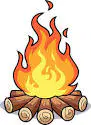
Nevaeh is having a bonfire. What is happening to the atoms in the wood:
The atoms in the wood are getting destroyed.
The atoms in the wood are rerranging to form new substances.
Some atoms are being destroyed, some are being created.
True or False: Atoms can be destroyed in a fire.
True
False
What elements are in this molecule: C8H10N4O2
Carbon, Helium, Sodium, Oxygen
Carbon, Hydrogen, Sodium, Oxygen
Carbon, Hydrogen, Nitrogen, Oxygen
Calcium, Hydrogen, Nitrogen, Oxygen
What elements are in this molecule: CaCl2?
Calcium and Chlorine
Carbon and Chlorine
Calcium and Steel
Carbon and Steel
Chemical or Physical Change: Melting an Ice Cube
Chemical Change
Physical Change
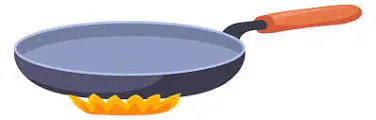
Chemical or Physical Change: A pan heating up on the stove top.
Chemical
Physical
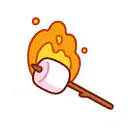
Chemical or Physical Change: Roasting a marshmallow over a fire.
Chemical
Physical
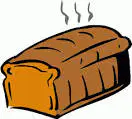
Chemical or Physical Change: Baking Bread
Chemical
Physical
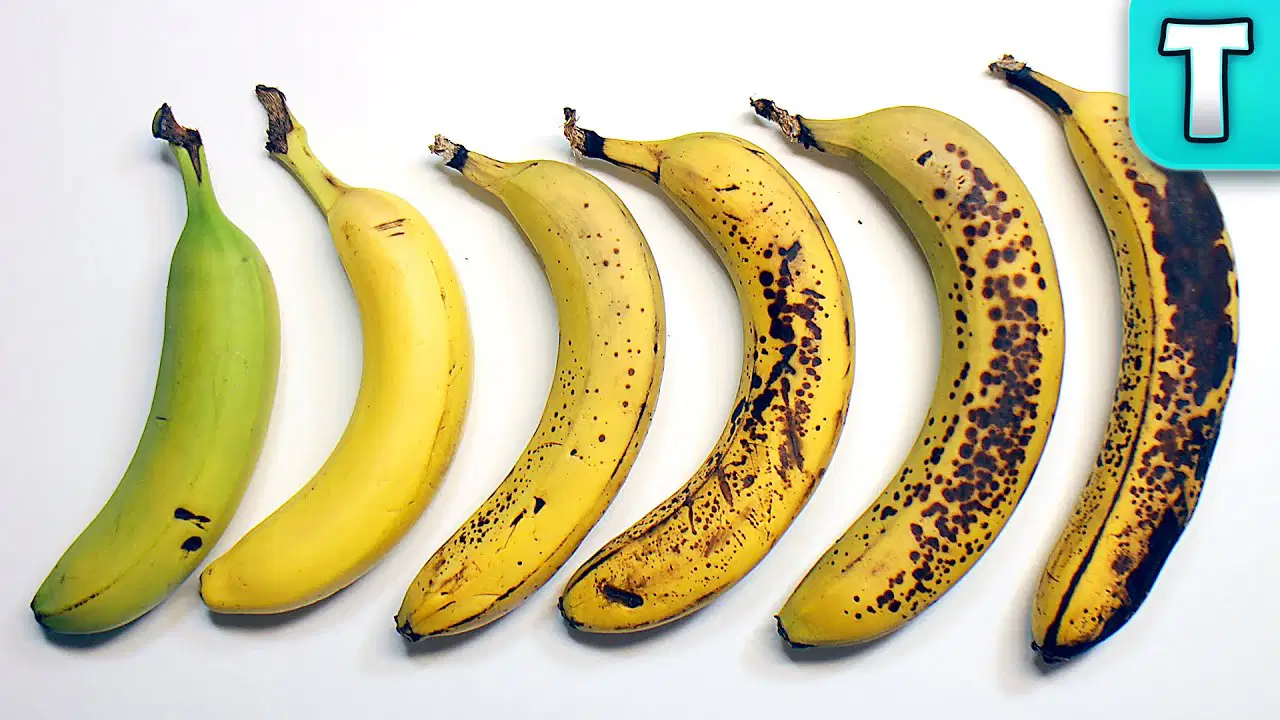
Chemical or Physical Change: A banana ripens, turning from green to yellow to brown
Chemical
Physical

Chemical or Physical Change: Dissolving hot chocolate mix in water
Chemical
Physical
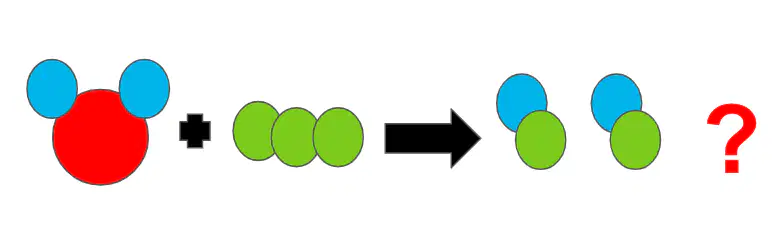
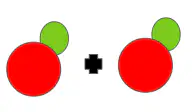
What other product would be made in this chemical reaction?




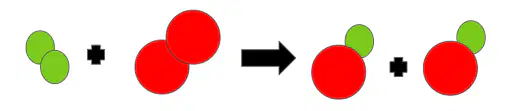
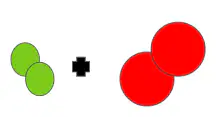
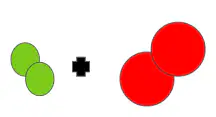
What are the reactants in this chemical reaction?
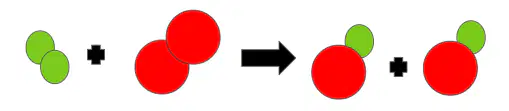
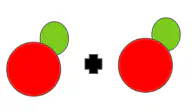
What are the products in this chemical reaction?
Which is a sign of a chemical reaction?
Change in size
Change in shape
Light is produced
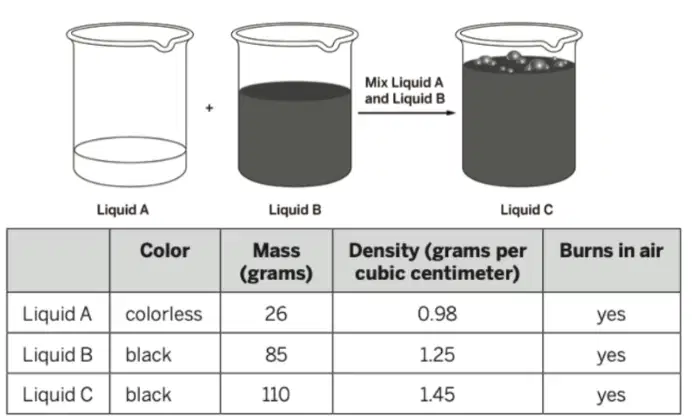
When Gwen mixed a clear liquid (A) and a dark liquid (B) together, the mixture got warm and bubbled.
Did a chemical reaction occur?
No. Liquid B and Liquid C both burn in air, so they are the same substance.
No.The color of Liquid C is the same as Liquid B, so they are the same substance.
Yes. Liquid C has a different density than Liquid A or Liquid B, so a new substance has formed.
Yes. The mass of Liquid C is not the same as Liquid A or Liquid B, so a new substance has formed.
Rota decides to shred his homework. Did a chemical reaction occur?
Yes, the paper strips are different size than the original piece of paper.
No, there was no change in substance, Rota still has paper even though the paper is now in strips.
Vocab: the tiny pieces that all matter—all the stuff in the world—is made of
Change
Atoms
protons
difference
Vocab: the temperature at which a substance changes from the liquid phase to the gas phase
Melting Point
model
Boiling Point
extended structure
Vocab: letters and numbers showing the types and number of atoms that repeat to make up a substance
chemical formula
fertilizer
change
element
Vocab: a process in which atoms rearrange to form new substances
element
repeating atom group
extended structure
chemical reaction
Vocab: the temperature at which a substance changes from the solid phase to the liquid phase
melting point
boiling point
chemical reaction
formula
Vocab: a group of atoms joined together in a particular way
element
molecule
chemical reaction
Vocab: something that can be observed about a substance, such as color, smell, or boiling point
element
property
chemical reaction
chemical formula
Vocab: something that is made of all the same atoms or groups of atoms
substance
element
atom
chemical formula
Substances have different properties because they are made of _____________ ______________of atoms. These groups vary in the type or number of atoms that make up the group.
chemical formula
chemical reaction
Different groups
element molecules
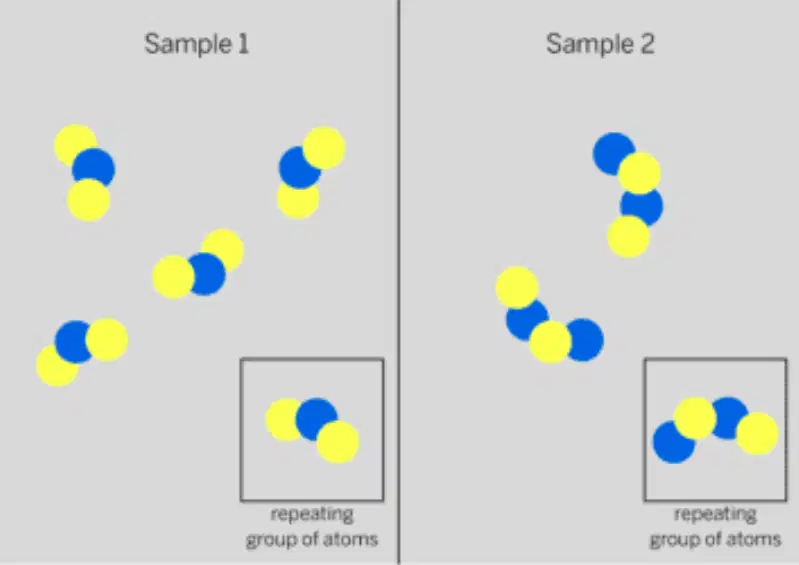
The diagram above shows the repeating groups of atoms that make up two samples. Both samples are gases at room temperature. Will the other properties of the samples likely be the same or different? (Examples of properties are smell, color, and the temperature at which a substance melts.)
The diagram above shows the repeating groups of atoms that make up two samples. Both samples are gases at room temperature. Will the other properties of the samples likely be the same or different? (Examples of properties are smell, color, and the temperature at which a substance melts.)
The other properties will likely be the same because both samples are gases at room temperature.
The other properties will likely be the same because the repeating groups of atoms that make up the two samples have the same types of atoms.
The other properties will likely be different because the repeating groups of atoms that make up the two samples have different numbers of atoms.
True or False: Different substances have different properties.
True
False

