
Font size
 Worksheets
Turning The Tide - How Sensational Awareness Can Heal A Nation
Total questions: 10
Worksheet time: 10mins

Autonomic Nervous System (ANS)
The part of the nervous system that controls voluntary functions such as movement and speech.
The part of the nervous system that controls emotions and behavior.
The part of the nervous system that controls involuntary functions such as heart rate, digestion, breathing, and blood pressure.
The part of the nervous system that controls our thoughts and feelings.

Neuroception
A type of brain scan used to diagnose neurological disorders.
Refers to the process by which the nervous system detects cues in the environment and determines whether they are safe, dangerous, or neutral.
A method of communication between neurons.
A technique used to measure the electrical activity of the brain.

Sympathetic Nervous System
A branch of the nervous system that controls voluntary movement
The branch of the autonomic nervous system that helps to regulate the body's systems at rest and conserve energy.
A branch of the nervous system that is responsible for involuntary processes.
A branch of the autonomic nervous system that prepares the body for "fight or flight" response, which is a physiological response to stress or perceived danger.

Parasympathetic Nervous System
A branch of the nervous system that controls voluntary movement
The branch of the autonomic nervous system that helps to regulate the body's systems at rest and conserve energy.
A branch of the nervous system that is responsible for involuntary processes.
A branch of the autonomic nervous system that prepares the body for "fight or flight" response, which is a physiological response to stress or perceived danger.
Correctly label each of the ZONES-RESPONSES of your Autonomic Nervous System (ANS)
Guess the name of the ZONES of your Autonomic Nervous System.
Match the following definitions of trauma.
Medical definition
Trauma is a physical injury caused by external forces such as accidents, falls, or violence.
Sociological definition
A psychological response to a distressing or life-threatening event that overwhelms an individual.
Psychological definition
Trauma is a social and cultural phenomenon that is shaped by factors such as race, gender, & power.
Neurobiological definition
Nervous system disruption that results in ANS dysregulation causing hypervigilance or immobility.
Match the following stages of regulation.
Explicit self-regulation
This stage where one has not yet have not yet developed the capacity for self-regulation.
Co-regulation
The ability to regulate one's nervous system through social interaction and connection with others.
Implicit self-regulation
The deliberate use of strategies to regulate one's own nervous system.
No regulation
The ability to trust the body's innate capacity for self-regulation and to let go of control.
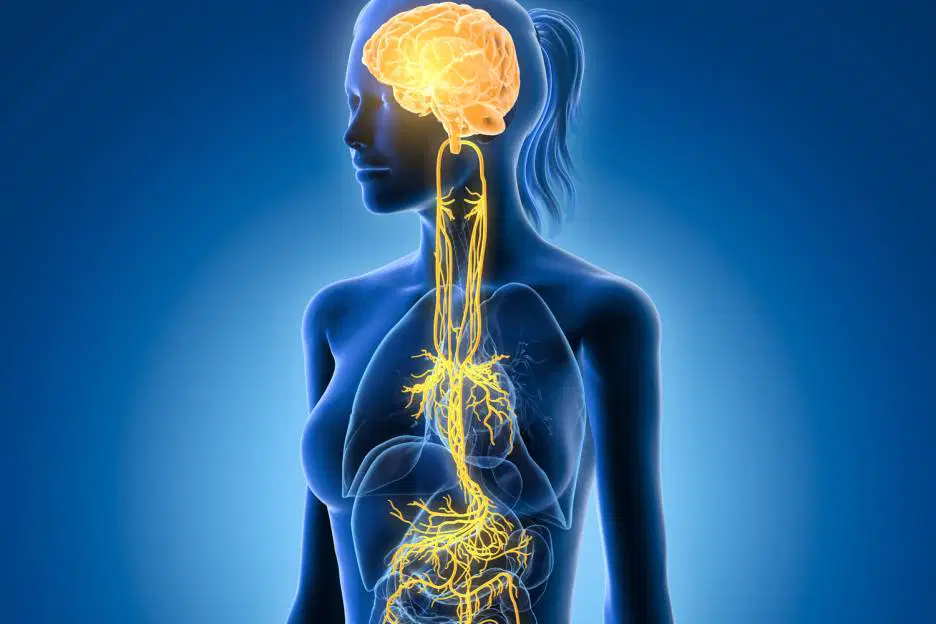
A nerve that originates in the brainstem and travels through the body, regulating the Autonomic Nervous System (ANS) and connecting the brain to the heart, lungs, and digestive system. The (a) nerve plays an important role in regulating stress responses and promoting relaxation and social engagement.
The ability to bounce back from adversity and maintain psychological and physiological well-being in the face of stress or trauma. This is influenced by many factors, including nervous system regulation and social support.
Resilience
Adaptability
Perseverance
Self-awareness

