wayground logo

Free Printable Worksheets

NEW

Font size

S
M
L
XL
Worksheets

Machinist Grinder 4th Sem - NSQF - Module 2 : Measuring methods

Total questions: 24

Worksheet time: 12mins

Name
Class
Date
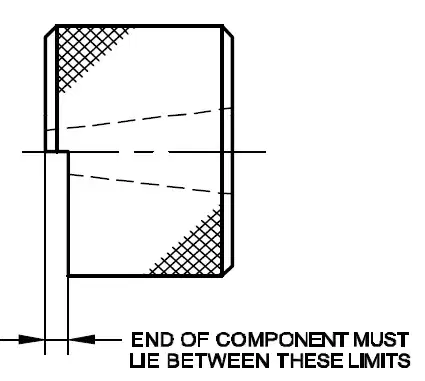
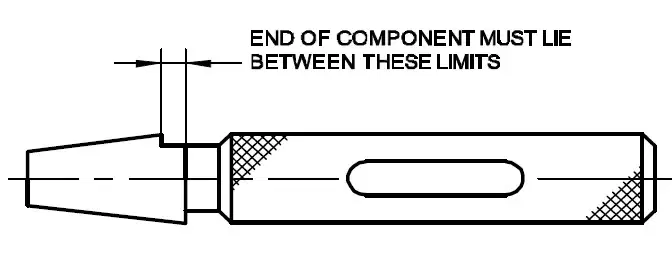
1.

How to identify the ‘Go end’ and‘No go end’ of taper gauge?

a)

Step provided

b)

Groove provided

c)

Printed ‘Go and No go’

d)

Dimension engraved

2.
What is the name of gauge?
a)

Progressive plug gauge

b)

Plain ring gauge

c)

Taper plug gauge

d)

Taper ring gauge

3.
What is the name of gauge?
a)

Taper ring gauge

b)

Taper plug gauge

c)

Progressive plug gauge

d)

Plug gauge

4.
Which gauge checks the external taper?
a)
Snap gauge
b)
Taper ring gauge
c)
Plug gauge
d)
Taper plug gauge
5.
Which gauge checks the internal taper?
a)
Taper plug gauge
b)
Snap gauge
c)
Taper ring gauge
d)
Plug gauge
6.
Which medium is used while testing with a taper plug gauge?
a)
Copper sulphate
b)
Chalk powder
c)
Cellulose lacquer
d)
Prussian blue
7.
How to identify the incorrect taper?
a)
Marking medium is dried
b)
Marking medium sticks unequal on surface
c)
Marking medium sticks equal on surface
d)
Marking medium is not sticked
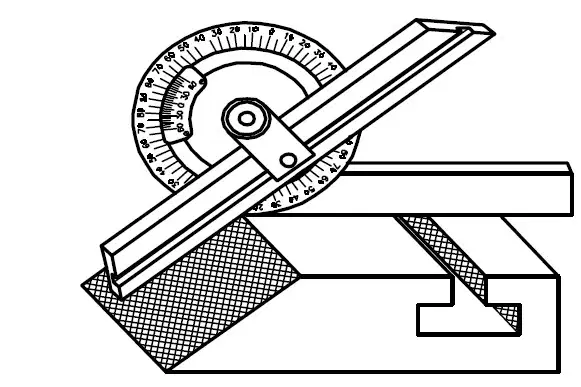
8.
What is the reading of acute angle in vernier bevel protractor?
a)

58° 30'

b)

41° 30'

c)

58° 15'

d)

41° 50'

9.
Which angle is measured?
a)

Obtuse angle

b)

Acute angle

c)

Reflex angle

d)

Right angle

10.
What is the angle measured?
a)

Right angle

b)

Acute angle

c)

Obtuse angle

d)

Reflex angle

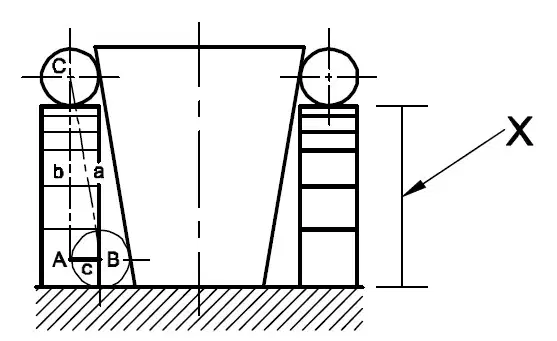
11.
What is marked as ‘x’?
a)

Height of component

b)

Slip gauge height

c)

Taper length

d)

Taper end with roller diameter

12.
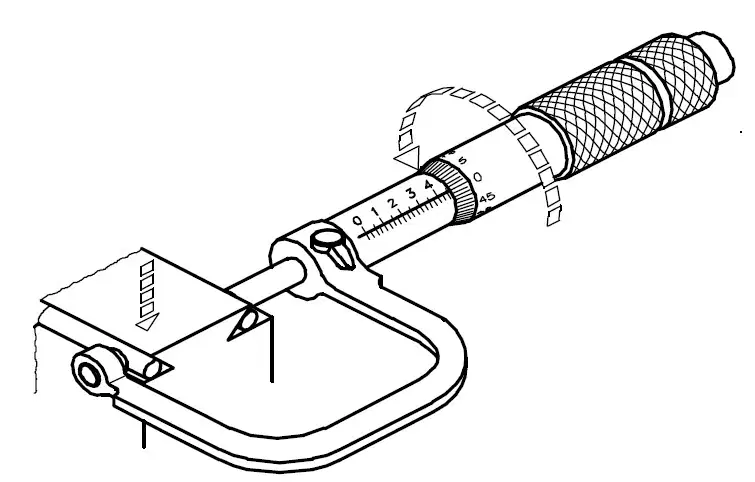
Which is used to measure the taper components?
a)

Vernier caliper

b)

Micrometer

c)

Precision rollers with slip gauges

d)

External ring gauges

13.
What measurement of dove tail measured?
a)

Dove tail angle

b)

Dove tail width

c)

Dove tail inner width

d)

Dove tail outer width

14.
What is the reading of obtuse angle?
a)

157° 30'

b)

122° 30'

c)

202° 30'

d)

142° 30'

15.
Which formula is used to calculate included angle of taper in component?
a)

Tanθ2=xyH×2\frac{Tan\theta}{2}=\frac{x-y}{H}\times2

b)

d = y-2 (s+r)

c)

D = x -2 (s+r)

d)

Tanθ2=xy2H\frac{Tan\theta}{2}=\frac{x-y}{2H}

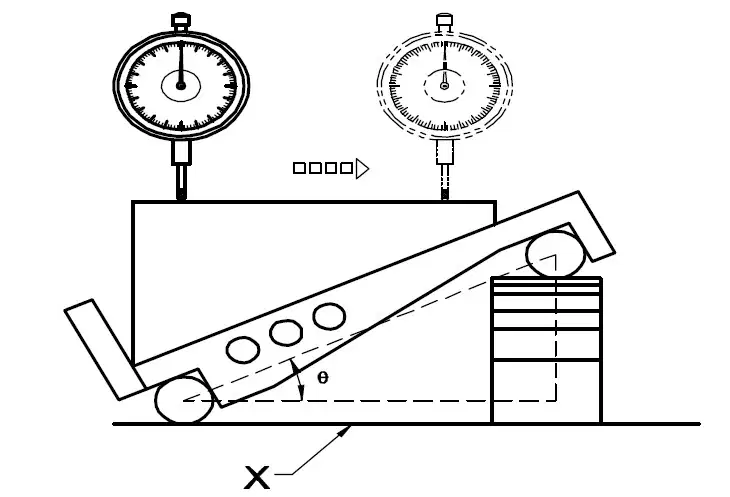
16.
What is marked as ‘x’?
a)

Sine bar

b)

Dial gauge

c)

Datum surface

d)

Slip gauge

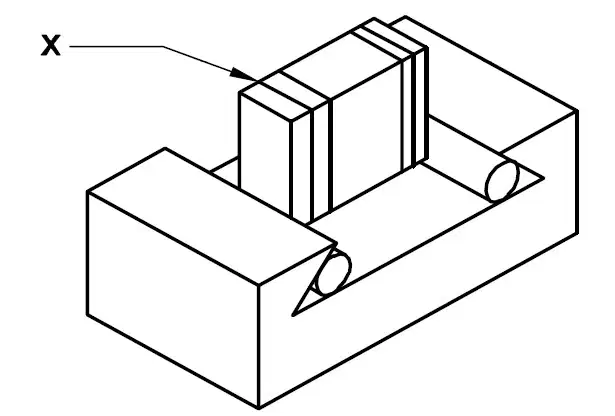
17.
What is marked as ‘x’?
a)

Dove tail

b)

Slips gauges

c)

Component

d)

Rollers

18.
What is the permissible deviation of 1000 mm test piece?
a)
0.005 mm
b)
0.008 mm
c)
0.0015 mm
d)
0.01 mm
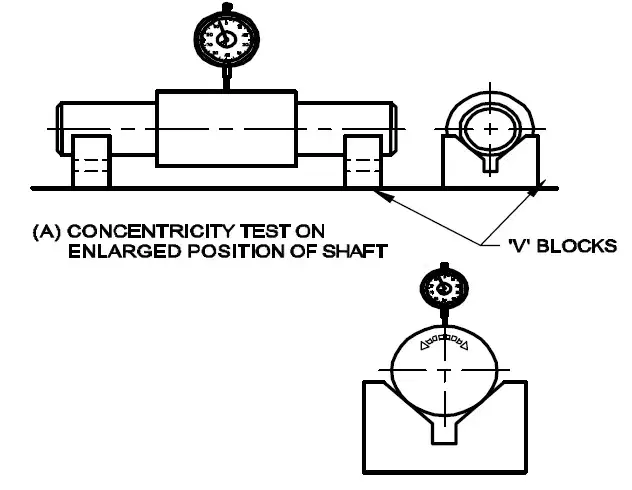
19.
Which test is carried out?
a)

Checking squareness

b)

Checking straightness

c)

Checking concentricity

d)

Checking parallelism

20.
Which is the economical method of checking components?
a)
Vernier caliper
b)
Sine bar
c)
Limit gauges
d)
Vernier bevel protractor
21.

What is the height of slip gauge if sine bar length 200 mm and angle in 25°25\degree ?(Sin 25°25\degree = 0.4226)

a)

84.52 mm

b)

473.26 mm

c)

199.57 mm

d)

200.42 mm

22.
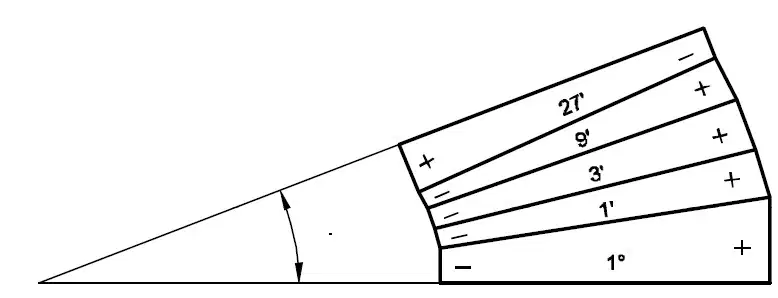
What is the angle of gauge blocks?
a)

1° 12'

b)

30'

c)

1° 40'

d)

46'

23.
Which is the reason for out of roundness in cylindrical shape?
a)
Holding method
b)
Improper wheel balancing
c)
Sufficient coolant
d)
Accurate machine alignment
24.
What instrument is used for checking the taper except sine bar and slip gauge?
a)
Dial test indicator
b)
Micrometer
c)
Bevel protractor
d)
Precision rollers