wayground logo

Free Printable Worksheets

Font size

S
M
L
XL
Worksheets

Final Exam - 25 Questions

Total questions: 60

Worksheet time: 38mins

Name
Class
Date
1.

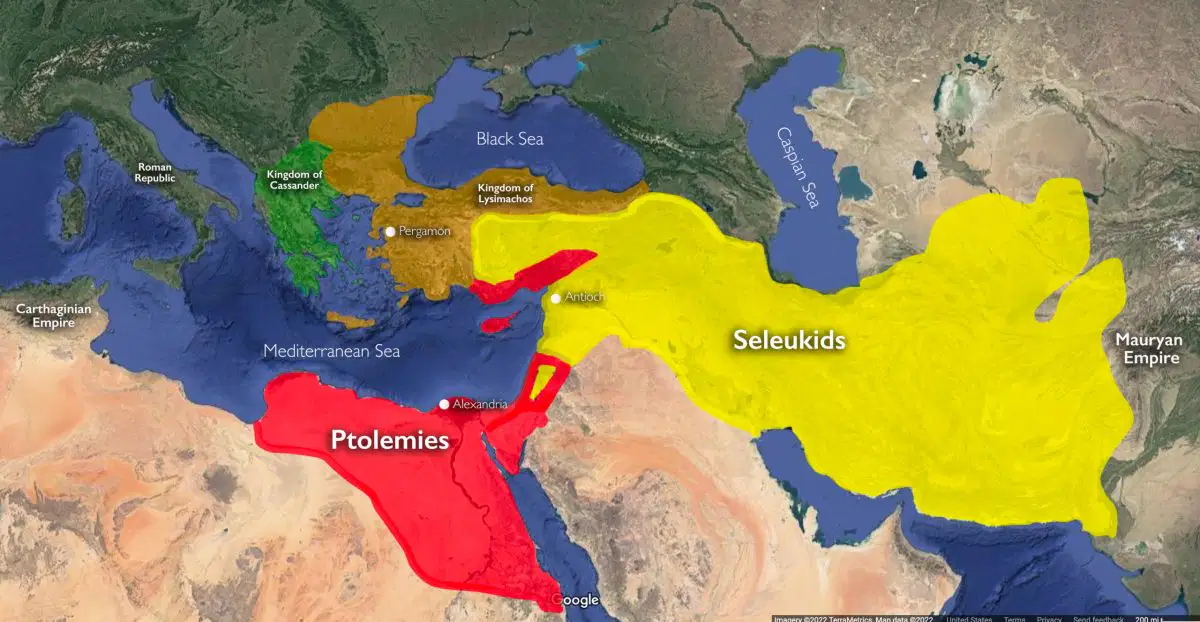
Select Athens on the Map.

2.
In Athens, what was valued?
a)
Freedom of thought and the arts
b)
Strength and order
c)
Leisure activities
d)
Military service
3.
When did Athenian boys start school?
a)
Age six
b)
Age twelve
c)
Age eighteen
d)
Age twenty
4.
What were Athenian boys taught at school?
a)
To write, read, and recite poetry, math, music, and gymnastics
b)
To fight and obey rules
c)
To run, wrestle, and throw a javelin
d)
How to run a household and care for a family
5.
What was the title given to Athenian boys after completing their military training?
a)
Citizen
b)
Soldier
c)
Commander
d)
General
6.
What was life like for girls in Athens?
a)
They were not allowed to attend school and seldom left their homes.
b)
They received physical training and were taught how to run a household and care for a family
c)
They were allowed to attend school and participate in leisure activities
d)
They were given military training
7.
What was valued in Sparta?
a)
Order and strength
b)
Freedom of thought and the arts
c)
Leisure activities
d)
Military service
8.
When did Spartan boys start living in barracks?
a)
Age seven
b)
Age twelve
c)
Age eighteen
d)
Age twenty
9.
What were Spartan boys taught at the barracks?
a)
How to fight and obey rules
b)
To write, read, and recite poetry, math, music, and gymnastics
c)
To run, wrestle, and throw a javelin
d)
How to run a household and care for a family
10.
When did Spartan men enter the army?
a)
Age twenty
b)
Age thirty
c)
Age forty
d)
Age fifty
11.
What was life like for Spartan girls?
a)
They received physical training and were taught how to run a household and care for a family.
b)
They were not allowed to leave their homes.
c)
They were allowed to attend school and participate in leisure activities.
d)
They were given military training.
12.
What were the Persian Wars?
a)
A series of battles fought between the Persian Empire and the Greek city-states.
b)
A series of battles fought between the Greek city-states.
c)
A series of battles fought between the Roman Empire and the Greek city-states.
d)
A series of battles fought between the Persian Empire and the Egyptian Empire.
13.
Who led the Spartans in the Battle of Thermopylae?
a)
King Leonidas
b)
General Miltiades
c)
King Xerxes
d)
Alexander the Great
14.

What was the outcome of the Persian Wars?

a)

The Greeks knew they could win even when they were outnumbered

b)

The Greeks developed cultural idenity

c)

The Greeks stopped future Persian invasions

d)

The Greeks killed Alexander the Great

15.
What is a peninsula?
a)

An area of land that is surrounded by water on three sides

b)

A landform that is located in the middle of a large body of water

c)

A narrow strip of land that connects two larger land masses

d)

A large body of water that is surrounded by land on all sides

16.
Why did Ancient Greece depend on fishing and trading?
a)

Because only a small part of Greece is suitable for growing crops

b)

Because the Greeks were not interested in farming

c)

Because the Greeks were not good at farming

d)

Because the Greeks preferred fishing and trading over farming

17.
What are city-states?
a)

Small communities of people that developed their own customs, beliefs, and ways of doing things

b)

Large communities of people that developed their own customs, beliefs, and ways of doing things

c)

Small communities of people that followed the same customs and beliefs

d)

Large communities of people that followed the same customs and beliefs

18.
How did the mountains of Ancient Greece help provide natural barriers?
a)

They created small spaces suitable for farming

b)

They provided natural harbors

c)

They created natural borders between city-states

d)

They made it easier for people to travel from one city-state to another

19.
What did the Ancient Greeks trade with other countries around the Mediterranean?
a)

Goods and services

b)

Technology and knowledge

c)

Ideas and culture

d)

All of the above

20.
What was the peak period of Ancient Greece called?
a)

The Classical Period

b)

The Hellenistic Period

c)

The Archaic Period

d)

The Bronze Age

21.
What did the Greeks control during the Classical Period?
a)

The mainland and islands of Greece and the land around the eastern end of the Mediterranean Sea

b)

The entire Mediterranean Sea

c)

The European continent

d)

The African continent

22.
What were some natural resources of Ancient Greece?
a)

Stone, timber, tin, silver, obsidian, and copper

b)

Oil, gas, and coal

c)

Gold, diamonds, and platinum

d)

Iron, steel, and aluminum

23.
What were two of the earliest civilizations of Ancient Greece?
a)

Minaons and Mycenaeans

b)

Athens and Sparta

c)

Corinth and Thebes

d)

Argos and Delphi

24.
During which period of ancient Greece did the Greeks develop the polis, which became the central unit of Greek society?
a)

Archaic Period

b)

Classical Period

c)

Hellenistic Period

25.
When did the Hellenistic Period of Ancient Greece end?
a)

500 BCE

b)

31 BCE

c)

800 BCE

d)

323 BCE

26.
Which period of Ancient Greece was marked by the rise of Athens and Sparta as significant powers?
a)

Archaic Period

b)

Classical Period

c)

Hellenistic Period

27.
Which period was marked by the creation of the first democracies in Ancient Greece?
a)

Archaic Period

b)

Classical Period

c)

Hellenistic Period

28.
Which period of Ancient Greece saw the spread of Greek culture throughout the Mediterranean world and the blending of Greek ideas with those of other cultures?
a)

Archaic Period

b)

Classical Period

c)

Hellenistic Period

29.
Which period saw the establishment of the Olympic Games?
a)
Archaic Period
b)
Classical Period
c)
Hellenistic Period
30.
What new forms of art and architecture were developed during the Hellenistic Period?
a)

Corinthian column, Hellenistic statue

b)

Pyramids, obelisks

c)

Gothic arch, rose window

d)

Baroque style, frescoes

31.
Who was the famous Greek king who became one of the greatest military commanders in history, and conquered much of the known world in a series of epic campaigns?
a)

Alexander the Great

b)

Homer

c)

Socrates

32.
Who was the famous writer from Ancient Greece during the Archaic Period?
a)

Aristotle

b)

Homer

c)

Alexander the Great

d)

Socrates

33.
Which period saw the development of the Corinthian column and the Hellenistic statue?
a)

Archaic Period

b)

Classical Period

c)

Hellenistic Period

34.
What is a Monarchy?
a)
A ruling power in the hands of one person
b)
A ruling power in the hands of a few people
c)
A ruling power in the hands of all citizens
d)
A ruling power in the hands of a military leader
35.

The role of aristocrats in a Monarchy was to (a)  

Choose from the below words
To advise the king
To make laws
To lead the army in wars
To conduct religious ceremonies
36.
What is an Oligarchy?
a)

A ruling power in the hands of a few people

b)

A ruling power in the hands of one person

c)

A ruling power in the hands of all citizens

d)

A ruling power in the hands of a military leader

37.
What did the oligarchs of Ancient Greece do to the poor?
a)
Forced them to listen using force
b)
Passed laws to protect their wealth
c)
Provided them with job opportunities
d)
Gave them land to farm
38.

What did the poor have to do to pay debts in the oligarchy? (a)  

Choose from the below words
Sell themselves into slavery
Join the army
Work in the fields
Pay in installments
39.
What happened to the oligarchs in the 600s B.C.E.?
a)

Overthrown by the people

b)

Became kings

c)

Formed a tyranny

d)

Joined forces with the poor

40.
What is a Tyranny?
a)
When a person seizes power illegally
b)
When a king rules with the advice of aristocrats
c)
When a few people share power
d)
When all citizens share in the ruling power
41.
How is a Tyranny different from a Monarchy?
a)
A tyrant cannot claim a legal right to rule, while a king can
b)
A king cannot claim a legal right to rule, while a tyrant can
c)
A tyrant is elected by the people, while a king is not
d)
A king's son usually inherits his father's power, while a tyrant's son does not
42.
What is a Democracy?
a)
All citizens share in the ruling important power
b)
A ruling power in the hands of a few people
c)
A ruling power in the hands of one person
d)
A ruling power in the hands of a military leader
43.

Who did the Ancient Greeks believe should have rights in a Democracy? (a)  

Choose from the below words
All male citizens
Only the rich
Only the poor
Only the aristocrats
44.

What is the first period of Ancient Greece called? (a)  

Choose from the below words
The Archaic Period
The Classical Period
The Hellenistic Period
The Dark Ages
45.

What began to form during the Archaic Period? (a)  

Choose from the below words
City-states
Monarchies
Oligarchies
Tyrannies
46.

What did the Ancient Greeks explore during the Archaic Period? (a)  

Choose from the below words
Philosophy and Theatre
Art and Music
Science and Mathematics
Politics and Law
47.

What is the second period of Ancient Greece called? (a)  

Choose from the below words
The Classical Period
The Archaic Period
The Hellenistic Period
The Dark Ages
48.
What was introduced during the Classical Period?
a)
Democracy
b)
Monarchy
c)
Oligarchy
d)
Tyranny
49.

The civilization was the first to arise in ancient Greece (a)  

Choose from the below words
Phoenician
Dorian
Minoan
Mycenaean
50.

The Minoans were an island civilization and Mycenaeans a mainland civilization.

a)

True

b)

False

51.
Which of these areas was not part of the Hellenistic world?
a)
Egypt
b)
Greece
c)
Southwest Asia
d)
China
52.

What was one of the effects of Alexander the Great's conquests?

a)

expansion of Hellenistic culture

b)

formation of the Christian church

c)

decreased importance of the Silk Road

d)

increased support of the Mayan leaders

53.
Which ancient civilization was the first to govern through democracy?
a)
Ancient Greece
b)
Ancient Rome
c)
Ancient Egypt
d)
Ancient Persia
54.
What became the basis of our method of scientific research, according to the Ancient Greeks?
a)
Reason
b)
Religion
c)
Magic
d)
Intuition
55.
In which fields did the Ancient Greeks make great discoveries?
a)
Biology
b)
Chemistry
c)
Physics
d)
Geology
56.
What distinction did the Ancient Greeks make between medicine, magic, and religion?
a)
Medicine
b)
Magic
c)
Religion
d)
None of the above
57.
Did the Ancient Greeks believe that disease was a punishment from the gods?
a)
No
b)
Yes
58.
What was a huge part of Greek society?
a)
Theater
b)
Music
c)
Literature
d)
Art
59.
What did the Ancient Greeks give the world?
a)
First alphabet with consonants and vowels
b)
First alphabet with consonants
c)
First alphabet with vowels
d)
First alphabet with numbers
60.
What did the Ancient Greeks build instead of palaces for the rich?
a)
Magnificent theaters, political buildings, temples, and other public gathering places
b)
Castles, forts, and citadels
c)
Skyscrapers, bridges, and dams
d)
Mansions and villas