
 Worksheets
Biol111 Practice Exam 4
Total questions: 100
Worksheet time: 2hrs 35mins
What does RNA stand for?
Ribouncenucleic acid
Ricenucleic acid
Ribonucleic acid
Deoxyribonucleic acid
What are the 4 RNA nitrogen bases?
adenine, thymine, cytoplasm, and guanine
adenine, thymine cytosine, and guanine
adenine, uracil, cytoplasm, and guanine
adenine, uracil, cytosine, and guanine
What is the monomer of RNA?
amino acids
nucleotides
fatty acids
polysaccharides
DNA contains the template to make RNA
True
False
RNA is double-stranded.
true
false
What is the process that makes a complementary mRNA strand from a DNA strand?
protein synthesis
transcription
translation
DNA Polymerase

Using this DNA sequence AAA TTT, what is the complementary RNA sequence will be
UUU AAA
AAA UUU
Using this DNA sequence ATA CGA GGA TTT, what is the complementary RNA sequence will be
UAU GCU CCU AAA
UAU GCU CCU TTT
TAT GCT CCT AAA
TAT GCT CCT TTT
True or False: RNA uses deoxyribose sugar.
True
False
After transcription mRNA goes from the nucleus to the _________.
Ribosome
Mitochondria
Endoplasmic Reticulum
Vacuoles
The first step of protein synthesis is.....
replication
mitosis
translation
transcription
Which Nucleic Acids can be found in the nucleus?
DNA only
DNA & RNA
RNA only
enzymes only
Where does transcription take place in EUKARYOTIC cells?
nucleus
cytoplasm
ribosome
ATG GGA ACT CCA
Which RNA carries the message from the DNA molecule out of the nucleus?
mRNA
rRNA
tRNA
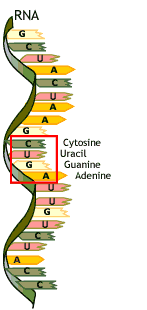
Where does transcription take place in PROKARYOTIC cells?
nucleus
cytoplasm
ribosome
How does RNA polymerase know where to start copying down instructions in the DNA molecule?
It looks for Promoters in the code
It looks for Stop Codons
It doesn't matter where it starts, it will find it.
mRNA signals to the RNA polymerase where to start by telekinesis

A polypeptide is a sequence of ____________________ held together by a ______________ bond.
amino acids; peptide
fatty acids; ionic
proteins; hydrogen
fatty acids; covalent
What is the function of DNA?
Store genetic information
Store energy
Form enzymes
Form the cell membrane

What is this a picture of?
DNA
mRNA
rRNA
tRNA

What process is occurring in this image?
DNA transription
DNA replication
DNA translation
Mitosis
Each section of DNA that codes for a protein is called a...
Chromosome
RNA
Gene
Enzyme
Where are proteins made?
ER
nucleus
cytoplasm
mitochondria
MET is know as the __________ codon.
stop
main
start
most common

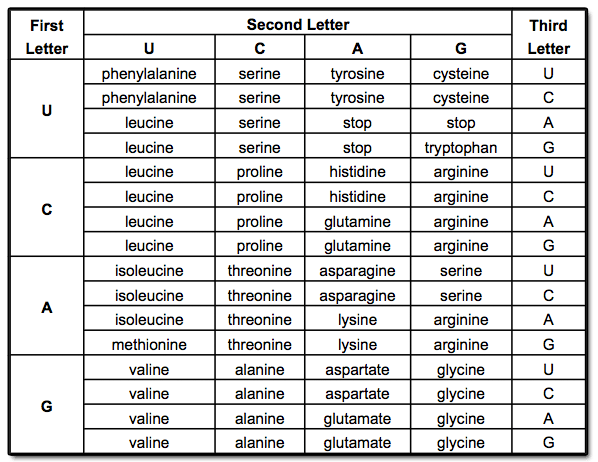
Select the RNA sequences for Glutamine.
CGU
CAG
CUA
CAA
RNA goes to the ribosome where it is used as a guide to attach amino acids together. Amino acids in a chain is a protein
This is Transcription.
This is Translation.

Find the amino acid that this segment of RNA codes for: GAC
Arginine
Asparagine
Aspartic Acid
Alanine
Find the amino acid that this segment of DNA codes for: GAC
Leucine
Serine
Aspartic Acid
Histine
Select the DNA sequence or sequences for Tyrosine.
ATC
ATA
ACC
ATG
A codon is a group of ___ RNA bases.
1
3
5
6
Find the amino acid that this segment of RNA codes for: UUG
Glycine
Asparagine
Lysine
Leucine
Find the amino acid that this segment of DNA codes for: CGT
Alanine
Stop
Valine
Leucine
Select the RNA sequence or sequences for STOP.
UCC
UAA
UGA
UAG
Select the DNA sequence or sequences for Lysine.
TTC
AAC
TTT
TAT
Which RNA carries the message?
mRNA
rRNA
tRNA
Which RNA brings amino acids?
rRNA
tRNA
mRNA

What happens to the mRNA sequence after it has been synthesized?
stays in the nucleus
leaves the cell
leaves the nucleus
separates into smaller pieces

DNA is confined to the nucleus.
True
False

What enzyme does transcription use?
DNA polymerase
ligase
RNA polymerase
helicase

Which RNA forms part of the ribosomes?
tRNA
mRNA
rRNA
Which of the following describes the direction the template strand is read?
5' to 3'
3' to 5'
N terminus to C terminus
C terminus to N terminus
Which of the following describes the process of alternative RNA splicing?
Different mRNA molecules are made from different sections of DNA
Different mRNA molecules are made from cutting out different introns from same pre-mRNA
Different mRNA molecules are made from cutting out different exons from same pre-mRNA
Different mRNA molecules are absorbed from the mitochondria for translation
Which of the following is the function of the poly-A tail?
To protect mRNA from hydrolytic enzymes
To allow for exit from nucleus
To signal for termination of translation
To decrease the length of mRNA molecules
Which of the following describes the difference between prokaryotic mRNA and eukaryotic mRNA?
Prokaryotes have longer mRNA strands due to presence of introns
Eukaryotes have longer mRNA strands due to the presence of introns
Prokaryotes modify the mRNA due to the presence of a nuclear envelope
Eukaryotes modify the mRNA due to the absence of a nuclear envelope
Where on the DNA does the enzyme responsible for transcription bind?
promoter
enhancer
polyadenylation sequence
start codon
Which of the following describes the correct mRNA sequence from the template strand of 5' - CGGTTA - 3'?
5' - GCCAAT - 3'
5' - GCCAAU - 3'
5' - UAACCG - 3'
5' - TAACCG - 3'
Which of the following enhance the binding of the enzyme responsible for transcription?
transcription factors
TATA box proteins
inhibitors
protons
The anti-codon of tRNA
contains a sequence the same as DNA
contains a sequence complementary to the mRNA codon
contains the base thymine
does not exist
What is the correct sequence for protein synthesis?
rRNA --> DNA --> Protein---->mRNA
Protein --> rRNA --> DNA---->tRNA
DNA ----> mRNA ---->tRNA----> Protein
DNA --> Protein --> tRNA-->mRNA

What is the correct amino acid sequence for the mRNA code AUGCCAGUAUGA?
Met-Pro-Val-Stop
Met-Ala-Arg-Stop
Tyr-Gly-His- Leu
Tyr-Gly-Arg-His

A is pointing at the
mRNA
nucleus
tRNA
codon
B is pointing at the
mRNA
nucleus
tRNA
codon
D is pointing at the
mRNA
nucleus
tRNA
codon
F is pointing at the
mRNA
nucleus
tRNA
codon
how many amino acids are there?
5
20
23
46
Is DNA directly involved in translation?
Yes
No
Is DNA directly involved in transcription?
Yes
No
What is done with the portion of DNA that does NOT code for proteins?
Introns are spliced out.
They are kept in the coding sequence.
Exons are spliced out.
Nothing happens.
Which of the following describes the direction the template strand is read?
5' to 3'
3' to 5'
N terminus to C terminus
C terminus to N terminus
Scientists can use a single codon chart to translate the information in a strand of mRNA from any species because –
scientists only study a few related species
the codon chart can adjust to any species
every species uses the same genetic code
all species makes the exact same proteins
anticodons are used to
Read DNA
connect tRNA to mRNA
destroy codons
create codons
After tRNA gives its amino acid to the ribosome's amino acid chain, the tRNA
becomes a permanent part of the ribosome
returns to the cytoplasm to get a new amino acid
dissolves
becomes part of the chain/protein
Which of the following are differences in the structure between RNA and DNA
DNA uses deoxyribose sugar, RNA uses sugar ribose
DNA pairs Adenine with Uracil, RNA pairs Adenine with Thymine
DNA is a double helix, RNA is a single helix
DNA pairs Adenine with Thymine, RNA pairs Adenine with Uracil
How can a mutation in the DNA sequence result in NO change to the protein that is made?
There are multiple codons that can code for the same amino acid and result in the same protein
There is always a change in the protein when a mutation occurs
Only the mRNA is used in protein synthesis so a mutation in the DNA would have no effect on the protein
What is the name of the enzyme that matches a tRNA and an amino acid?
Aminoacyl-mRNA synthetase
DNA polymerase
Aminoacyl-tRNA synthetase
RNA polymerase
Which site does the tRNA exit the ribosome?
P
E
A
R
Where does the tRNA bind to in a ribosome?
E site
P site
The 5’ cap
A site
Which site does the peptide chain bind to in a ribosome?
P
A
E
R
Termination occurs in translation when the stop codon reaches the E site
True
False, it is the A site
False, it is the P site
GAG-CTC-GAC-AGA
Mutant
GAG CTC-CAC-AGA
The mutated DNA segment is TTCGCAAG. This is an example of ___ mutation.
What are the three types of gene mutation?
Insertion, Deletion, Subsitution
Aberration, Deletion, Substitution
Inversion, Duplication, Insertion
Insertion, Duplication, Substitution
In this type of point mutation, one extra base pair is inserted into a sequence of DNA
substitution
insertion
deletion
translocation
In this type of point mutation, one base pair is lost
substitution
insertion
deletion
translocation

The bottom DNA sequence in the image has been altered by this type of mutation
substitution
insertion
deletion
translocation
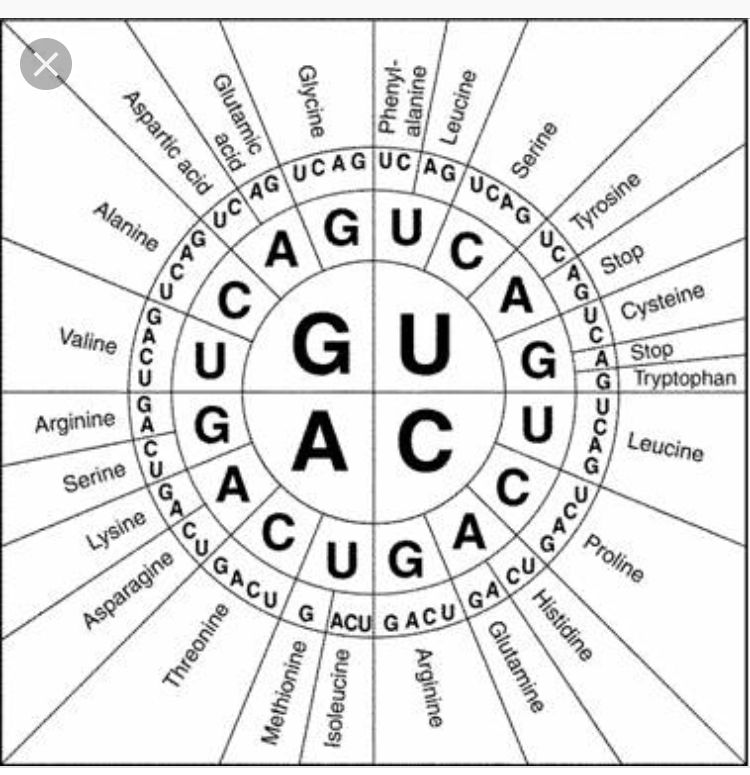
If a mutation codes for "stop" in the amino acid chain, this is called a:
nonsense mutation
missense mutation
silent mutation
frameshift mutation
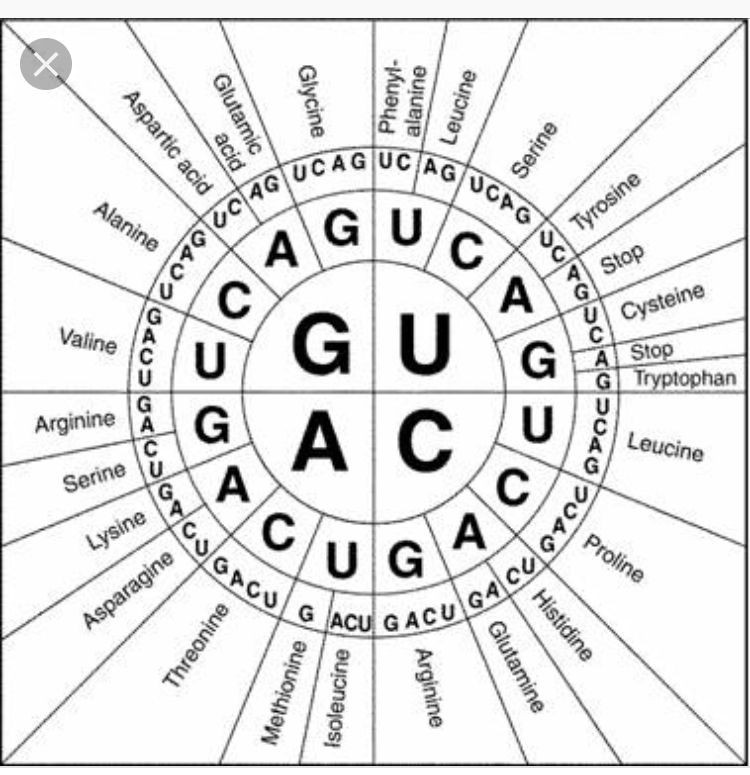
If UCU is changed to UCC in a mRNA transcript, this is a _______________________________.
silent mutation
missense mutation
nonsense mutation
frameshift mutation
Mutations that change the amino acid specified by the codon, affecting the amino acid sequence, are called:
nonsense mutations
missense mutations
silent mutations
point mutations
Which mutation below would have the worst effect on the function of the protein?
an insertion or deletion near the end of a gene
an insertion or deletion at the beginning of the gene
an insertion at the middle of the gene
a base substitution in the middle of the gene

