
 Worksheets
Ecology
Total questions: 223
Worksheet time: 6hrs 44mins
Why do grasses appear before shrubs in ecological succession?
loosen the dirt for new trees to take roots?
provide food for animals returning to the area
require plenty of sunlight to make their own food
can grow even in areas with shallow soil
After a volcanic eruption, lava covers the land. What is the order that plants grow to repopulate the area?
Lichens → Shrubs → Grasses → Trees
Lichens → tree → shrubs→Grasses
Grasses → Lichens → Shrubs → Trees
Lichens → Grasses → Shrubs → Trees
Secondary Succession on land always begin when _______ is still available.
Rock
Dirt
Water
Wind
Lichens is a great pioneer species because it can survive with little or no _______.
Grasses
Warm Weather
Soil
Cold Weather
___ are the first organisms to colonize an area and begin the process of ecological succession.
foundational organisms
introductory organisms
primary organisms
pioneer species
What is the term that describes a steady and stable community?
peak community
turf community
climax community
disturbed community
What is an example of an area that is likely to undergo primary succession?
Glaciers melt and leave exposed rock
Plants die from drought and decompose
Land is bulldozed and soil remains
Which of the following correctly matches the catastrophic event with its impact?
Heavy flooding increases the number of species in an area.
A tornado causes seawater to move onto the coast.
A hurricane increases erosion and makes a beach smaller.
A wildfire increases the number of habitats for organisms.
What is the main difference between primary and secondary succession?
primary begins with soil formation and secondary starts with soil intact
primary is the first stage and secondary is the second stage
primary builds plant communities and secondary builds animal communities
primary occurs after natural disasters and secondary occurs after disturbances to the ecosystem
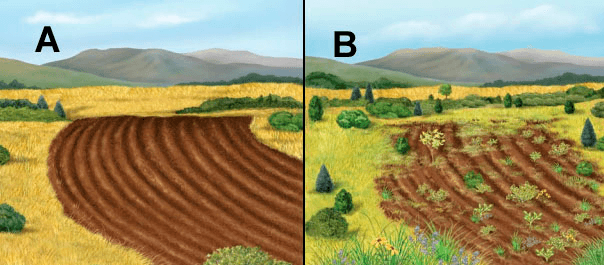
What is the main difference between primary and secondary ecological succession?
Primary begins WITHOUT soil; Secondary begins WITH soil
Primary is the first state and secondary is the second stage
Primary builds plant community; secondary builds animal community.
Primary begins WITH soil; Secondary begins WITHOUT soil

What type of succession is this?
Primary succession
Tertiary succession
Secondary succession
Variable succession
Succession that occurs in an area with NO SOIL
Ecological succession
Secondary succession
Primary succession
Pioneer species

What is the name given to lichen or moss after a primary succession
Pioneer species
Volunteer species
Founder species
Captain species

What is the most important function of pioneer species?
To create rocks
To look nice
Food for animals
To create soil and add nutrients to the environment
Secondary Succession on land always begin when _______ is still available.
Rock
Dirt
Water
Wind
After a volcanic eruption, lava covers the land. What is the order that plants grow to repopulate the area?
Lichens → Shrubs → Grasses → Trees
Lichens → tree → shrubs→Grasses
Grasses → Lichens → Shrubs → Trees
Lichens → Grasses → Shrubs → Trees

Primary succession

pioneer species

abiotic factor

secondary sucession

climax community


Primary or secondary ecological succession?


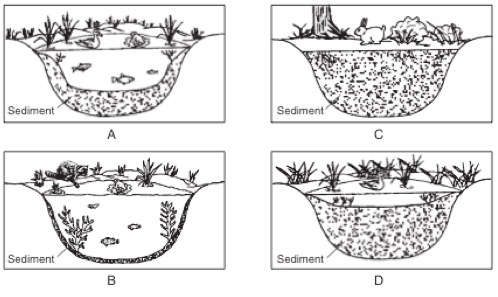
What is a common characteristic among pioneer species?
roots that break apart rocks
long thick roots
exposed surface roots
soak up water quickly
Which of the following best describes primary succession?
Volcano wipes out ecosystem that gradually grows back from ash covered soil
Volcano creates a new island of rock that must break down to form an ecosystem
Forest fire burns down forest that must bounce back over time
Tornado destroys a crop that must slowly grow back over time.
Breaking News! A new island has formed off of Hawaii! What must occur for it to become an ecosystem?
Secondary Succession
Aquatic succession
Primary Succession
Ferns must grow
Which would most likely result in primary succession?
old forest growing
undisturbed prairie
pollution kills mountain lake species
a Newly formed volcanic island
Primary succession occurs in areas with:
very little soil
lots of soil
no soil
soil that has been disturbed
What best describes the term succession?
rapid changes that create an ecosystem overnight
gradual changes over time to fully create or restore and ecosystem
forest with the tallest trees
the rate species produce offspring


What do 'plants' do with the carbon they receive?
They turn it into water
They don't need carbon
They turn it into food by photosynthesis
They keep it forever

How does carbon get from animals and back into the atmosphere? (CHOOSE ALL THAT APPLY)
Respiration (breathing)
After they die, they are broken down by decomposers
Photosynthesis
None of these

How do animals get carbon?
Photosynthesis
They absorb it from the atmosphere
The sun
They eat other plants and animals
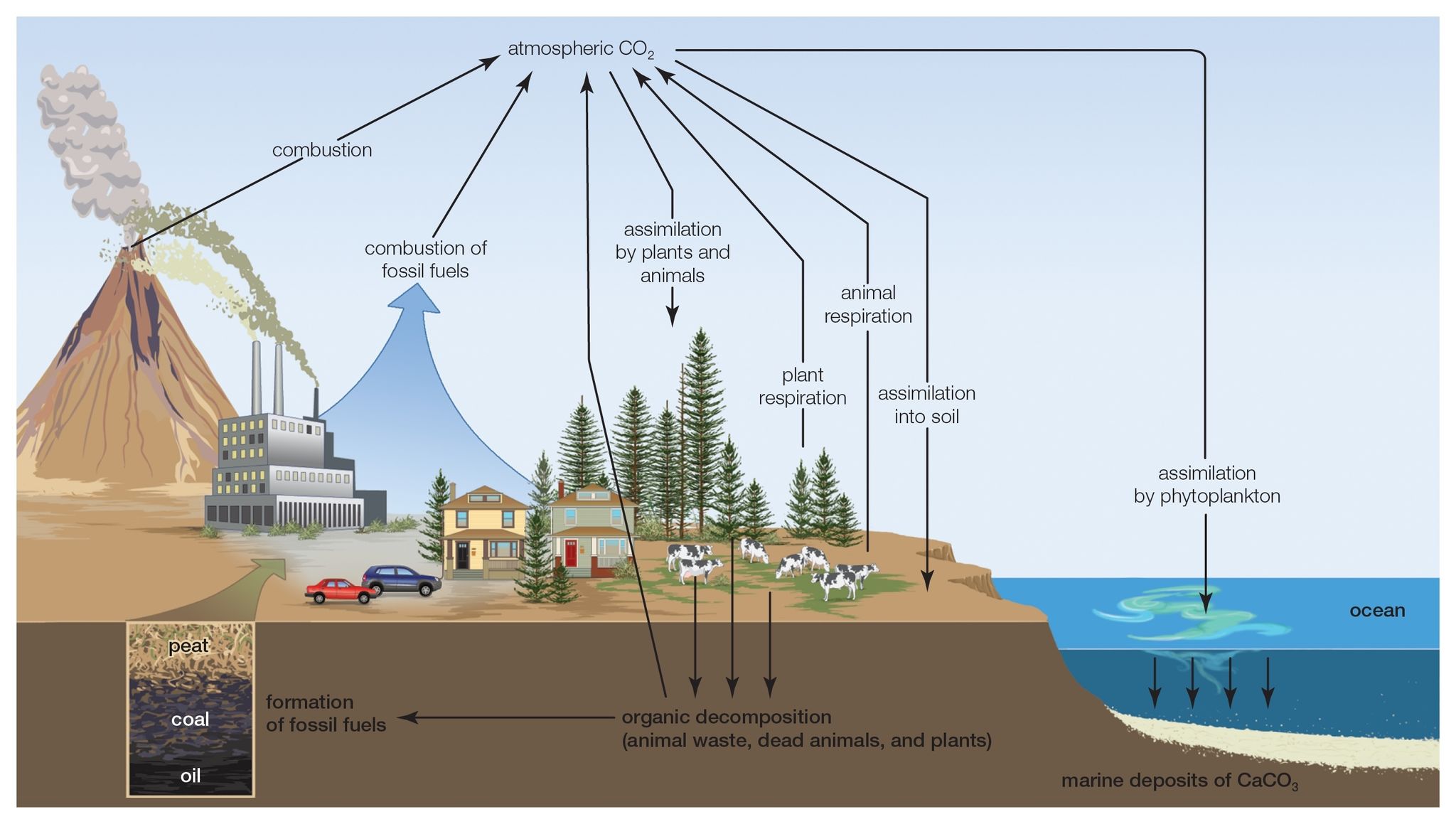
Which process contributes carbon dioxide to the atmosphere?
respiration
photosynthesis
tree farms

The step of the nitrogen cycle that is in red is called...
Denitrification
Nitrification
Nitrogen Fixation
Ammonification

The step of the nitrogen cycle that is in red is called...
Denitrification
Nitrification
Nitrogen Fixation
Ammonification

The step of the nitrogen cycle that is in red is called...
Denitrification
Nitrification
Nitrogen Fixation
Ammonification
Nitrogen fixation...
animals eat the plants and other animals that contain nitrogen and release it through their waste
Bacteria in the soil and lightning in the atmosphere “fix” the nitrogen
Once in the ground, bacteria in the soil also nitrify the nitrogen
plants absorb nitrogen through their roots and return it back to the atmosphere
Nitrification...
animals eat the plants and other animals that contain nitrogen and release it through their waste
Bacteria in the soil and lightning in the atmosphere “fix” the nitrogen
Once in the ground, bacteria in the soil also nitrify the nitrogen
plants absorb nitrogen through their roots and return it back to the atmosphere
Ammonification...
animals eat the plants and other animals that contain nitrogen and release it through their waste
Bacteria in the soil and lightning in the atmosphere “fix” the nitrogen
Once in the ground, bacteria in the soil also nitrify the nitrogen
plants absorb nitrogen through their roots and return it back to the atmosphere
Denitrification...
animals eat the plants and other animals that contain nitrogen and release it through their waste
Bacteria in the soil and lightning in the atmosphere “fix” the nitrogen
nitrogen is released back into the atmosphere from the animal’s waste or decomposers
plants absorb nitrogen through their roots and return it back to the atmosphere

Nitrfying Bacteria

Plant

Nitrogen-fixing bacteria

atmosphere(air)

denitrfying bactera
What is Nitrogen support with life
Amino Acids and DNA
Phosphates
Sugars and fats
Oil
Which nitrogen cycle process is occurring when bacteria convert ammonium to nitrite and then into nitrate?
nitrogen fixation
nitrification
denitrification
ammonification
assimilation
Which of these nitrogen cycle processes converts atmospheric nitrogen to a soil form of nitrogen that is usable by plants?
nitrogen fixation
nitrification
denitrification
ammonification
assimilation
Why is denitrification is important?
Removes harmful nitrates from environment
Uses up excess oxygen
Nitrogen is better in the soil than the atmosphere
Nitrates are better for the atmosphere
How can Nitrogen gas (N2) be fixed into a usable form for plants?
Through the action of bacteria only
Through lightning only
Through the action of bacteria and lightning
True or False- Animals can get the Nitrogen they need directly from the soil bacteria just like plants do.
True
False
A correct path that Nitrogen could take would be...
Air--> Animals--> Plants--> Bacteria
Air--> Bacteria--> Plants--> Animals

Aquatic succession to a wetland
10% of the energy moving up to the next trophic level
Is a community transitioned to another in a natural order
is a terrestial ecosystem turning to an aquatic ecosystem
an ecosystem adapting to a natural disaster

True or False: Bacteria fix nitrogen from the atmosphere into a form plants can use
True
False


This is NOT a part of the phosphorus cycle.
Phosphate is incorporated into sedimentary rocks
Phosphate bound to soil
Atmospheric phosphate
Phosphate is absorbed from the soil by plants
Select all the correct answers from menu.
What happens during nitrification?
During nitrification, bacteria convert ammonia into _______________
and ________________.
nitrogen
oxygen
nitrite
phosphorous
nitrate
why do organisms need nitrogen?
Humans need nitrogen
To manufacture proteins
To store electricity
Nitrogen is present in organic and inorganic forms
What drives the water cycle?
rain
temperature
the Sun
rotation

The diagram shows the process of evaporation over the ocean. What is the most likely effect of this process on the land areas nearby?
Increased drought conditions
Decreased erosion of the shoreline
Increased precipitation
Decreased solar energy

This photograph shows a beach on a partly sunny day. Which of the following is an interaction between the sun and the ocean that results in clouds forming near the beach?
Energy from the sun causes precipitation over the ocean.
Energy from the sun causes water to evaporate from the ocean.
Light from the sun reflects off the surface of the ocean.
Light from the sun decreases the amount of water vapor in the air over the ocean.
Jack noticed that a puddle was gone that was there on his walk to school. What happened to the puddle?
It evaporated
It melted
It condensed
occurs when the sun heats water up and it becomes vapor in the air.
Evaporation
the opposite of evaporation; it occurs when air cools and the vapor collects into liquid form.
Condensation
condensation falling onto land in the form of rain, sleet, hail, snow, and mist. Only 10% of water evaporated falls as precipitation.
Precipitation
the downward movement of water from the land surface into the soil or porous rock. Ground water begins as precipitation. Once water infiltrates the soil it can move vertically and horizontally through the soil.
Infiltration
is the water that exists for long periods below the Earth’s surface.
Groundwater storage
Earth's freshwater is located in
Lakes
Rivers
Oceans
Soil
Glaciers

Evaporation
A
Condensation
B
Precipitation
C
Transpiration
D
Groundwater
E

The image shows various stages in the water cycle. During which stage does water flow back towards the sea as runoff?
W
X
Y
Z

Which best explains why runoff is important?
It returns water to other locations on Earth
It increases the chance of flooding
It makes evaporation occur faster
It increases condensation
What is the defining difference between the marine, freshwater, and estuary biomes?
Salinity (dissolved salt)
Sunlight
Oxygen
Amount of Water
Which aquatic biome is characterized by where rivers meet oceans?
Marine
Freshwater
Coral Reef
Estuary

Why does the water level in an estuary rise and fall?
ocean tides bring water in and out of the shore, causing flooding in the estuary
rivers add new water off and on through the day
people all flush their toilets at the same time and it fills the estuary
lots of rain makes the flooding

Why is it important that plants like cattails and mangroves live only in the region of the estuary that is brackish water and stays partly flooded during the day?
they have adaptations for living in freshwater and saltwater and need the waters to flood their roots each day.
because if they lived close to the ocean, the turtles would eat them all
because the water is too cold farther up by the river
Why does it matter how much salt is in the water for organisms?
the wrong amount of salt causes organisms to become ill or die
they don't like the way it tastes
salt makes it easier to swim
Why is it important that plants and animals only live in a certain part of the estuary, like near the river, in the brackish water, or by the ocean?
They can only have adaptations for one type of environment.
Predators prevent them from living anywhere else.
The soil is specific for each part of the estuary.

What photos are the Mangroves tree?


Which of the following is not part of the harsh environments mangroves endure
High salt
Hard ground
Low oxygen
Varying Tides
These are trees that grows along the coast located near large bodies of water like lakes and rivers.
Coral Reefs
Rainforest
Mangroves
Plants

Mangrove swamps serve as important natural buffers, protecting upland areas from
erosion and storm damage.
saltwater intrusion.
raw sewage spills.
alien invasions.
Which is true of swamps?
there isn't a lot of water or rainfall there
the ground floor of a swamp doesn't receive a lot of sunlight because of the tall plants
the animals and plants that live there are very colorful
What is a biome?
the surroundings of where organisms (animals and plants) live
an area that protects animals from being harmed by humans
a glass arena where animals live to avoid predtators
Which plant would you most likely find in a swamp?


Which of the following is a saltwater ecosystem?
Oceans
River
Ponds
Lakes
The forest ecosystem is a great source of oxygen and a filter of carbon dioxide.
TRUE
FALSE
Hunting animals for their parts is a threat to the forest ecosystem.
TRUE
FALSE
Coral reefs protect coastal villages.
TRUE
FALSE
Which terrestrial ecosystem is characterized by almost no rainfall, very hot days, and very cold nights?
Tundra
Temperate Forest
Desert
Grassland
Which of the following ecosystems is characterized by flat land, little rainfall, and low growing plants such as grass and wildflowers?
Grassland
Taiga
Tundra
Tropical Rainforest
Swamps, marshes, and rivers are all examples of ____________ ecosystems.
Saltwater
Oceans
Freshwater
Tropical Rainforest
Which of the following ecosystem has a high salinity factor?
River
Ocean
Pond
Lake
What does "terrestrial" mean?
Water
Land
Animals
Plants
How are aquatic and terrestrial ecosystems different?
Aquatic has animals
Aquatic is water, terrestrial is land
Terrestrial has trees
Terrestrial is water, aquatic is land

What aquatic biome is characterized by flowing fresh water?
Lakes/Ponds
Mangroves Swamps
Rivers/Streams
Coral Reefs

Termites are tiny insects that can cause severe damage to homes and other structures that consist of wood. Termites are an example of what type of factor.
Biotic
Abiotic

John takes the subway to work every morning. He enjoys drinking his coffee and talking to people that sit near him. The other people on the subway are an example of what type of factor?
Abiotic
Biotic
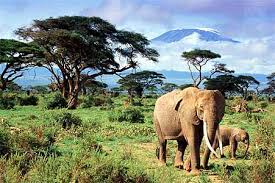
A palm tree is an example of a(n):
Abiotic factor
Biotic factor
Temperature is an example of a(n):
Abiotic factor
Biotic factor
Fungus is an example of a(n):
Abiotic factor
Biotic factor

The largest number of individuals that an environment can support long term is...
carrying capacity
emigration
immigration
population density

What happens if a population grows past its carrying capacity?
The population keeps growing
The population starts to die off
The entire species will go extinct
The carrying capacity just increases

Something that regulates the size of a population is called...
a limiting measure
a limiting factor
carrying capacity
biodiversity

What is the carrying capacity of the graph?
1000
8000
800
600
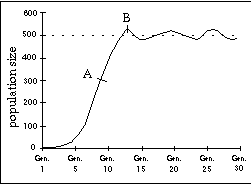
What is the carrying capacity of the graph?
around 500
more than 800
less than 300
around 700
What is the carrying capacity of the graph?
around 500
more than 800
less than 300
around 700
The system that contains all living things on Earth.
Biosphere
Atmoshpere
Hydrosphere
Geosphere
A habitat is the natural surroundings or home of an organism.
True
False

Animal that gets its energy and nutrition from eating plants.
Parasite
Herbivore
Carnivore
Ominvore

All energy in an ecosystem comes from the sun. This energy is passed through the ecosystem as organisms eat other organsims.
Ominvores
Herbivores
Detritivores
Flow of energy

Animal that gets its energy and nutrition from eating meat.
Detritivore
Ominvore
Carnivore
Herbivore

Organisms that produce their own food mostly through photosynthesis (producers). Examples are plants and algae.
Ominvore
Detritivore
Heterotroph
Autotroph

Organisms that get their energy and nutrition from other organisms (consumers).
Heterotroph
Autotroph
Decomposer
Detritivore

The level in an Ecological pyramid that includes all the organisms that share the same place in a food chain.
Trophic Levels
Toxic Levels
KeKe Levels
Environmental Systems

Only 10% of the energy is passed on from one trophic level to the next. 90% is lost as heat due to cellular respiration or waste.
Tertiary Consumer
Biotic Factor
Abiotic Factor
10% Rule

The flow of carbon from the atmosphere to plants, to animals to the soil and back into the atmosphere.
Bi-Cycle
Nitrogen Cycle
Carbon Cycle
Abiotic Cycle

The flow of nitrogen from the atmosphere to the soil, to plants, to animals and then back to the soil or back into the atmosphere.
Nitrogen Cycle
Carbon Cycle
Trophic Cycle
Abiotic Cycle

Parts of an ecosystem that are not living. Examples: water, soil, sunlight, temperature, altitude.
Detritivores
Herbivores
Biotic Factors
Abiotic Factors

Parts of an ecosystem that are living or deal with the living. Examples include producers, consumers, decomposers, predation, disease, competition, parasitism, and symbiosis.
Abiotic Factors
Biotic Factors
Community
Population
All the alligators in the same area are an example of a(n) _______________.
organism
community
population
group
All the tiger sharks in the ocean.
All the oak trees in a forest.
All the cows on a farm.
The plants and animals in the same area.
Reorder the following from least to greatest (from left to right).
organism
population
community
ecosystem
biome
What is significant about the first three (3) levels of organization in the environment?
The first three (3) levels have only abiotic factors.
The first three (3) levels have only ionic factors.
The first three (3) levels have only biotic factors.
The first three (3) levels have abiotic and biotic factors.


A relationship where one organism benefits and another is harmed
Commensalism
Parasitism
Mutualism
Competition

Cattle egrets forage (feed) in fields among cattle. The egret gets easy access to flying insects stirred up by the cattle, and the cattle don't care if they are there or not. This is an example of parasitism.
true
false

What is a population?
One individual member of a species
a group of individuals of the same species that live in the same area
a community of different species and their environment
Which is an example of an ecosystem?
An area of cold climate and communities of different species
one elk
a group of elks living together in the same area
elks, snow rabbits, and owls living in the same area
Which definition best fits the term BIOTIC?
The study of the interactions between animals and their environment
Factors in the environment that are considered not alive
Factors in the environment that are considered living or the remains of living things
One species benefits, the other is unaffected
symbiosis
parasitism
mutualism
commensalism
Honey guide birds alert and direct badgers to bee hives. The badgers then expose the hives and feed on the honey first. Then, the honey guide birds eat as well.
symbiosis
parasitism
mutualism
commensalism
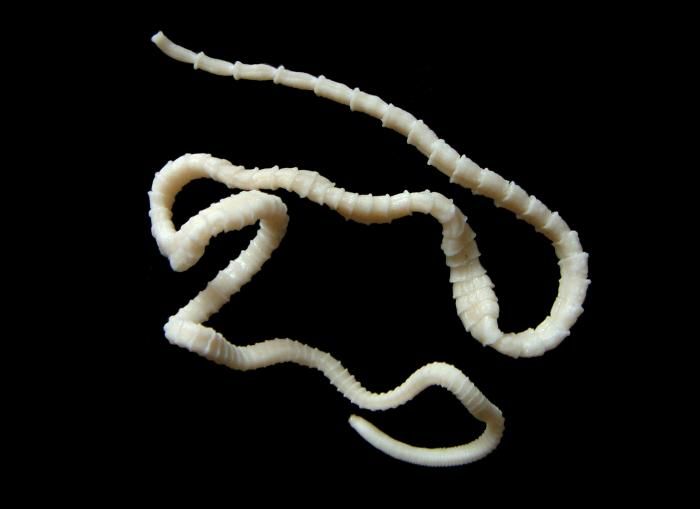
Tapeworms reside in human intestine and take nutrients from the human
symbiosis
parasitism
mutualism
commensalism

Vines grow on a tree. The vines get light but the tree is not affected. What kind of relationship is this?
Competition
Mutualism
Commensalism
Parasitism

Predator
Autotroph
Producer
Decomposer
The ecological role an organism performs in their specific environment is considered the organism's...
Habitat
Population
Biome
Niche
They point to the organism that is being eaten.
It shows how sunlight flows within an ecosystem.
They show what direction the energy is flowing between organisms.
They represent how water is transferred within a habitat.


The populations of which organisms will most likely increase as a result of a disease that suddenly reduced the population of Texas horned lizards?
Grasses and ants
Ants and grasshoppers
Grasshoppers and Texas Cottonmouths
Texas cottonmouths and red shouldered hawks

Producers /Autotrophs
Consumers /Heterotrophs
Decomposers
Scavengers


Why might an organism have more than one arrow coming FROM them in a food web?
More than one organism may eat them.
They may eat more than one other organism.
This organism gets its energy from multiple sources.
Grass > Grasshopper > Bird > Snake
Decomposer
This is an organism that breaks down and gains nutrients from dead organisms.
Predator
This is an animal that lives by preying on other animals.
Producer
This is an organism that supplies matter and energy, also known as an autotroph.
Consumer
This is an organism that relies on other organisms for its food and energy supply; heterotroph
Parasite
This is an organism which feeds on, but usually does not kill, a larger organism

What happens to the amount of available energy in the pyramid as it moves up through the different levels?
it increases
it decreases
it remains the same
In any food web, the organisms that are responsible for converting raw energy into usable chemical energy are collectively called ________ while organisms that recycle the nutrients trapped in dead organisms are collectively called ________.
producers;consumers
producers; decomposers
consumers; decomposers

What is a population?
One individual member of a species
a group of individuals of the same species that live in the same area
a community of different species and their environment
Which is an example of an ecosystem?
An area of cold climate and communities of different species
one elk
a group of elks living together in the same area
elks, snow rabbits, and owls living in the same area
Which definition best fits the term BIOTIC?
The study of the interactions between animals and their environment
Factors in the environment that are considered not alive
Factors in the environment that are considered living or the remains of living things
One species benefits, the other is unaffected
symbiosis
parasitism
mutualism
commensalism
Honey guide birds alert and direct badgers to bee hives. The badgers then expose the hives and feed on the honey first. Then, the honey guide birds eat as well.
symbiosis
parasitism
mutualism
commensalism
Tapeworms reside in human intestine and take nutrients from the human
symbiosis
parasitism
mutualism
commensalism
Vines grow on a tree. The vines get light but the tree is not affected. What kind of relationship is this?
Competition
Mutualism
Commensalism
Parasitism
Predator
Autotroph
Producer
Decomposer
The ecological role an organism performs in their specific environment is considered the organism's...
Habitat
Population
Biome
Niche
They point to the organism that is being eaten.
It shows how sunlight flows within an ecosystem.
They show what direction the energy is flowing between organisms.
They represent how water is transferred within a habitat.
The populations of which organisms will most likely increase as a result of a disease that suddenly reduced the population of Texas horned lizards?
Grasses and ants
Ants and grasshoppers
Grasshoppers and Texas Cottonmouths
Texas cottonmouths and red shouldered hawks
Producers /Autotrophs
Consumers /Heterotrophs
Decomposers
Scavengers
Why might an organism have more than one arrow coming FROM them in a food web?
More than one organism may eat them.
They may eat more than one other organism.
This organism gets its energy from multiple sources.
Grass > Grasshopper > Bird > Snake
Decomposer
This is an organism that breaks down and gains nutrients from dead organisms.
Predator
This is an animal that lives by preying on other animals.
Producer
This is an organism that supplies matter and energy, also known as an autotroph.
Consumer
This is an organism that relies on other organisms for its food and energy supply; heterotroph
Parasite
This is an organism which feeds on, but usually does not kill, a larger organism
What happens to the amount of available energy in the pyramid as it moves up through the different levels?
it increases
it decreases
it remains the same
In any food web, the organisms that are responsible for converting raw energy into usable chemical energy are collectively called ________ while organisms that recycle the nutrients trapped in dead organisms are collectively called ________.
producers;consumers
producers; decomposers
consumers; decomposers
Yucca flowers are pollinated by yucca moths. The moths lay their eggs in the flowers where the larvae hatch and eat some of the developing seeds. Both species benefit.
commensalism
parasitism
mutualism
A flea feeds on a mouse's blood to the mouse's harm.
commensalism
parasitism
mutualism
Wrasse fish feed on the parasites found on the black sea bass's body. Both species benefit.
commensalism
parasitism
mutualism
Cattle egrets are birds that forage in fields among cattle. The egrets get easy access to food and the cattle don't care if they are there or not.
mutualism
commensalism
parasitism
A relationship between two organisms in which one organism benefits and the other is unharmed.
Mutualism
Commensalism
Parasitism
Silverfish live and hunt with army ants. They share the prey. They neither help nor harm the ants.
Mutualism
Parasitism
Commensalism

Clown fish live among anemones, acting as a lure for the sea anemone's prey. The clown fish gets protection and shelter from the anemone.
This is an example of which type of symbiosis?
Commensalism
Mutualism
Parasitism

