Wayground logo

Free Printable Worksheets

Font size

S
M
L
XL
Worksheets

BIOLOGY EOC EXAM PREPARATION

Total questions: 188

Worksheet time: 3hrs 54mins

Name
Class
Date
1.
Which biomolecule is the key source of energy? 
Quick Energy! 
a)
Lipid
b)
Protein
c)
Carbohydrate
d)
Nucleic Acid
2.
What are the functions of lipids? 
a)
Quick source of energy
b)
Builds muscles, skin, enzymes
c)
Stores genetic information
d)
Long-term energy, insulation, found in cell membrane 
3.
What is the function of nucleic acids?
a)
Store genetic information
b)
Store long-energy
c)
Quick source of energy
d)
Builds structures
4.
Which of the following is NOT a function of proteins? 
a)
Enzymes speed up chemical reactions
b)
Transport molecules throughout cell membrane
c)
Build muscle
d)
Give energy
5.
Which type of cell has no nucleus?
a)
Eukaryote
b)
Prokaryote
c)
Animal
d)
Plant
6.
Holds the DNA, controls the cell's activities
a)
cell membrane
b)
nucleus
c)
mitochondria
d)
lysosome
7.
Choose the similarity between prokaryotes and eukaryotes.
a)
Both have cell walls.
b)
Both are able to reproduce by mitosis.
c)
Both contains cytoplasm, ribosomes, and DNA
d)
Both are found in the same organizm
8.
One example of a prokaryote is a...
a)
fungus
b)
bacteria
c)
animal
d)
plant
9.
Which organelle is only found in a plant cell? 
a)
nucleus
b)
chloroplast
c)
mitochondria
d)
cell membrane
10.
What is the name of the structure shown in the diagram where cellular respiration (ATP production) takes place?
a)
Chloroplast
b)
Mitochondrion
c)
Nucleus
d)
Vacuole
11.
I am a protein packaging and shipping machine! Who am I?
a)
vacuole
b)
ribosome
c)
endoplasmic reticulum
d)
golgi apparatus
12.
Where are proteins made?
a)
Golgi body
b)
Mitoichondrion
c)
Chromosomes
d)
Ribosomes
13.
The maintenance of an organism’s internal environment is called:
a)
compensating
b)
homeostasis
c)
balancing
d)
routine
14.
Osmosis is the movement of _____ across a membrane.
a)
food
b)
energy
c)
oxygen
d)
water
15.
The cell below is in a _________ solution.
a)
Hypotonic
b)
Hypertonic
c)
Isotonic
16.
This cellular structure helps organisms maintain homeostasis by controlling what substances may enter or leave cells.
a)
vacuole
b)
nucleus
c)
cell membrane
d)
cell wall
17.
The cell below is in a _____________ solution.
a)
Hypertonic
b)
Hypotonic
c)
Isotonic
18.
What type of transport is this? Note the use of a channel protein.
a)
facilitated diffusion
b)
active transport
c)
diffusion
d)
osmosis
19.
What type of transport is this?
a)
Endocytosis
b)
Facilitated Diffusion
c)
Active Transport Pump
d)
Osmosis
20.
Before cells can divide, what must be copied?
a)
mitochondria
b)
cytoplasm
c)
DNA
d)
Cell Wall
21.
In the S stage of interphase_______________
a)
the cell grows
b)
the nucleus divides
c)
the cell membrane divides
d)
the DNA is replicated
22.
During the growth/gap 1 stage of the cell cycle, a cell
a)
splits into two new cells
b)
doubles in size and growth
c)
Duplicates its DNA
d)
divides its cytoplasm
23.
Which of the following phrases best describes cytokenesis
a)
division of the cytoplasm
b)
division of the nucleus
c)
division of DNA
d)
division of surface area
24.
Substage of Interphase in which the cell copies its DNA in preparation for cell division
a)
G1
b)
Synthesis
c)
G2
d)
Interphase
25.
Name the phase:
a)
Anaphase
b)
Telophase
c)
Metaphase
d)
Prophase
26.
Name the phase:
a)
Anaphase
b)
Telophase
c)
Metaphase
d)
Prophase
27.
What is the next phase of mitosis?
a)
Prophase
b)
Metaphase
c)
Anaphase
d)
Telophase
28.
Name the phase:
a)
Prophase
b)
Metaphase
c)
Anaphase
d)
Telophase
29.
Name the phase:
a)
Prophase
b)
Metaphase
c)
Anaphase
d)
Telophase
30.
This produces 2 identical cells.
a)
mitosis
b)
meiosis
31.
True or False? Meiosis involves on cell division that produces two cells.
a)
True
b)
False
32.
True or False? Meiosis involves two cell divisions that produce four cells.
a)
True
b)
False
33.
What is the result of one cell undergoing mitosis in humans?
a)
two cells, each with 23 chromosomes
b)
two cells, each with 46 chromosomes
c)
four cells, each with 23 chromosomes
d)
four cells, each with 46 chromosomes
34.
Which DNA component holds the genetic information?
a)
The phosphate backbone
b)
The deoxyribose sugar
c)
The sequence of nucleotides
d)
The ratio of adenine and guanine
35.
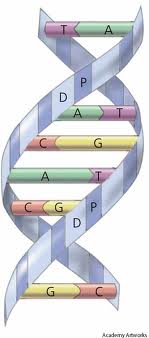
Which sequence of bases match the DNA model?
a)
CATC
b)
GTAG
c)
CAAG
d)
GTAC
36.
Name this structure
a)
double helix
b)
nucelotide
c)
twisted ladder
d)
hydrogen bond
37.
Which of the following complementary base pairs are correct?
a)
A  - T
b)
A - G
c)
T - C
d)
G - U
38.
What is the correct order of DNA replication?
a)
3, 2, 1, 4
b)
2, 1, 4, 3
c)
2, 3, 1, 4
d)
3, 4, 1, 2
39.
What is the correct complimentary strand for the following DNA?  ATCGAG
a)
TACGAG
b)
ATCGAG
c)
TAGCTG
d)
TAGCTC
40.
The bonds that hold the two strands of DNA together come from...
a)
the attraction of phosphate groups 
b)
strong bonds between  bases and sugars
c)
carbon to carbon bonds in the sugar
d)
weak hydrogen bonds between the bases
41.
Which of these nitrogenous bases is NOT seen in DNA?
a)
Uracil
b)
Thymine
c)
Cytosine
d)
Guanine
42.
Transcription takes place in the 
a)
cytoplasm
b)
chloroplast
c)
nucleus
d)
mitochondria
43.
Translation takes place in the 
a)
cytoplasm (ribosome)
b)
chloroplast
c)
nucleus
d)
mitochondria
44.
This nucleic acid is single stranded
a)
DNA
b)
RNA
c)
Both
45.
Which is the mRNA molecule that would be transcribed from this DNA template:
TGGCAA
a)
ACCGTT
b)
UGGCAA
c)
UCCGUU
d)
ACCGUU
46.
What carries the genetic code to the ribosome?
a)
mRNA
b)
tRNA
c)
rRNA
d)
DNA
47.
UUU codes for
a)
Phe
b)
Leu
c)
Ser
d)
Pro
48.
GAA codes for
a)
Asp
b)
Glu
c)
Gly
d)
Ala
49.
What mutation has occurred here? 
T-G-A-C-C-A
T-G-A-G-C-A
a)
Substitution
b)
Deletion
c)
Insertion
d)
Frameshift 
50.
ATTTGAGCC- Original
ATTGAGCC - Mutated
The example above is an example of a 
a)
Insertion- Frameshift
b)
Deletion- Substitution
c)
Deletion -Frameshift
d)
All of the above
51.
Which of the following is a phenotype?
a)
BB
b)
Bb
c)
bb
d)
Blue eyes
52.
T - tall and t = short
In the punnett square below, what belongs in the missing square
a)
tt
b)
Tt
c)
Bb
d)
TT
53.
G = green, g = yellow
The genotype for a yellow plant is...
a)
GG
b)
Gg
c)
gg
d)
all of the choices result in yellow
54.

DNA is made up of phosphates, sugars, and

a)

proteins

b)

lipids

c)

bases

d)

iodine

55.

A red flower bred to a white flower produces red and white spotted flowers. This is an example of

a)

incomplete dominance

b)

recessive genes

c)

epistasis

d)

co-dominance

56.

Identify the gas that is an input (reactant) of photosynthesis:

a)

oxygen

b)

Water

c)

carbon dioxide

d)

nitrogen

57.

What is the simplest level of organization in the body?

a)

cell

b)

tissue

c)

organ

d)

organ system

58.

A gene is_______________________.

a)

located only in sex cells

b)

a whole chromosome

c)

a section of DNA that codes for a trait

d)

not expressed in the dominant form

59.

The diagram shows homologous chromosomes during prophase I of meiosis. Which of the following correctly describes the process being illustrated?

a)

Segregation of sister chromatids

b)

Mutation in which the DNA content of the gene is altered

c)

Crossing over in which alleles are exchanged

d)

Condensation and segregation of alleles

60.

What happens to the chromosome number during meiosis?

a)

doubles

b)

halves

c)

stays the same

d)

becomes diploid

61.
Animals are prokaryotic.
a)
True
b)
False
62.
W=white hair
w= non-white hair
If you cross a horse with WW and a horse with ww what fraction of the offspring would be expected to have white hair?
a)
none
b)
3/4
c)
1/2
d)
all
63.
What is the genotype for a pea plant heterozygous for round seeds (R), and homozygous recessive for green seeds (y)?
a)
Ry
b)
RRyy
c)
RrYy
d)
Rryy
64.
What is the functions of lipids?
a)
Quick source of energy
b)
Builds muscles, skin, enzymes
c)
Stores genetic information
d)
Stores energy, insulation, protection
65.
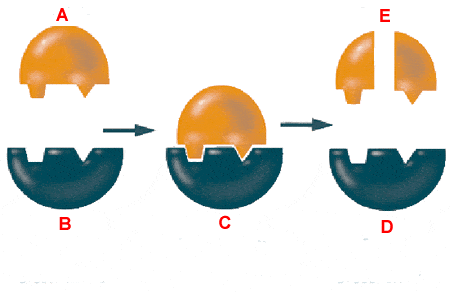
What is structure C?
a)
Substrate
b)
Active site
c)
Enzyme
d)
Products
66.
The graph shows how enzymes affect reactions in cells. Which statement best summarizes the information shown in the graph?
a)
Enzymes increase the energy of the reactants.
b)
Enzymes decrease the energy level of the products.
c)
Enzyme decrease the activation energy of the reaction.
d)
Enzymes reverse the direction of the reaction.
67.
Which is true of prokaryotic and eukaryotic cells?
a)
Prokaryotic cells are larger than eukaryotic cells.
b)
Eukaryotic cells do not have nuclei, and prokaryotic cells do have nuclei.
c)
Prokaryotic cells lack membrane-bound organelles, and eukaryotic cells contain membrane-bound organelles.
d)
Eukaryotic cells are simpler than prokaryotic cells.
68.
Which is true about active transport?
a)
It requires energy
b)
it does not require energy
c)
It moves substances down the concentration gradient
d)
it moves material from high to low concentration
69.
Which of the following is the correct equation for PHOTOSYNTHESIS?
a)
6CO2 + 6H2O --> 6O2 + C6H12O6
b)
6CO2 + C6H12O6 + 6H2O --> O2 
c)
6O2 + 6H2O --> 6CO2 + C6H12O6
d)
C6H12O6 + 6O2 ---> 6H2O + 6CO2 
70.
Which sequence of DNA bases would pair with this partial strand
ATG TGA CAG
a)
ATG TGA CAG
b)
TAC ACT GTC
c)
GTA AGT GAC
d)
CAT TCA CTG
71.
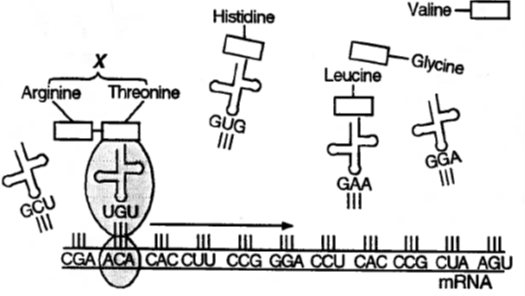
What process is going on in this photo? 
a)
Transcription 
b)
Translation 
c)
Replication 
d)
All the above 
72.
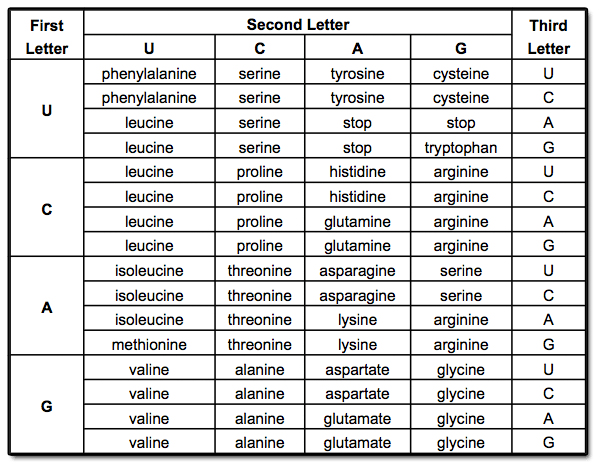
What amino acid is represented by the codon UUA?
a)
Phenylalanine
b)
Tyrosine
c)
Leucine
d)
Stop codon
73.
Which is Metaphase?
a)
A
b)
E
c)
C
d)
F
74.
Which process and type of resulting cells are represented?
a)
mitosis, gametes
b)
mitosis, body cells
c)
meiosis, gametes
d)
meiosis, body cells
75.
DNA molecule segment is : TTACGCAAG
The mutated DNA segment is TTCGCAAG. This is an example of ______ mutation.
a)
Substitution
b)
Deletion
c)
Insertion
d)
Inversion
76.

Which of the following list includes cellular structures found both in plant and animals?

a)

Vacuoles, cell membrane, nucleus, mitochondria

b)

Chloroplasts, cell wall, cell membrane, cytoplasm

c)

Cell membrane, cytoplasm, nucleus, cell wall

d)

Chloroplasts, vacuoles, cell wall, cytoplasm

77.

According to cell theory, all living things are made of cells that---

a)

grow using energy from sunlight

b)

have cell organelles with specialized functions

c)

move using structures on the cell membranes

d)

come from other living cells

78.

1The nucleus is a round, double walled structure often found in the center of both plant and animal cells. Its function is to –

a)

Contain genetic material (DNA)

b)

Store fat

c)

Generate cytoplasm

d)

Purify water

79.

Justin is a tall, blonde-haired, blue-eyed soccer player who likes to cook. Based on the information in the chart, which is an inherited trait from his mother?

a)

blonde hair

b)

blue eyes

c)

his ability to play soccer

d)

his hitch-hiker thumb

80.

Plant cells have a strong, rigid outer layer known as the cell wall. The function of the cell wall is to –

a)

Convert energy from the Sun into chemical energy

b)

Regulate the transfer of material into the cell

c)

Separate the genetic material from the rest of the cell

d)

Help the cell maintain its shape and provide support

81.

If an offspring is produced through sexual reproduction, the offspring’s genetic material is always -

a)

A copy of the genetic material of one parent.

b)

identical to the genetic material of its siblings.

c)

A blend of the genetic material of its parents.

d)

completely unrelated to that of its parents.

82.

The passing of traits from parent to offspring

a)

levels of organization

b)

asexual reproduction

c)

binary fission

d)

heredity

83.
Which of the following best describes a DNA molecule?
a)
double helix
b)
contains ribose
c)
made of amino acids
d)
contains Uracil
84.
Which 2 molecules forms the sides (backbone) of the DNA ladder?
a)
deoxyribose and adenine
b)
deoxyribose and a hydrogen bond
c)
sugar and the nucleus
d)
deoxyribose (sugar) and phosphate
85.

Which of the following statements is correct?

a)

DNA and RNA must stay inside the cell nucleus.

b)

DNA stays in the cell nucleus and RNA can leave the nucleus.

c)

RNA stays in the cell nucleus and DNA can leave the nucleus.

d)

DNA and RNA can go into and out of the cell nucleus.

86.

DNA replication results in two DNA molecules,

a)

each one with two original strands.

b)

each one with two new strands.

c)

each one with one new strand and one original strand.

d)

one with two new strands and the other with two original strands.

87.

What process synthesizes mRNA from DNA?

a)

Translation

b)

Transcription

c)

DNA Replication

88.

What is the main function of a tRNA molecule?

a)

It carries the instructions to make proteins

b)

It forms part of the ribosomes

c)

It strings together complementary RNA and DNA strands

d)

It brings amino acids from the cytoplasm to the ribosomes

89.
If the diploid number of an organism is 36, how many chromosomes are found in a gamete?
a)
36
b)
72
c)
18
d)
Not enough information
90.
Which process creates an identical copy of DNA?
a)
Mutation
b)
Replication
c)
Transcription
d)
Translation
91.
Transcribe this sequence:  ACTGTTC
a)
UGACAAG
b)
TGACAAG
c)
TGUCUUG
d)
AGUCUUG
92.
In a cross of two heterozygous parents, what proportion of the offspring will also be heterozygous?
a)
50%
b)
100%
c)
0%
d)
75%
93.
Cell membrane allows nutrients to enter the cell and wastes to leave but prevents unwanted materials from entering or needed things from leaving.  What does this describe?
a)
Selective permeability
b)
Metabolism
c)
Respiration
d)
Photosynthesis
94.
When Mendel crossed two green pea plants, some of the offspring produced yellow peas.  What does this tell us about the parent plants?
a)
They must have been homozygous dominant
b)
They must have been heterozygous
c)
They must have been homozygous recessive
d)
One was dominant and one was recessive
95.
What do you call a change in an organism's DNA?
a)
Replication
b)
Mutation
c)
Codon
d)
Phenotype
96.
What do all cells use for energy?
a)
Carbs
b)
Protein
c)
Fat
d)
ATP
97.
How do organisms produce ATP?
a)
break down macromolecules
b)
performing photosynthesis
c)
removing a phosphate from ADP
d)
removing a phosphate from ATP
98.
Which molecule is most commonly broken down to make ATP?
a)
ADP
b)
lipid
c)
protein
d)
carb
99.
Which macromolecule produces the most ATP when broken down?
a)
1 g lipid
b)
1 g protein
c)
1g Carb
d)
1 g sugar
100.
What does the "TP" in ATP stand for?
a)
2 phosphates
b)
tri (3) phosphates
c)
Two proteins
d)
tri (3) proteins
101.
How is energy released from ATP?
a)
adding a phosphate
b)
making a new bond
c)
removing the 3rd phosphate
d)
adding a protein
102.
which contains more energy?
a)
ATP
b)
ADP
103.
which process releases energy?
a)
making a bond (adding a phosphate)
b)
breaking a bond (removing a phosphate)
104.
which process requires an input of energy
a)
making a bond (adding a phosphate)
b)
breaking a bond (removing a phosphate)
105.
Which has the MOST stored energy?
a)
1 ATP molecule
b)
1 ADP molecule
c)
1 glucose molecule
d)
1 starch molecule
106.
Enzymes catalyze reactions by ___________ Activation Energy.
a)
Increasing
b)
Decreasing
107.
An experiment is performed on plants to see how different liquids affect plant growth. Each plant in the experiment is given a different liquid; water, apple juice, or milk. Each plant has the same amount of soil, sunlight, and listens to the same music. In this investigation, the independent variable is ...
a)
The type of plant
b)
The amount of sunlight
c)
The type of music
d)
The type of liquid
108.
The amount of energy that usually transfers from one trophic level to the next...
a)
10%
b)
20%
c)
80%
d)
50%
109.

Which of the following converts food into energy for the cell?

a)

vacuole

b)

mitochondria

c)

cytoplasm

d)

cell membrane

110.
What is something that prokaryotic and eukaryotic cells have in common?
a)
They have a nucleus. 
b)
They are multi-cellular. 
c)
They have DNA. 
d)
They have organelles that are membrane-bound.
111.
Active transport does not require energy.
a)
True 
b)
False 
112.
Which 2 molecules forms the sides (backbone) of the DNA ladder?
a)
deoxyribose and adenine
b)
deoxyribose and a hydrogen bond
c)
sugar and the nucleus
d)
deoxyribose (sugar) and phosphate
113.
These molecules represent which organic molecule?
a)
proteins
b)
lipids
c)
nucleic acids
d)
carbohydrates
114.

The light independent reactions (Calvin Cycle) of photosynthesis happen where?

a)

stroma of chloroplast

b)

mitochondrial matrix

c)

stem

d)

thylakoid membrane

115.
In this image, the cell is using which type of molecular transport?
a)
Osmosis
b)
Diffusion 
c)
Endocytosis
d)
Exocytosis 
116.
What are the two reactants of cellular respiration?
a)
C6H12O6 & 6CO2
b)
6 CO2 & 6H2O
c)
C6H12O6 & 6O2
d)
6CO2 & 6O2
117.
Name structure #5.
a)
rough ER
b)
nucleus
c)
vesicle
d)
cytoplasm
118.
According to the diagram, when did the common ancestor of giant pandas and spectacled bears exist? 
a)
5-10 mya
b)
10-15 mya
c)
15-20 mya
d)
20-25 mya
119.
Prokaryotes used to be classified as a single kingdom. New technology allowed them to be split into...
a)
Protista and Prokaryota
b)
Protista and Bacteria
c)
Eubacteria and Archaea
d)
Archaea and Eukarya
120.
Movement of materials down the concentration gradient through a protein channel is an example of 
a)
facilitated diffusion
b)
active transport
c)
respiration
d)
osmosis 
121.
Which list includes only structures that would be found in a prokaryotic cell? 
a)
Cell wall, plasma membrane, mitochondria
b)
Central vacuole, cell wall, lysosome
c)
Cell wall, plasma membrane, cytoplasm
d)
Plasma membrane, nucleus, mitochondria
122.
Humans are made up of different cells that preform different functions. From which cells do nerve cells develop? 
a)
Muscle cells
b)
Stem cell
c)
Sperm cells
d)
White blood cells 
123.
Which of the following statements vest describes the cell cycle? 
a)
Interphase is the reproductive phase, mitosis is the growth phase
b)
Interphase is the growth phase, mitosis is the reproductive phase
c)
Cytokinesis is the growth phase, S-phase is the reproductive phase
d)
Cytokinesis is the reproductive phase, S-phase is the growth phase
124.
What is the function of this molecule in organisms? 
a)
Storage of genetic information
b)
Structure and support
c)
Short term energy storage
d)
Long term energy storage
125.
Which best describes the function of enzymes?
a)
to speed up chemical reactions in a cell
b)
to produce cellular energy
c)
to produce proteins
d)
to speed up cell division
126.
Which factor determines the shape and function of a protein?
a)
The density of ribosomes in the cell
b)
The peptide bonds between amino acids
c)
The order of the amino acids in the peptide chian
d)
The sequence of the phosphate molecules in the DNA chain. 
127.
What are the products of photosynthesis? 
a)
glucose and oxygen
b)
glucose and carbon dioxide
c)
glucose and water
d)
water, carbon dioxide, and energy
128.
Which process uses ATP to move materials across the plasma membrane against the concentration gradient?
a)
passive transport
b)
active transport 
c)
facilitated diffusion
d)
osmosis
129.
Which process of the carbon cycle removes carbon dioxide from the atmosphere? 
a)
photosynthesis
b)
cellular respiration
c)
combustion of fossil fuels 
d)
death and decomposing organisms 
130.
What type of growth is shown by the human population? 
a)
Carrying capacity
b)
Logistical
c)
Exponential
d)
Stabilizing 
131.
Which statement describes how complementary strands of DNA are linked?
a)
each sugar in one strand is paired with a complementary base in the other strand. 
b)
Each sugar in one strand is pained with a complementary phosphate in the other strand
c)
Each phosphate in one strand is paired with a complementary phosphate in the other
d)
Each base in one strand is paired with a complementary base in the other 
132.
Name the photosynthesizing organelle of the plant cell.
a)
G
b)
B
c)
J
d)
C
133.
Name the process in the picture.
a)
transcription
b)
mitosis
c)
translation
d)
replication
134.
Which letter is the active cycle of the virus?
a)
A
b)
B
135.
Which number contains the nucleic acid?
a)
1
b)
2
c)
3
136.
What process is occurring in the picture?
a)
DNA replication
b)
mitosis
c)
protein synthesis
d)
meiosis
137.
Name M.
a)
light dependent cycle
b)
Carbon dioxide
c)
glucose
d)
Calvin cycle
138.
Name B.
a)
phosophate
b)
glucose
c)
deoxyribose
d)
nitrogen base
139.
Which gas is filling the balloon in the experiment?
a)
Oxygen
b)
Carbon Dioxide
c)
Glucose
d)
Water
140.
What type of punnett square?
a)
codominance
b)
incomplete dominance
c)
complete dominance
d)
sex linked recessive
141.
What is happening in the picture?
a)
recombinant DNA
b)
karyotype
c)
mitosis
d)
binary fission
142.
Widow's peak is dominant to straight hair line. Cross a heterozygous widow's peak female with a heterozygous widow's peak male. What is the genotype ratio?
a)
1:2:1
b)
3:1
c)
1:1
d)
1:0
143.
Which process is used to make mRNA from the DNA in the nucleus?
a)
transcription
b)
translation
c)
replication 
144.
Which RNA bases would pair with TACGAA in transcription? 
a)
AUGCUU
b)
ATGCTT
c)
GCATCC
d)
GCAUCC
145.
Where does transcription take place?
a)
nucleus
b)
cytoplasm
c)
ribosome
146.
How many amino acids are coded for by this sequence of nucleotides:
ATG GGA ACT CCA
a)
4
b)
2
c)
6
d)
12
147.
What is occurring in this picture?
a)
Translation
b)
Replication
c)
Translocation
d)
Transcription
148.
Which species’ DNA is most similar to the DNA of the toothed whale? 
a)
Hippopotamus 
b)
Baleen Whale
c)
Grazing Mammals
d)
Camels
149.
The white feathers of a snowy owl allow it to blend in with its environment during the winter months (snow). This is an example of ________________
a)
Species
b)
Environmental Change
c)
Adaptation
d)
Variation
150.
What is the advantage of having different shaped beaks?
a)
To look different from other species.
b)
To be able to eat the food readily available in the environment.
c)
To protect itself against predators.
d)
To protect itself against prey.
151.
Cattle egrets forage (feed) in fields among cattle. The egret gets easy access to flying insects stirred up by the cattle, and the cattle don't care if they are there or not.
a)
mutualism
b)
commensalism
c)
competition
d)
parasitism
152.
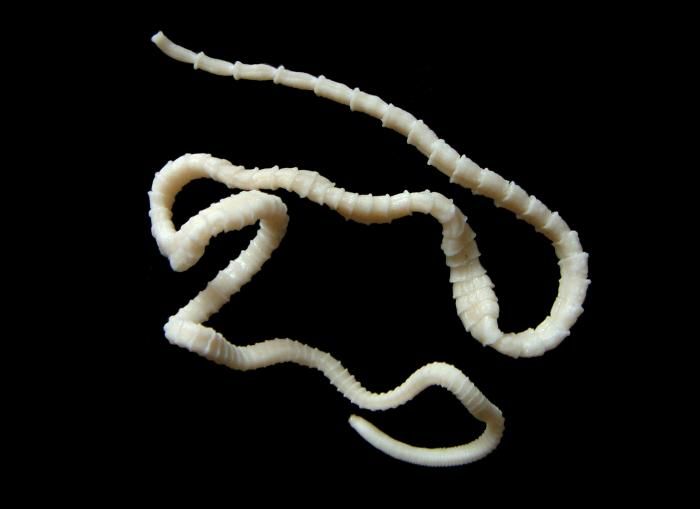
A tapeworm and a cat have this type of relationship.
a)
mutualism
b)
parasitism
c)
commensalism
d)
competition
153.
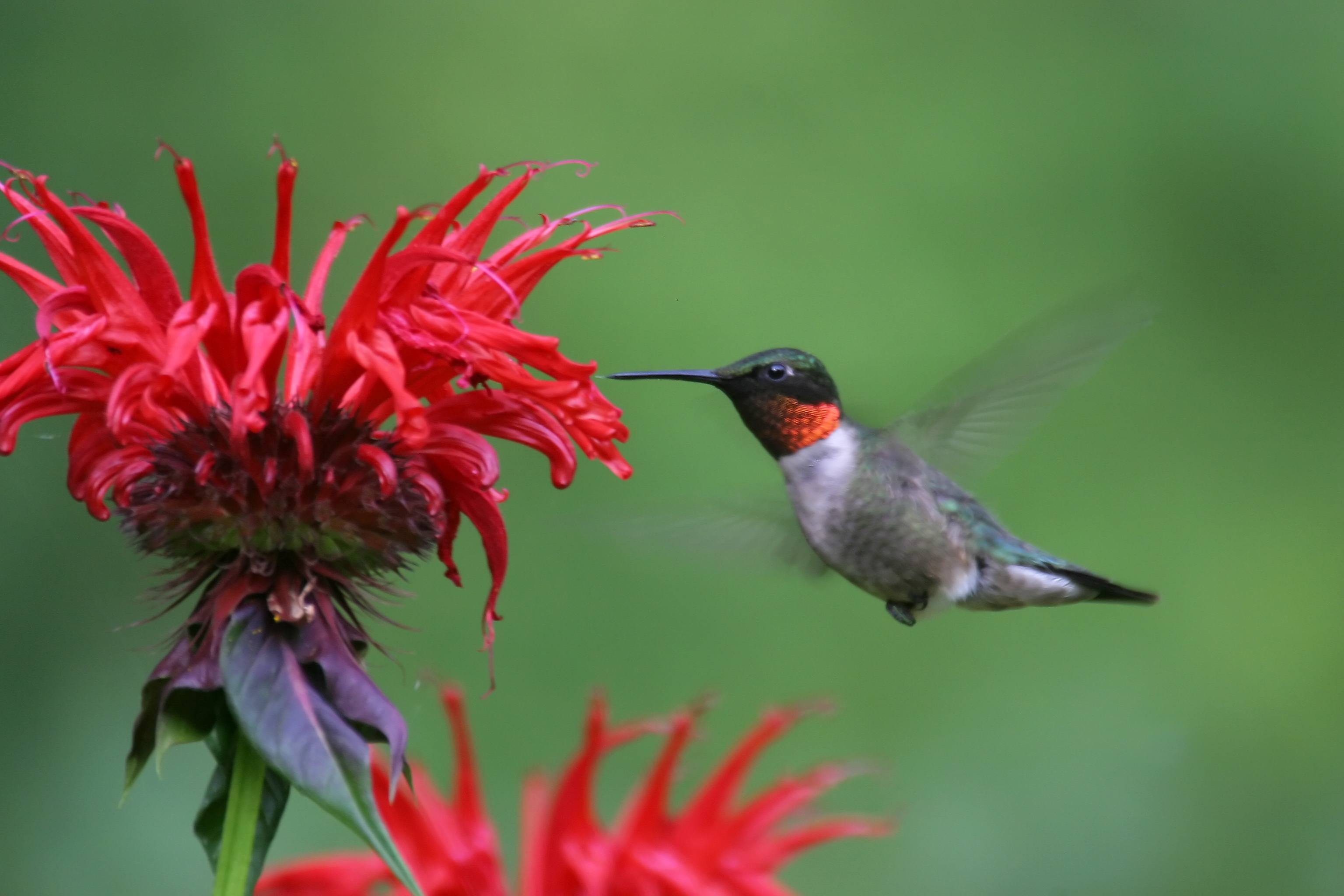
What type of symbiosis?  Hummingbirds feed on nectar from flowers.  The flowers are pollinated by hummingbirds as they move from flower to flower.
a)
commensalism
b)
mutualism
c)
parasitism
d)
predation
154.
Which type of cell has no nucleus?
a)
Eukaryote
b)
Prokaryote
c)
Animal
d)
Plant
155.
Which type of cell?
a)
Prokaryote
b)
Eukaryote
c)
Mixed
156.
Which organic macromolecules are composed of chains of amino acids that join to form the structural components of organisms?
a)
carbohydrates
b)
nucleic acids
c)
proteins
d)
lipids
157.
The ability to taste a bitter chemical called PTC is a dominant trait in humans.  The Punnett square below shows a cross between two parents who are heterozygous for the ability to taste this chemical.  What is the probability, expressed as a percentage, that these parents will produce an offspring who is homozygous recessive for the tasting trait?
a)
0%
b)
25%
c)
50%
d)
75%
158.
Which of these substances stores and transmits the information that specifies the traits of an organism?
a)
DNA
b)
RNA
c)
enzymes
d)
carbohydrates
159.
The diagram summarizes two stages in the production of the specialized cells used for sexual reproduction.
What happens in the stage labeled "process 2"?
a)
The chromosomes cross over.
b)
Th chromosomes number is reduced by half.
c)
The chromosomes move to opposite end of the cell.
d)
Four identical gametes form.
160.
Proteins are formed in the cytoplasm of cell using genetic instructions from DNA, which is located in the cells nucleus.  Which of the following best explains how the genetic information gets to the site of protein synthesis?
a)
DNA is divided during mitosis, and one strand travels outside the nucleus to bind with RNA and form a protein
b)
DNA is copied to make mRNA. The mRNA leaves the nucleus and goes to the ribosomes, where the information is used to guide protein synthesis.
c)
Genetic information travels from DNA in the nucleus along a strand of mRNA that is connected to ribosomes in the cytoplasm where proteins are made.
d)
The genetic code is transferred to ribosomes on tRNA molecules, which can pass through the nuclear membrane.
161.
The diagram shows the base sequence of a strand of DNA.
From left to right, what is the sequence of the complementary strand of DNA in this molecule?
a)
T G A A C
b)
A C T  T G
c)
T G U U C
d)
U C T T G
162.
The table shows several DNA codons and their corresponding amino acids.
If a sequence of DNA reads AGTGGGTCT, for what sequence of amino acids does it code?
a)
arginine-glycine-serine
b)
serine-arginine-arginine
c)
serine-arginine-glycine
d)
serine-glycine-serine
163.
The legs of crocodiles and mice have similar bone structures and develop in a similar way.  What type of structures are the leg bones?
a)
homologous structures
b)
analogous structures
c)
fossilized structures
d)
vestigial structures
164.
The standardized system for naming organism is known as binomial nomenclature.  What two pieces of information are used to name and identify organisms using this system?
a)
genus and species
b)
class and genus
c)
class and species
d)
domain and kingdom
165.
The diagram shows a container divided into two compartments by a membrane permeable to water but not to starch. Two solutions containing different concentrations of dissolved starch were placed on each side of the membrane. Which of the following describes what will happen to the water level during the process of osmosis?  
a)
The water level of both sides of the membrane will decrease 
b)
The water level on the right side of the membrane will increase 
c)
The water level on the left side of the membrane will increase
d)
The water level on both sides of the membrane will stay the same 
166.
An animal cell placed in a sugar solution is shown in the diagram. Which statement best describes how osmosis will affect this animal cell?  
a)
Water will move out of the cell and the cell will shrink
b)
Water will move into the cell and the cell will expand 
c)
Sugar will move out of the cell and the cell will expand 
d)
Sugar will move into the cell and the cell will expand
167.
In order to make hydrochloric acid, which is required in human digestion, ATP is used to move hydrogen ions from the blood to the stomach lining. This is an example of ___.   
a)
Active Transport
b)
Passive Transport
c)
Osmotic Potential 
d)
Facilitated Diffusion
168.
 A paramecium is shown.  This paramecium lives in an environment where water is constantly entering the organism.  The paramecium uses specialized vacuoles to pump some of the water back into the environment against a concentration gradient. Which of these processes is used to pump extra water out of the paramecium?   
a)
Osmosis
b)
Diffusion
c)
Active Transport
d)
Electron Transport
169.
A cell requires energy to move materials from an area of low concentration, across the cell membrane, to an area of high concentration.  This process is called ___. 
a)
Osmosis
b)
Active transport 
c)
Passive transport 
d)
Facilitative diffusion
170.
In active transport, carrier proteins ___.  
a)
Move substances across the cell membrane without the use of ATP.
b)
Move from low concentration to high concentration by diffusion
c)
Move small molecules through the cell membrane by osmosis 
d)
Move substances from a low concentration to high concentration through the use of energy.
171.
What will most likely occur when a cell is placed into a saline solution that has a higher salt concentration than inside the cell?    
a)
Water molecules will move into the cell
b)
Salt molecules will move out of the cell 
c)
Salt molecules will move until the salt concentration is the same inside and outside the cell 
d)
Water molecules will move until the salt concentration is the same inside and outside of the cell.
172.
 An ion must cross the cell membrane through active transport instead of passive transport when the ion is ___. 
a)
Negatively charged
b)
Carried across by a protein 
c)
Going against the concentration gradient 
d)
Too small to move independently
173.
The diagram shows the semipermeable membrane of a cell and the concentration of solutions inside and outside the cell. Which of the following statements best describes how the molecules will move?   
a)
Water molecules will move out of the cell 
b)
Water molecules will move into the cell 
c)
Solute molecules and water molecules will move out of the cell 
d)
Solute molecules and water molecules will move into the cell 
174.
The stages of the cell cycle are shown in random order below.  Starting with prophase, sequence the diagrams to show the stages of mitosis.  
                       
a)
5-3-1-2-4
b)
3-1-4-2-5
c)
4-1-2-5-3
d)
2-3-1-5-4
175.
What is the diploid number of chromosomes in the above diagrams?   
a)
2
b)
4
c)
6
d)
8
176.
The diagrams show the stages of mitosis in random order.  What sequence correctly shows the stages of mitosis?             
a)
3-1-2-4
b)
1-3-4-2
c)
4-2-3-1
d)
2-1-4-3
177.
A bone cell of a goat contains 60 chromosomes.  How many chromosomes will be in each daughter cell after mitosis? 
a)
15
b)
30
c)
60
d)
120
178.
What must occur during the cell cycle to ensure proper division of the chromosomes?  
a)
The cell must grow in size
b)
The mitochondria must divide 
c)
The DNA of the cell must replicate
d)
The cell membrane must dissolve
179.
The main purpose of DNA replication is to ___.  
a)
Capture sunlight
b)
Store energy in the bonds of a glucose molecule
c)
Synthesize proteins 
d)
Copy genetic information 
180.
.  Which statement best describes the primary function of DNA replication?   
a)
To ensure daughter cells have a complete copy of the DNA
b)
To prevent mutations from occurring in cells 
c)
To provide genetic variation within specific organisms
d)
to allow prokaryotic cells to undergo meiosis
181.
During strenuous exercise, body temperature increases. The body responds to the increase in temperature by sweating, which helps to reduce the body temperature. Which is demonstrated in this situation?
a)
excretion
b)
metabolism
c)
homeostasis 
d)
synthesis
182.
What is the function of autotrophs in the carbon cycle?
a)
to use oxygen to produce glucose 
b)
to take in excess water
c)
to use carbon dioxide to produce glucose
d)
to feed on herbivores 
183.
What will most likely happen if the human population continues to grow at current rates?
a)
There will be fewer natural resources available for future generations.
b)
There will be an increase in nitrogen levels in the atmosphere. 
c)
There will be a decrease in water pollution. 
d)
There will be an increase in the number of strong hurricanes. 
184.
Why is meiosis important for sexual reproduction?
a)
It allows the zygote formed from fertilization to have triple the chromosome number of the organism. 
b)
It allows gametes to have twice the original number of chromosomes of the organism.
c)
It allows gametes to have half the original number of chromosomes of the organism. 
d)
It allows the zygote formed from fertilization to have half the original number of chromosomes of the organism. 
185.
Which technique would most likely be used by forensic scientists?
a)
gene cloning
b)
gene therapy
c)
DNA fingerprinting
d)
karyotyping
186.
Which process produces the most variation within a species? 
a)
Asexual reproduction
b)
Sexual reproduction
c)
mitosis
d)
cloning
187.
What are the subunits of DNA and their function? 
a)
nucleotides that store information 
b)
monosaccharides that provide quick energy for the cell
c)
lipids that store energy and provide insulation 
d)
proteins that provide the building blocks for the structural components of organisms 
188.
The use of pesticides on crops has been a common farming practice for decades. What has been the greatest effect of natural selection through the use of pesticides on certain insect populations? 
a)
Natural selection has been altered because the insects and their predators are killed. 
b)
The rate of selection is increased because the pesticides do not kill the insects that are naturally resistant to it. 
c)
The rate of selection has decreased because the pesticides kill only young insects. 
d)
The pesticides have altered natural selection by causing the insect DNA to spontaneously mutate.

Similar Resources on Wayground