
 Worksheets
Weathering and Erosion, Landforms
Total questions: 60
Worksheet time: 39mins
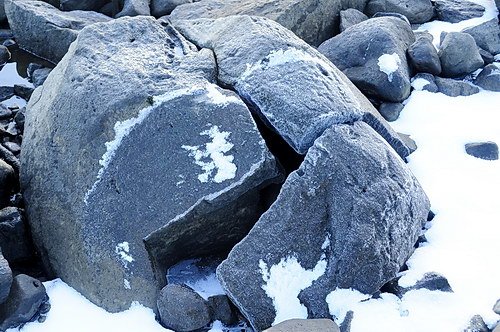
How does freezing water cause the weathering of rocks? The freezing water—
keeps the rocks in place.
makes the rocks last longer.
expands cracks and breaks rocks.
causes rocks to fall in landslides.
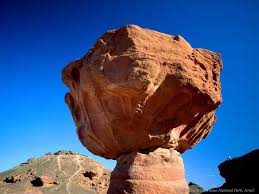
The process that breaks down rocks and other materials on Earth's surface is called
Weathering
Erosion
Deposition
Decomposition

A cliff formed near the ocean. Which statement best describes how this cliff formed?
Warm air melted the rock.
Sun rays evaporated the rock.
Ocean waves washed away rock.
Plant roots pushed away the rock.


What causes the greatest erosion effect on our beaches?
Waves
Gravity
Glaciers
Wind

What is an enormous mass of ice moving over land, causing weathering of rock and soil?
A glacier
An iceberg
An ice wedge
A sand dune
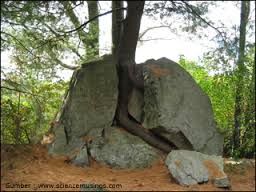
How do plants weather rocks?
During photosynthesis
When roots grow into cracks of rocks and expand the rock breaks.
When the plant moves water from the roots to the leaves, the rock breaks.
Plants don't weather rocks.
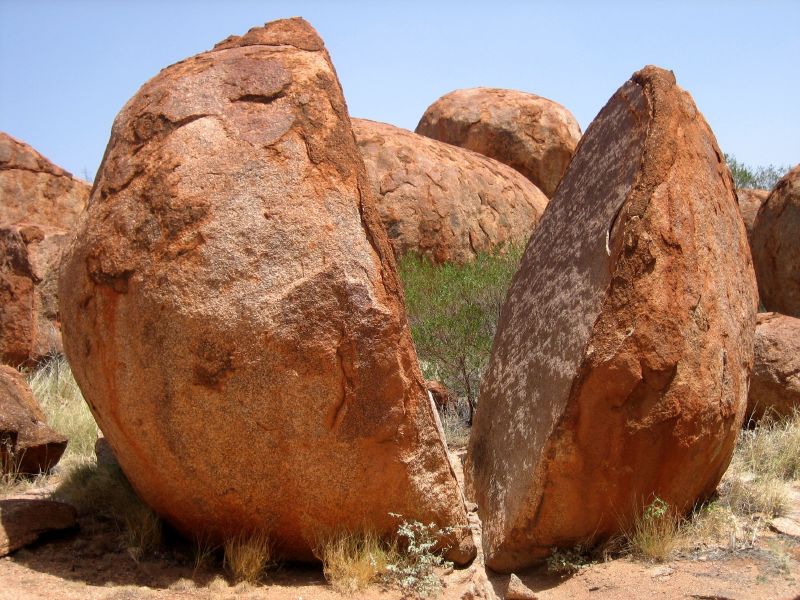
What is the wearing away or breaking down of rocks called?
Deposition
Erosion
Glaciers
Weathering
Some agents of weathering are water, wind, ice, temperature and plant roots.
true
false


_____ is the process by which soil and sediment (weathered rock) are transported (moved) from one place to another by water, wind, glaciers, and gravity
Erosion
Deposition
Weathering
Running Water

A farmer's topsoil is blown away during a hurricane is an example of ___________.
weathering
erosion
deposition
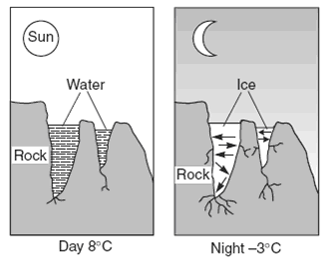
Which statement best explains why this process results in weathering?

What is one thing that causes weathering?
Sun rising
Flowing water
Driving cars
Mountain climbing


What do we call unique and important parts of the Grand Canyon?
Layers
Features
Fossils
Valley

What are the three types of rocks that make up the earth? (select three)
Hard
Sedimentary
Metamorphic
Igneous

What kind of rock is the Grand Canyon primarily made of?
Hard
Sedimentary
Metamorphic
Igneous

What do we call the remains of plants and animals which show up in the layers of sedimentary rock?
images
rot
coal
fossils

In what state is the Grand Canyon located in?
Arizona
Utah
Nevada
Colorado

Which group of people first discovered the Grand Canyon?
Gold miners
Settlers
Vacationers
Native Americans

What can you ride into the Grand Canyon?
Mountain bikes
Horses
Skateboards
Mules

How long ago did the Grand Canyon start to form?
6 million years
6 billion years
6 thousand years
No one knows
Who built the granaries—storage places for grain—into the Canyon walls?
Canyon guides
Canyon visitors
Anasazi Indians
Havasupai Indians

Why can visitors to the Grand Canyon find shells and fish teeth in some of the rock layers?
Burrowing animals move these objects up from the river.
The land was covered by water long ago.
Riders bring food with them and leave some behind.
The Indian people buried their food scraps there.
What is the name of the river that carved the Grand Canyon?
Arizona River
Colorado River
Canyon River
What is the definition for massive?
Small
Huge
Normal sized
What can a flash flood do ?
It can be fun!
It can wash out terrain.
It makes it easier to walk on the terrain.
Rare means
there are lots of something
not many of something exists
something huge
How did the Grand Canyon form?
Over millions of years, the Colorado river chipped away at the rocks, forming walls, peaks and plateaus.
Dinosaurs wanted to dig the biggest hole on Earth.
A meteor struck the Earth and created the Grand Canyon crater; 18 miles wide, 1 mile deep.
Over time, strong winds created a the deep Canyon that we all know of today.
Which colors can be seen on the canyon walls at Grand Canyon National Park?
pink, blue , purple and red
gold, silver, yellow and black
green, brown, yellow and red
orange, red, gray and brown

The grand canyon is striped because layers of different rocks have formed together over time, one on top of the other.
True
False

How many miles does the Grand Canyon stretch down the Colorado River?
120 miles
77 miles
277 miles
400 miles
An invasive species is a plant or animal that is...
Native to the area
Not native to the area
welcome all year round
live happily in the canyon

Which layer is the youngest layer?
F
A
E
C
Which layer of the Grand Canyon is the oldest?
Top
Middle
Bottom

Select TWO scientific observations based on the image.
There is a landslide.
Why is the sky blue?
There are visible rock layers.
You can fish.
Canyons are narrow with steep sides.
True
False
Geologists study
rocks, sand, and trees
rocks, soil and other parts of the planet
rocks, soil and water
Which does NOT describe what glaciers to do rocks?
carve
grind
melt
scrape
Which region has dry plains, deserts and canyons?
Southwest
Northeast
West
Southeast
What causes the strips of color that run through the canyon?
Sediment
Decorations
Lava layers
What is a fossil?
A really old, picture drawn by cavemen.
The hardened remains or imprints of plants or animals preserved in rock.
Dinosaur bones.
The softened remains or imprints of plants or animals preserved in rock.
A scientist discovers a body fossil of a fish.
Place the events into the correct order to describe how the body fossil formed. What was the first step of the sequence?
An organism dies.
A fossil forms.
Bones are replaced by minerals.
Soft tissue decays.
How did the Grand Canyon form?
Over millions of years, the Colorado river chipped away at the rocks, forming walls, peaks and plateaus.
Dinosaurs wanted to dig the biggest hole on Earth.
A meteor struck the Earth and created the Grand Canyon crater; 18 miles wide, 1 mile deep.
Over time, strong winds created a the deep Canyon that we all know of today.
What do the different layers of rock in the Grand Canyon tell us?
It proves, through the many layers, that global warming has been going on for thousands of years.
It reveals evidence of ancient seas and deserts, extinct plants and animals, volcanic eruptions, and earthquakes.
It shows that humans have been around much longer than scientists thought.
It reveals what prehistoric animals ate, how they lived and why they died.

Which of the following was formed by the Colorado River? It is located in Arizona.
The Great Lakes
The Grand Canyon
Atlantic Ocean
Mammoth Cave
The two categories of natural geographic features are...
buildings and streets
landforms and water features
mountains and canyons
bays and oceans

