
Font size
 Worksheets
Atoms
Total questions: 36
Worksheet time: 21mins
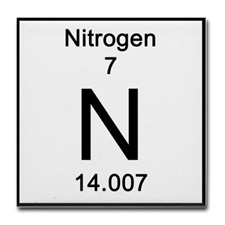

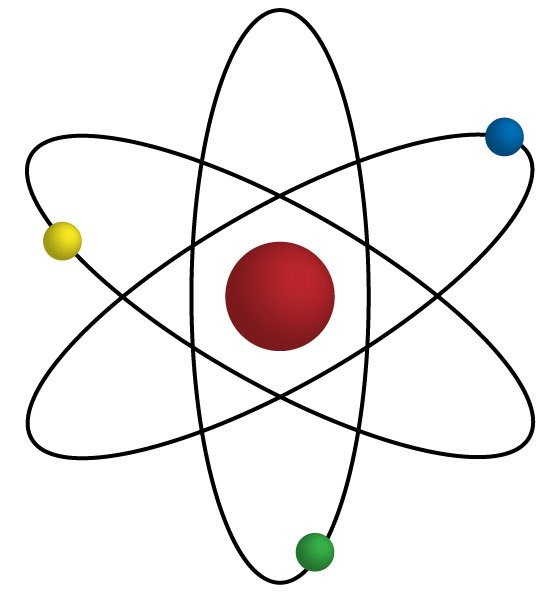
What does the atomic number represent?
how many atoms are in a group.
how much an atom weighs.
the number of protons in the nucleus of the atom.
which subatomic particles have no charge (they are neutral)?
protons
neutrons
electrons
What is a subatomic particle with a positive charge?
Proton
Neutron
Electron
The amount of matter in an object
Mass
Volume
Density
the amount of space an object takes up
Mass
Volume
Density
Mass/Volume
Mass
Volume
Density
Which particles make up the nucleus of an atom? (you can choose more than one answers)
proton
electron
neutron

The size of the negative charge of an electron is exactly the same as the size of the positive charge on a proton. What is the overall charge of the helium atom shown in the diagram?
positive
negative
neutral
Electrons have less mass than protons do
true
false
Electrons are found in the nucleus of the atom
true
false
The atomic _____ tells you how many protons are there in an atom.
size
mass
weight
number
A negatively charged particle, located in the outermost shell of an atom.
Valence electron
Muon
Neutrino
Lepton
An element which has the same number of protons and electrons having no net charge.
Isotope
Ion
Neutral atom
Electron
This universal law states that like charges repel and unlike charges attract.
Law of interaction
Law of conservation of mass
Law of attraction
Law of repulsion
Electrons move around_________________the nucleus
Inside
Outside
On top of
Without
The modern periodic table is organized by _________________ atomic number.
Increasing
Decreasing
Reducing
Developing
A ___________________ is a combination of two or more atoms that are held together by covalent bonds.
Moles
Ions
Molecules
Megatrons


Atoms are made up of ________________
energy
electrons
subatomic particles
gasses

The subatomic particles that make up an atom.
solid, liquid, gas
electrons, protons, nucleus
energy, protons, nucleus
electrons, protons, neutrons


The smallest part of any element. Made up of protons, neutrons and electrons.
Atom
AMU
Ion
Isotope

The mass number is always larger than the atomic number (exept for Hydrogen).
TRUE
FALSE

