
 Worksheets
Lesson 3 & 4 - Civil War Reconstruction - Review
Total questions: 45
Worksheet time: 29mins
Which of the following presidents was impeached during Reconstruction? (a)
What former Union General was elected President? (a)
What name was givin to Northerners who moved south for political jobs and to profit off Reconstruction? (a)
What was another name for a southerner who sided with the Radical republicans that wanted to punish the south for the war? (a)
What economic system was created in the south to replace slavery and keep Freedmen poor and under white control? (a)
Freedmen´s Bureau
Agency established by Congress to help former slaves in the South
Reconstruction
Period of rebuilding the nation after the Civil War
Fourteenth Amendment
African American Citizenship
Fifteenth Amendment
Banned states from denying African Americans right to vote
Sharecropping
Landowners gave a few acres of land to farm workers in exchange for a portion of their crops
Radicals
Republicans who wanted to destroy the political power of former slaveholders
Scalawag
White Southerners who joined the Republican Party
Carpetbagger
Northerners who moved to the South after the war
Ku Klux Klan
White southerners who used violence to keep blacks from voting
Members of the Republican party who believed the Confederacy should be punished for their actions and believed African Americans were entitled to the same political rights and opportunities as whites. (a)
A person freed from slavery.
Scalawag
Radical Republican
Freedmen
Carpetbagger
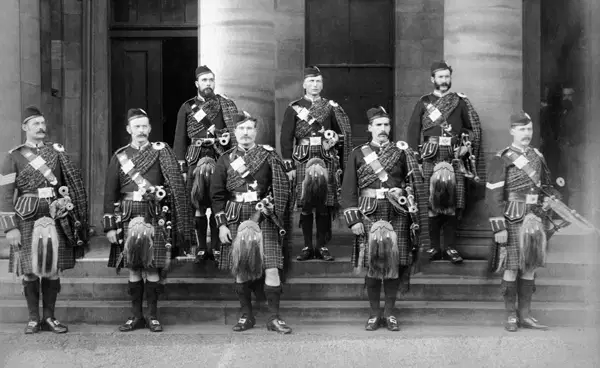
Which of these pictures represents a secret organization of white men formed after the Civil War that used violence and terror against African Americans?



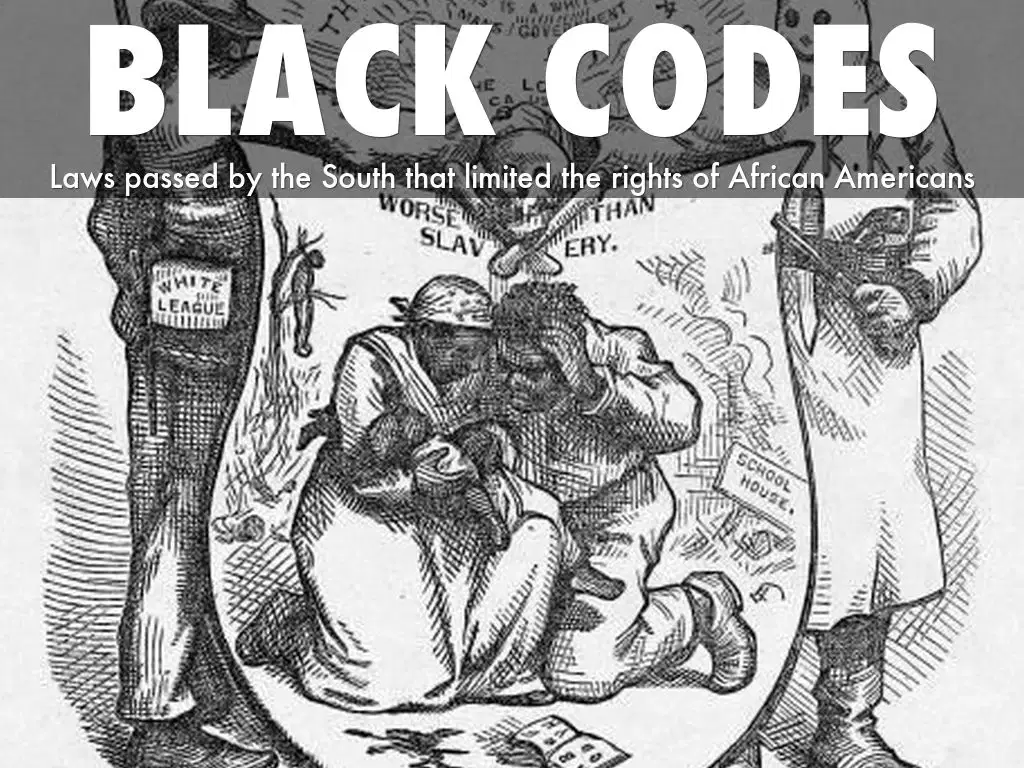
A law or laws that required blacks to work or face being arrested or forced to work as a servant.
Freedmen Bureau
Sharecropping
Black Codes
Compromise of 1877
A terrorist group that prevented blacks from voting.
Ku Klux Klan
Freedmen Bureau
Jim Crow Laws
Civil Rights Act of 1866
The Constitution Amendment that gave blacks the right to vote.
13th
16th
14th
15th
A federal law that outlawed Black Codes.
Civil Rights Act of 1866
Civil Rights Act of 1865
Civil Rights Act of 1867
Civil Rights Act of 1868
A farming system that keep blacks poor and uneducated.
poll tax
sharecropping
black code
14th Amendment
The 14th Amendment...
gave voting rights for newly freed African Americans.
outlawed slavery in the United States.
allowed females to vote.
defined citizenship in the United States.
A government agency that help freedmen during Reconstruction.
Black Codes
Freedmen Bureau
New State Constitution
Enforcement Act
A law that prevented groups such as the Ku Klux Klan from interfering with equal rights given to African Americans.
Amnesty Act of 1872
Compromise of 1877
Enforcement Act
Civil Rights Act of 1866
The Supreme Court ruling that legalize segregation in the United States.
Plessy v. Ferguson
Brown v. Board of Education
Dred Scott v. Sanford
Plessy v. Sanford

A tax used to keep black and poor whites from voting.
Literacy Test
Jim Crow Laws
14th Amendment
Poll tax
The agreement that allowed President Hayes to become president and withdrew the military.
Amnesty Act of 1872
Compromise of 1877
Enforcement Act
Compromise of 1876
A test given before poor whites and freedmen could vote in the United States.
Poll Tax
Literacy test
Black codes
Jim Crow Laws
A law that legally segregated blacks and whites in public places.
Poll tax
Literacy test
Sharecropping
Jim Crow Laws
What do the 13th, 14th, and 15th Amendments have in common? (Select the two
correct answers.)
They included protections for American Indians and women.
They provided equal protection of the Constitution to all citizens.
They allowed for Black Codes to be adopted as part of the Constitution.
They provided rights to citizens that had once been excluded from the
Constitution.
Match the amendment with the protection it guarantees.
Bans slavery in the United States and all of its territories.
13th
Amendment
Grants citizenship to all persons born in the U.S. regardless of race, color,
or previous condition of servitude.
14th
Amendment
Ensures all persons born in the U.S. have the right to vote regardless of
race, color, or previous condition of servitude.
15th
Amendment
The 13th, 14th and 15th Amendments changed the meaning of citizenship in the
United States. However, some groups still were not included in those new rights.
Which two groups were the last to receive their full citizenship benefits? (Check two.)
American Indians
Women of all races
White American males
African American males
Asian Males

Reconstruction came to an end when...
Lincoln became president.
the Black Codes were adopted.
Congress proposed the 13th Amendment.
a compromise took place over the 1876 election.

Who is being described:
Fought for adoption of Constitutional Amendments that guaranteed voting rights.
Was a powerful voice for human rights and civil liberties for all people.
Robert E. Lee
Abraham Lincoln
George Washington
Frederick Douglass
Effect: Removal of troops from southern states.
Name the cause: _____
Black Codes
Jim Crow Laws
Compromise of 1877
Civil Rights Act of 1866
How did the southern states prevent African Americans from voting starting in
the 1890’s?
Every southern state adopted the 15th Amendment.
Southern states implemented Reconstruction policies.
Southern states banned black codes and Jim Crow Laws.
Changed constitutions that added requirements such as poll taxes for
African Americans.
The granting of pardon to a large number of persons, protection from prosecution for an illegal act.
Segregation
Amnesty
Freedmen
Impeachment
A article that allowed individuals who did not pass the literacy test to vote, if their fathers or grandfathers had voted before Reconstruction began.
Poll Tax
Black Codes
Grandfather Clause
Jim Crow Laws
A tax of a fixed amount per persons that had to be paid before the person could vote.
Poll Tax
Literacy Test
Jim Crow Laws
Grandfather Clause
A method used to prevent civilians from voting by requiring prospective voters to read and write at a specific level.
Poll Tax
Grandfather Clause
Black Codes
Literacy Test
A person freed from slavery.
Scalawag
Radical Republican
Freedmen
Carpetbagger
Segregation in the South was mainly based on...
hair color.
religion.
race (color of the skin).
economic status.
Jim Crow laws were mainly directed at this group.
Latinos
African-Americans
Native Americans
Asians
better opportunities for women
African Americans gaining full civil and political rights
discrimination laws focused on Native Americans
unequal opportunities for African Americans in housing, jobs, and education
Plessy v. Ferguson said it was ok to...
discriminate against African Americans.
create separate but equal public settings.
create poorer quality settings for African Americans.

What Supreme Court case ruled "separate but equal" was legal?
Texas vs. Johnson
Tinker vs. DesMoines
Brown vs. Board of Education
Plessy vs. Ferguson
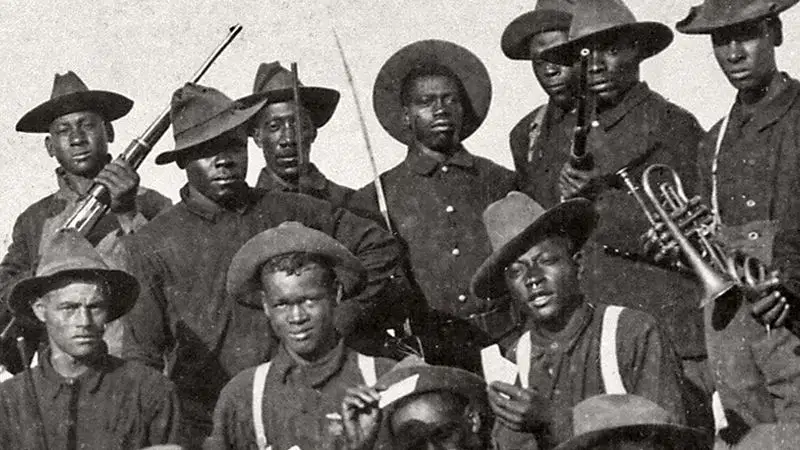
Which of the following are reasons many black men joined the army after the Civil War? (Check all that apply.)
There was an opportunity to learn to read and write.
It was hard to find work.
They were given land after they served.
The army provided food, shelter, and opportunity.
They would be allowed to vote.
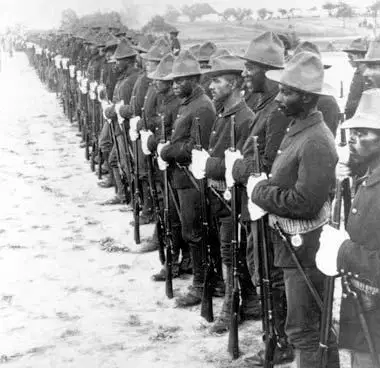
Black soldiers were given the name Buffalo Soldiers by...
former slave owners.
the Confederacy.
the Union Army.
the Native Americans.

