
 Worksheets
AMSCO 2.6, 2.7 - APWH
Total questions: 20
Worksheet time: 16mins
One of the most significant crops for East Asian population growth that spread via trade in the period 1200-1450 C.E. was
Champa rice
Bananas
Sugar
Oranges
One of the most significant crops that led to population growth in sub-Saharan Africa and came from Indonesia as a result of trade was
champa rice
bananas
oranges
sugar
Which is a downside of population growth that impacted Great Zimbabwe in the 15th century?
environmental degradation due to overgrazing
cities multiply in distant regions of the globe
the proliferation of new ideas and technologies as a result of denser settlements in urbanizing areas
states with high population growth have weaker armies and navies
One negative impact of increased interregional connections following the Mongol conquests was
bubonic plague spread to new areas such as Southeast Asia and Europe
the religious and cultural syncretism that often followed Mongol rule
the shifting from nomadic-pastoralism to agricultural ways of life
Mongols were often tolerant of belief systems in their conquered territories

The changes in the distribution of cities in the period 1200 to 1400 C.E. best support which of the following conclusions?
The Mongol conquests had a more disruptive impact on the Middle East and Central Asia than they had on East Asia.
The emergence of the Ottoman Empire significantly increased the percentage of major urban centers in Europe.
The adoption of Champa rice during the Song dynasty significantly increased the share of China’s urban population.
The outbreaks of bubonic plague greatly reduced urban populations across Eurasia.
The changes in the distribution of cities in the period 1200 to 1400 C.E. best support which of the following conclusions?
The Mongol conquests had a more disruptive impact on the Middle East and Central Asia than they had on East Asia.
The emergence of the Ottoman Empire significantly increased the percentage of major urban centers in Europe.
The adoption of Champa rice during the Song dynasty significantly increased the share of China’s urban population.
The outbreaks of bubonic plague greatly reduced urban populations across Eurasia.

The 13th-century map of Constantinople shown above indicates that the city
was located on an island
was highly fortified against outside attacks
tolerated many religions
looked down on trade and commerce
valued and rewarded people of all classes

Which of the following best describes a way in which the table illustrates how the spread of rice cultivation contributed to changing the total amount of land devoted to the production of agricultural crops in China, India, and the Middle East between 1200 and 1300 ?
The total amount of land devoted to the production of agricultural crops declined in China and the Middle East but rose in India.
The total amount of land devoted to the production of agricultural crops declined more substantially in India than it did in the Middle East and China.
The total amount of land devoted to the production of agricultural crops declined in all three regions.
The total amount of land devoted to the production of agricultural crops increased in every region except China.
Which of the following best describes a way in which the table illustrates how an emphasis on wheat cultivation in Europe affected the total amount of land devoted to the production of agricultural crops there compared with the rice-producing regions of China and India between 1200 and 1300?
The total amount of land devoted to the production of agricultural crops in Europe increased at the same rate that the total amount of land devoted to agricultural crops in China and India declined.
The total amount of land devoted to the production of agricultural crops in China, India, and Europe remained relatively stable.
The total amount of land devoted to the production of agricultural crops declined in all three regions.
The total amount of land devoted to the production of agricultural crops increased considerably in Europe and declined in China and India.
Which of the following best describes how the table illustrates the effect of the spread of the bubonic plague on the total amount of land devoted to the production of agricultural crops in Europe and the Middle East between 1300 and 1400 ?
The total amount of land devoted to the production of agricultural crops did not change significantly in either region.
The total amount of land devoted to the production of agricultural crops decreased more substantially in the Middle East than in Europe.
The total amount of land devoted to the production of agricultural crops declined substantially in Europe and slightly in the Middle East.
The total amount of land devoted to the production of agricultural crops increased slightly in the Middle East and in Europe.
known as the "City of Spices"
Calicut
London
Kiev
Samarkand
Which is most correct regarding the overall economic purpose of various trading networks circa 1200 - 1450 C.E.?
to exchange what people were able to grow or produce for what they wanted, needed, or could use to trade for other items
to enrich wealthy elites while providing no benefit to merchants, sailors, middlemen, and locals
to recruit new believers for modern military forces in several states in Asia, Europe, and the Mid-East
to show that most people continued hunting-gathering-foraging lifestyle long after the agricultural revolution
Which is true regarding the social structure of Mongol women in the period circa 1200 - 1450?
Mongol women moved about freely and refused the burka and foot-binding; women often served as advisors to the great khan
Mongol women were more restricted than women in most other parts of Afro-Eurasia
Mongol women could neither fight, travel, nor choose whom to marry
No records of Mongol women survive to the present day
Which of the following most directly contributed to the decline of Eurasian urban populations during the 14th century?
Climate change
Epidemic disease
Religious wars
Regional migration
Ibn Battuta traveled widely across the Middle East, South Asia, Southeast Asia, and Africa in the fourteenth century. His travels serve as evidence for the
unifying influence of Islam
excellent condition of roads in Africa and Asia
political unity of Africa and Asia
widespread use of paper money
“After leaving India, we arrived in Sumatra. It is a fertile area, in which coco-palm, clove, Indian aloe, mango, and sweet orange trees grow. Local commerce is facilitated by tin and Chinese gold. The sultan was informed of our visit and sent the judge and experts on Islamic law to meet me. The sultan is an illustrious and generous ruler and a patron of religious scholars. He is constantly waging war against the non-Muslims of Sumatra, but is a humble man who walks on foot to Friday prayers. The non-Muslims of the area must pay a poll-tax to obtain peace.
One Friday after leaving the mosque, the sultan mounted an elephant and we and his entourage rode with him on horses until we reached the palace. Male musicians came into the audience hall and sang before him, after which they led horses into the hall. The horses were embroidered in silk and wore golden anklets and danced before the sultan. I was astonished, even though I had seen the same performance at the court of the Delhi sultan in India*. My stay at the sultan’s court lasted fifteen days, after which I asked his permission to continue my journey to China because it is not possible to sail to China at all times of the year.
We then traveled to a kingdom on the Malay Peninsula aboard a Chinese ship. This kingdom is inhabited by non-Muslims and contains great quantities of aromatic spices and aloes. The merchants sell Indian aloe for a roll of cotton cloth, which is dearer to them than silk. The ruler is a non-Muslim. We then left the Malay Peninsula and sailed to another non-Muslim kingdom in Southeast Asia. After seventeen days at sea, with a favorable wind and sailing with maximum speed and ease, we reached the land of China.”
--Ibn Battuta, Muslim traveler from North Africa, account of his journey to China, circa 1345
The purpose of Ibn Battuta’s account was most likely to
glorify himself by exaggerating the influence he had obtained over local rulers in Southeast Asia
warn Muslim merchants that China was beginning to dominate commerce in the Indian Ocean
encourage fellow Muslims in North Africa to participate more in maritime commerce
inform his audience about the cultural, political, and economic characteristics of the places he visited

The maritime trade connections involving East Africa shown on Map 1 provided a setting for which of the following developments?
The emergence of commercial credit through banks
The development of the compass
The spread of Islam
The appearance of social structures privileging men over women
All of the following are impacts of the Black Death EXCEPT
the decline of feudalism in Europe
killing 1/3 of the population of Europe in a few years
25 million Chinese and other Asians died between 1332 - 1347
Mass deaths from disease in Sub-Saharan Africa and South Asia
Which trade network can be called "WalMart" for its greater emphasis on mass market goods?
Sand Roads
Silk Roads
Indian Ocean Sea Roads
Mediterranean Trade Route
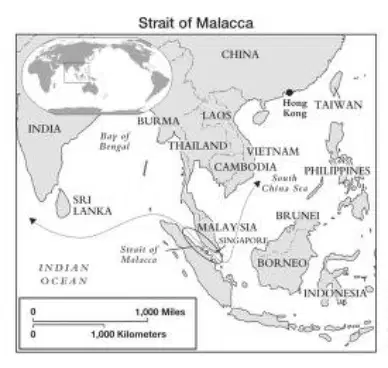
Which trade route is depicted on the map?
Silk Roads
Sand Roads
Sea Roads
Mediterranean trade network

