
 Worksheets
Question Bank for Grade 6 Science
Total questions: 215
Worksheet time: 3hrs 18mins


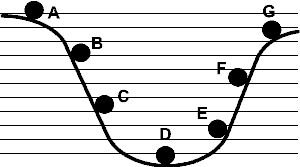
Which point has the most potential energy?
G
F
B
A


Which activity involved the energy transformation from chemical to potential energy?


What energy transformations take place when a battery-operated radio is in use?
Electrical to chemical to light
Sound to chemical to mechanical
Chemical to electrical to sound
Light to electrical to thermal

Which transformation of energy will occured when you turn on a hair dryer?
electric to kinetic to thermal and sound
chemical to thermal to light and sound
nuclear to electrical to thermal and sound
kinetic to light to thermal and sound

State the correct energy transformation when you turn on a television?
Electrical energy ----> light energy
Electrical energy -----> light energy ----->sound energy
Chemical energy ---->light energy-----> sound energy
Light energy ----> chemical energy -----> sound energy

Which transformation of energy occurs in a toaster?
Electrical to kinetic energy
Electrical to heat energy
Thermal to mechanical energy
Solar to electrical energy
Which energy transformation occurs when you rubs your hands together rapidly?
Electrical energy to thermal energy
Electrical energy to chemical energy
Thermal energy to kinetic energy
Kinetic energy to heat energy

What is the energy transformation that happens when using a toaster?
Yes
System
Thermal > Chemical
Electrical > Thermal

What type of energy transformation occurs when heating up food on a grill?
Chemical > Thermal
Yes
Electrical > Electromagnetic
Chemical > Electric

What is the transformation of energy that occurs when burning a candle?
Mechanical > Electromagnetic
Chemical > Thermal and Electromagnetic (light)
Chemical > Mechanical
Yes

What is the energy transformation of a Wind Turbine Turning?
Electromagnetic > Light
Chemical > Mechanical
Mechanical > Chemical
Mechanical > Electricity
What is the energy transformation when turning on a lamp?
Chemical > Sound
Electrical > Electromagnetic and Thermal
Electrical > Chemical and Sound
Yes
What is the type of kinetic energy that occurs when playing loud music that creates vibrations and moves through multiple mediums (air, water, steel)?
Mechanical
Sound
Electromagnetic
Chemical
A form of energy made available by the flow of electric charge through a wire
Sound
Mechanical
Electrical
Chemical

A form of energy that exhibits wavelike behavior as it travels through space, part of the electromagnetic spectrum. Ex: sunlight, x-rays, microwave
Sound
Electromagnetic (Light)
Chemical
Electrical

A student wants to model the Coriolis effect. She spins a globe and then uses a marker to draw a line on it while it spins. She begins drawing near the North Pole and moves her hand directly toward the Equator.
Which diagram best represents the line drawn on the globe?
Z
W
Y
X
In the United States, weather patterns generally move in which direction?
south to north
east to west
west to east
north to south
In general, air masses along the southern U.S. tend to be made up of high-pressure air. Air closer to the north pole tends to be low pressure air.
Why does the high pressure air from the south not blow straight to the north?
Because the Earth's rotation turns the wind's path to the west.
Because the Earth's rotation turns the wind's path to the east.
Because winds blow from areas of low pressure to areas of high pressure.
Because the Earth's surface is heated evenly, canceling out any pressure differences.
A sample of water evaporates from the Earth's surface and becomes a gas. The gas expands and rises high into the atmosphere. Eventually, the gas condenses and falls back to the ground as rain.
The water's movement through the atmosphere is an example of _______, which is driven by the Sun's _______.
conduction; heat
convection; heat
conduction; gravity
convection; gravity

The diagram shows the general pattern of air circulation in the atmosphere.
Many of the world's deserts are located at latitudes slightly below 30° N. This includes the region marked with an X on the map. Which of the following statements best explains this?
Most of the moisture is removed from the air before it rises into the upper atmosphere.
Air near the equator moves quickly as Earth rotates, so it cannot carry much moisture.
The descending cooled air from the upper atmosphere contains very little moisture.
Moist air near the equator tends to flow away from land and toward the oceans.
Ocean currents and global wind patterns, which are caused by convection currents, most strongly affect a region's...
day length.
latitude.
climate.
population size.
Convection currents, which affect weather and climate, are created by
slow, constant tectonic movement.
mining of the seafloor.
erosion of ocean beaches.
the uneven heating of the Earth.
Which of the following factors drives all the weather on Earth, including large-scale storms and local weather systems?
The Coriolis effect curves the motion of wind due to the Earth's rotation.
The Sun heats up the air at different rates, and the atmosphere undergoes changes to equalize temperatures and pressures.
The ocean holds thermal energy more efficiently than land.
The greenhouse effect ensures that some thermal energy will always be trapped near the Earth's surface.
The atmosphere is heated both by the Sun and by the Earth's surface. Water radiates heat differently than land, so the air temperature over the ocean is usually different than the air temperature over land.
The difference in air temperature over land compared to over water causes convection currents in the atmosphere. How would a person at the beach experience these convection currents?
They would feel that the sand is hot.
They would feel the heat of the Sun.
They would feel that the water is cold.
They would feel wind as the air moves.
Solar energy heats the surface of the Earth, including the ground, rocks, and even roadways. As the temperature of these surfaces increases, heat energy is released back into the atmosphere, forming a pocket of warm air. As the warm air pocket rises, it is replaced by cooler air.
This process is responsible for many of the weather patterns in our atmosphere, and is known as
convection.
evaporation.
transpiration.
conduction.
Radiation transfers energy from the Sun to various parts of the Earth and its atmosphere. What process is driven by this transfer of energy?
the constant pattern of ocean tides
the movement of tectonic plates across Earth's surface
the spinning of Earth on its axis
the global circulation of the atmosphere and oceans
Convection currents, resulting from uneven heating of the Earth's surface, cause _______ to form.
volcanoes
mountains
fossils
wind
Global winds are directly caused by the Earth's rotation and
uneven precipitation rates.
uneven heating of the Earth's surface.
the Moon's phases.
the release of carbon dioxide into the atmosphere.

Marie drew a diagram to describe atmospheric convection.
What causes atmospheric convection?
The Sun's energy cools the ground, cooling air at the surface and causing the air to sink.
Energy from deep in the Earth heats the ground, heating air at the surface and causing the air to rise.
Energy from deep in the Earth cools the ground, cooling air at the surface and causing the air to sink.
The Sun's energy heats the ground, heating air at the surface and causing the air to rise.

Look at the diagram.
If the primary source of atmospheric thermal energy on Earth is energy from the Sun, what conclusion can be made from the diagram?
The atmosphere at the Earth's equator is always warmer than the atmosphere at its poles.
The atmosphere of the Northern Hemisphere is always warmer than that of the Southern Hemisphere.
The atmosphere at the Earth's poles is always warmer than the atmosphere at its equator.
The atmosphere of the Southern Hemisphere is always warmer than that of the Northern Hemisphere.
Global winds are found in each convection region. Because convection cells are in a set place in the atmosphere and the Earth is spinning on its axis, the winds appear to curve.
The apparent curving of the winds is called _______.
the Curvature effect
the global wind effect
atmospheric curving
the Coriolis effect

The following image shows two jet streams in the Northern Hemisphere. The polar jet stream carries cold air. The subtropical jet stream carries warm air.
In the summer, the polar jet stream is usually north of the United States. In the winter, the polar jet moves down, often past the place marked with an "X". How will the weather at point X change as the polar jet moves from north of it to south of it?
It will get cooler.
It will get warmer.
The weather will stay the same.
The winds will change direction.

When sunlight strikes the ground it warms the ground and the air near it. The warm air near the ground then rises as it expands. What does this process typically result in on the ground?
Freezing conditions near the ground generate a high pressure system.
Floodwater rushes in to cool the hot surface.
Clouds push the warm air back to the ground.
Cooler air rushes in to replace the rising warm air.

The steam that can be seen coming out of a boiling kettle consists of condensing water droplets. These water droplets move upward with the hot water vapor coming out of the kettle.
The process of hotter air rising and cooler air falling is called convection. What role does convection play in the atmosphere?
Convection currents distribute heat in the atmosphere.
Convection prevents the air in the atmosphere from moving.
Convection makes the air warmer at higher altitudes.
Convection transfers heat from the atmosphere to the ocean.

Which of the following are major influences on weather and climate?
I, III, and IV only
I, II, and III only
II, III, and IV only
I, II, and IV only.
The atmosphere flows in large convection currents. What happens during atmospheric convection?
Cool air rises, and warm air sinks.
Warm air circles pockets of cool air.
Warm air rises, and cool air sinks.
Cool air circles pockets of warm air.
When you feel wind, you are feeling the movement of Earth's atmosphere. Imagine that the pocket of atmosphere above your town is heated by the Sun.
Which of the following best describes the movement that will take place in that pocket of atmosphere?
The heated air will vibrate in place, causing a swirling wind.
There will be no movement; heated air does not have the energy move.
The heated air will rise, and cooler air will move into its place.
The heated air will sink down to the surface.
Which biome is more biodiverse?
Desert
Grassland
Tundra
Rainforest


Image "B" shows more biodiversity than image "A". Why?
Because "B" shows more different species than image "A"
Because image "B" has less different species than "A"
"A" has a greater number of same species plants so this statement is wrong.
Both images show the same biodiversity


Which do you think has a higher species diversity biodiversity, a food chain or a food web?
Food Chain
Food Web

Why is biodiversity in an ecosystem so important?
Because it can help humans where to determine good places to develop farm land.
Because places that have a healthy biodiversity are unaffected by major disturbances.
Because having a high biodiversity allows ecosystems to withstand major changes.
Because having a high biodiversity allows for fewer opportunities of competition for similar resources.

What is happening to the biodiversity of the aquatic ecosystem as a result of the Great Barrier Reef dying?
Increased
Decreased
Stayed the same
Invasive species are native to an area.
Invasive species have no natural predators in the area.


Which factor is most likely to cause the number of rabbits living in an area to increase?
less water
lack of shelter
fewer predators
limited food

This diagram provides information on the diversity, in number of species, for four major groups of animals over time. What is the only group that experienced an increase of diversity between 413 million years ago and 265 million years ago?
Mollusks
Arthropods
Echinoderms
Chordates

This graph presents data on the amount of land used by a certain city each year to bury solid waste. In the year 2000, the city started a recycling program to slow the increase of land needed for this purpose. What data would support the claim that this program effectively achieved its goal?
Data showing that by the year 2010, more than 40% of the citizens were participating in the recycling program
Data showing that the land used for burying solid waste in 2010 was less than 22 square kilometers
Data showing that by the year 2010, there was five times more solid waste being buried than being recycled
Data showing that the land used to build a recycling facility is greater than the amount of land used to bury solid waste
What is precipitation?
Sweat from our bodies on hot days
Warm rain but not cold snow or sleet
Gas that we use in furnaces or ovens
Any form of water that falls from the sky
The current state of the atmosphere right now.
Climate
Weather
Meteorology
Patterns
During a cold front you are likely to experience...
Thunderstorms
Light drizzle
Sunny Weather
cold
warm
moist
dry
stationary front
cold front
occluded front
warm front
What type of air rises?
Cool/cold air
Warm/hot air
dense air
dry air
The Coriolis Effect causes what phenomenon?
Causes the Earth to rotate faster in the Spring.
Causes the Earth's currents to change directions closer to the equator.
Causes the Earth's winds to travel faster closer to the Poles.
Causes the Earth's wind and water currents to appear curved.
What type of heat transfer is the following?
Solar panels are used to collect sunlight for energy.
Convection
Conduction
Radiation
None of the above
In the following example, identify the correct type of heat transfer:
You feel the warmth from the sun on your face.
Convection
Conduction
Radiation
In the following example, identify the type of heat transfer.
You hold an ice cube in your hand and it begins to melt.
Radiation
Convection
Conduction
Convection occurs in
liquids and gases
solids
none of these

The arrows in the pot represent _____.
convection
conduction
waves
radiation
Thermal energy always moves from object with ...
no heat to objects with heat
more kinetic energy to objects with less kinetic energy
direct contact between them
higher temperatures to objects with lower temperatures
What is the energy in motion?
Potential
Thermal
Kinetic
Heat

Why do we cook food over a fire?
Heat rises due to convection.
Heat rises due to conduction.
Heat makes air molecules expand and fall.
Heat makes water molecules expand and rise.
What variable affect gravitational potential energy?
gravity and speed
velocity and height
mass and velocity
mass and height
What variables affect kinetic energy?
height and speed
mass and velocity
potential energy
height and speed

Which letter(s) represent the maximum kinetic energy?
X and Z
W and Y
X
W
What is not an example of kinetic energy?
The skateboarder going down the ramp
A book sitting on the edge of the table
A person dropping out of the plane
A student walking to school
Which of the following is considered a non-renewable resource?
The energy of sunlight
Water behind a dam
Fossil fuels
Wind energy
Wind is a
renewable resource
nonrenewable resource
not an energy resource
The sun is a
nonrenewable resource
renewable resource
not an energy resource
Water is a
nonrenewable resource
renewable resource
not an energy resource


Which 2 letters have the most kinetic energy
W & Y
X & Z
W & X
X & Y


How could you change the design of the track to increase the gravitational potential energy at C?
Decrease the height of A
Increase the height of C
Decrease the height of C
Decrease the drop at D

The original source of energy for all organisms in a food web is...
plants
sun
producers
decomposers

Decomposers get energy from...
the sun
eating plants
eating animals
dead things and waste

Producers are ...
plants
animals
also called decomposers
all of these are true

Arrows in a food web show
eating
sunlight
energy flow
matter
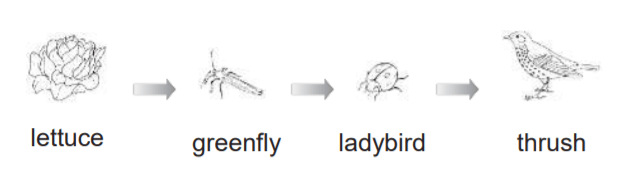
Who is the producer?
lettuce
greenfly
ladybird
thrush

What is a producer?
an organism that gets energy from eating other organisms
an organisms that uses sunlight to make its own food
an organism that gets energy from eating dead organisms, non-living material or waste

An animal that hunts other animals for food is a ___________
herbivore
predator
prey
producer

What is a herbivore?
an animal that gets energy from eating other animals
an organism that gets energy from eating only plants
an animal that gets energy by eating both plants and other animals

An organism that gets energy from eating other organisms is a ______________
producer
consumer
decomposer

An animal that is hunted and eaten for food is a
predator
prey

What is a carnivore?
an animal that gets energy by eating other animals
An animal that gets energy by eating only plants
an animal that gets energy by eating both plants and animals

Which of the following is NOT a consumer
grass
dog
shark
fish

Which of the following is a living part of the ecosystem?
Air
Sunlight
Mushroom
Soil

This type of consumer eats a primary consumer.
vegans
primary producer
secondary consumer
tertiary consumer

This type of consumer
eats a producer. (herbivores)
Primary Consumer
Secondary Consumer
Tertiary Consumer
Vegan Consumers

This is an example of a producer because it makes its own food.
venus fly trap
bacteria
algae
toadstools

These helps to break down
dead or decaying matter.
producers
predators
plants
decomposers

A field mouse eats seeds,
a snake eats the field mouse, & a hawk eats
a snake
This is called a...
food web
food link
energy chains
food chain

meat eaters
herbivores
omnivores
Carnivores
Producers
This organism draws its water from the ground, traps sunlight in its chlorophyll, and makes glucose (sugar) in broad green parts of its body. Is it a...
Producer
Consumer
Decomposer

Frog. Is it a....
Producer
Consumer
Decomposer

Earthworm. Is it a...
Producer
Consumer
Decomposer


What is a carnivore?
A consumer that eat plants
A consumer that eats other animals
A consumer that eats animals and plants
What is an Omnivore?
An consumer that eats other animals ONLY.
A consumer that eats both plants and animals
A consumer that eats dead things

Barn owls hunt shrews. In this example what is a barn owl?
Herbivore/Predator
Carnivore/Prey
Carnivore/Predator


Monkeys cry out a warning when a predator is near, giving the other members of the troop a chance to escape.
Visual
Chemical
Tactile
Auditory
Auditory communication is when animals communicate through what?
Making sound
Displaying something that can be seen
Leaving behind a scent that can be smelt later
Contact (touch) with another animal

Young chimpanzees display the "fear grin" when approaching a dominant male in their troop to indicate they accept the male's dominance.
Visual
Chemical
Tactile
Auditory

The bright coloration of the poison dart frog is communicating what to other organisms?
It is scared
It sees food
It is poisonous
It wants to mate
Chemical communication is when animals communicate through what?
Making sound
Displaying something that can be seen
Leaving behind a scent that can be smelt later
Contact (touch) with another animal

Male deer rub their antlers on the base of a tree leaving their scent behind.
Visual
Chemical
Tactile
Auditory

A dog baring its teeth and barking whenever another dog is around is communicating what to the other dog?
It is ready to mate
It sees food
It is defending its territory
It is scared
What is an advantage of using auditory communication?
Information is sent fast and can travel around barriers
Is long lasting
Works in noisy environments
Can stay in one place for long periods of time
Visual communication is when animals communicate through what?
Making sound
Displaying something that can be seen
Leaving behind a scent that can be smelt later
Contact (touch) with another animal

Bullfrogs croak to attract female frogs as mates.
Visual
Chemical
Tactile
Auditory
Tactile communication is when animals communicate through what?
Making sound
Displaying something that can be seen
Leaving behind a scent that can be smelt later
Contact (touch) with another animal

Peafowl display their colorful plumes to communicate what?
It is dangerous
It sees a predator
It is ready to mate
It is scared
What is a disadvantage of using tactile communication?
Information doesn't travel fast
Only works during the day
Not useful in noisy environments
Only works over small distances (within reach)

Lions fight younger male offspring to communicate what?
They need food
Establishing dominance
They found new territory
They're poisonous
What is a disadvantage of an animal using chemical communication?
Information is not long lasting
Only works over small distances (within reach)
Information is sent slowly, difficult in windy situations
Can be blocked by barriers
What is an advantage of an animal using visual communication?
The information is sent fast and at a long distance
Information is long lasting even after the animal is gone
Information can travel around barriers
Information can be used day or night
A hollow, sealed glass sphere contains sand, water, air, algae, and tiny brine shrimp. The sphere is a model ecosystem. Which of these is a biotic factor of this ecosystem?
air
algae
sand
water

Refer to the diagram. Which list includes abiotic factors only?
Items A, C, D
Items B, C, E
Items A, D
Items A, B, C, D, E
Which of these is a biotic factor in a river ecosystem?
the types of microorganisms that live in the river water
the amount of soil and other particles carried by the river
the speed at which the river water flows toward the ocean
the amount of rain that flows off the land and into the river
In many desert ecosystems, days are hot and nights are cold. Water is scarce, so animals seek water wherever possible. The spines of a cactus are actually leaves adapted to conserve water. The cactus plants have also adapted to live in thin, sandy soil. Which of the following is a biotic component of a desert ecosystem?
the thin, sandy soil
the wide temperature range
the scarcity of water
the spiny cactus leaves
Which of the following is a biotic factor in an ocean ecosystem?
the salt content of the water
the temperature of the water
the fish in the water
the oxygen in the water
Which of the following MOST completely describes the components of a pond ecosystem?
the soil and water that make up the pond
the organisms and non-living environment in and around the pond
the plants and animals that live in and around the pond
the fish and other aquatic animals in the pond
Drought, erosion, flood, and prolonged heat spells are examples of —
communities
biotic factors within an ecosystem which affect abiotic components
populations
abiotic changes within an ecosystem which can affect biotic factors
An abiotic component of an ecosystem is represented by the —
bats under a bridge in Austin, Texas
population of deer on a deer lease in Central Texas
attack on a wheat field by fungus
monthly average rainfall in Texas

What terms should replace X and Y in the table?
elements; compounds
abiotic; biotic
microscopic; macroscopic
natural; man-made
Which statement below refers only to biotic components in an ecosystem?
Evaporation, transpiration, and precipitation are complex processes that cycle water between the atmosphere and the Earth's surface.
Photosynthesis and respiration are not considered atmospheric processes.
Vegetation is an indicator of several environmental factors, including precipitation, temperature, soil, geology, and wind.
In Yellowstone Park, shrubs have expanded their range into large areas formerly populated by short grasses, due to overgrazing and trampling by livestock.
What is the difference between the biotic and abiotic factors?
Biotic factors are living things and abiotic factors are nonliving things.
Biotic factors are nonliving things and abiotic factors are living things.
Temperature is an example of what kind of factor?
biotic
abiotic
dead
living
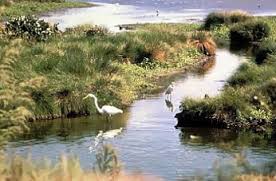
What are the abiotic factors in this image?
water, sunlight, dirt, air
birds, trees, and sunlight
water, trees, and birds
A group of the same organisms living together in the same place at the same time is:
An organism
A population
A community
A biome
What are groups of different populations living togther in the same place at the same time called?
An organism
A population
A community
A biosphere
What is it called when you have groups of different populations along with their abiotic factors?
An organism
A population
A community
An ecosystem
Together, all the ecosystems on Earth form...
a community.
a biome.
a biosphere.
an Earthsphere.
What is a group of ecosystems that share similar climates and types of organisms called?
A community
A biome
An ecosystem
A biosphere
The organisms in a community, as well as all of the nonliving aspects of the environment are a(n):
Population
Community
Habitat
Ecosystem
Living factors or organisms that affect an ecosystem are
abiotic factors
species
trophic level
biotic factors

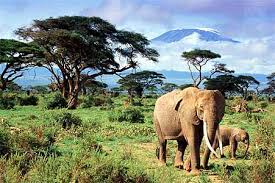
What are the biotic factors in this image?
sunlight, elephants, and grasses
sunlight, water, and air
elephants, plants, trees
An ecosystem contains living and nonliving things.
True
False
Which of the following is a population?
hawks, barred owls, and eagles on NC coast
mountain stream
all the frogs in a pond
blue-tailed skinks (lizards) around a barn

What level of organization can be seen here?
Species
Population
Community
Ecosystem

Which of the following levels of organization is the most complex?
organism
population
community
ecosystem
Gradual, natural change in an ecosystem over time:
Succession
Movement
Evolution
Change
After a volcano destroys the land, ________________ succession takes place.
Secondary
Primary
Tertiary
Important
The first species to live in a land, after destruction, are:
Oregon Trail species
Primary consumers
Pioneer species
A pattern of change after existing ecosystem is destroyed, such as clearing for farming.
Evolution
Secondary Succession
Primary Succession
Primary succession takes ____________ time than secondary succession.
More
Less
Same
A new island is formed after a volcano erupts.
What is the order that things would grow?
Tree, grass, moss
Lichen, Grass, Shrub, Tree
Lichen, Shrub, Moss, Tree
Shrub, grass, moss, tree
The first plants to grow on bare rock are:
Pioneer species
large trees
succession community
After an area was cleared for farmland 100 years ago, it has completely regrown large trees. This is an example of:
Evolution
Ecology
Primary Succession
Secondary Succession
What type of organism would typically grow on bare rock?
Moss and lichen
Grass
Oak trees
Shrubs
Would an oak tree be one of the first or last species to grow?
First
Last
What animals would be first to enter a new ecosystem?
Insects
Bears
Foxes
Elk

Barnacles create home sites by attaching themselves to whales. In this relationship, the whales are neither harmed nor benefited. What type of symbiosis is this relationship?
parasitism
commensalism
mutualism

Egrets feed in fields among cattle. The egrets get easy access to the insects that are stirred up by the cattle, and the cattle do not care if the egrets are there or not. What type of symbiosis is this relationship?
mutualism
commensalism
parasitism
Honey guide birds alert and direct badgers to bee hives. The badgers then expose the hives and eat the honey first. Then the honey guide birds eat what is left. What type of symbiosis is this relationship?
mutualism
commensalism
parasitism
Remoras attach themselves to the bodies of sharks. They then travel with the shark and feed on the leftover scraps from the sharks' meals. What type of symbiosis is this relationship?
commensalism
mutualism
parasitism
As buffaloes walk through grass, insects become active so they are spotted by and then eaten by cowbirds. What type of symbiosis is this relationship between the buffaloes and cowbirds?
commensalism
mutualism
parasitism
A cuckoo may lay its eggs in a warbler's nest. The cuckoo's young will displace the warbler's young and end up being raised by the warbler. What type of symbiosis is this relationship?
Parasitism
Commensalism
Mutualism
Wrasse fish feed on the parasites found on the body of black sea bass. What type of symbiosis is this relationship?
Mutualism
Commensalism
Parasitism
Hermit crabs live in shells that are made and then abandoned by snails. What type of symbiosis is this relationship?
Commensalism
Mutualism
Parasitism
Spider crabs live on the shallow ocean floor. Algae lives on the crabs. The algae helps the crabs blend in and the algae gets a good place to live. What type of symbiosis is this relationship?
Commensalism
Mutualism
Parasitism
In a mutualism relationship, both organisms are ---
benefited.
unaffected.
harmed.
In a parasitic relationship, one organism is ______ and the other organism is benefiting.
benefited
harmed
unaffected
Commensalism is where one organism is benefiting and the other organism is ---
unaffected.
benefited.
harmed.
An organism that lives on or in another organism and causes it harm is called ---
a host.
a parasite.
a virus.
A tapeworm lives in the intestines of its host. Which example best describes the relationship between the tapeworm and its host?
The tapeworm benefits from its host; however, the host is not affected.
The tapeworm does not benefit from its host, but the host does benefit.
The tapeworm benefits from its host, and the host is negatively affected.

Ostriches and gazelles feed next to each other. They both watch for predators. Because the visual abilities of the two species are different, they can each identify threats that the other animal may not see as readily. Both species benefit. This is an example of which type of symbiosis?
Commensalism
Mutualism
Parasitism

Clown fish live among anemones, acting as a lure for the sea anemone's prey. The clown fish get protection and shelter from the anemone. This is an example of which type of symbiosis?
Commensalism
Mutualism
Parasitism

Mistletoe extracts water and nutrients from the spruce tree to the detriment of the spruce. This is an example of which type of symbiosis?
Commensalism
Mutualism
Parasitism

A bee and a flower work together to benefit each other. This is an example of a ______. The bee helps the flower by pollinating it and the flower helps the bee by providing it with nectar.
commensalism relationship
parasitic relationship
mutualism relationship

