NEW
Font size
 Worksheets
HS CHEMISTRY QUESTIONS I
Total questions: 27
Worksheet time: 14mins
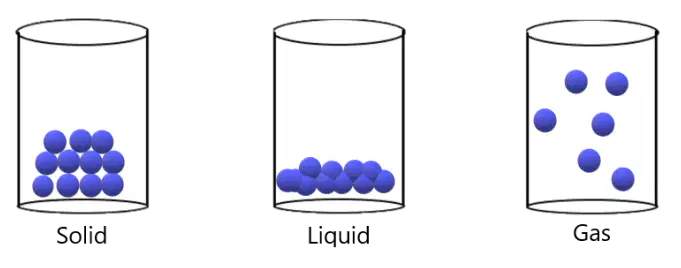
1. Which of the following statements about the kinetic theory of matter is NOT TRUE?
A. Particles are always in motion or vibration.
B. In gases, particles are moving faster than those in liquids.
C. The more energy that is added, the greater the speed of particles.
D. Gases have high densities because the particles are widely separated.
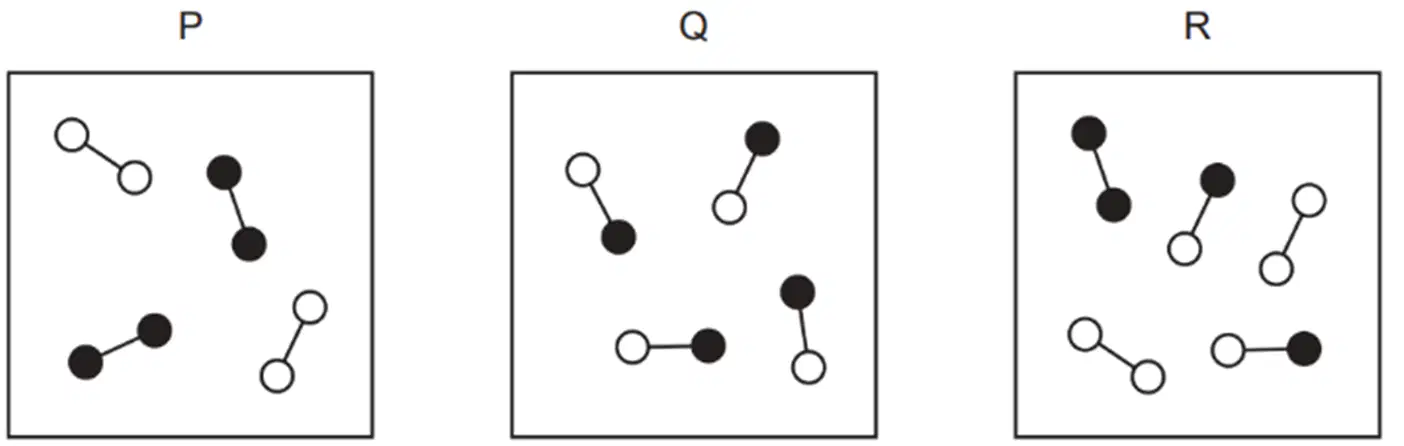
2. Which statement about the boxes P, Q, and R is correct?
A. Box P contains two compounds and box R contains two elements.
B. Box P contains two elements and box Q. contains a mixture.
C. Box P contains two elements and Box Q contains one compound.
D. Box Q contains two compounds and Box R contains a mixture.

3. The diagram is a particle model of a substance.
What would the particle model become when it is fully cooled?


4. A measuring cylinder contains 20 cm3 of water initially. When a stone with a mass of 60 g was placed into the measuring cylinder, the water level rose to 45 cm3 as shown in the diagram.
What is the density of the stone?
A. 417 kg /m3
B. 1333 kg /m3
C. 2400 kg /m3
D. 3000 kg /m3
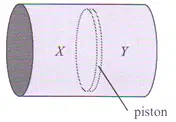
5. The diagram below shows a container of volume 1 liter is divided by a piston into two equal parts X and Y. The amount of air in X is doubled of that in Y.
What is the direction of force due to the pressure difference acting on the piston?
A. Toward left
B. Toward right
C. Random direction
D. The piston will not move
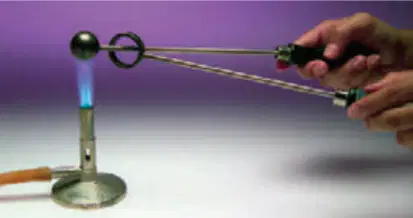
6. If a metal sphere is heated by Bunsen burner, which of the following quantities will increase?
(1) volume (2) density (3) mass
A. (1) only
B. (1) and (3) only
C. (2) and (3) only
D. (1), (2) and (3)
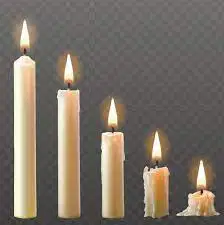
6a. Which of the following is NOT true about a physical change?
A. Energy is not required.
B. It is a reversible change
C. No new substance is formed.
D. Changing of phase takes place
7. Which of the following statements must be true?
(1) When liquid changes its state to solid, its volume decreases.
(2) When gas changes its state to liquid, its volume decreases.
(3) When solid changes its state to liquid, the particles can move more freely.
A. (1) only
B. (1) and (2) only
C. (1) and (3) only
D. (2) and (3) only
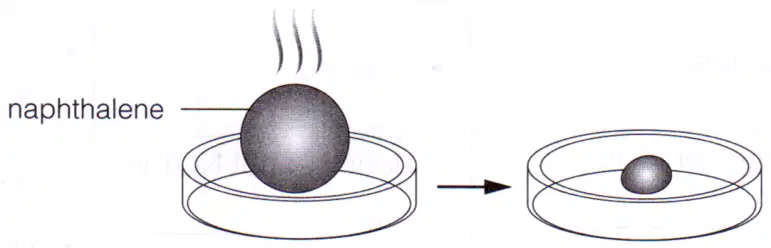
Study the diagram below and answer questions
7a. A ball of naphthalene sublimes to become smaller in size.
Which of the following represents the correct change in state?
A. Liquid to solid state
B. Solid to liquid state
C. Solid to gaseous state
D. Gaseous to solid state
Study the diagram below and answer questions
8.The change in the state of matter from question 7 has taken place due to change in _______________ of particles of naphthalene.
A. mass
B. type
C. size
D. movement
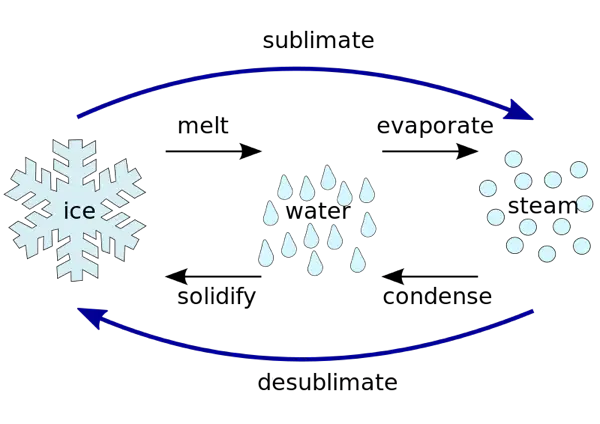
9.The molecules of a substance that were vibrating in a fixed position moved furthest apart from each other and moved freely in all directions. Which of the following examples best describes the change that has taken place?
A. Freezing water
B. Melting wax
C. Sublimation of iodine crystals
D. Condensation of water vapor
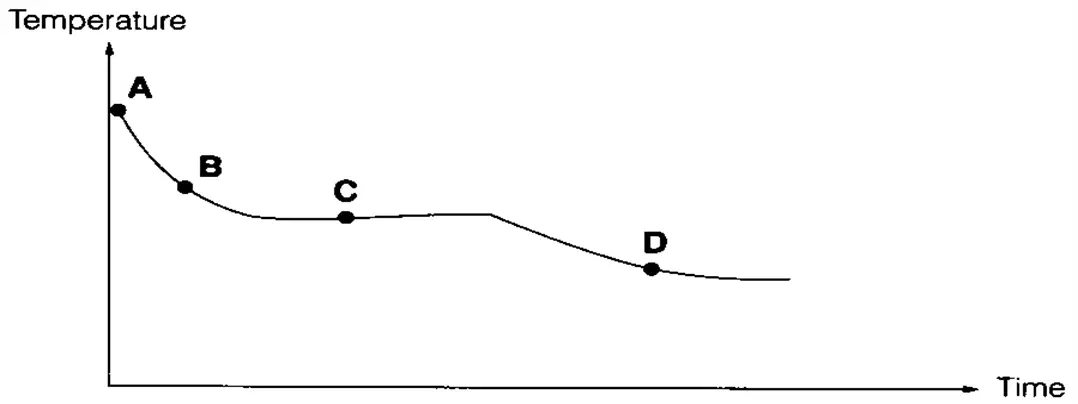
10.The graph below shows how the temperature of an unknown substance changes as it cools from liquid to solid. At which labeled point would the particles of the substance have the least kinetic energy?
Point A
Point B
Point C
Point D
11.Which of the following diagrams best describes the molecules of oxygen gas at room temperature and pressure?


12.P and Q are both gases. They combine to form a compound R. Which of the following are P, Q and R?
A. Oxygen + Magnesium = Magnesium Oxide
B. Oxygen + Hydrogen = Water
C. Sodium + Chlorine = Sodium Chloride
D. Calcium+ Oxygen = Calcium Oxide

13. The table shows some of the properties of four elements. Which of the particles of element has the strongest forces of attraction?
Element A
Element B
Element C
Element D
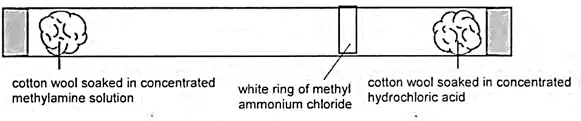
14. When concentrated methylamine and concentrated hydrochloric acid are placed at opposite ends of the tube, a white ring of methyl ammonium chloride forms nearer to the hydrochloric acid.
A. The boiling point of methylamine is lower than hydrogen chloride.
B. The concentration of methylamine is lower than the acid.
C. Methylamine is less reactive than hydrogen chloride.
D. The relative molecular mass of methyl amine is lower than hydrogen chloride.

15. Based on the table, which of these changes would speed up the rate of dissolving the most?
Option A
Option B
Option C
Option D

16. Elements Q, R, and S are in the same period in the Periodic Table. Q. is a metal, R is chemically unreactive and S has a low boiling point.
What is the order of Q, R and S in increasing proton number?
Option A.
Option B.
Option C.
Option D.

17. This diagram represents the structure of an atom of an element in the Periodic Table.
How many protons, electrons and neutrons does this atom have?
A.
proton (+) - 10
neutron ( )- 13
electron (-) 13
B.
proton (+) - 13
neutron ( )- 27
electron (-) 13
C.
proton (+) - 13
neutron ( )- 14
electron (-) 13
D.
proton (+) - 14
neutron ( )- 13
electron (-) 14

The diagram shows the structure of brass.
18. Why is brass harder than pure copper?
A. The zinc atoms form strong covalent bonds with copper atoms.
B. The zinc atoms have more electrons than the copper atoms.
C. The zinc atoms prevent the ‘sea of electrons’ from moving freely in the solid
D. The zinc atoms prevent the layers of copper atoms from sliding over each other

19. A solid metal is heated until it turns into vapor. The graph shows the temperature of the metal during the process.
19. Which part of the graph shows the melting of the metal?
Point A
Point B
Point C
Point D
20.Two chemical processes are described.
During combustion of gasoline, energy is ___________I__________.
During electrolysis of sulfuric acid, energy is__________II__________.
Which words complete the gaps?
A.
I : Given out
II :Given out
B.
I: Given out
II: Taken in
C.
I: Taken in
II: Given out
D.
I: Taken in
II: Taken in

For Questions 21 to 22 refer to the following table which shows the pH values of four unknown solutions.
21.Which of the following substances can solutions X be?
A. digestive juice from stomach
B. vinegar
C. sodium chloride solution
D. sodium hydroxide solution
For Questions 21 to 22 refer to the following table which shows the pH values of four unknown solutions.
22.What is the expected result if a blue litmus paper is dipped into solution W ?
A. become red
B. become white
C. become colorless
D. remain blue
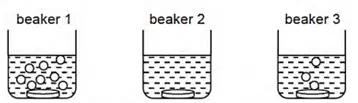
23.The diagram above shows the results obtained when three different metallic discs of the same shape and size were dropped into dilute hydrochloric acid separately.
Which metal is likely to have been placed in each beaker?
Beaker 1: magnesium
Beaker 2: copper
Beaker 3: calcium
Beaker 1: calcium
Beaker 2: copper
Beaker 3: magnesium
Beaker 1:copper
Beaker 2: magnesium
Beaker 3:calcium
Beaker 1: calcium
Beaker 2: magnesium
Beaker 3: copper
24.If a fizzy drink is mixed with powdered mint sweets, a lot of carbon dioxide is produced. For this reaction to occur, what must the substances contain?
A.
Fizzy Drink: acid
Mint Sweets: alkali
B.
Fizzy Drink: acid
Mint Sweets: carbonate
C.
Fizzy Drink: alkali
Mint Sweets: base
C.
Fizzy Drink: alkali
Mint Sweets: carbonate
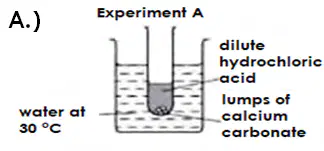
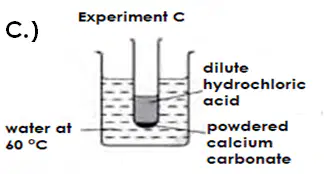
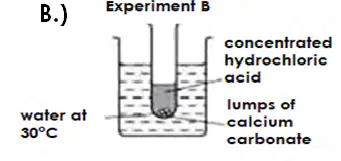
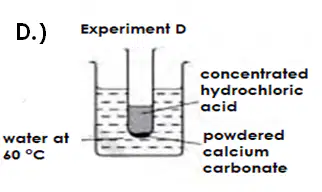
25. Which of the following experiment will have the fastest speed of reaction?