
NEW
Font size
 Worksheets
Revision - Unit 2 - Electricity
Total questions: 36
Worksheet time: 18mins
Which electricity comes from a power plant to your home?
Mains
Battery
Which wires are used to transmit a lot of electricity from the power plant to the city?
Thick wires
Thin wires
Electricity from a battery is ...
AC (Alternating current)
DC (Direct current)
Mains electricity is ...
AC (Alternating current)
DC (Direct current)
AC is usually used in (1) while DC is better for (2).
1 - large heavy appliances
2 - small delicate appliances
1 - small delicate appliances
2 - large heavy appliances
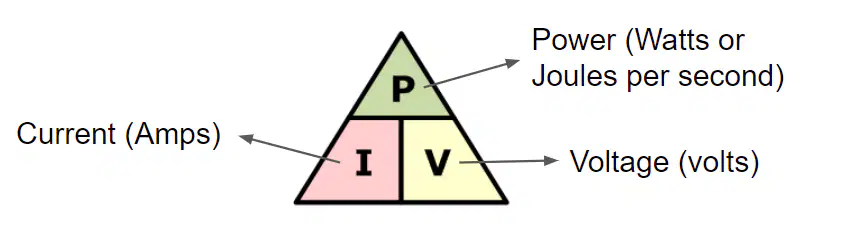
Power is ...
the rate of flow of electricity.
the potential difference (pressure)
the rate at which work is done or energy is used.
There is a current of 0.25 A in a bulb when a voltage of 12 V is applied across it. Calculate the power of the bulb.
1 W
1.5 W
3 W
7.5 W
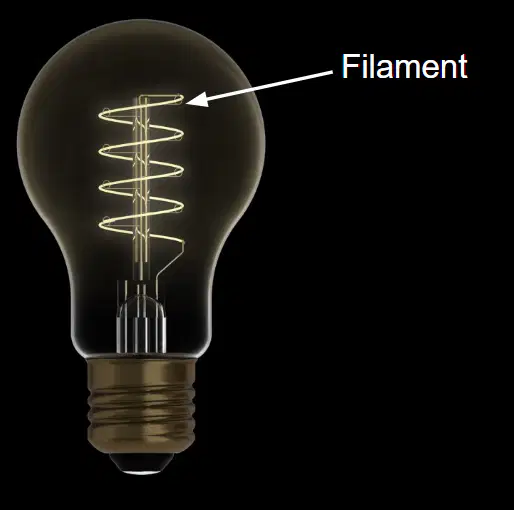
The filament in a bulb has a ... resistance.
high
low
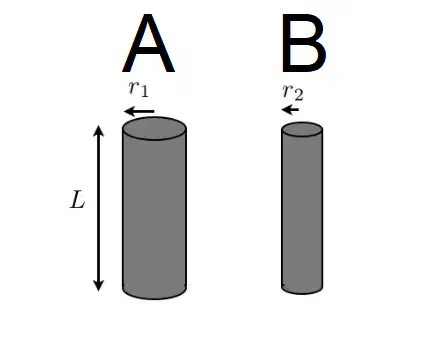
Which wire can transmit electricity more easily?
A
B
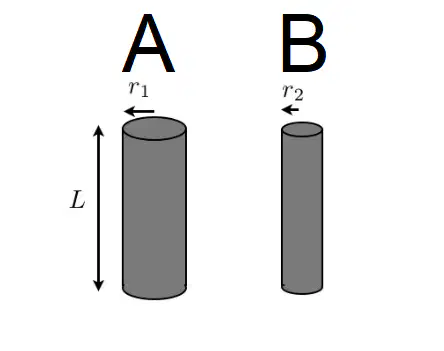
Which wire has a higher resistance?
A
B
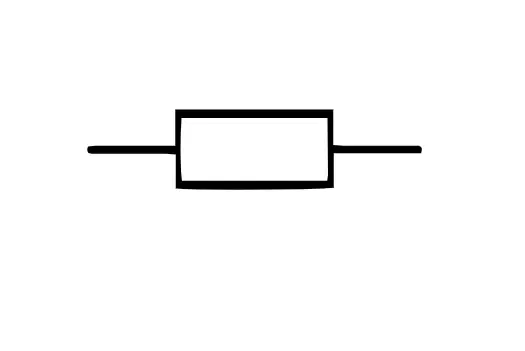
What circuit symbol is this?
Resistor
Lamp
Battery
Switch
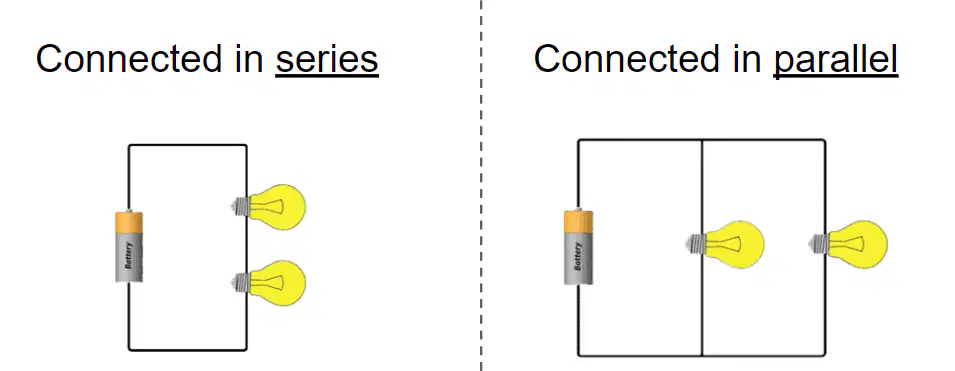
Why are home circuits connected in parallel?
To save electricity.
So if one bulb breaks the rest can continue working.
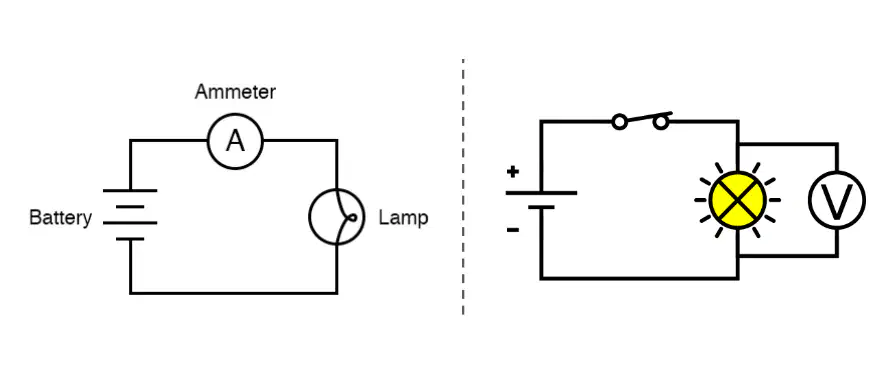
An ammeter is always connected in ... while a voltmeter is always connected in ...
series, parallel
parallel, series
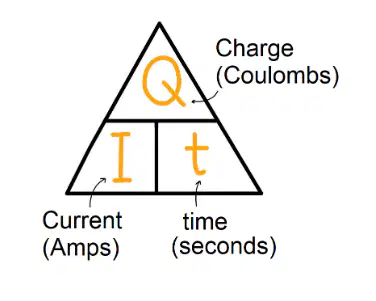
One Coulomb of charge is equal to ...
6X10^18 electrons
100 electrons
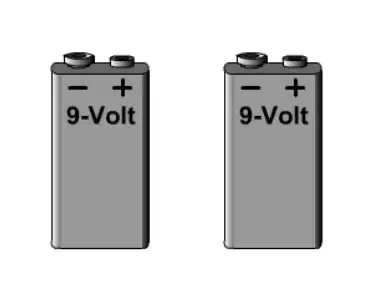
If I connect two 9 V batteries to a circuit, how much energy is provided to each coulomb of charge?
9 V
4.5 V
18 V
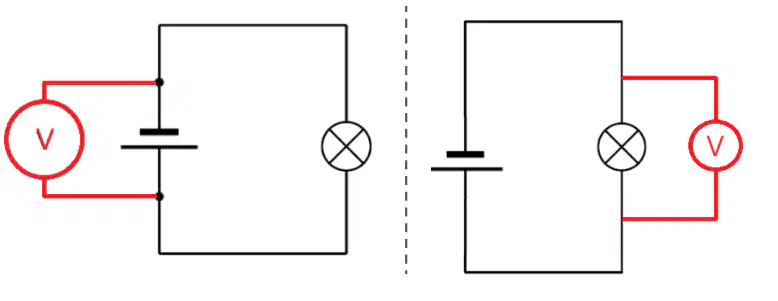
A voltmeter can measure the voltage (electric pressure) across batteries and resistors.
True
False, only batteries.
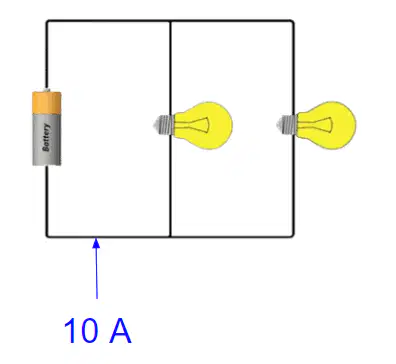
What happens to the current in a parallel circuit?
The current is shared. 5 A in one bulb and 5 A in the other.
Both bulbs receive 10 A.
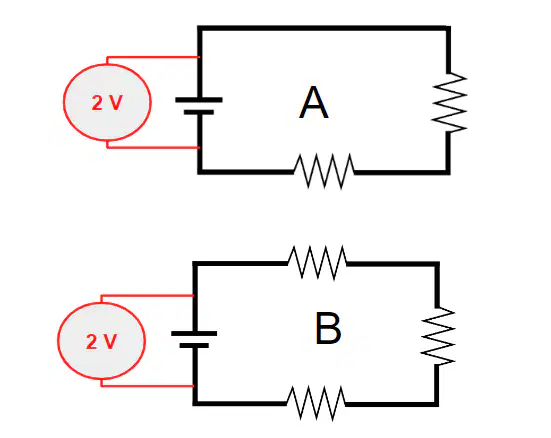
What happens to the current when I add another component to the circuit?
The current will stay the same.
The current will decrease.
The current will increase.
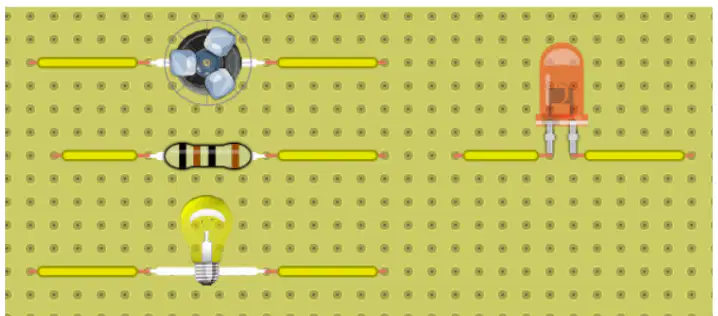
Which components in the picture provide a resistance to the current?
Bulb and fan
Resistor
All of them
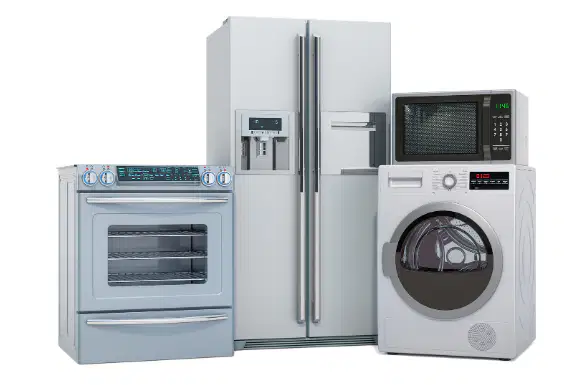
Components that use a lot of energy have a high / low resistance?
high
low
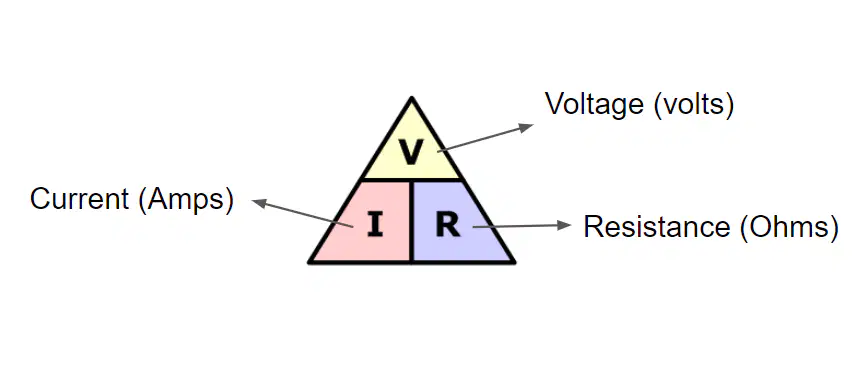
The following equation is known as ...
Volt's law
Ohm's law
Ampere's law
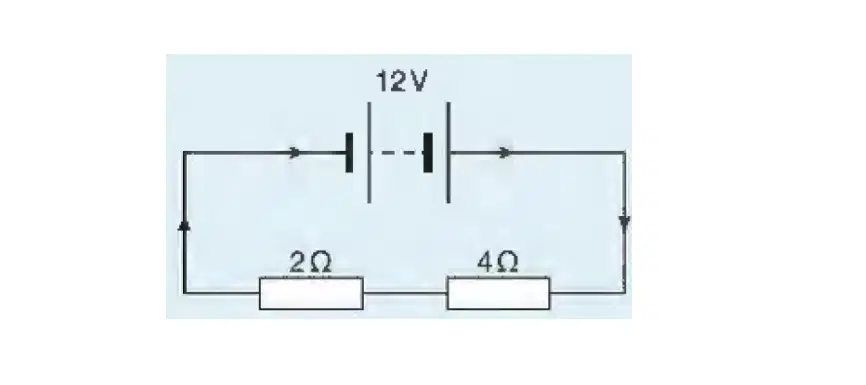
Calculate the current in each resistor.
2 A
4A, 2A
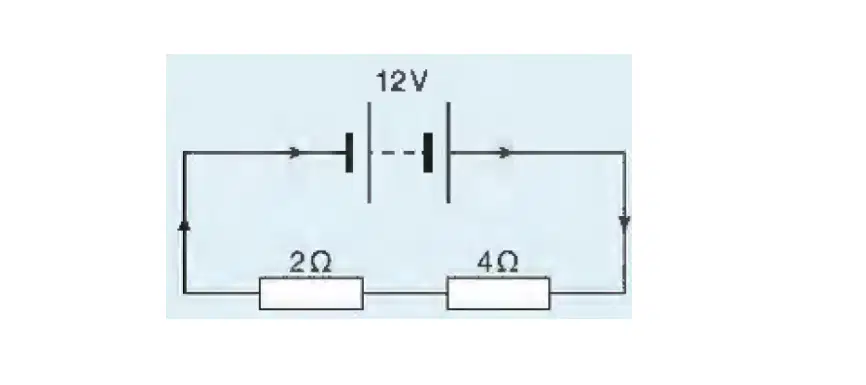
Calculate the voltage across each resistor.
4 V
4V, 8V

The current in the picture prefers path A / B?
A
B
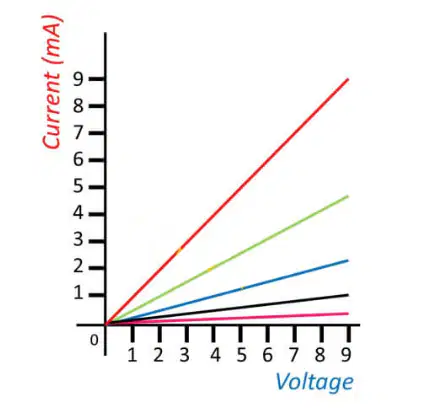
A steep slope is a high / low resistance?
high
low
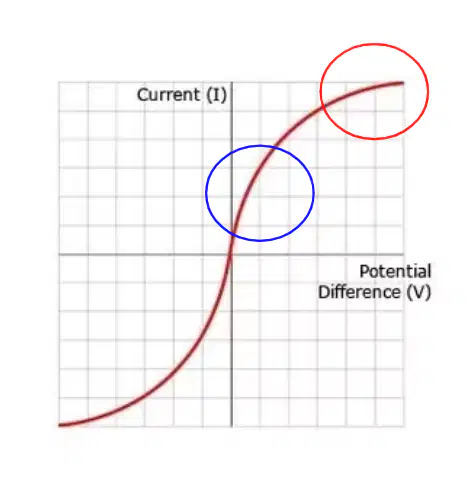
The blue circle shows ... resistance.
The red circle shows ... resistance.
high
low
low
high
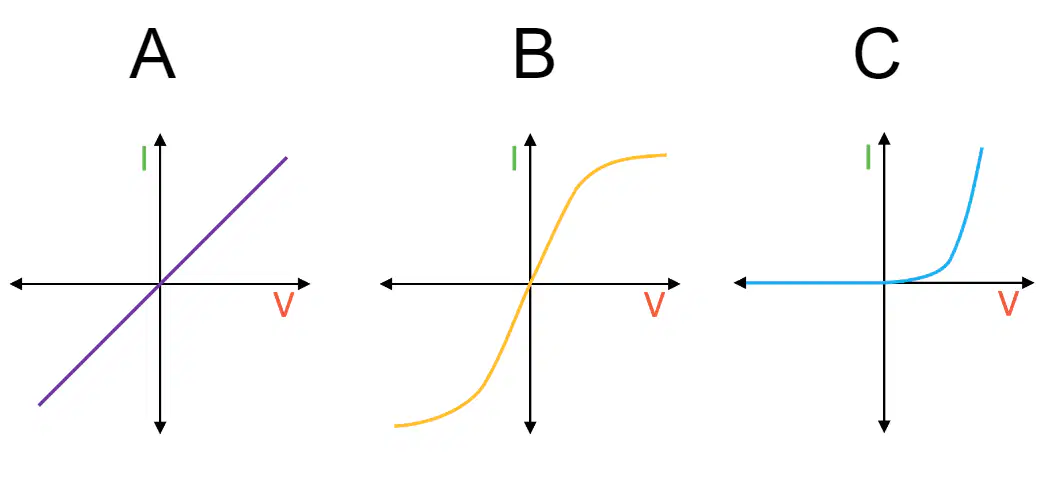
Which graph represents a filament bulb?
A
B
C
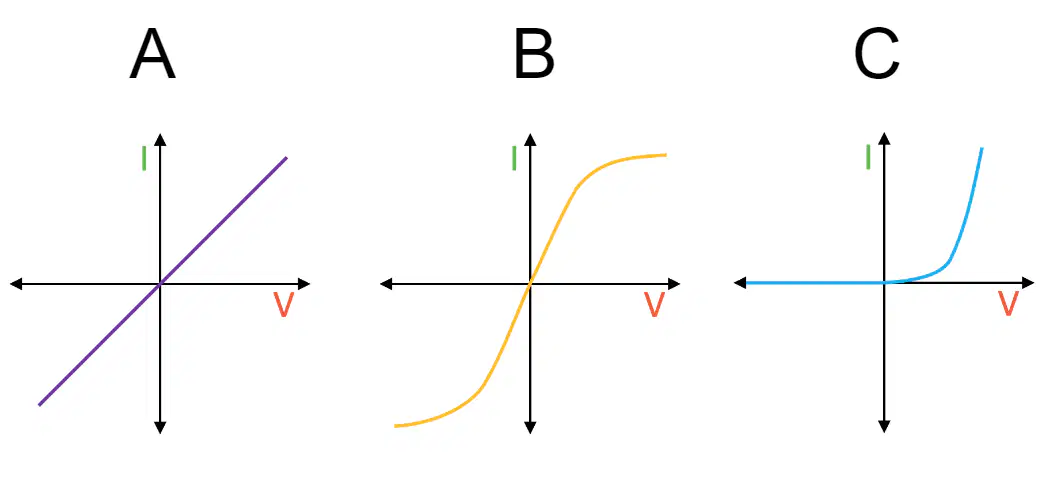
Which graph represents a ohmic conductor (a conductor that obeys ohm's law).
A
B
C
Which graph represents a diode?
A
B
C
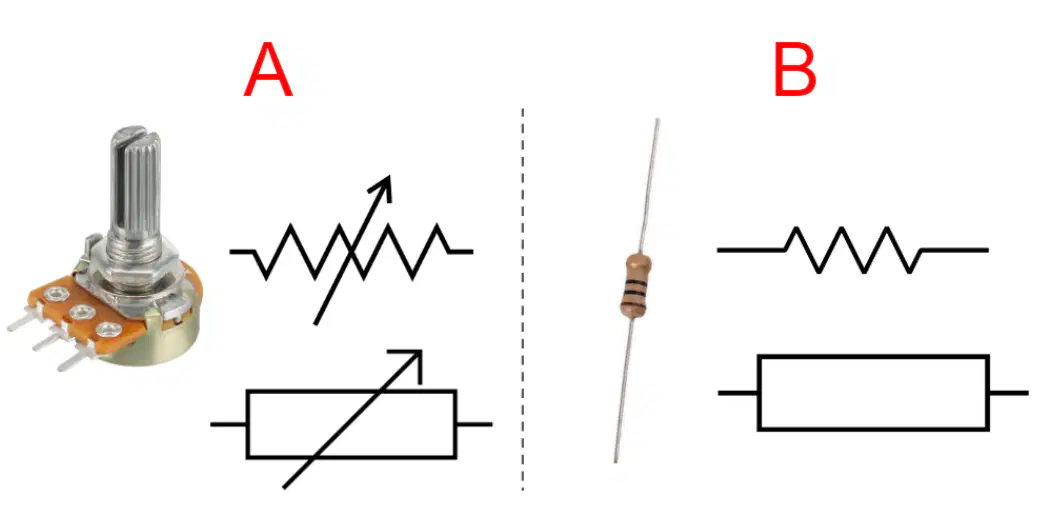
Choose the correct option.
A = variable resistor
B = fixed resistor
A = fixed resistor
B = variable resistor
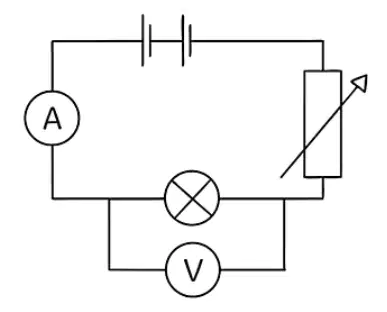
What can the variable resistor do?
It can make the light bulb shine brighter or dimmer.
It can make the current go around the light bulb.
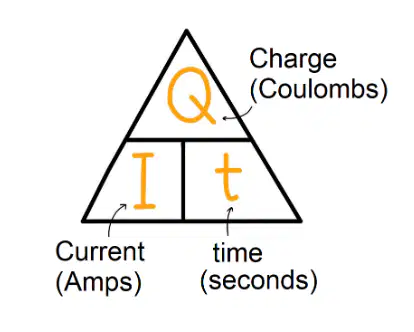
A current of 5 Amps flows through a circuit for 10 seconds. How much charge moves through the circuit?
50 C
50 A
1/2 C
2 A
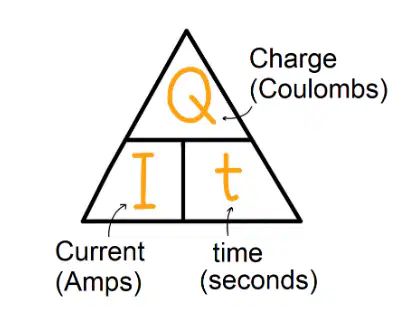
A charge of 4 C is transferred through a circuit in 12 seconds. What is the magnitude of the current in this circuit?
33 A
1/3 A
1/3 C
3 C
1 electron has 1.6X10⁻¹⁹ of negative charge.
How much charge does 6.241X10¹⁸ electrons have?
(1.6X10-19) X (6.241X1018) = 1 C
(1.6X10-19) X (6.241X1018) = 10 C
1 electron has 1.6X10⁻¹⁹ C of negative charge.
A cell transfers 2 C of charge. How many electrons did it transfer?
2 / 1.6X10-19 = 1.25X10¹⁹ electrons
2 X 1.6X10-19= 3.2X10⁻¹⁹ electrons
1 Coulomb of charge has 6.241X10¹⁸ electrons.
A cell transfers 3 C of charge. How many electrons does it transfer?
3 / 6.241X1018 = 4.8X10⁻¹⁹ electrons
3 X 6.241X1018 = 1.8X10¹⁹ electrons

