Wayground logo

Free Printable Worksheets

Font size

S
M
L
XL
Worksheets

10Y Question Bank

Total questions: 173

Worksheet time: 4hrs 2mins

Name
Class
Date
1.

What is the atomic number?

a)

the number of protons in the nucleus

b)

the number of protons and neutrons in the nucleus

c)

the number of neutrons in the nucleus

d)

the number of protons in the energy levels

2.

What is the mass number?

a)

the number of protons in the nucleus

b)

the number of protons and neutrons in the nucleus

c)

the number of neutrons in the nucleus

d)

the number of protons and electrons in the atom
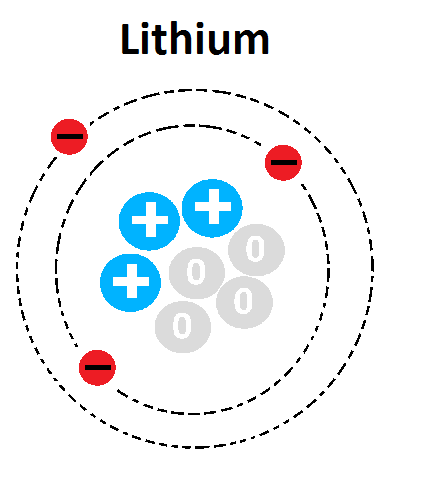
3.

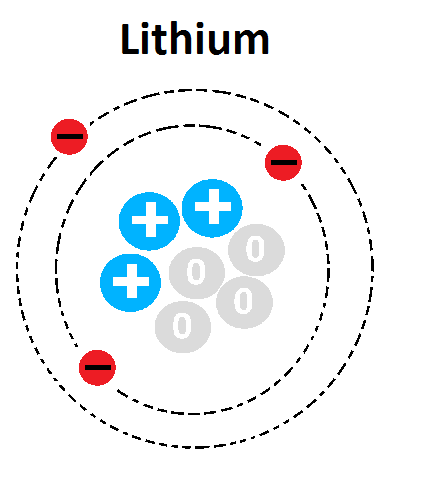
What is the atomic number of this atom?

a)

1

b)

3

c)

4

d)

7

4.

What is the mass number of this atom?

a)

1

b)

3

c)

4

d)

7

5.
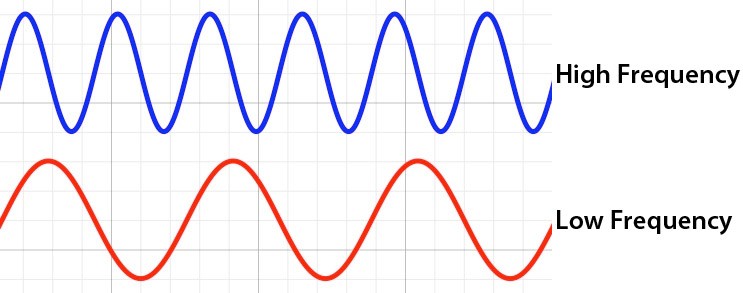
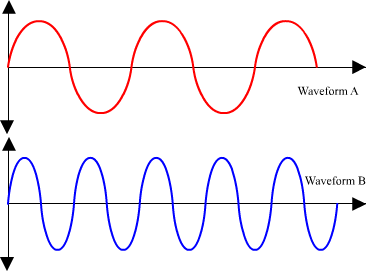
Most of the mass in an atom is made up of _____________________?
a)
protons and electrons
b)
protons and neutrons
c)
neutrons and electrons
d)
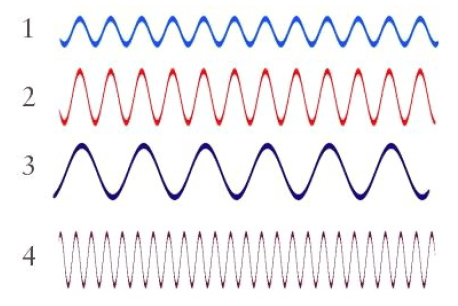
electrons and quarks
6.
In order for an atom to be neutral what has to be true?
a)
The atom has more protons than neutrons
b)
The atom has more neutrons than protons
c)
The atom has the same number of protons and neutrons
d)
The atom has the same number of protons and electrons
7.
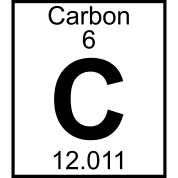
What does the C represent?
a)
atomic mass
b)
atomic number
c)
element name
d)
chemical symbol 
8.

What does the 6 represent?

a)

Atomic mass

b)

atomic number

c)

chemical symbol

d)

element name

9.
How is the number of neutrons in the nucleus of an atom calculated?
a)
Add the number of e- and p+ together
b)
Subtract the number of e- from p+
c)
Subtract the number of p+ from the mass number
d)
Add the mass number to the number of e-
10.
What subatomic particles would you find in the nucleus of an atom?
a)
Protons only
b)
Protons and Neutrons
c)
Neutrons and Electrons
d)
Protons and Electrons 
11.
Which subatomic particles contribute the most to the mass of an atom?
a)
Protons, Neutrons, Electrons
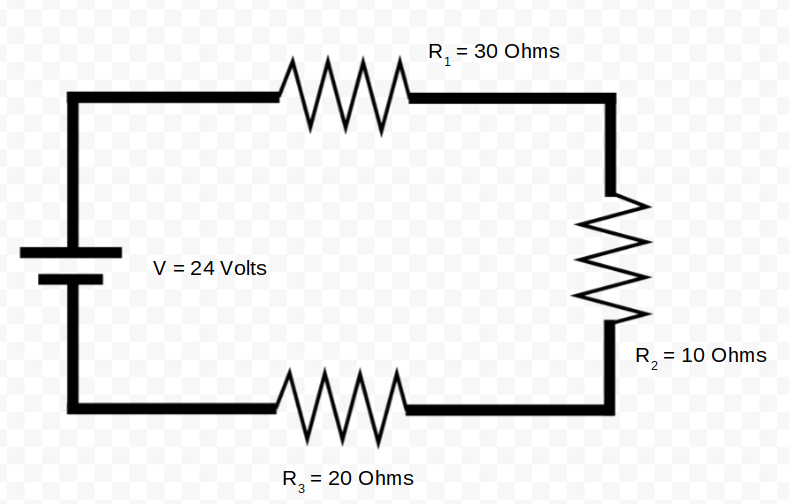
b)
Protons only
c)
Protons and Electrons
d)
Protons and Neutrons
12.
If an atom has 12 positively charged subatomic particles, which of the following must it also have to be considered a neutral atom?
a)
12 neutrons
b)
12 electrons
c)
12 protons
d)
24 protons and neutrons
13.

An atom has 10 protons, 15 neutrons and 10 electrons what is its mass number.

a)

20

b)

10

c)

35

d)

25

14.

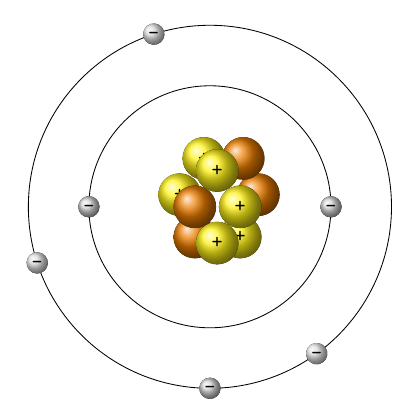
How many electrons does this atom have?

a)

2

b)

4

c)

6

d)

10

15.
The atomic number of an element that has 9 protons, 9 electrons, and 10 neutrons is _____.
a)
9
b)
10
c)
19
d)
28
16.
An element with a mass number of 11 and an atomic number of 5 has how many neutrons?
a)
11
b)
5
c)
6
d)
16
17.
Where is most of the mass in an atom located?
a)
in the nucleus
b)
in the protons
c)
in the neutrons
d)
in the electrons
18.
An atom has an atomic number of 15 and a mass number of 31. How many protons are there in the atom?
a)
15
b)
31
c)
16
d)
47
19.
What is the atomic number of the atom pictured? 
a)
9
b)
10
c)
18
d)
19
20.

Which of the following determines the identity of an element?

a)

number of protons

b)

atomic mass

c)

number of neutrons

d)

number of shells

21.
If you double the mass of an object with the same force apply on it, the acceleration will
a)
double
b)

halve

c)
the same
d)
zero
22.
What kind(s) of objects have inertia?
a)
all objects with mass
b)
only objects at rest
c)
only objects in motion
d)
only objects whose motion is being changed
23.
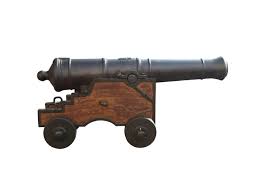
After a cannonball is fired into frictionless space, the amount of force needed to keep it going equals
a)
twice the force with which it was fired
b)
the same amount of force with which it was fired
c)
1/2 the force with which it was fired
d)
zero, since no force is required to keep it moving. 
24.

The acceleration produced by a resultant force on an object is

a)
inversely proportional to the mass of the object.
b)
directly proportional to the magnitude of the net force.
c)
in the same direction as the net force.
d)
 all of the above
25.

A 10-kg brick and a 1-kg book are dropped in a vacuum. The force due to gravity on the 10-kg brick is

a)

10 times as much as the force on the 1-kg book

b)

zero.

c)

the same as the force on the 1-kg book.

d)

none of the above

26.

A book weighs 4 N. When held at rest in your hands, the resultant force on the book is  
a)
0 N.
b)
 0.4 N.
c)
 4 N.
d)
 39 N.
27.
A 20 kg bike accelerates at 10 m/s2.  what was the net force
a)
25 Newtons
b)
20 Newtons
c)
200 Newtons
d)
10 Newtons
28.
When a cannon fires a cannonball we observe Newton's third law. Which force is the reaction force?
a)
The cannon moving forward
b)
The cannonball moving forward
c)
The cannon moving backward
d)
The cannonball moving backward
29.
Which one of Newton’s Laws of Motion best explains why the dishes do not move when the table cloth is removed?
a)
Newton's 1st Law
b)
Newton's 2nd Law 
c)
Newton's 3rd Law 
d)
Newton's Law of Biology
30.
The tendency of an object to stay in motion or at rest is called 
a)
velocity
b)
acceleration
c)
speed
d)
inertia
31.
What is the difference between mass and weight?
a)
mass is how much matter is in an object, and weight is the gravitational pull on that object
b)
mass and weight are the same
c)
weight affects how much mass is in an object
d)
weight is determined by how many atoms make up an object
32.
What is the net force?
a)
5000 N right
b)
4000 N right
c)
40 N left
d)
4000 N left
33.
What is happening at C?
a)
Stationary
b)
Accelerating
c)
Fast steady speed; moving away from the starting position
d)
Slower steady speed; moving away from the starting position
34.
What is happening at D?
a)
Stationary
b)
Accelerating
c)
Fast steady speed; moving away from the starting position
d)
Slower steady speed; moving away from the starting position
35.
Which of the following shows the direction of the friction force?
a)
A
b)
B
c)
C
d)
D
36.
Which statement is true about a moving object?
When an object is ....
a)
...accelerating, the resultant force acting on it must be zero
b)
... moving at a steady speed, the air resistance acting on it must equal zero
c)
... moving at a steady speed, the resultant force acting on it must equal zero
d)
... moving, there must be a resultant force acting on it.
37.
A woman lifts 20 bricks, each of weight 6N.
What other information is needed to calculate the useful work done in lifting the bricks?
a)
the distance she lifts the bricks
b)
the mass of the bricks
c)
the time taken to lift the bricks
d)
the volume of the bricks
38.
How far does the car travel before it reaches a steady speed?
a)
10m
b)
20m
c)
100m
d)
200m
39.
Which statement is correct about a bottle of water?
a)
its mass at the North Pole is different from its mass at the Equator
b)
its mass is measured in newtons
c)
its weight and mass are the same thing
d)
its weight is one of the forces acting on it
40.
a)
  A
b)
  B
c)
  C
d)
  D
41.
Which statement about mass and weight is correct?
a)
Mass and weight are both forces
b)
Neither mass nor weight is a force
c)
Only mass is a force
d)
Only weight is a force
42.
a)
   A
b)
  B
c)
   C
d)
   D
43.
In a race, a car travels 60 times around a 3.6km track. This takes 2.4 hours. What is the average speed of the car?
a)
1.5 km/h
b)
90 km/h
c)
144 km/h
d)
216 km/h
44.
Which quantity is measured in newtons?
a)
density
b)
energy
c)
pressure
d)
weight
45.
Two forces act on an object.
In which situation is it IMPOSSIBLE for the object to be in equilibrium?
a)
The two forces act in the same direction
b)
The two forces act through the same point
c)
The two forces are of the same type
d)
The two forces are the same size
46.

Rays used to take pictures of bones of human body

a)

X-ray

b)

Infrared

c)

Gamma rays

d)

Microwaves

47.

What do radio and television transmitters emit?

a)

Light

b)

Sound

c)

Heat

d)

Radio Waves

e)

Ultraviolet waves

48.

What waves are used to heat food?

a)

Microwaves

b)

Gamma Waves

c)

Ultraviolet waves

d)

Radio Waves

49.

UV rays from the sun are -

a)

Gamma Waves

b)

Ultraviolet waves

c)

Heat Waves

d)

Light waves

e)

Sound waves

50.

Produced by nuclear reactions

a)

Radio Waves

b)

Nuclear Waves

c)

Gamma rays

51.

Are used in an airport scanner

a)

Ultrasound

b)

Light

c)

X ray

d)

Ultraviolet rays

e)

Radio Waves

52.

Heat radiations are called

a)

Infrared radiations

b)

Light

c)

Microwaves

53.

Used to treat cancer

a)

Microwaves

b)

X rays

c)

Radio Waves

d)

Gamma rays

e)

None of the above

54.

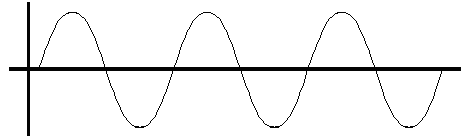
What type of wave is this? (a)  

Choose from the below words
Longitudinal
Transverse
55.

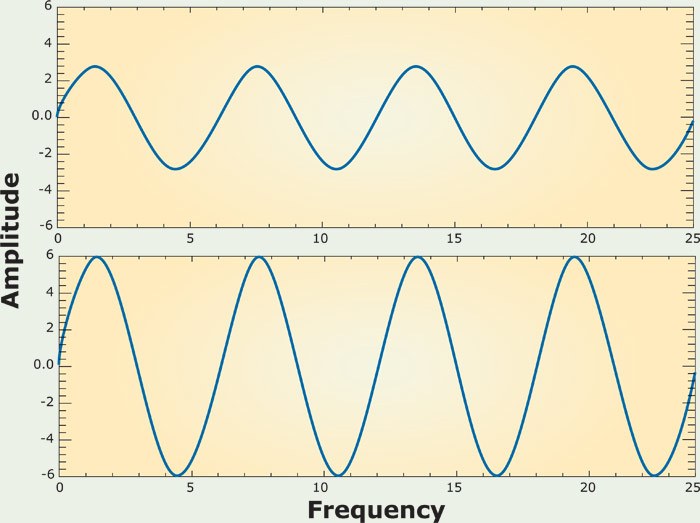
Which property of these waves differs? (a)  

Choose from the below words
Frequency
Wavelength
Amplitude
Pitch
56.
Which waves do NOT need a medium?
a)
Sound
b)
Ocean
c)
Seismic
d)
Light
57.
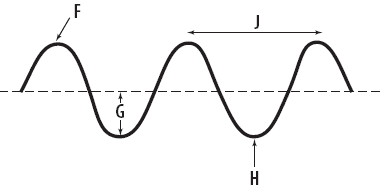
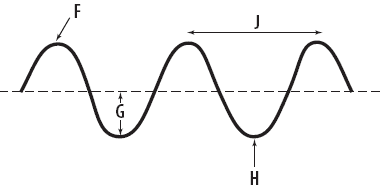
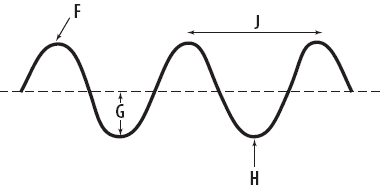
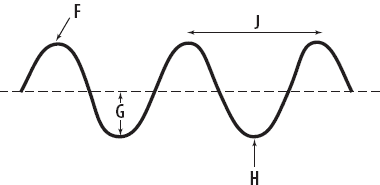
Which letter is a crest?
a)
F
b)
G
c)
H
d)
J
58.
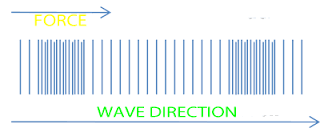
What type of waves have compressions and rarefactions?
a)
longitudinal
b)
transverse
59.
Which letter is a trough?
a)
F
b)
G
c)
H
d)
J
60.
Which letter shows amplitude?
a)
F
b)
G
c)
H
d)
J
61.
Which letter identifies the wavelength?
a)
F
b)
G
c)
H
d)
J
62.
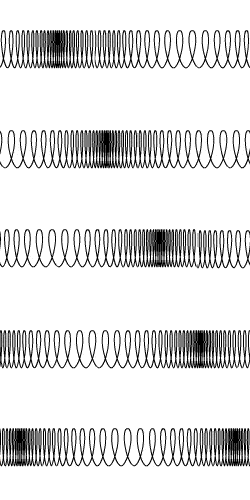
What type of wave is this?
a)
Longitudinal
b)
Transverse
63.
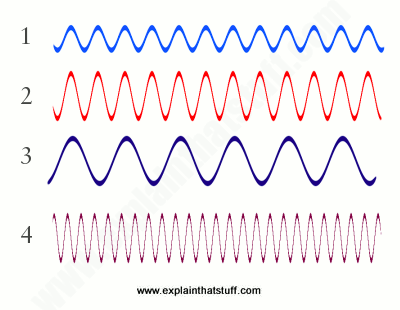
Which wave has the highest frequency?
a)
1
b)
2
c)
3
d)
4
64.
Frequency is
a)
Amount of time it takes for one wavelength
b)
How many wavelengths are completed in one second
c)
Distance between two crests or two troughs
d)
Amount of energy in a wave
65.
What is the material waves travel through?
a)
Period
b)
Frequency
c)
Medium
d)
Hertz
66.
Which part of a longitudinal wave is where particles are packed closely together?
a)
compression
b)
rarefaction
c)
crest 
d)
amplitude
67.
What do all waves transfer?
a)
Light
b)
Sound
c)
Heat
d)
Energy
68.
Frequency is measured in
a)
Newtons
b)
Joules
c)
Hertz
d)
Decibels
69.
These waves have the same
a)
amplitude
b)
frequency
c)
period 
d)
wavelength
70.

Which wave in the diagram has the greatest frequency?

a)

1

b)

2

c)

3

d)

4

71.
The type of waves that require medium to pass:
a)
Mechanical Waves
b)
Electromagnetic Waves
72.

The oscillations in a transverse wave are....

a)

parallel to the direction of the wave

b)

tangentially to the direction of the wave

c)

at an 180 degree angle

d)

perpendicular to the direction of the wave

73.

The oscillations in a longitudinal wave are...

a)

parallel to the direction of the wave

b)

back and forth

c)

tangentially to the direction of the wave

d)

perpendicular to the direction of the wave

74.

The graph shows the change in current with potential difference for

a)

an LED

b)

a filament lamp

c)

a diode

d)

a thermistor

75.

To calculate the resistance of the component at a particular potential difference you

a)

read the current at that point on the graph and calculate p.d divided by current

b)

draw a tangent to the line at that point and calculate the gradient

c)

draw a tangent to the line at that point and calculate 1/gradient

d)

read the current at that point on the graph and calculate current/p.d

76.

The resistance of the component

a)

is always constant as the p.d. increases

b)

starts high and then decreases as the p.d. increases

c)

starts constant for low values of p.d. and then increases as the p.d. increases

d)

starts constant for low values of p.d. and then decreases as the p.d. increases

77.

Which component has the highest resistance?

a)

1

b)

2

78.

The components 1 and 2 which produced this IV graph are:

a)

Resistors

b)

Filament lamps

c)

Diodes

d)

A combination of the above

79.

To calculate the resistance of component 1

a)

Calculate the gradient of the line

b)

Calculate the gradient of line 1 and line 2 and find the difference between them.

c)

Calculate the area under the graph

d)

Calculate 1/gradient of the line

80.

Where would you place an ammeter in the circuit?

a)

Green ?

b)

Red ?

81.

Where would you place a voltmeter in the circuit?

a)

Green ?

b)

Red ?

82.

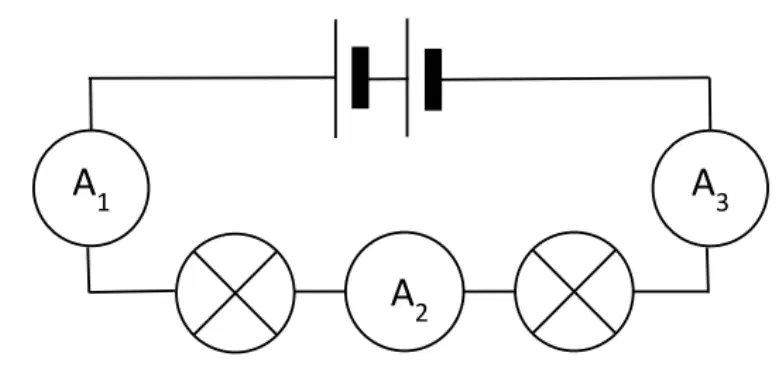
What is the relationship between the readings on Ammeters A1, A2 and A3

a)

A1 = A2 + A3

b)

A3 = A1 + A2

c)

A1 = A2 = A3

d)

A3 = A1-A2

83.

What is the relationship between the readings on Ammeters A1, A2 and A3?

a)

A1 = A2 = A3

b)

A1 = A2 - A3

c)

A3 = A1 + A2

d)

A3 = A1 - A2

84.

This is an example of a _________ circuit

a)

series

b)

parallel

85.

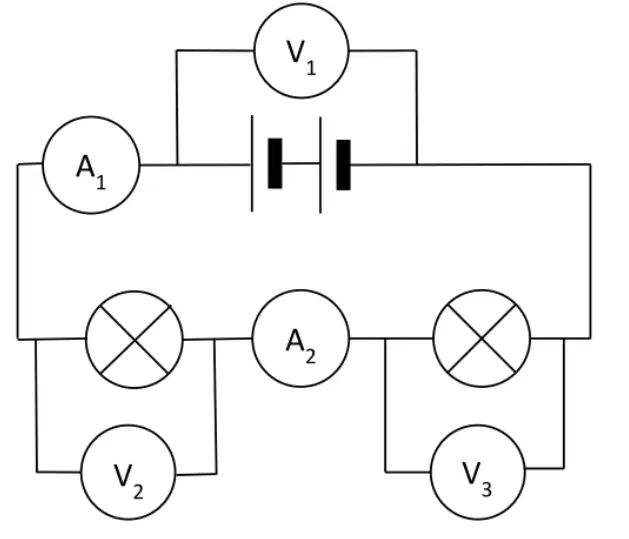
The reading on Voltmeter V1 is

a)

15V

b)

6V

c)

9V

d)

12V

86.

The reading on Voltmeter V2 is

a)

15V

b)

6V

c)

9V

d)

3V

87.

The reading on the voltmeter is

a)

3 V

b)

6 V

c)

12 V

d)

Can not answer as need to know the resistance of the bulb.

88.

Which of the following statements is true?

a)

V1 + V2 + V3 is equivalent to the emf of the cell

b)

V1 + V2 - V3 is equivalent to the emf of the cell

c)

V2 = V3

d)

V1 = V3

89.

This symbol represents a .............

a)

Anode

b)

Alternator

c)

Amplifier

d)

Ammeter

90.
Which circuit (s) are parallel?
a)
A
b)
A and B
c)
B and C
d)
C
91.
This is the symbol for a _____?
a)
switch
b)
light 
c)
battery
d)
wires
92.
a)
Switch (Closed)
b)
Switch (Open)
c)
Bulb
d)
Chassis Ground
93.
The current has only has one loop to flow through in this circuit. 
a)
Series Circuit 
b)
Parallel Circuit 
94.
What is this symbol?
a)
Variable resistor
b)
Thermistor
c)
Fuse
d)
LDR
e)
LED
95.

This is the symbol for a...

a)

Thermistor

b)

Fixed Resistor

c)

Variable Resistor

d)

Fuse

96.
Pick the correct sentence.
a)
This circuit will work because it is a closed circuit.
b)
Energy will freely flow in this circuit.
c)
This circuit will not work because there is no energy source.
d)
This circuit will not work because there is no switch.
97.

A material in which current does not flow as easily 

a)
Circuit 
b)
Insulator 
c)
Resistance 
d)
Conductor
98.

This is the symbol for a...

a)

Battery

b)

Thermistor

c)

Motor

d)

Fuse

99.

This symbol represents a .........

a)

Resistor

b)

Battery

c)

Twix

d)

buzzer

100.
The picture shows an electrical circuit. This circuit is a series circuit because: 
a)
It has 3 light bulbs.
b)
The same current flows through all three light bulbs.
c)
It uses a single battery.
d)
The electrical current is divided between the three light bulbs.
101.

This is the symbol for a...

a)

Thermistor

b)

Bulb

c)

Fixed Resistor

d)

Ammeter

102.

A metal wire carries an electric current. The charge that flows in the wire is made up of

a)

electrons

b)

protons

c)

positive ions

d)

negative ions

103.
This is the symbol for a _____?
a)
Diode
b)
LED
c)
Microphone
d)
Loudspeaker
104.

This is the symbol for a...

a)

Light Emitting Diode

b)

Fuse

c)

Fixed Resistor

d)

Variable Resistor

105.

This is the symbol for a...

a)

Motor

b)

Ammeter

c)

Bulb

d)

Voltmeter

106.
Which statement is true about a moving object?
When an object is ....
a)
...accelerating, the resultant force acting on it must be zero
b)
... moving at a steady speed, the air resistance acting on it must equal zero
c)
... moving at a steady speed, the resultant force acting on it must equal zero
d)
... moving, there must be a resultant force acting on it.
107.
Which statement about mass and weight is correct?
a)
Mass and weight are both forces
b)
Neither mass nor weight is a force
c)
Only mass is a force
d)
Only weight is a force
108.
Which quantity is measured in newtons?
a)
density
b)
energy
c)
pressure
d)
weight
109.
Which type of radiation is the least penetrating?
a)
Alpha
b)
Beta
c)
X-ray
d)
Gamma
110.
What is the range of alpha radiation in air?
a)
A few centimetres (up to 5 cm)
b)
About 1 metre
c)
100 metres
d)
More than 1km (almost infinite)
111.

What is the Total Resistance for this circuit?

a)

200

b)

330

c)

460

d)

560

112.

What is the total resistance in this circuit?

a)

200 ohms

b)

500 ohms

c)

1000 ohms

d)

1200 ohms

113.

What is the current in this circuit?

a)

0.01 A

b)

0.1 A

c)

1 A

d)

10 A

114.

What is the potential difference across R1?

a)

2 Volts

b)

3 Volts

c)

5 Volts

d)

10 Volts

115.

What is the potential difference across R2

a)

2 Volts

b)

3 Volts

c)

5 Volts

d)

10 Volts

116.

What is the potential difference across R3

a)

2 Volts

b)

3 Volts

c)

5 Volts

d)

10 Volts

117.
In a series circuit which of the following is the same  throughout the circuit
a)
Resistance
b)
Voltage
c)
Current
d)
None of the above
118.
A circuit with 3 resistors, 10 Ohms, 30 Ohms and 20 Ohms are in series. What is the total resistance
a)
30 Ohms
b)
50 Ohms
c)
60 Ohms
d)
100 Ohms
119.

Find total resistance total current and the potential difference across resistor 3

a)

60 Ohms, 0.4 A, 8 V

b)

60 Ohms, 2.5 A, 8 V

c)

90 Ohms, 2.5 A, 24 V

d)

60 Ohms, 0.4 A, 24 V

120.
In a Series circuit the more lightbulbs you add the brighter they get 
a)
False 
b)
True 
121.
When there is only one path for electrons to move through it is called a _____. When one light goes out, they all go out. 
a)
closed circuit
b)
parallel circuit
c)
series circuit
d)
open circuit
122.

In a series circuit:

1. the ​ (a)   is the same everywhere

2. the ​ (b)   is split across the components

3. the total resistance ​ (c)   as you add more resistors

Choose from the below words
current
potential difference
increases
decreases
charge
123.

Match the following

a)
1.

LDR

b)
2.

thermistor

c)
3.

LED

d)
4.

fuse

e)
5.

variable resistor

124.

A 3.0 V cell is connected in series with a 100 ohm resistor and a variable resistor.

The resistance of the variable resistor is increased.

1.​ the current in the circuit will ​ (a)  

2. the potential difference of the cell will ​ (b)  

3. the total resistance of the circuit will ​ (c)  

4. the potential difference across the variable resistor will ​ (d)  

5. the potential difference across the 100 ohm resistor will​ (e)  

Choose from the below words
decrease
stay the same
increase
125.

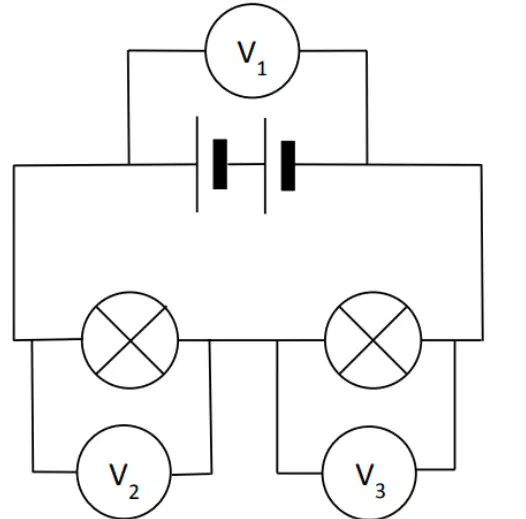
Assume the bulbs are identical.

If A2 reads 0.7 A, the reading on A1 will be (a)   A.
126.

Assume the bulbs are identical.

If V1 reads 8 V,

V2 will read ​ (a)   V

V3 will read ​​ (b)   V

Choose from the below words
4
8
2
0
127.

These bulbs are not identical.

If V1 reads 8 V, and V2 reads 5 V, then

V3 will read ​​​ (a)   V

Choose from the below words
3
4
5
8
128.

Assuming the bulbs are identical. Fill in the blanks.

V1 = ​ (a)   ; V2 = 3V ; V3 = ​ (b)  

A1 = 2 A ; A2 = ​ (c)  

Choose from the below words
6V
3V
2A
4V
1A
3A
6A
129.
The type of current where charges flow in one direction
a)
Direct Current
b)
Alternating Current
c)
Electron Flow
d)
Voltage
130.

The type of current where flow of charge changes direction

a)

Alternating Current

b)

Direct Current

c)

Voltage

d)

Switchback Current

131.
What colour is the neutral wire in a three pin plug
a)

Red

b)

Blue

c)

Green and yellow

d)

Brown

132.
What colour is the earth wire in a three pin plug
a)

Red

b)

Blue

c)

Green and yellow

d)

Brown

133.

What colour is the live wire in a three pin plug?

a)

Red

b)

Blue

c)

Green and yellow

d)

Brown

134.
What is the purpose of the neutral wire in a three pin plug?
a)
To provide a return path for the current to the power station
b)
To provide a return path for the current to the earth in case of electrical fault
c)
To provide the electric current to the device
135.
What is the purpose of the earth wire in a three pin plug?
a)
To provide a return path for the current to the power station
b)
To provide a return path for the current to the earth in case of electrical fault
c)
To provide the electric current to the device
136.
What is the purpose of the live wire in a three pin plug?
a)
To provide a return path for the current to the power station
b)
To provide a return path for the current to the earth in case of electrical fault
c)
To provide the electric current to the device
137.
Which of the following labels correctly identifies the Cable Grip on the diagram of a UK electrical plug?
a)
C
b)
D
c)
E
d)
F
138.
Which of the following labels correctly identifies the Live Wire on the diagram of a UK electrical plug?
a)
A
b)
B
c)
C
d)
D
139.
Which of the following labels correctly identifies the Earth Wire on the diagram of a UK electrical plug?
a)
A
b)
B
c)
C
d)
D
140.
Which of the following labels correctly identifies the Neutral Wire on the diagram of a UK electrical plug?
a)
A
b)
B
c)
C
d)
D
141.

What is wrong in this picture of a plug?

a)

The Earth and the Live have been swapped

b)

The Live and the Neutral have been swapped

c)

The Neutral and the Earth have been swapped

d)

The Earth is the wrong colour

e)

the fuse has blown

142.

What component protects the appliance from overloading which could start a fire?

a)

Earth Wire

b)

Neutral Wire

c)

live wire

d)

Fuse

e)

battery

143.

A plastic appliances like hairdryers are double insulated.

This means they do not need....

a)

A fuse

b)

An earth wire

c)

A neutral wire

d)

A live wire

e)

A switch

144.

What is the potential difference of mains electricity

a)

230 V

b)

12 V

c)

50 V

d)

240 V

145.

What is the frequency of mains electricity

a)

20 Hz

b)

30 Hz

c)

40 Hz

d)

50 Hz

146.

The potential difference between the live wire and neutral wire is ​ (a)   .

The potential difference between the live wire and earth wire is ​ (b)   .

The potential difference between the earth and neutral wire is ​ (c)   .

Choose from the below words
230 V
0 V
50 V
115 V
147.

This model was developed after J.J. Thompson discovered electrons, a particle smaller than an atom. It shows electrons floating freely in a positive region.

a)

The "Plum Pudding Model" of the atom

b)

The "Rutherford Model" of the atom

c)

Democritus's model of the atom

d)

The "Quantum Mechanical Model" of the atom

148.
Ernest Rutherford discovered that atoms were mostly _________________. 
a)
negatively charged
b)
positively charged
c)
electrons
d)
empty space. 
149.
In the gold foil experiment, most of the positively charged alpha particles passed through the gold foil, but some were deflected or bounced back.  What did we conclude because of this?  
a)
Atoms are small indivisible spheres
b)
Atoms are mostly empty space with a small, dense, positive center
c)
Atoms have negatively charged particles which orbit the nucleus
d)
Light is a wave, not a particle
150.

In the atomic model nicknamed the "plum pudding" model, what do the plums represent?

a)

the nucleus

b)

the atom

c)

the electrons

d)

the positive material

151.

What subatomic particles make up the nucleus of an atom?

a)

electrons

b)

protons

c)

neutrons

d)

leptons

e)

mesons

152.

On a rollercoaster, gravitational energy is transferred to which other two energy stores?

a)

thermal and electrostatic

b)

kinetic and chemical

c)

kinetic and nuclear

d)

thermal and kinetic

153.

What is the equation to work out kinetic energy?

a)

mass x velocity

b)

0.5 x mass x velocity

c)

0.5 x mass x velocity3

d)

0.5 x mass x velocity2

154.

The mass of a car is 2500kg. It travels at 20m/s. Calculate the kinetic energy.

a)

500,000J

b)

600,000J

c)

400,000J

d)

700,000J

155.

What is the equation to work out gravitational potential energy?

a)

mass x gravitational field strength x height

b)

0.5 x mass x velocity2

c)

mass x height

d)

height x gravitational field strength

156.

A book has a mass of 2.7kg. It is on a shelf that is 2.4m above the ground. The gravitational field strength is 10N/kg. Calculate the gravitational potential energy:

a)

64.7

b)

64.8

c)

64.9

d)

65.0

157.

Atomic structure:

Protons have a relative charge of ​ (a)   .

Neutrons have a relative charge of ​ (b)   .

Electrons have a relative charge of ​ (c)  

Choose from the below words
+1
0
-1
1/2000
158.

Atomic structure:

Protons have a relative mass of ​ (a)   .

Neutrons have a relative mass of ​ (b)   .

Electrons have a relative mass of ​ ​ (c)  

Choose from the below words
1
1/2000
-1
0.5
2
159.

What is the equation that links gravitational field strength (g), mass (m) and weight (W)?

a)

Weight = Mass x Gravitational Field Strength, or W=mg

b)

Weight = Mass / Gravitational Field Strength, or W=m/g

c)

Weight = Gravitational Field Strength / Mass, or W=g/m

160.

What is the equation that links distance (s), force (F) and work done (W)?

a)

Work Done = Force x Distance, or W=Fs

b)

Work Done = Force / Distance, or W=F/s

c)

Work Done = Distance / Force, or W=s/F

161.

What is the equation that links extension (e), force applied to a spring (F) and spring constant (k)?

a)

Force applied to a Spring = Spring Constant x Extension, or F=ke

b)

Force applied to a Spring = Spring Constant / Extension, or F=k/e

c)

Force applied to a Spring = Extension / Spring Constant, or F=e/k

162.

What is the equation that links acceleration (a), change in velocity (Δv) and time (t)?

a)

Acceleration = Change in Velocity x Time, or a=Δv x t

b)

Acceleration = Change in Velocity / Time, or a=Δv/t

c)

Acceleration = Time / Change in Velocity, or a=t/Δv

163.

What is the equation that links acceleration (a), mass (m), and resultant force (F)?

a)

Resultant Force = Mass x Acceleration, or F=ma

b)

Resultant Force = Mass / Acceleration, or F=m/a

c)

Resultant Force = Acceleration / Mass, or F=a/m

164.

What is the equation that links mass (m), momentum (p), and velocity (v)?

a)

Momentum = Mass x Velocity, or p=mv

b)

Momentum = Mass / Velocity, or p=m/v

c)

Momentum = Velocity / Mass, or p=v/m

165.

What is the equation that links kinetic energy (Ek), mass (m) and velocity (v)?

a)

Kinetic Energy = 0.5 x Mass x Velocity², or Ek=0.5 x m x v2

b)

Kinetic Energy = 0.5 x Mass² x Velocity, or Ek=0.5 x m2 x v

c)

Kinetic Energy = 0.5 x Mass² / Velocity, or Ek=0.5 x m2 / v

166.

What is the equation that links gravitational field strength (g), gravitational potential energy (Eg), height (h), and mass (m)?

a)

Gravitational Potential Energy = Mass x Gravitational Field Strength x Height, or Eg=mgh

b)

Gravitational Potential Energy = Mass / (Gravitational Field Strength x Height), or Eg=m/(gh)

c)

Gravitational Potential Energy = Mass x Gravitational Field Strength / Height, or Eg=mg/h

167.

What is the equation that links energy transferred (E), power (P) and time (t)?

a)

Power = Energy Transferred / Time, or P=E/t

b)

Power = Time / Energy Transferred, or P=t/E

c)

Power = Energy Transferred x Time, or P=Et

168.

What is the equation that links frequency (f), wavelength (λ) and wave speed (v)?

a)

Wave Speed = Wavelength x Frequency, or v=λf

b)

Wave Speed = Wavelength / Frequency, or v=λ/f

c)

Wave Speed = Frequency / Wavelength, or v=f/λ

169.

What is the equation that links charge (Q), current (I) and time (t)?

a)

Charge = Current x Time, or Q=It

b)

Charge = Current / Time, or Q=I/t

c)

Charge = Time / Current, or Q=t/I

170.

What is the equation that links current (I), potential difference (V) and resistance (R)?

a)

Potential difference = Current x Resistance, or V=IR

b)

Potential difference = Current / Resistance, or V=I/R

c)

Potential difference = Resistance / Current, or V=R/I

171.

Write the equation for kinetic energy, in terms of mass (m) and speed (v).

172.

Write the equation for wave speed (v), in terms of wavelength (λ) and frequency (f)

173.

A car reaches a top speed because:

Initially,​ the only force acting on the car is the thrust from the engine.

The car ​ (a)   . As the speed of the car ​ (b)   , the air resistance acting on the car ​ (c)   . This continues until the air resistance equals the ​ (d)   , at which point the ​ (e)   is zero and the car no longer accelerates.

Choose from the below words
accelerates
increases
thrust
resultant force
speed
weight
decreases
decelerates