
 Worksheets
Thermodynamics
Total questions: 40
Worksheet time: 27mins

Which letter represents the Potential Energy of the Reactants?
A
B
C
D
E
Which letter represents the Potential Energy of the Products?
A
B
C
D
E
Which letter represents the Potential Energy of the Activated Complex?
A
B
C
D
E
Which letter represents the Activation Energy?
A
B
C
D
E
Is this reaction endothermic or exothermic?
(a)
Which letter represents the ΔH ?
A
B
C
D
E
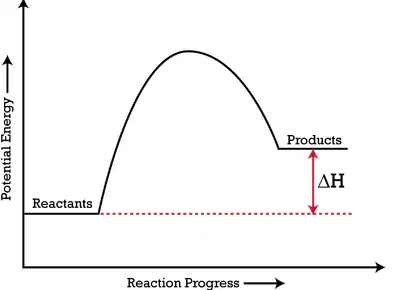
Is this reaction endothermic or exothermic?
(a)
What type of energy is stored in chemical bonds?
Chemical Energy
Nuclear Energy
Radiant Energy
Mechanical Energy
Electrical Energy
What type of energy is related to the motion of an object?
Chemical Energy
Nuclear Energy
Radiant Energy
Mechanical Energy
Electrical Energy
What type of energy is caused by electromagnetic radiation?
Chemical Energy
Nuclear Energy
Radiant Energy
Mechanical Energy
Electrical Energy
What type of energy is stored as heat?
Chemical Energy
Nuclear Energy
Radiant Energy
Mechanical Energy
Thermal Energy
What is the average kinetic energy of the molecules in an object measured as?
Heat
Temperature
Specific Heat
Entropy
Thermal Energy is stored as ____.
Temperature
Heat
Entropy
Light
Is heat the same thing as temperature?
Yes
No
Is heat related to temperature?
Yes
No
What is the unit for heat? (Write out the full word)
(a)
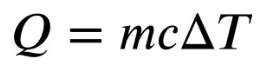
In the equation, which symbol represents heat?
(a)
In the equation, which symbol represents mass?
(a)
In the equation, which symbol represents specific heat?
(a)
In the equation, what does the symbol Δ stand for?
(a)
In the equation, what does the symbol T stand for?
(a)
The First Law of Thermodynamics states that Energy can be created and destroyed.
True
False
Another name for the First Law of Thermodynamics is:
The Law of Entropy
The Law of Conservation of Energy
The Law of Conservation of Mass
The Law of Gravitation
Another name for the Second Law of Thermodynamics is:
The Law of Entropy
The Law of Conservation of Energy
The Law of Conservation of Mass
The Law of Gravitation
The Second Law of Thermodynamics has to do with ___
Heat
Energy
Entropy
Temperature
The First Law of Thermodynamics has to do with ___.
Entropy
Energy
Heat
Temperature
Entropy is measured in (a) . (Use symbols)

The picture shows chemical energy converting to (a) energy.
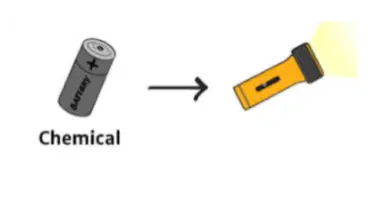
The picture shows chemical energy converting to (a) energy.
What type of energy is stored in the nucleus of a cell?
(a)
In an exothermic reaction, heat will go on the ___side of the reaction.
Reactant
Product
In an endothermic reaction, heat will go on the ___side of the reaction.
Reactant
Product
A car takes chemical energy (gasoline) and turns it into what kind of energy?
Light
Mechanical
Nuclear
Radiant
Which of the following describe the movement of energy during an exothermic reaction?
Into the surroundings
Out of the surroundings
Into the object
Out of the object
Which of the following describe the movement of energy during an endothermic reaction?
Into the surroundings
Out of the surroundings
Into the object
Out of the object
Which of the following are examples of exothermic processes?
Combustion
Melting
Freezing
Cooking
Which of the following are examples of endothermic processes?
Combustion
Melting
Freezing
Cooking
During an endothermic reaction, ΔH will be:
+
-
During an exothermic reaction, ΔH will be:
+
-
All systems will tend towards a ___ entropy.
Higher
Lower
Constant

