
Font size
 Worksheets
APES Finals Review
Total questions: 60
Worksheet time: 3600secs
1. Sustainability is defined as…
Consuming at a rate to satisfy the current generation.
Rapidly increasing resource consumption over time.
Maintaining a rate of resource consumption that will allow the population to survive indefinitely.
Not consuming any resources at all.
The Arctic National Wildlife Refuge is a section of federally-owned land in Alaska. What activities would not normally be allowed in this area?
Hiking and camping
Commercial logging
Drilling for oil
There are no commercial restrictions for wildlife refuges.
One of the three major environmental problems is resource depletion. Which is a major contributing factor to this problem?
Developing countries have a much higher rate of resource consumption than others.
Developed countries have a much higher rate of resource consumption than others.
The human population overall is too small.
Each country uses approximately the same amount of resources.
Which example best illustrates the point behind the Tragedy of the Commons essay?
Various nations overfishing in international waters, leading to a collapse of fish stocks.
A property owner clear-cutting all of the trees on his land to sell for timber
A farmer that overplants his fields one year, leading to a poor harvest
One country declaring war on another


What is a resource?
Anything that is used for a purpose.
Anything that has a purpose.
Anything that we use for information.
Anything that is renewable.
What is renewable energy?
Energy that comes from resources such as fossil fuels.
Energy that comes from resources that humans have to replenish over time.
Energy that comes from resources which are naturally replenished on a human timescale.
Energy that comes from resources that are available in nature.
What are examples of non-renewable resources?
Oil, coal and solar energy.
Gas, coal and water.
Oil, gas and wind.
Oil, gas and coal.
What are considered "the commons"
Common house hold items like knifes, spoons, and forks.
A renewable resource owned by no one and available for use by anyone at little or no charge
Personal property





The term subsidence refers to
failure of the groundwater supply
sinking of ground when water has been withdrawn
living on very little money
intrusion of salt water into a freshwater aquifer
money paid by the government to farmers
Cannot easily be traced to the source of the pollution.
Point Source Pollution
Non-point source pollution

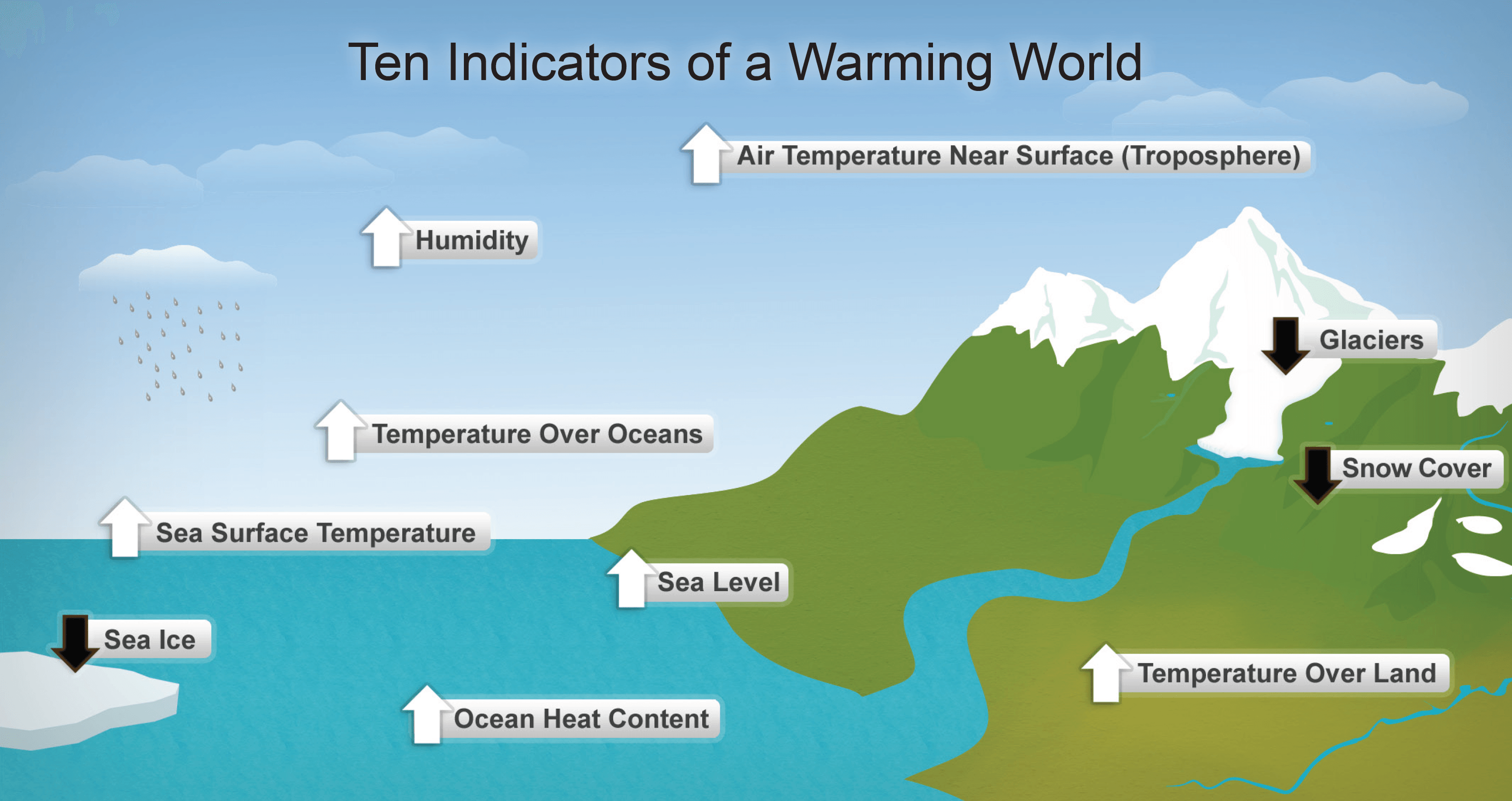
Which of the following sets of evidence supports global warming?
CO2 levels rising
Sea levels rising
Glacier mass decreasing
All of the above

What is the greenhouse effect?
warming of the earth due to gases such as carbon dioxide and methane in our atmosphere
cooling of the earth due to gases in our atmosphere
Which of the following is an example of a positive externality resulting from an outdoor band concert?
An elderly woman in her apartment hears a song that she liked as a child.
A pair of endangered birds leave their nest in a nearby tree when the concert starts.
A pizza parlor closes early, because all of its customers are at the concert.
A traffic jam occurs as drivers hunt for parking spots near the concert.
Which was most likely classified as a pandemic?
A People in 11 states were sickened after eating beef contaminated with the E. Coli bacteria. The tainted beef was traced to a meat-packing plant.
B Two camps, in close proximity to each other, experienced an outbreak of cholera. The infection was traced to contaminated drinking water.
C A measles outbreak in Indiana was attributed to children whose parents refused to have them vaccinated for measles.
D During 1918–1919, 20–40% of the world’s population suffered from the Spanish flu.
What is sequestration?
describes the types of carbon storing sources
describes the nitrongen storing sources
describes the overall carbon cycle
process of increasing genetic diversity.

Use the image to describe stage 3 of population growth.
Both birth rate and death rate are high, which stabelizes popluation groth, keeping it around the same level (little or no polulation growth.).
Birth rate is high, and death rate falls more rapidly. Total population increases.
Birth rate and death rate fall, but death rate falls more slowly. Total population increases. This is the stage of developing nations.
none of the ansers are correct.
What is the significance of genetic diversity?
Genetic diversity decreases the likelihood of species survival.
Genetic diversity increases the likelihood of species diversity.
Gentic diversity is not a factor that influences the likelihood of species survival.
None of the answers are correct.

What is the soil texture of of a sample that has the following percent composition:
silt = 10%
clay = 30%
sand = 60%
clay
clay loam
loam
sandy clayt loam
How does permeable pavement help prevent pollution?
It filters water from runoff after it has reached a watershed.
It catches water down stream to prevent runoff.
It is pavment that allows water to seap through, and filter pollutants, preventing the spread of pollutants from runoffs.
None of the answers are correct.
How is extracting crude oil (petroleum) different from Tar Sands different from Fracking for it?
Water is not used. Also, Fracking requires digging below a cap stone rock.
Although both processes use hot heated water to loosen deposits, Tar Sands do not require Fracking (digging beneath capstone). Extracting for Tar Sand bitumen uses surface mining.
Both processes are essentially identical.
Extracting oil or natural gas from Tar Sands requires digging beneath capstone rock.
What is the formula for % change of something?
(change in number or size of something ÷ original number or size of that same population) X 100
(change in number or size of something X original number or size of that same population) ÷ 100
R/%change
None of the answers are correct.
What is the doubling time formula?
(change in number or size of something ÷ original number or size of that same population) X 100
(change in number or size of something X original number or size of that same population) ÷ 100
R/%change
None of the answers are correct.
Which of the following process most accurately represents the production of smog.
NO2 is converted to NO + O in the presence of sunlight.
water and SO2 is converted to SO + O in the presence of sunlight.
Water and NO2 is converted to NO + O in the presence of sunlight.
NO is converted to NO2 + O in the presence of sunlight.
Emphasis on use of pesticides, herbicides, and monoculture
green revolution
agricultural revolution
industrial revolution
subsistence agriculture

Fossil Fuels are
pieces of rock that have been compacted many times
rock that contains 50% plant and animal remains
metamorphic rock
fuels that form from the remains of plant and other organisms that were buried and altered over million of years
If there are 35,000 kcals of energy captured by the producers from the sun, how much is available for the tertiary consumer?
3,500 kcals
350 kcals
35 kcals
3.5 kcals

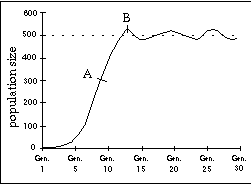
What is the best estimate of the carrying capacity of the moose population?
30
50
1,500
2,500

How would you describe the growth rate of the country represented by this age structure diagram?
rapid growth
slow growth
zero growth
negative growth

What causes birth rates to drop in the third stage of the demographic transition?
advancements in medicine
advancements in technology
better opportunities for women
none of the above
Which of the following is a density-independent limiting factor?
food availability
water availability
habit availability
tsunami

Which position in the diagram represents winter for the northern hemisphere?
A
B
C
D
Which of the following is not a threat to biodiversity?
habitat destruction
invasive species
pollution
nature preserves

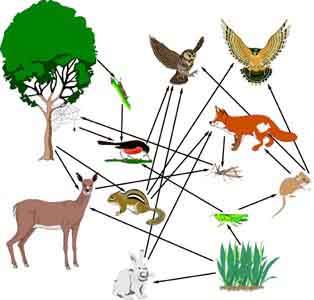
Which would be a secondary consumer?
rabbit
mouse
aphid
fox

If the producers were exposed to a toxin, which organism is likely to have the highest concentration of toxins in its tissues?
owl
mouse
rabbit
aphid
Ecosystem services
are the processes by which life-supporting resources are produced
indicate the current state of the environment
are valued for their beauty
refer to abiotic features of the environment
are the processes that humans use to address environmental problems
Which is not evidence of Biodiversity?
Genetic variation among human populations
The number of species in a region
The number of ecosystems and habitats in a region
Many different species of plants and animals in a region
a large number of one species in a region
Which best describes the concept of net primary production?
Energy captured minus energy lost
total energy available from the sun
total energy produced through photosynthesis
total energy available in ecosystems
total cellular respiration in an ecosystem
How does an algal bloom affect the oxygen content of the water?
an algal bloom will cause the oxygen content to increase
an algal bloom will cause oxygen to decrease and lead to hypoxic conditions
an algal bloom will have no effect
it will cause the oxygen content to fluctuate rapidly, and vary by the depth of the water
You observe a mountain that has lush vegetation on one side and a dry desert on the other side. What is a likely explanation for this pattern?
Acid rain is affecting the dryer, desert side
the dryer side does not have as much nutrients in the soil
the heavily vegetated side receives more sunlight
the dry side is the result of the rainshadow effect
Climate change poses a threat to niches of living organisms and to their survival. Niche ______ are more likely to survive climate change conditions because ________.
specialists; they have a variety of food sources and acceptable temperature ranges
specialists; they are more populous on earth
generalists; they have a variety of food sources and acceptable habitats
specialists; they have a larger quantity of food sources

