
 Worksheets
High and Low Languages
Total questions: 100
Worksheet time: 50mins
Which level of a programming language is Machine Code?
Low
High
Which level of a programming language is Assembly Code?
Low
High
Which level would create the fastest code to execute?
Low
Assembly
High
Which level would create the easiest code for humans to understand?
Low
Assembly
High
Python is an example of a High Level programming language
True
False

Which generation?
Machine Code - Low
Assembly Code - Low
High Level
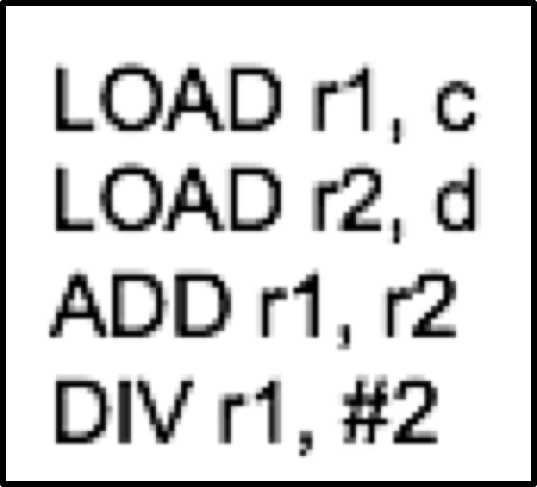
Which generation?
Machine Code - Low
Assembly Code - Low
High Level

Which generation?
Machine Code - Low
Assembly Code - Low
High Level
Binary is the only language a computer can understand
True
False
Computers must translate everything into binary
True
False
High Level Code is easier for humans to understand as it is written in English
True
False
What is the only thing that computers understand?
Machine Code
Low Level Language
High Level Language
Algorithm
Before a computer can understand a program it must be...
Translated into its machine code.
Translated into a high level language.
Translated into a low level language.
Java, Python, PHP, and C++ are examples of
low level languages
Graphic arts languages
medium level languages
high level languages
What is machine code?
A programming language that a computer understands
The make and model of a computer
The serial number of a computer
It is the process of creating a sequence of instruction to enable computer to do something.
Coding
Programming
Algorithm
Which of these is the process of typing a series of instructions to have a computer perform a task?
programming
computing
composing
creating
Which of these is the set of rules that must be followed when typing code using a programming language?
Syntax
Value
Expression
Statement
Which of these is a series of instructions that solve a problem?
Algorithm
String
Array
Statement


Assembly is a...
high level programming language
low level programming language
Most programming languages are...
High-level languages
Low-level languages
Machine code is a...
high level programming language
low level programming language
High level languages feature...
English-like keywords
Named subroutines
No variables names
Abbreviated command names
Machine code is written using...
Binary/hexadecimal
English-like key words
Plain English
Abbreviated mnemonic keywords
Assembly langauge is written using...
Binary/hexadecimal
English-like key words
Plain English
Abbreviated mnemonic keywords
Advantages of low-level languages include...
Direct access to the CPU
Programs written will often be more efficient than high-level programs
Easier to remember programming commands
Can use subroutines and advanced data structures
Assembly language is better than machine code because...
it is easier for humans to read
it is easier to remember the instructions
a person is less likely to make mistakes in assembly language
it is written using English-like keywords
Which of these are high-level languages?
Java
Assembly
Machine code
VB.NET

Which of these is machine code?
A
B
What generation of programming language is Machine Code
1st Generation
2nd Generation
4th Generation
3rd Generation
What type of language translator is needed for the 1st Generation to the CPU
Compiler
No translator needed
Assembler
Interpreter
Which of these is a Low Level Language
Delphi
Python
Little Man Computer (LMC)
Basic
2nd generation to 1st Generation language needs what type of translator.
An assembler
Interpreter
No translator needed
Compiler
What language translators can be used to translate 3rd to 2nd generation.
Compiler
No translator needed
Assembler
Interpreter
Which generation is the fastest code to execute.
3rd Generation
2nd Generation
4th Generation
1st Generation
What is the easiest to program for a programmer.
1st Generation
2nd Generation
4th Generation
3rd Generation
Why would you program in a low level language.
Easier to understand
Uses less code
Makes programs with small file sizes
Simple to de-bug
One advantage of programming in a high level language is.
Eliminates bugs
Easier to understand
Executes faster than other levels
Useful for programming device drivers
Define the relationship between low and high level languages.
One to One (One high level instruction = one low level)
One to Two (Each high level instruction has two low level instructions)
One to Many (Each high level instruction has many low level instructions)
Many to One (Many high level instruction has only one low level instruction)
What is used to translate assembly code.
Assembler
Compiler
Interpreter
Router
What is NOT used when translating high level languages
Assembler
Compiler
Router
Interpreter
What is used to translate the entire source code in one go.
Assembler
Compiler
Interpreter
Router
Which translator stops when it encounters an error.
Assembler
Interpreter
Compiler
Editor
On fully developed code, what translator is used at the end before publishing.
Assembler
Compiler
Interpreter
Editor
Low level languages use what type of code.
Hexadecimal
Binary
Logic
Cryptic
When writing a high level program we use what.
An assembler
Interpreter
Compiler
Object code and error reporting are produced in what type of language translator.
Assembler
Compiler
Interpreter
Editor
Which translator cannot translate source code to machine code
Assembler
Compiler
Interpreter
Which one of these can not be called source code.
Java
Python
Visual Basic
Android
There are two types of languages used within computer systems:
High Level & Low Level Languages
Choose the correct options below:
High Level
Low Level
Mid Level
Level 42
A high level programming language uses code written in a way that is similar to a natural human language, such as English.
A high-level language must be translated into a low-level language (binary) before it can be run, as high-level languages cannot be executed directly by the CPU.
I have read this carefully
I need to read back over this
Therefore, examples of High Level languages include Python, Java, Ruby, Visual Basic, Perl etc...
These need to be translated so that the computer understands them
The computer already understands them
Low level programming languages do not resemble natural languages, such as English. They are made up entirely of bit patterns (binary) that can be executed directly by the CPU.
They are very difficult for humans to read
They are easy for humans to read
They look like this: 0011001001100110
Python is an example of a Low level language
Low level languages are useful when speed of execution is critical or when writing software which interfaces directly with the hardware, e.g. device drivers.
I have read this carefully
I have not read this
An example of a high level programming language is...
Python
Assembly code
Machine code
An example of a low level programming language is...
Python
Assembly code
Machine code
Machine code is...
The lowest level of code
Only made of 1s and 0s
Easy for humans to read
Translated before it can be run.
A high level programming language is...
very efficient on the processor
easy for humans to read
interpreted or compiled
multiple instructions per statement
assembled
A low level programming language is...
very efficient on the processor
easy for humans to read
interpreted or compiled
multiple instructions per statement
assembled
High-level languages are faster to write than in assembly or machine language but they are harder to read and understand.
True
False
Machine code is...
The lowest level of code
Only made of 1s and 0s
Easy for humans to read
Translated before it can be run.
A process of developing a sequence of instructions to enable a computer to accomplish a particular task
Computer science
Computer technology
Computer programming
Computer engineering
Information processed or stored by a computer
Text
Data
Graphics
Memory
The basic computer language which consists of zeros and ones
Application language
High-level language
Assembly language
Machine language
A type of computer programming languages which are one step up from the machine language
Assembly languages
High-level languages
Application languages
System languages
A computer programming languages designed specially for creating and maintaining webpages
System languages
Machine languages
Internet languages
Webpage languages
A computer language writing application programs which solve specific problems
Software language
Application language
System language
Machine language
A computer programming languages used to build and maintain databases
Database language
Programming language
System language
Machine language
A computer languages developed from assembly programming languages
Machine language
High-level language
System language
Assembly language
A computer programming languages used for managing a computer system
Webpage language
Application language
System language
Program language
A computer program which converts the source code into machine language one line at a time
Interpreter
Compiler
Language
Source
This programming language takes a long time to write
Program language
Machine language
System language
Assembly language
Allow programmers to write programs faster than using machine language
Assembly language
Machine language
System language
Program language
This language looks more like ordinary human languages
Machine language
System language
High-level language
Low-level language
Examples of this program include music player, accounting program and word processing.
Application language
System language
Software language
Computer language
A _________ is where computers store and retrieve information, such as names, addresses, product features, company profits, etc.
database
system
computer
program
How do we express Machine Language
Mnemonic code
Binary code
English Like Codes
What does an Assembler do?
Converts machine code to assembly code so we can understand it
Converts assembly code to machine code
puts code together to make a whole program
assembles code fragments

