
 Worksheets
Astronomy SOL Review
Total questions: 230
Worksheet time: 3hrs 37mins

Which planet has the hottest temperature? (a)

Which is the correct order of planets, starting with closest to the sun? (a)

Which planet has the shortest year? (a)
A day is longer than a year on this planet (a)
Gravity of this object keeps planets in their orbits (a)
Two things that affect an object's gravity are mass and distance (a)
What are the first four terrestrial planets made of? (a)
It has little or no effect
It is the same effect as on Earth
It has a slightly reduced surface temperture
It has a extremely high surface temperature

Which terrestrial planet are we most likely to travel to if the Earth would no longer support life?
Jupiter
Venus
Mars
Mercury
What is at the middle of a Heliocentric system?
Mars
Moon
Sun
Earth
What is at the middle of a Geocentric system?
Sun
Neptune
Earth
The Universe
Who proposed the Heliocentric system?
Copernicus
Ptolemy
Aristotle
Galileo
What does the Heliocentric system look like?


What FORCE caused the cloud to flatten into a planetary disc?
magnetism
gravity
adhesion
surface tension
What is it called when a star "turns on"?
electromagnetism
personification
stellar fusion
gravity
Before the planets were formed, __________ appeared in the spinning disc.
meteors and meteoroids
planetesimals and protoplanets
comets and asteroids
dwarf planets and moons
The theory that explains how the solar system was formed is known as: (a)
rotates in opposite direction of other planets (a)
only one natural satellite
Mercury
Venus
Earth
Mars
largest dust storms
Mercury
Venus
Earth
Mars
70% of surface is covered in water
Mercury
Venus
Earth
Mars
called Red planet
Mercury
Venus
Earth
Mars
home to the tallest mountain
Mercury
Venus
Earth
Mars
This planet has the most extreme hot and cold temperatures on its surface.
Venus
Mercury
Mars
Earth
The hottest planet in the Solar System
Mercury
Venus
Jupiter
Saturn
This planet has no atmosphere
Earth
Mercury
Venus
Mars
Olympus Mon is the largest active volcano on the entire planet
Earth
Mars
This planet is the largest of the inner planets
Jupiter
Mercury
Earth
Mars
This planet has iron oxide on its surface that gives it a unique color.
Mercury
Venus
Mars
Jupiter
The four small, dense, rocky planets that orbit closest to the sun are called
terrestrial planets
gas giants
asteroids
solar system
This planet is sometimes called the "Earth's twin".
Mercury
Venus
Mars
Uranus
When a planet rotates backward, it is called ___.
prograde rotation
retrograde rotation
revolution
orbit
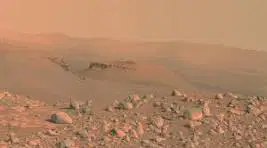
Identify this planet.
Mercury
Venus
Earth
Mars

Identify this planet.
Mercury
Venus
Earth
Mars

Identify this planet.
Mercury
Venus
Earth
Mars

Identify this planet.
Mercury
Venus
Earth
Mars
What are the four Earth systems?
Hemisphere
Geosphere
Hydrosphere
Atmosphere
Biosphere
What shape is Earth's orbit?
circle
ellipse
square
spiral
Who was the first astronomer to use a telescope for astronomy?
Brahe
Newton
Hubble
Galileo

Our solar system is found on what galaxy?
Andromeda Galaxy
Milky Way Galaxy
Comet Galaxy
Eye of Sauron Galaxy

The ________ ________ consists of the sun, planets, dwarf planets, moons and small objects that travel around the sun.
solar system
Jupiter
Milky way
Universe
Mass is the amount of the _______ in an object.
weight
gravity
matter
force
He stated inertia and gravity keep the planets in motion
Galileo
Newton
Copernicus
Kepler
What is the source of heat and light in our Solar System?
the North star
the moon
the sun
Earth
About how long does it take the moon to orbit the Earth?
~ 29 days
~15 days
~1 day
It doesn't.
We experience seasons on Earth because
The Earth is tilted at 23.5 degrees causing the sun to heat Earth with direct rays in the summer and indirect rays in the winter.
We rotate around the sun once per year.
We are closer to the sun during warmer months and further from the sun in colder months.
The Earth is tilted at 23.5 degrees.
Patterns are predictable. Patterns in our Earth, Sun and Moon system include... (select all that apply)
Moon phases
Sunrise and sunset
Seasonal changes
Meteor showers

Shown here is an eclipse. Is it a solar eclipse or lunar eclipse?
(a)

Shown here is an eclipse. Is it a solar eclipse or lunar eclipse?
(a)
A solar or lunar eclipse don't occur every lunar cycle because all three celestial bodies (the Sun, Earth and Moon) have to
move closer together
rotate clockwise
rotate counterclockwise
align
During which season will the North Pole receive 24 hours of darkness?
Summer
Fall
Winter
All of the above

At location A, what season are people in the Northern Hemisphere experiencing?
Fall
Summer
Spring
Winter

The model shown represents a _____ eclipse
solar
lunar

The model shown represents a _____ eclipse.
solar
lunar
The gravitational pull from the moon and sun causes
moon phases
eclipses
tides
When the northern hemisphere is tilted away from the sun, it is
Winter
Summer
Fall
Spring
Which is most likely caused by the tilt of Earth on its axis as it revolves around the sun?
lunar eclipse
phases of the moon
two high tides and two low tides each day
opposite seasons in the Northern and Southern Hemispheres
Different angles of the moon's lit surface as the moon revolves around Earth cause
cycles.
moon phases.
eclipses.
tides.
Why are people on Earth unable to see the moon during the new moon phase?
The lit side of the moon is not facing Earth.
The sunlight is being reflected off the moon.
The location of Earth is between the moon and the sun.
The tilt of Earth is causing the moon to be blocked by the sun.
During the summer solstice,
the Northern Hemisphere receives most sunlight; longest day of year.
the sun is directly above the equator.
Northern Hemisphere receives less sunlight; shortest day of year.
sunlight doesn't change.
Moon phases happen every month. Which statement explains why we see the moon changing from night to night.
The Earth revolves around the moon.
The Sun revolves around the Earth.
The moon revolves around the Earth.
The moon stays in place as the sun moves.

What phase is this?
Waning gibbous
Full
Last quarter
Waxing crescent
What does "waning" mean?
Staying the same
Having one side illuminated
Getting bigger and brighter
Getting smaller and darker

What is the Moon?
A celestial body that revolves around a planet
A curved path followed by a satellite as it revolves around an object
The luminous star around which Earth and other planets revolve; is composed mainly of hydrogen and helium

What is an Axis?
An obscuring of the light from a celestial body by the passage of an object between the celestial body and the observer or between the celestial body and its source of illumination
A phenomenon or process that involves multiple steps and repeats itself
The imaginary line through Earth that extends from the North Pole to the South Pole and is the center of Earth’s rotation

The earth's axis is tilted (a) degrees off center.
What would seasons be like if Earth's axis were straight up and down and not tilted?

Which location has the greatest number of hours of daylight?
A
B
C
D
E

In the diagram below, the Northern hemisphere would be in what season at position A?
Fall or Autumn
Spring
Winter
Summer


The bulge of water on the side of Earth facing the moon produces
high tides
low tides
no tides
neap tides
How often do neap tides occur?
twice per month
once per month
twice a year
twice per day
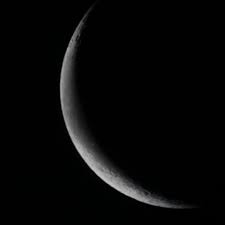
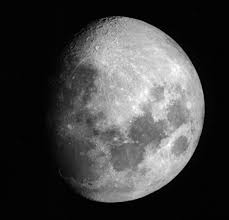
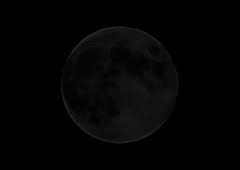
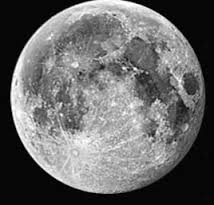
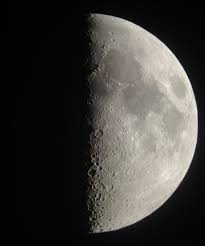


The Moon most likely formed from an impact of a Mars-size object with early Earth.
True
False
Who was the first American to step onto the surface of the moon?
Buzz Aldrin
Neil Armstrong
Alan Shepard
Scott Kelly

What is the age of the moon?
38.5 billion years old
4.53 billion years old
235.6 billion years old
273.66 billion years old
The Moons orbital plane is inclined by how many degrees with respect to the Earths orbital plane?
5 degrees
15 degrees
25 degrees
12 degrees
The Moons diameter is around 3,468 km (2,155 miles) in diameter. It is:
about ¼ the size of Earth
about 1/10th the size of Earth
about 1/5th the size of Earth
about 1/3 the size of Earth
When a stellar object is closest to another stellar object it is known as.....
perigee
apogee
On the Moon, lava channels are called
Rilles
coronae
planitia
mare
The moons gravity is
1/6 of Earths gravity
1/4 of Earths gravity
1/2 of Earths gravity
1/10 of Earths gravity
Which side of the Moon has more craters
near side
far side
both sides have the same amount of craters
there are no craters on the moon
What was the name of the vehicle that transported Armstrong and Aldrin to the moon's surface?
The Tiger
The Eagle
The Scorpion
The Raven
The mission that was the first to land on the moon was called....
Surveyor 1
Luna 22
Pioneer 2
Apollo 13
Apollo 11
The commander of the mission was the first to make a footprint on the lunar soil. His famous quote was...
"One small step for man, one leap for mankind"
"That's one small step for man, one giant leap for mankind"
"One small leap for man, one big leap for mankind"
"That's a small step for man and a giant leap for humankind"
What term below is defined as mountainous regions of the Moon?
ejecta
maria
highland
rille
What term below is defined as the dark, smooth plains of the Moon?
maria
highland
ray
regolith
What term below is defined as structures that resemble valleys?
regolith
crater
ray
rille
What term below is defined as loose, ground up rock on the surface of the Moon?
rille
regolith
ray
maria


We do NOT have a lunar eclipse each month because...
The tilt of the moon's orbit is at 5 degrees
The moon is too small
The moon's orbital distance changes
All choices
Which of the following correctly places these in order from LARGEST to SMALLEST?
galaxy -- local group/cluster -- planet -- solar system -- universe
universe -- galaxy -- solar system -- planet
planet -- solar system -- galaxy -- universe
universe -- galaxy -- solar system -- local group/cluster -- planet
A galaxy which is either spherical (football like) or a flattened disk is a ___ galaxy.
elliptical
humanoid
irregular
spiral
A galaxy which has a nucleus of bright stars and two or more arms in circular formation is called a ___ galaxy.
elliptical
humanoid
irregular
spiral
A Group of stars, and or star systems, star clusters, dust and gas held together by gravity is known as:
Universe
Galaxy
Solar System
Planet
Which of these correctly identifies different objects in the universe according to their size and composition?
A nebula is larger than a galaxy
a solar system contains many stars
a galaxy contains many solar systems
a galaxy is bigger than a universe


What does the Big Bang Theory tell us
About the popular television show.
the entire universe was once condensed in the form of a dense mass called a singularity
It explain exactly how the universe began.
How does the abundance of hydrogen and helium support the Big Bang Theory.
Hydrogen and helium are elements on the Periodic Table
Hydrogen and helium are in the same ratio throughout the universe.
Hydrogen and helium have many current uses today

How far is it across the Milky Way Galaxy?
100 light years across
1,000 light years across
10,000 light years across
100,000 light years across

The vast spherical cloud of oldest stars surrounding the Milky Way is called ___
the crown of light
the aurora
the corona
the halo
According to the standard model of Big Bang cosmology, approximately how old is the Universe?
65 million years old
3.8 billion years old
13.7 billion years old
4.5 billion years old
What unit of measurement is used to calculate distance in our universe?
astronomical units
kilometers
light years
parsecs
What is the time taken for the light to travel between the Sun and Earth?
4 minutes
8 minutes
12 minutes
2 minutes
Proxima Centauri is ______ light years away.
6.8
2.5
4.3
5.4
Most of the universe is made of
visible matter
Invisible matter
dark energy
dark energy and dark matter
Galaxies are classified and named according to their
shape
wavelength
distance from Earth
cosmic background radiation
Dark matter is a theoretical substance. What does this mean?
Scientists have simply guessed that it exists
There is evidence for its existence, but it hasn't been proven
Scientists are certain that it exists
Scientists are split 50/50 over whether it exists or not
A circle of light shown around or above the Milky Way:
Halo
Galaxy
Bulge

Figuring out what the Milky Way looks like is difficult because
we live outside of it.
it is impossible to send a space probe that far.
we live inside of it.
it is full of dark matter.
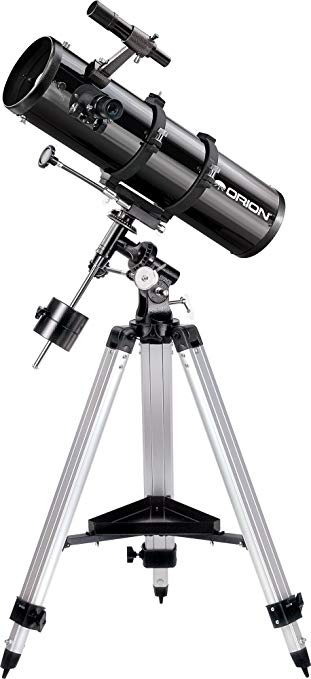
Reflecting telescopes use _______ to focus light.
Lenses
Flat mirrors
Curved Mirrors
A lens and lasers
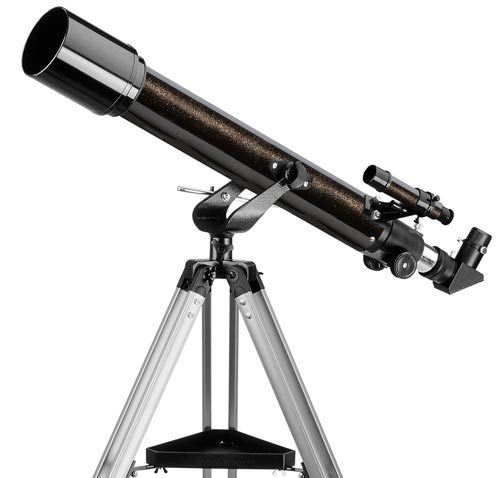
A refracting telescope uses _______ to focus light.
Lenses
Mirrors
Lasers
Water

Which of these can solve the issue of atmospheric blurring?
polishing the lens
only using the telescope when it's a clear night
putting the telescope in space
putting the telescope underground

Which of these light types cannot be captured by a telescope?
Radio waves
Microwaves
Ultraviolet
All of them can be captured
A meteor is DIFFERENT from a comet mainly because
has a tail of ice and gas
is found in orbit between Jupiter and Mars
enters the Earth's atmoshere
has a nucleus mad of rock and snow.
Earth and Venus
Uranus and Saturn
asteroid and comet
meteor and asteroid
The fuzzy halo around a comet's nucleus is called the
coma
cloud
tail
magnitude
The frozen center of a comet is called the
coma
tail
nucleus
snowball
Mercury,Saturn
Jupiter, Uranus, Neptune
Jupiter, Neptune,
Mercury,Saturn,
Uranus
Mars,Jupiter,
Saturn,Uranus
Neptune

The gas giants are also called:
Terrestrial planets
Jovian planets
The four outer planets are:
Mercury Venus Earth Mars
Jupiter Saturn Uranus Neptune
closest point in an orbit
perihelion
gravity
aphelion
inertia
farthest point in an orbit
aphelion
perihelion
gravity
inertia
stays in motion unless acted upon
inertia
gravity
perihelion
centripetal
This person discovered moons on Jupiter using a telescope, which helped to support the heliocentric theory
Aristotle
Copernicus
Ptolemy
Galileo

Gravity causes light gases to move to the center while heavier materials and ice stay in outer areas. Then what?
The center of the nebula begins to get hot and dense.
A protostar forms in the center of the nebula.
The nebula begins to spin and flatten.
A protostar forms in the center of the nebula. Then what?
Shock waves hit the nebula causing it to collapse.
The center of the nebula begins to get hot and dense.
The SUN is born, fusion begins in the core.
The SUN is born, fusion begins in the core. Then what?
Planetesimals (small rock or icy bodies) begin to form. Rocky pieces in the outer rings and icy pieces in the inner rings.
A protostar forms in the center of the nebula.
About 4.5 billion years ago pieces of rock and ice accumulate more material until they grow into planets and moons.
Planetesimals (small rock or icy bodies) begin to form. Rocky pieces in the outer rings and icy pieces in the inner rings. Then what?
About 4.6 billion years ago, a cloud of stellar dust or nebula exists within the Milky Way.
About 4.5 billion years ago pieces of rock and ice accumulate more material until they grow into planets and moons.
The SUN is born, fusion begins in the core.
What is the age of the Earth?
4.6 million years
46 years
4.6 billion years
13 billion years
How old is the solar system?
4.6 million years
46 years
4.6 billion years
13 billion years
How do we know how old the earth/solar system are?
Evidence found in rocks and meteorites
Evidence found in the middle of the sun
There is no evidence
Evidence found in fossils
The Milky Way is _________________ than the solar system.
larger
smaller
farther away
moving faster
Our solar system sits inside the...
Andromeda Galaxy
Milky Way Galaxy
MR-1043B Galaxy
Hamburger Galaxy
Solar nebula theory describes...
how nebulas form
how black holes form and the stars inside them
how galaxies form
how stars form and the planets that orbit them
Its the gas and dust swirling around a young protostar that will eventually form small
nuetrinos
atoms
protons
planetesimals
Planetesimals will grow larger and larger, becoming massive enough to attract more gas and dust making them into planets
TRUE
FALSE
Solar nebula theory and the life cycle of a star predicts that the suns outer layer will
eventually swell and vaporize the earth
stay exactly the same forever
rotate faster
turn into a black hole
Which is the coldest planet ?
(a)
If you wanted to find an asteroid with a telescope, where would be the best place to look?
Between Mars and Jupiter
Between Earth and Venus
Between Jupiter and Saturn
Between Mercury and Venus
What do asteroids have in common with Earth?
They have oxygen-rich atmosphere
They rotate around a central axis
Many of them contain liquid water
They're made mostly of magnesium
How old are asteroids compared to the rest of the solar system?
They're much older than the rest of the solar system
They're older than the sun, by younger than the planets
They're about the same age as the rest of the solar system
They're much younger than the rest of the solar system
Why do asteroids burn up as they enter Earth's atmosphere?
The oxygen trapped inside them ignites in the presence of nitrogen
Because they are covered in an extremely flammable material
Heat is created by friction between the asteroid and the atmosphere
The sun's UV rays ignite them when they pass through the ozone layer
What is the difference between a meteor and a meteorite?
Meteors burn up in the earth's atmosphere; meteorites strike the earth.
Meteors are found throughout the solar system; meteorites are found only in the asteroids belt.
Meteors are similar to comets; meteorites are similar to dwarf planets.
Meteors are much larger than meteorites.
How is Ceres different from all the other asteroids in the solar system?
It has a satellite revolving around it
It rotates on its axis
It revolves around the sun
It's much larger than all other asteroids

What is a comet?
Large rocky ball of ice that orbits the sun
Cluster of billions of stars
Lumps of rock or iron that orbit the sun
Minor planets
Which planet is known as earth's twin?
Neptune
Super-Earth
Venus
Mars
What are Exoplanets?
Any planet beyond our solar system
Other planets in our Solar System except for Earth
Inhabitable planets
Planets bigger than Earth

