
 Worksheets
Working Scientifically
Total questions: 46
Worksheet time: 33mins

What is this boy doing?
He is sleeping
He is pushing the box
He is playing football
The steps used by scientists to solve a problem or answer a question is called ___________.
scientific method
recipe
conclusion
A hypothesis is the right answer to an experiment.
A hypothesis is an observation.
A hypothesis is what you think will happen(a guess).
Make an observation
Make a payment
Form a hypothesis
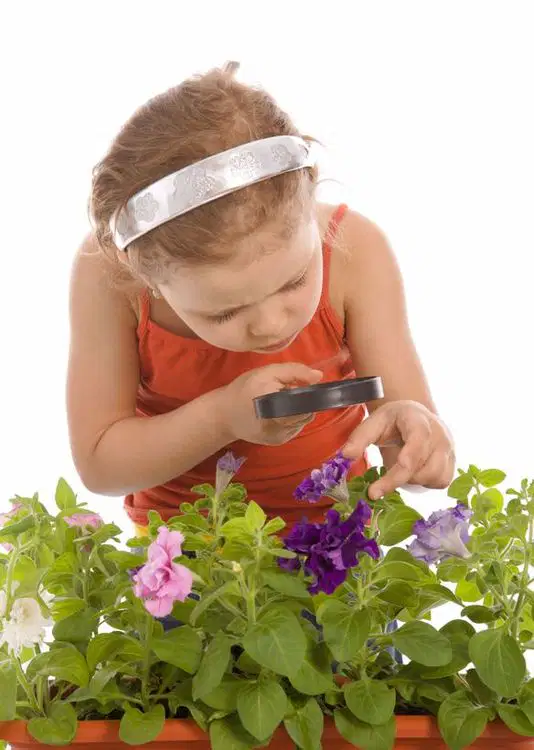
The first step in the scientific method is to _____________________________.
Ask a question/make an observation
Do an experiment
Draw a conclusion

Another word for educated guess is: ________________
hypothesis
conclusion
experiment
A careful way of looking for something or finding answers to a problem is called -------------------------.
hypothesis
investigation
classifying
The last step in the scientific method is?
Make observation
Share the result/ answer
Form a hypothesis
material
Inquiry
law

Name this scientific tool.
Thermometer
Tape Measure
Scale

Information that you gather with your senses is called?
Learning
A question
An observation
Which plant did not get enough water and sunlight?


1. Which of these materials is suitable
for making gloves?
paper
wool
glass
A good material
for making an umbrella should be
Heavy and rough
Light and waterproof
Absorbent and shiny
Paper is a good material to use for
wrapping presents
building a chair
making an umbrella
sunlight, oxygen, soil
soil, carbon dioxide, sunlight
sunlight, air, water
What happens to a plant that does not have water or sunlight?
it gets sad
it dies
it grows
Which of the following parts of the
plant lies under the ground?
leaves
roots
flowers
Choose all pictures that are living things.


Choose all the objects that are non-living things.


Do living things grow?
Yes
No
They are born, they jump and all of them sing songs.
They are born, they grow, they reproduce and they die.
They do nothing.


I ___________with my hands
taste
touch/ feel
see

I ___________with my ears.
hear
smell
see

We need _________ to help us power electrical appliances.
Appliance
Electricity
Activity
________ are devices that need electricity to work.
Sound
Magnets
Electrical Appliances
Which animal is NOT cold-blooded?
a fish
a mammal
a reptile
Animals with backbones are called _________.
vertebrates
invertebrates
jellyfish
Mammals are warm-blooded.
True
False
Vertebrates are classified into __________ groups.
2
3
5
Mammals are one of the classifications of vertebrates. Mammals are known for:
Having feathers.
Having fur/ hair and feeding their young milk.
Laying eggs.
Reptiles are known for:
Having fur.
Having feathers.
Having scales and laying eggs.
Feeding their young with milk.
Fish are known for:
having gills, fins and Living underwater.
Having scales and fur.
Feeding their young with milk.
Birds are known for:
Having scales.
Living partly in water and partly in the clouds.
Having feathers and laying eggs.
Amphibians are known for:
Being cold blooded and living partly on land and partly in the water.
Being warm blooded.
Having feathers.
_________________ is an example of an amphibian.
Cat
Frog
Eagle
Humans are _____________
Omnivores
Carnivores
Herbivores
An animal that eats both plants and flesh (meat and fish) is called ___________.
Omnivore
Carnivor
Herbivores
Animals that only eat plants are called _____________..
Carnivore
Omnivore
Herbivore

carnivore
omnivore
herbivore

These are examples of ______________.
vertebrates
invertebrates

Which type of animal is this?
vertebrates
invertebrates

