
 Worksheets
AP Calculus BC Review Sheet
Total questions: 264
Worksheet time: 9hrs 34mins

Equals
a∫c f(x)dx
a∫b f(x)dx
b∫c f(x)dx
c∫a f(x)dx

Equals
∫ f(x)dx
cx∫ f(x)dx
c∫f(x)dx
(1/c)∫f(x)dx

equals
f(x)
f(x) + C
f '(x)
f '(x) +C


Equals
d∫cf(x)dx
- d∫cf(x)dx
f(d) - f(c)
f(c) - f(d)


If y = f(x)/g(x), then dy/dx =
f '(x)⋅g(x) + f(x)⋅g'(x)
f '(x)⋅g(x) - f(x)⋅g'(x)
[f '(x)⋅g(x) + f(x)⋅g'(x)] / [g(x)]2
[f '(x)⋅g(x) - f(x)⋅g'(x)] / [g(x)]2


Find the limit of the function as x approaches 2.
(Click the image.)
1
-1
5
DNE

Find the mistake if possible. (Click the image.)
The Diff EQ is solved correctly
Step 1 is incorrect. The separation of variables wasn't done correctly.
Step 2 is incorrect. They didn't integrate x2 correctly.
Step 3 is incorrect. They didn't take the reciprocal of x3/3+C correctly.

Solve the Initial Value Problem
y=−x1
y=−x2
y=x+1−1
y=x+11

Select the integral that would find the volume of the region revolving around the given axis.
(Click the image.)


Find the limit
0
8
16
Does Not Exist (DNE)
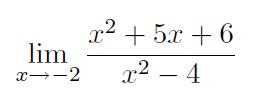
Find the Limit
0
-1/4
-5/4
1
DNE

Find the limit as x approaches 1+
1
-1
-3
Infinity
DNE

Find the limit as x approaches 1
1
-1
-3
Infinity
DNE

Select all statements that are TRUE.


Determine the Limit at Infinity
0
-1
-5/2
DNE
infinity

Find the limit at infinity
0
infinity
4/3
-3/2
DNE

Find the limit at infinity
0
1
infinity
DNE

Which of the following statement(s) are false?
f is continuous at a
the limit as x approaches a exists
f is differentiable at a
f(a) exists
None, all statements are true

Find the value for that makes f(x) continuous.
0
1
1.5
2
No such value exists

A
B
C
D
E

A
B
C
D
E

A
B
C
D
E

A
B
C
D
E

A
B
C
D
E

A
B
C
D
E

A
B
C
D
E

A
B
C
D
E

A
B
C
D
E
The graph of f has a relative extrema when f'
changes sign
equals zero
goes from negative to positive
goes from positive to negative

Let g(x)=∫0xf(t)dt , where the graph of f is shown above. On what interval(s) is g decreasing?
[2,8]
[0,5]
[2,5]
[-5,-2]U[0,5]
If w(x)=f(x)q(x) , then w′(x)=
f′(x)q′(x)
f′(x)q′(x)+f(x)q(x)
f′(q(x))q′(x)
f′(x)q(x)+f(x)q′(x)
For the function f, it is known that x→−1−limf′(x)=x→−1+limf′(x) . Which of the following must be true?
I. f is continuous at x = -1
II. f is differentiable at x = -1
Both I and II
I only
II only
Neither I or II
Evaluate x→4πlimx−4πcosx−cos(4π)
−22
DNE
0
22
dxd(1−2x1) equals
−(1−2x)22
−2ln∣1−2x∣
(1−2x)22
−21ln∣1−2x∣
For a particle moving along the x-axis, the particle's speed equals 2 when
∣v(t)∣=2
v(t)=2
a(t)=2
∣a(t)∣=2
If f(x)=∫4x(cos(2t)+3)dt , then f′(x)=
21sin(2x)+3x
cos(2x)
2cos(2x)+3
cos(2x)+3

The region R is the area enclosed by the functions y=2x and y=x2 . Which expression represents the area of R?
∫02(x2−2x)dx
∫02(2x−x2)dx
∫04(2x−x2)dx
∫04(x2−2x)dx
What is the acceleration of the object at time t = 2 s?
Find the average velocity from t = 3 to t = 5.
v (t) > 0 means
the particle is moving to the right
the particle is speeding up
the particle has positive position
the particle is at rest

Which is true for the graph of velocity of an object?
The object is speeding up for parts A, B, and C
The object is speeding up in parts D and E
The object is speeding up in parts A and D.
The object is stopped or at rest in part B
What does a flat (horizontal) line on a velocity-time graph mean?
[Example section B on this graph]
The object is not moving.
The object is moving, but at a constant velocity.
The object is accelerating, and its acceleration is positive.
The object is accelerating, and its acceleration is negative.
You can calculate the slope of a velocity-time graph.
If you calculate the slope of the graph between two points, what would that tell you?
The velocity of the object.
The distance travelled by the object.
The acceleration of the object.
The mass of the object
Besides v(t) = 0, what else is needed to know an object changes directions at a specific time, t ?
v(t) = 0 and a(t) = 0
v(t)=0 and velocity changes sign
v(t) = 0 and acceleration changes sign
Part E of the graph is from 95s to 105s. Which of these statements is true about Part E?
The object is at rest.
The object is slowing down
The object is speeding up.
The object has negative acceleration.

What is the total displacement of the object represented in this position/time graph?
0 meters
100 meters
140 meters
200 meters
The intermediate value theorem (IVT) is primarily concerned with which of the following?
y-values
first derivative values
second derivative values
x-values
Which of these is NOT a hypothesis of the Mean Value Theorem (MVT)?
A closed interval
A differentiable function
A continuous function
A twice-differentiable function
Tangent line formula.
y−f(x1)=f′(x1)(x−x1)
y=f′(x1)(x−x1)
y−f(y1)=f′(x1)(x−x1)
y=f(x1)(x−x1)
The fundamental theorem of calculus.
∫abf(x)=F(b)−F(a) where F is the antiderivative
∫abf(x)=f′(b)−f′(a)
∫abF(x)=f(b)−f(a) where F is the antiderivative
∫abF(x)=f′(b)−f′(a) where F is the antiderivative
The fundamental theorem of calculus.
dxd∫0xf(t)dt=f(x)
dxd∫0xf(t)dt=F(x) where F is the antiderivative
dxd∫0xF(t)dt=f(x) where F is the antiderivative
dxd∫0xf(t)dt=f′(x)
Volume using discs revolving around horizontal line.
π∫x=ax=b(top −bottom)2dx
π∫x=ax=b(top −bottom)dx
∫x=ax=b(top −bottom)2dx
∫x=ax=b(top −bottom)dx
Volume using discs revolving around vertical line.
π∫y=ay=b(right −left)2dy
π∫y=ay=b(right −left)dy
∫y=ay=b(right −left)2dy
∫y=ay=b(right −left)dy
Volume using washers revolving around vertical line.
π∫y=ay=bR2−r2 dy
π∫y=ay=b(R−r)2dy
∫y=ay=b(R−r)2dy
∫y=ay=bR2−r2 dy
If f'(x) = 0 what does that imply about the x value?
It is a critical point, it is a possible max, min, or point of inflection.
That the limit does not exist.
When looking for critical points we did....
- took the limit of the function. 2. Graphed the critical points.
- Found f'(x). 2. Set f'(x) = 0 and solved for x. 3. Created a sign diagram. 4. Took the limit
- Found f'(x). 2. Set f'(x) = 0 and solved for x. 3. Created a sign diagram. 4. Checked out intervals.

(a)

Given the following integral values, find the integral below
A
B
C
D

Given the following integral values, find the integral below
A
B
C
D

Given the following integral values, find the integral below
A
B
C
D
If ∫02f(x) dx=5 , ∫24f(x)dx=3 , and ∫26 f(x)dx =12 , then ∫06 f(x) dx=
5
-5
17
-17

If a<c<b, answer the following:
A
B
C
D
E
∫−33∣x+1∣dx=
10
0
8
none of these
What is the derivative of y= 1 - x2 + x - 3x4
y/=x+-2x+1-12x3
y/=x-x3/3+x2/2-3x5/5
y/=-2x+1-12x3
y/=2x+1-12x3
what is the derivative of y= sin(2x)?
y/=cos(2x)
y/=2sin(2x)
y/=2sin(x)+cos(2x)
y/=2cos(2x)
when is the function f(x)=x2+6x+9 increasing?
(3,∞)
(-∞,3)
(-3,-∞)
(-3,∞)
What is the speed of the position function f(x)=-3x2-6x-6 at x=2
-18
18
-6
6
What is the integral of f(x)=sin(2x)+1/x
-2cos(2x)+ln(x)+c
ln(|x|)−cos(2x)/2+C
ln(|x|)−cos(2x)/2
ln(|x|)+cos(2x)/2+C
Let f be the function defined by f(x)=4x3-10x+5. Find the equation of the tangent line to the graph of f at the point where x = 1
y+1=2(x-1)
y-1=2(x-1)
y+1=2(x+1)
y+1=-2(x-1)
If g is the inverse function of F and f(2)=3, find the value of g'(3) for F(x)=6x2+2x-1
1/24
1/25
1/26
26
What are the vertical asymptotes of the function f(x)=(x2-9)/(x2+6x+9)
x=3
x=-3
x=3,-3
no vertical asymptote
what is the average rate of change of the function f(x)=x2-6x+6 from 2 to 6?
4
2
3
23/4
What are the conditions that satisfy the mean value theorem, and what does it mean?
Continuous on the open and differentiable on the closed, and then there is at least 2 numbers c and d in the interval (a,b) (that is a < c < b) such that
Discontinuous on the closed and differentiable on the open, then there is at least one number c in the interval (a,b) (that is a < c < b) such that f'(c)=(f(b)- f(a))/ (b-a)
Continuous on the closed and differentiable on the open,and then there is at least one number c in the interval (a,b) (that is a < c < b) such that f'(c)=(f(b)- f(a))/ (b-a)
Continuous on the open and differentiable on the open, and then there is no number c in the interval (a,b) (that is a < c < b) such that f'(c)=(f(b)- f(a))/ (b-a)
A particle moves along the x-axis with velocity at time x>0 and the function is v(x)=x2+6x+3, is the speed of the particle increasing at x=4?
No because both velocity and acceleration at x=4 is positive
Yes because both velocity and acceleration at x=4 is positive
No because both velocity and acceleration at x=4 is negative
Yes because both velocity and acceleration at x=5 is positive
Alec consumes beverages at a rate of r(x)=10+.2x2 beverages per hour, how many beverages does Alec drink in the first 16 hours?
25.068
433.067
5463.759
Too many, Alec should seek medical attention
What is the derivative of the function f(x)=∫12x(6ex)dx
6e2x
12e2x
6e2x-6ex
6e2x
Find F'(x) given F(x)=∫0x2csc2x dx
csc2(x2)
csc2(x)
2xcsc2(x)
2xcsc2(x2)
∫x(1−3x2)4dx
30−1(1−3x2)5
30−1(1−3x2)5+C
(1−3x2)5+C
6−1(1−3x2)5+C
∫[5x−csc2x]dx
5x−cotx+C
5x+cotx+C
ln55x+cotx+C
lnx5x−cotx+C
Approximate the area using a Midpoint Riemann Sum on the interval [0,4] for f(x)=x2+3
42
26
33
66

A
B
C
D

A
B
C
D

A
B
C
D

A
B
C
D

Hint: Use u substitution
A
B
C
D
Integrate ∫ 3x1 dx
32x23+c
23x32+c
23x32
6x23+c

A
B
C
D
Let g be a function that is differentiable over the interval (2, 9) . Giveng(3) = 5 , g(6) = -2 , and g(8) = 5 , which of the following must be true?
I. g has at least one horizontal tangent line.
II. g has at least 2 zeros.
III. For some c in the interval (3, 6), f'(c) = -7/3.
II only
II and III
I and II
I, II, and III
Find the average velocity from t = 3 to t = 5.
s(t) = t3 - 6t2 - 4.
What is the speed of the object when its acceleration is 0?

If f′(a)=0 and f′(x) changes from positive to negative at x=a , then f(x) has
A relative maximum at x=a
A relative minimum at x=a
No relative extrema at x=a
A vertical tangent line at x=a

Which of the following could be the graph of f ' , the derivative of f ?


On what interval(s) is the function f(x)=x3+6x2 concave down?
(−∞,−4)
(−∞,−2)
(−2,∞)
(0,∞)


Selected values from the function f(x) are shown in the table. When a midpoint Riemann sum with two subintervals is used to complete ∫210f(x)dx , the value is...
24
28
36
26
dxdy=ex+3y3
What would be a step in solving the differential equation?
∫y3dy=∫ex+3dx
∫ y31dy=∫ ex+3dx
∫ y31dy=∫ ex+31dx
∫ y3dy=∫ ex+31dx

Let g(x)= ∫0xf(t)dt , where the graph of f is shown. For what value(s) of x does g have an inflection point?
-2, 0, 5
-2 and 5 only
-2, 2, and 8
2 and 8 only

The graph of the function f is shown. At which of the following points is f'(x)<0 and f"(x)>0?
c
a
b
d

Selected values from the function f(x) are shown in the table. When a left Riemann sum with two subintervals is used to approximate ∫05f(x)dx , the value is...
16
21
15
11
For a particle moving along the x-axis, x (1 )=5 and v (1)= 2. At time t = 1, it can be said that the particle is...
Speeding up
moving toward the origin
moving away from the origin
slowing down.
dxd(e5x)=?
−5e5x
51e5x
e5x
5e5x
If g(x)=∫ππxcos(t2)dt then g′(x)=
sin(π2x2)
πxsin(π2x2)
πxcos(π2x)
πcos(π2x2)
dxd∫sinx41+t2 dt =
1+sin2x
−cosx1+sin2x
−1+sin2x
cosx1+sin2x
If f has two continuous derivatives on [5, 10] , then
∫510f′′(t)dt =
f′′(10) − f′′(5)
f′(10) − f′(5)
f(10) − f(5)
51(f′(10) − f′(5))

The graph of g′(x) is given below, if g(3) = 6 find g(0).
1
2
4
6

The graph of f is given below. F(x)=∫0x f(t)dt Which of the statements below is true?
F is decreasing on (1,2)
F has a relative minimum at x = 2
F is decreasing on (2, 4)
F has a relative maximum at x = 1.
F has a point of inflection at x = 4.

If
f(x)=∫−2xf′(t)dt where f′(t) is shown in the figure below, find the equation of the tangent line to f at x=3y=18
y = 2x + 18
y = 2x + 12
y = 2x + 2

The function f(x) is continuous on the inteval [-5, 11], and selected values are given below. The trapezoidal approximation for ∫−56f(x)dx found with 4 subintervals, is zero. Find k.
-9/10
-2/3
-21/31
-16/19
∫0πcosx dx
Which of the limits is equivalent to the following definite integral?
n→∞limi=1∑ncos(nπi)⋅nπ
n→∞limi=1∑ncos(nπi)⋅ni
n→∞limi=1∑ncos(ni)⋅ni
n→∞limi=1∑ncos(ni)⋅nπ
Given g′(x)=ln(x+7) and g(2) = 6 determine the value of g(3) .
-3.749
1.648
7.321
8.250
For a particle moving along the x-axis, x(3)=−10 and v(3)=−9 . At time t = 3, it can be said that the particle is ...
Slowing down
Moving away from the origin
Moving toward the origin
Speeding up
Evaluate h→0lim hcos(67π+h)−cos(67π)
23
21
−23
−21
If g(x)=f−1(x) , with f(6)=2 & g(3)=2 ,
then g′(2)=?
f′(3)
f′(6)1
f′(3)1
f′(6)

Let g(x)=∫0x f(t)dt , where the graph of f is shown below. On what interval(s) is g both concave down and increasing?
(-5, -2)
(5, 8)
cannot be determined
(-5, -2) U (0, 2)
If g(x)=f−1(x) , with f(6)=5 and g(6)=8 , then g′(6)=?
f′(5)1
g′(8)1
f′(8)1
g′(5)1

Let g(x)=∫0x f(t)dt , where the graph of f is shown. For what value(s) of x does g have a relative minimum?
-2 and 2
8
-2 and 5
2


A
B
C
D
E

A
B
C
D

A
B
C
D
A
B
C
D

A
B
C
D

A
B
C
D

A
B
C
D

A
B
C
D

A
B
C
D
Which of these sums up the Mean Value Theorem (MVT)?
f′(c)=b−af(b)−f(a)
f(c)=b−af(b)−f(a)
f(c)=b−af′(b)−f′(a)
f′(c)=b−af′(b)−f′(a)

Evaluate.
-1
3
0
The limit does not exist

Evaluate.
-3
3
-9
The limit does not exist

Evaluate.
1/2
2
√2
√2/2

Evaluate without a calculator. Show all steps on a sheet of paper.
A
C
D
E
B


If
f′(x)=3e3xcos(e3x) , then f(x)= ?cos(e3x)
e3sin(x)
sin(e3x)
sin(3e3x)
Suppose that
(x→−2−)limf(x)=k , (x→−2+)limf(x)=k , and f(−2)=k , then (Check all that apply)
-2 is in the domain of f(x)
(x→−2)limf(x) exists
f(x) has a removal at x = -2
f(x) is continuous at x = - 2
f(x) must be differentiable at x = -2
Suppose that h(x) is continuous on the interval (2, 9) and that f(2) > 0 and f(9) < 0, then by the Intermediate Value Theorem
f(x) is decreasing on the interval (2, 9)
f(x) must have at least one x-intercept in the interval (2, 9)
f(x) has a positive Average Rate of Change on the interval (2, 9)
f(x) has at least one critical value in the interval (2, 9)
(x→2)limf(x)=9
Suppose that f′(9)=0 and f′′(9)>0 then f(x) is (a) (two words) at x = 9.
x→πlim x2−π2(cos x+sin(2x)+1) = ___
2π1
π1
1
nonexistent
If f(x)=(x−1)(x2+2)3 , then f′(x) is
6x(x2+2)2
6x(x−1)(x2+2)2
(x2+2)2(x2+3x−1)
−3(x−1)(x2+2)2
(x2+2)2(7x2−6x+2)
Evaluate h→0lim htan−1(x+h)−tan−1(x)
1+x21
−1+x21
1−x21
−1−x21
dxd(3x)=?
ln33x
3xln3
3x
x3x−1
∫secxtanxdx=?
−cscx+c
−secx+c
cscx+c
secx+c
When does a curve have a horizontal tangent line?
When x = 0
When y = 0
When dxdy=0
When dxdyis undefined
When does a curve have a vertical tangent line
When x = 0
When y = 0
When dxdy=0
When dxdyis undefined
If f''(x) < 0, the curve is
Concave Up
Concave Down
Increasing
Decreasing
If f''(x) > 0, the curve is...
Concave Up
Concave Down
Increasing
Decreasing
If f'(x) > 0, then f(x) is
Concave Up
Concave Down
Increasing
Decreasing
If f'(x) < 0, then f(x) is
Concave Up
Concave Down
Increasing
Decreasing
Which of the following uses the 1st Derivative Test correctly?
f'(c)=0.
f'(x) changes from + to - at x=c.
Therefore, f(x) must have a relative minimum at x=c.
f'(c)=0.
f'(x) changes from + to - at x=c.
Therefore, f(x) must have a relative maximum at x=c.
f'(c)=0.
f''(c)<0.
Thus, f(x) has a relative maximum at x=c.
f'(c)=0.
f''(c)>0.
Thus, f(x) has a relative minimum at x=c.
Which of the following uses the 2nd Derivative Test for relative extrema correctly?
f'(c)=0.
f''(c)>0.
Thus, f(x) must have a relative maximum at x=c.
f'(c)=0.
f''(c)<0.
Thus, f(x) must have a relative minimum at x=c.
f'(c)=0.
f''(c)>0.
Thus, f(x) must have a relative minimum at x=c.
f''(c)=0.
f''(x) changes from + to - at x=c.
Thus, f(x) has a point of inflection at x=c.
How can we tell if a function has a point of inflection at x=c?
If f'(c)=0 and f'(x) changes signs at x=c
If f'(c)=0
If f''(c)=0 and f''(x) changes signs at x=c
If f''(x)=0

The graph shows the velocity of a body moving along a coordinate line in meters per second. When does the body reverse direction?
t = 2, 6, 7
t = 4, 8
t = 3, -3
t = 0, 9
x→2lim(x2−7x+10x−2)
(a)
x→0lim(ex−1−x3x2)
(a)
If the length L of a rectangle is decreasing at a rate of 2 inches per minute while its width W is increasing at a rate of 2 inches per minute, which of the following must be true about the area A of the rectangle?
A is always increasing
A is always decreasing
A is increasing only when L>W
A is increasing only when L<W
A remains constant
The side of a cube is increasing at a constant rate of 0.2 centimeters per second. In terms of the surface area S, what is the rate of change of the volume of the cube, in cubic centimeters per second?
0.1S
0.2S
0.6S
0.04S
0.008S
The function f(x)=(1−sinx)2 is concave up at x=6π ? What is the estimate for f(0.5) using the local linear approximation for f at x = 6π ?
(a)
The function f(x)=(1−sinx)2 is concave up at x=6π ? What is the estimate for f(0.5) using the local linear approximation for f at x = 6π ? Is it an underestimate or overestimate?
Underestimate
Overestimate
x→0lim 1+x−ex1−cosx=
-1
0
1
nonexistent

The graph of f ′, the derivative of f, is shown. For what values of x is the graph of f concave up?
b<x<d
a<x<0 or x>d
b<x<c or x>e
a<x<b or c<x<e
Let f(x)=∫−12x4−xetdt. At what value of x is f(x) a minimum?
0
21
321
21
Which of the following integrals gives the length of the graph of y=1+4 x3 between x = 0 and x = 3?
∫031+36xdx
∫031+36x2dx
∫031+36x3dx
∫031+48xdx
A population is modeled by a function P that satisfies the logistic differential equation dtdp=2P(1−90P), where the initial population P(0) = 110 and t is the time in years. For what values of P is the population growing the fastest?
30
45
55
90
Which of the following series can be used to determine if the series n=1∑∞9+n7n2+2n converges, using the limit comparison test?
n=1∑∞n211
n=1∑∞n231
n=1∑∞n251
n=1∑∞n51
Which of the following gives the area of the region inside the polar curve r=2sinθ and outside the polar curve r=sinθ?
23∫02πsin2θdθ
2∫02πsin2θdθ
3∫02πsin2θdθ
4∫02πsin2θdθ
Which of the following series converge?
I. 1+221+331+441+...
II. 52−63+74−85+...
III. n=1∑∞1⋅3⋅5⋅⋅⋅(2n+1)n!
I only
II only
III only
I and III only
The fourth-degree Taylor polynomial for xe−x about x = 0 is
−1+x−x2+2x3−6x4+...
1−x+x2−2x3+6x4−...
−x+x2−2x3+6x4−...
x−x2+2x3−6x4+...
If ∫1∞ x2lnxdx=1, then which of the following must be true?
I. n=1∑∞n2lnn converges
II. n=1∑∞n2lnn diverges
III. n=1∑∞n2lnn=1
I only
II only
III only
I and III only
What are all values of x for which the series n=1∑∞(−1)nn23nxn converges?
−3<x<3
−3≤x<3
−3<x≤3
−3≤x≤3
A function f has a Maclaurin series given by 1−3!x4+5!x8−7!x12+...+(2n−1)!(−1)n−1x4(n−1)+... Which of the following is an expression for f(x)?
xsinx
x2cosx
x2sin(x2)
x2e−x−x3
∫cos(4x+5)dx
-¼sin(4x + 5) + C
4sin(4x + 5) + C
¼sin(4x + 5) + C
4cos(4x + 5) + C


If x→alimf(x)=f(a) which of the following must be true?
f(x) is differentiable at x=a
f(x) is continuous at x = a
f(x) is differentiable and continuous at x=a
none of these must be true
If h→0lim hf(2+h)−f(2)=5 , which of the following must be true?
The slope of the tangent line to f(x) at x=2 is 5
The instantaneous rate of change of f(x) at x=2 is 5
f′(2)=5
all of these are true
Evaluate the limit: h→0lim hcos(π+h)+1
π
−1
1
0
Determine the derivative: tan2(2x)
2sec2(2x)
4sec2(2x)
2tan(2x)sec2(2x)
4tan(2x)sec2(2x)
What is the equation of the tangent line to y=xx+3 when x=1
y−1=−3(x−1)
y−4=−3(x−1)
y−4=4(x−1)
y−1=4(x−1)
If h(x)=3⋅f(x)−g(3x) , what is h′(x)?
3⋅f′(x)−g′(3x)
0⋅f′(x)−g′(3)
3⋅f′(x)−3⋅g′(3x)
f′(x)−3⋅g′(3x)
If it is known that f(x) is a constant function and h(x)=x⋅f(x) , what is h′(x)?
0
1⋅f(x)
1⋅f′(x)
x⋅f′(x)

34.
A
B
C
D
E

A
B
C
D
E

A
B
C
D
E

A
B
C
D
E

A
B
C
D
E

76.
A
B
C
D
E

a
b
c
d
e

a
b
c
d
e

a
b
c
d
e
What is an antiderivative of e3x ?
e3x
3e3x
31e3x
ln(3x)
Which of these is an antiderivative of y = sec2x?
tan x
sec x
cot x
csc x
A
B
C
D
E
A
B
C
D
E
A
B
C
D
E


Which choice below represents this slope field?
dy/dx = 2x
dy/dx = -x
dy/dx = yx
dy/dx = x2

Find f′(4)
-4
−41
41
4


Find h′(−4)
-4
-1/4
1/4
4
Lef f be a function and let f′(x)=x2(x−2)(x+3) At how many points does the graph of f have a relative maxmimum OR minimum?
0
1
2
3

Oil spilled from a tanker spreads in a circle whose circumference increases at a rate of 40 ft/sec. How fast is the area of the spill increasing when the circumference of the circle is 100π ft?
At what rate is the radius changing when the circumference is 100π ft?
dtdr=π20
dtdr=π50
dtdr=50
dtdr=20


Find all relative extrema for the function above:
A
B
C
D


(1,∞) Discuss the concavity and the point(s) of inflection (if any) of the function:
Concave up in (−∞,1) , Concave down in (1,∞) . And the point of inflection at x = 1
Concave down in (−∞,1) , Concave up in (1,∞) . And the point of inflection at x = 1
Concave down in (−∞,∞) . with no point of inflection.
Concave up in (−∞,1) and (1,∞) . with no point of inflection.
Discuss the concavity and the point(s) of inflection (if any) of the function:
Concave up in (−∞,0) and , Concave down in (0, 4). And points of inflection at x = 0 and 4
Concave down in (−2, 2) and , Concave up in (0, 4). And points of inflection at x = 0 and 4
Concave up in (4,∞) (0, 4) and ,With no points of inflection.
Concave down in (−∞,−2) (0, 4) and ,With no points of inflection.
Concave up in (−∞,∞) ,With no points of inflection.
Discuss the concavity and the point(s) of inflection (if any) for the function
Concave down in (−∞,0) Concave up in ( (0,∞) ,. And Point of Inflection at x = 0
Concave up in (−∞,0) Concave down in (0,∞) ,. And Point of Inflection at x = 0
Concave down in (−∞,0) and (0,∞) . with no inflection point.
Concave up in (0,∞) and (0,∞) . with no inflection point.
Concave up in (−∞, ∞) with no inflection point.
Given f(x)=−6x4−8x3+2
Use the 2nd Derivative Test to find and classify the relative extrema.
Select ALL that apply.
Relative Maximum at
x = -1
Relative Minimum at
x = 1
Inflection at
x = 0
Relative Maximum at
x = 1
Relative Minimum at x = 0
Given f(x)=6x5−10x3+2
Use the 2nd Derivative Test to find and classify the relative extrema.
Select ALL that apply.
Relative Maximum at
x = -1
Relative Maximum at
x = 1
Inflection at
x = 0
Relative Minimum at
x = 1
Relative Minimum at x = 0

