
 Worksheets
Communication & Conflict Resolution
Total questions: 103
Worksheet time: 3hrs 43mins
The process of sending and receiving messages from others is (a)
To make (someone) friendlier or less angry (a)
A disagreement, dispute, or fight between people with opposing points of view (a)
The process of settling a conflict by cooperating and problem solving (a)
Behaving in a way that shows that you feel people are criticizing you (a)
The skill of thinking about what it would be like in another’s place (a)
The ability to relate to others in a socially appropriate, meaningful way (a)
The ability to motivate others to cooperate when completing a common task (a)
Intervention between conflicting parties to promote reconciliation, settlement, or compromise (a)
The act of finding an answer or solution to a conflict or problem (a)
Learning to effectively communicate, resolve conflicts and develop negotiation skills (a)
The methods or processes used to complete a task (a)
shy, not clearly stating what they want or how they feel
Passive
Passive-Aggressive
Aggressive
Assertive
making demands and insulting others
Passive
Passive-Aggressive
Aggressive
Assertive
makes demands of others while insulting them in a calm way
Passive
Passive-Aggressive
Aggressive
Assertive
clearly states what they want and how they feel
Passive
Passive-Aggressive
Aggressive
Assertive

Refusal Skills

Conflict Resolution

Decision Making Skills

Problem Solving Skills
Exchange of spoken or unspoken messages between people
Feedback
Verbal Communication
Communication
Nonverbal Communication
A disagreement or argument that occurs due to misunderstandings
Mediation
Compromise
Misunderstanding
Conflict
What causes a conflict?
Misunderstandings
Different Goals
Different needs
All of the above
Which IS a method of conflict resolution?
Yelling
Meditation
Debate
Looking at both sides
What's a good method for resolving conflict?
Agree to their first proposal to calm everyone down
Speak in "you" statements so they feel heard
Explain your needs clearly
Make it personal
To resolve a conflict you need to...
Find a middle ground
Sacrifice some of your position
Agree on a mutual end goal
All of the above
If a solution fails...
You have failed
The solution needs to be rethought
You should work with someone else
The other person has failed
Your friend borrows your sunglasses and loses them. What should you do?
Express anger and emotion
Explain your feelings and ask for a replacement
Address how they need to be better
Lose their sunglasses in return
You're being accused of breaking something you didn't. What should you do?
Argue your case immediately.
Figure out who broke the item.
Make a plan to pay for the broken item.
Stay calm, honest, and explain your side. Try to calm the other side.
Where does conflict happen? Choose the best answer!
At home
At work
At school
Everywhere

Which of the following is something you can control?
Feeling disappointed
Disagreeing with your parents
Yelling at your best friend
A difficult classmate

Someone who must always get her way is most often viewed as:
Selfish
Persuasive
Unintelligent
Helpful

You're upset with your mom for throwing away some of your old comic books. How should you tell her?
"How could you do something so horrible?"
"You have no right to touch my things!"
"That was really mean and thoughtless."
"I'm upset that you threw away my comics."
A situation in which your words say one thing but your body language says another is
An “I” Message
A mixed message
Body Language
Active listening

Briefly, what is happening here (emotion)?
When their is conflict, listening is very important
True
False
When their is conflict, listening is very important
True
False

Briefly, what is happening here?
Being right should be the end goal when in a conflict.
True
False
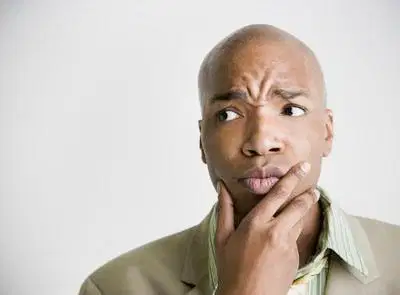
Briefly, what is happening here?
All are examples of tips for managing conflict except:
Being willing to forgive
Control your emotions
Pick your battles
Bring things up from the past
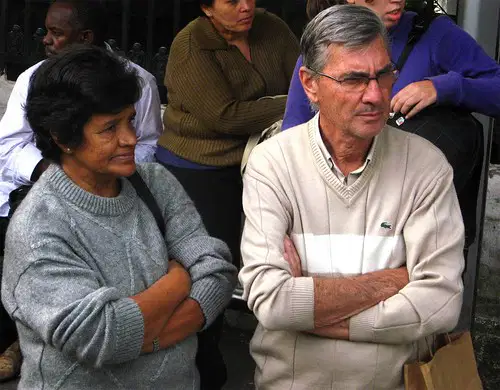
In one or two words, describe their emotions?

Is this a positive or negative nonverbal communication sign?
Positive
Negative

In one or two words, describe her emotions.

Briefly describe what the middle person is thinking.
What is the action or state of including or of being included within a group or structure?
diversity
inclusion
communication
resolution
What is being different?
diversity
inclusion
communication
resolution
What is the process of exchanging messages?
conflict resolution
texting
communication
What is paying attention to hear what the sender is saying
proximity
nonverbal communication
communication
listening
Match the following words to the correct definition.
Verbal Communication
The use of language and words to send and receive information
Nonverbal Communication
Includes methods used in addition to or as a substitute for language
Communication
The process of exchanging messages
Body Language
Use of the body instead of words to communicate
Proximity
The physical space between people
We stated that many behaviors expected in the classroom are also expected in the workplace. What is an example of a behavior that is expected in both?
Being on time
Being respectful
Producing great work
All of the above.
A large part of our communication is nonverbal.
True
False
It is okay to hit someone you don't agree with.
True
False
It is very important to remain calm when trying to fight fair.
True
False
When you disagree with someone, it is always appropriate to deal with multiple concerns.
True
False
It is important that each person in a conflict be willing to compromise.
True
False
The ability to make good, quick decisions
Persuasion
Acumen
Success
Motivation
The ability to recover quickly from difficulties
Savvy
Resilience
Logic
Independence
Moral principles that govern a persons behavior
Attitude
Attentiveness
Ergonomics
Ethics
The ability to use your time effectively
Time Management
Success
Supervision
Reliability
The ability to observe and evaluate your own behavior
Self-Monitoring
Motivation
Independence
Attentiveness
Dealing with relationships or communication between people
Listening
Obstacle
Ergonomics
Interpersonal
To be aware of, control, and express one's emotions
Conflict Management
Indepedence
Enthusiasm
Emotional Intelligence
Able to be trusted
Self-Monitoring
Ethics
Reliable
Acumen
Cause someone to do something through reason or argument
Persuasion
Savvy
Persistence
Conflict Resolution
Paying close attention to something
Enthusiasm
Customer Service
Logic
Attentiveness
A set of circumstances that makes it possible to do something
Obstacles
Opportunity
Savvy
Motivation
The process of talking about a conflict and deciding how to reach a compromise is called
Compromise
Negotiation
Gossip
Perception
Each person gives up something in order to reach a solution that satisfies everyone is called?
Negotiation
Conflict
Compromise
Tradition
To talk to people about someone else's personal life or private business is called?
Compromise
Negotiation
Communication
Gossip
An opinion about people that is formed without facts or knowledge is called?
Thought
Idea
Prejudice
Feedback
Using one's senses to get information about one's environment is called?
Participation
Precipitation
Practice
Perception
Someone who restates what the speaker says to make sure the message is understood is called
Active Listener
Passive
Assertive
Aggressive
A custom or belief is called?
Tradition
Compromise
Stereotype
Conflict
You can show someone that you have understood by providing them
A gift
Feedback
A smile
A nod
_______ is to shut out or ignore opinions and beliefs that are different from their own.
placating
prejudice
closed mind
______ pattern of communication in which people accuse others for everything that goes wrong.
blaming
placating
distracting
________ are statements that use I to express your thoughts, feelings, and ideas.
I statements
You statements
Resolution
_________means you give the sender some type of sign you are listening.
passive listening
active listening
reflecting
Where does conflict happen? Choose the best answer!
At home
At work
At school
Everywhere
Which approach would be best in this situation? You are confronted by an angry but calm coworker who is frustrated that you keep parking in his parking spot. You did not realize that the parking spot was hers.
Avoid
Accommodate
Control
Compromise
Someone who values their goals over relationships and will seek to achieve their goals even sacrificing relationships.
Avoiding person
Accommodating person
Competing person
Collaborating person
Decide which conflicts are important to you,and avoid getting into the conflicts that aren't important.
Take a break
Values
Pick Your Battles
Emotions
Everyone has a right to his or her own opinion.You shouldn't feel the need to always change other people's opinion.
Other Behaviors
Respect different opinions
Disagreement
Values/items
Is the ability to understand or identity with the ideas or feelings of another person or group.
Walk Away
Negotions
Body Language
Empathy

